

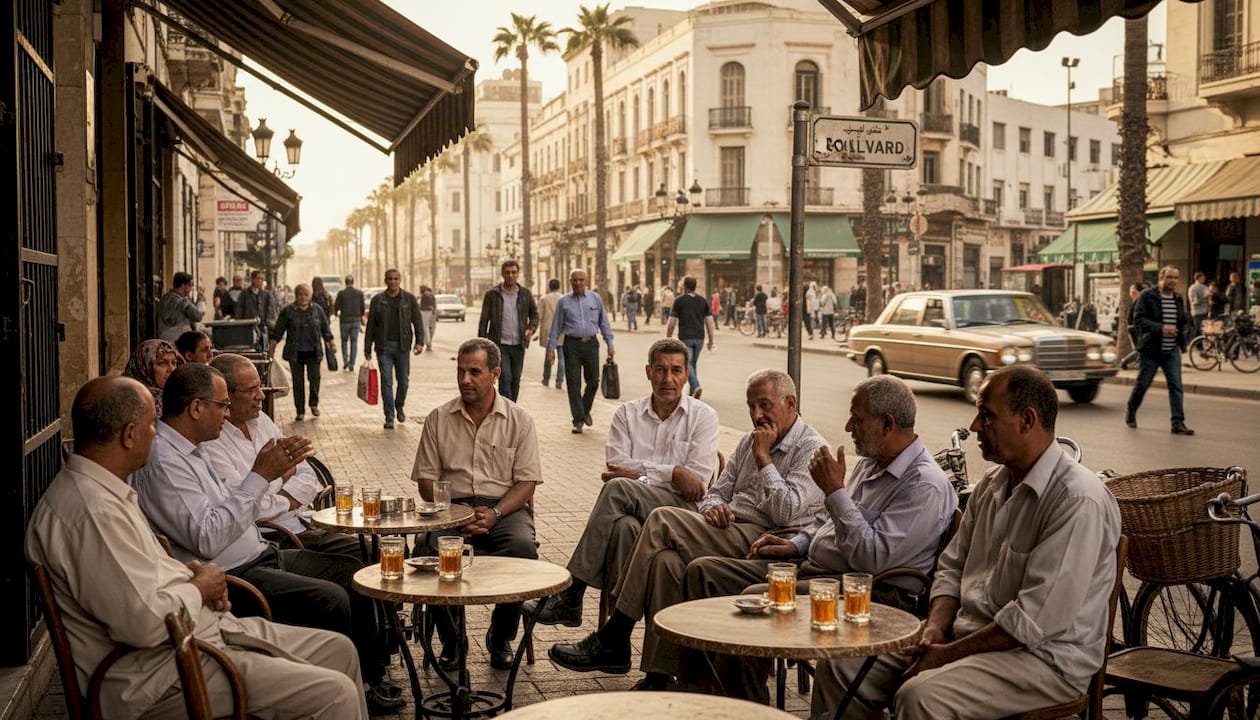
Most people picture Casablanca through the lens of a 1942 film, expecting fog, trench coats, and a smoky piano bar. The real city is something far more alive. Casablanca is Morocco’s largest city and its economic engine, packed with a historic and modern mix that surprises nearly every visitor who arrives with low expectations. This guide cuts through the cinematic myth and shows you exactly what to see, eat, and experience in one of North Africa’s most dynamic urban destinations.
Table of Contents
- Casablanca at a glance: The urban heart of Morocco
- From myth to reality: Casablanca’s iconic sites
- Local life and cultural immersion
- Planning your perfect Casablanca visit
- Unlock even more with Morocco tour packages
- Frequently asked questions
Key Takeaways
| Point | Details |
|---|---|
| Casablanca: Morocco’s urban gateway | Casablanca is the country’s economic and travel gateway, blending tradition and modernity for visitors. |
| Iconic sites and local gems | From Hassan II Mosque to hidden markets, Casablanca offers a spectrum of experiences beyond film-driven myths. |
| Authentic immersion is key | Local food, festivals, and neighborhoods let travelers connect deeply with Casablanca’s culture. |
| Smart trip planning pays off | Two nights and spring/autumn visits give you the best of the city, balancing iconic sights with local life. |
Casablanca at a glance: The urban heart of Morocco
Casablanca sits on Morocco’s Atlantic coast and is home to roughly 4 million people, making it the country’s most populous city by a wide margin. It handles about 33% of all Morocco’s air traffic, which means most international travelers pass through here whether they plan to or not. That position as a gateway is not accidental. The city is Morocco’s financial and commercial capital, and its energy reflects that status.
Morocco had a landmark year in tourism. The country welcomed nearly 20 million tourists in 2025, with Casablanca’s Mohammed V International Airport processing 11 million passengers. Those numbers signal that this is not a sleepy heritage stop. It is a living, breathing city that rewards curious travelers.
“Casablanca is not just a stopover. It is a city of contrasts, where French colonial architecture stands beside Islamic art and modern glass towers, all within walking distance of each other.”
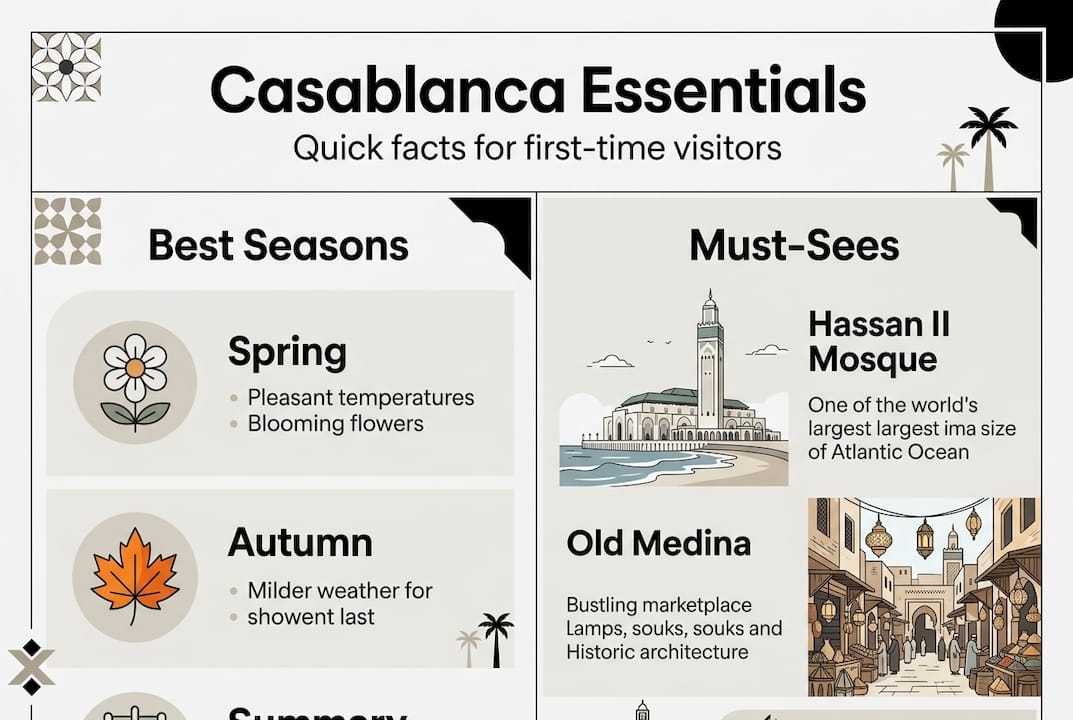
For practical planning, the best seasons to visit are spring (March to May) and autumn (September to November). Summer heat can be intense, and winter brings occasional rain. A two-night stay is the sweet spot for most travelers, giving you enough time to cover the highlights without feeling rushed.
| Practical detail | Information |
|---|---|
| Best seasons | Spring and autumn |
| Recommended stay | 2 nights |
| Airport passengers (2025) | 11 million |
| Morocco tourists (2025) | 19.8 million |
| City population | ~4 million |
| Language | Arabic, Darija, French |
| Currency | Moroccan Dirham (MAD) |
Casablanca consistently ranks among the top cities for culture in Morocco, and the Morocco tourism growth trend shows no signs of slowing. If you have been waiting for the right moment to visit, 2026 is it.
From myth to reality: Casablanca’s iconic sites
Let’s start with the big one. The Hassan II Mosque is not just Casablanca’s most famous landmark. It is one of the largest mosques on earth. The minaret stands 210 meters tall and the mosque can seat up to 25,000 worshippers inside, with space for 80,000 more in the surrounding plaza. It sits directly on the Atlantic Ocean, and its retractable glass roof opens to the sky on clear days. No photograph does it justice.
| Landmark | Why it matters | Best time to visit |
|---|---|---|
| Hassan II Mosque | World’s 3rd largest mosque, ocean-edge design | Morning, guided tour |
| Old Medina | Authentic markets, less crowded than Marrakech | Weekday mornings |
| Habbous Quarter | French-Moroccan architecture, artisan shops | Late afternoon |
| Mohammed V Square | Art Deco fountains, colonial-era buildings | Evening |
| Corniche | Atlantic beachfront, cafés, seafood restaurants | Sunset |
| Central Market | Fresh produce, local vendors, city pulse | Early morning |
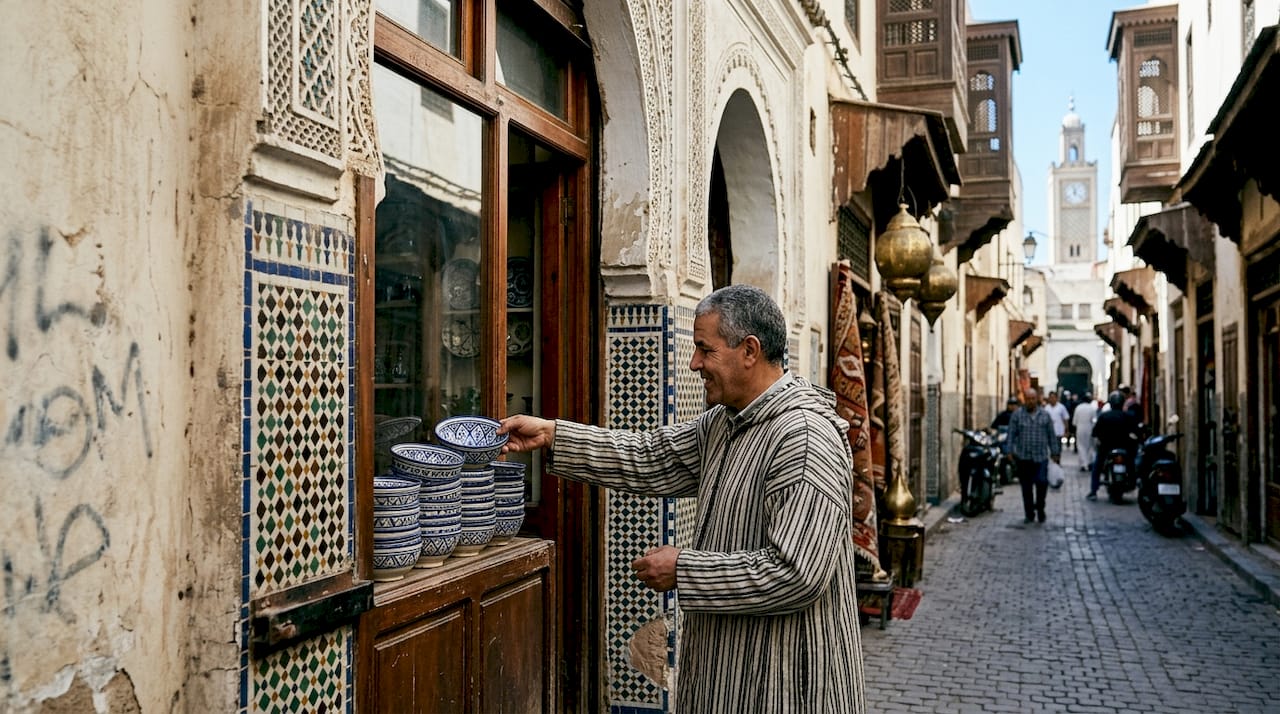
The Old Medina is where Casablanca gets real. Unlike the heavily touristed medinas of Fez or Marrakech, Casablanca’s Old Medina feels more authentic and less performative. You will find locals shopping for groceries, tailors working in narrow alleys, and street food vendors who are not catering to tour groups. It is smaller and scrappier than its famous counterparts, and that is exactly its appeal.
The Habbous Quarter, also called the New Medina, was built by French urban planners in the 1930s and blends Moroccan architectural tradition with European city planning. It is a fascinating contradiction: a medina designed on a grid. Browse the pastry shops, pick up handmade leather goods, and notice how the arched doorways and zellige tilework create a sense of timeless calm.
Mohammed V Square is the city’s civic heart. The Art Deco buildings surrounding it were constructed during the French Protectorate era and remain in excellent condition. Visit at dusk when the fountains are lit and locals gather for their evening stroll.
Now, about Rick’s Café. Yes, it exists. But it was built in 2004 as a tribute to the film, not as a historic site. It is a well-run restaurant with good food and a fun atmosphere, but do not mistake it for an authentic piece of Casablanca’s history. Think of it as a knowing wink, not a pilgrimage.
For unique Morocco experiences that go beyond the standard tourist trail, Casablanca rewards those who look up. The city has one of the finest collections of Art Deco architecture outside of Miami, and most visitors walk right past it. If you enjoy exploring Marrakech for its visual richness, Casablanca will give you a completely different but equally rewarding visual language.
Pro Tip: Download a free Art Deco walking map before you arrive. The buildings along Boulevard Mohammed V and the streets around the Central Market contain extraordinary details, including carved stone facades, geometric ironwork, and mosaic entryways that most visitors never notice.
Local life and cultural immersion
Casablanca’s real magic lives in its everyday rhythms. The city’s markets, night tours, and jazz festival deliver a kind of immersion that no museum can replicate. If you want to understand Casablanca, you need to eat where locals eat, walk where locals walk, and stay out past 10 p.m.
Here are the experiences that will define your trip:
- Seafood at the Central Market: Buy fresh fish from the vendors on the ground floor, then take it upstairs to one of the small restaurants that will cook it for you on the spot. This is how Casablancans eat lunch.
- Mint tea ritual: Accept every invitation to sit and drink tea. It is not just a beverage. It is a social contract, a sign of hospitality, and one of the most pleasant pauses you will take all day.
- Jazzablanca Festival: Held each spring, this internationally recognized jazz festival draws artists from across Africa, Europe, and the Americas. It transforms the city’s outdoor spaces into concert venues and gives you a window into Casablanca’s cosmopolitan creative scene.
- Night tour of the Corniche: The Atlantic waterfront comes alive after dark. Families, couples, and groups of friends fill the promenade, and the seafood restaurants stay busy until midnight. It feels nothing like a tourist zone.
- Neighborhood walks in Maarif: This upscale district is where young Casablancans shop, eat, and socialize. It has a distinctly European café culture layered over a Moroccan sensibility.
For safety, Casablanca is a straightforward urban environment. Keep your phone in your pocket in crowded markets, use licensed taxis or ride-share apps, and avoid poorly lit side streets late at night. The same common sense you would apply in any large city applies here.
Pro Tip: If a vendor in the medina invites you into their shop for tea, you are under no obligation to buy anything. Enjoy the conversation, admire the craftsmanship, and leave gracefully if the price does not work for you. Pressure selling is common but never aggressive.
For travelers who want to go deeper into Morocco’s cultural fabric, planning Morocco culture tours in advance gives you access to local guides who know which market stalls are worth visiting and which festivals align with your travel dates. You can also customize luxury tours to match your specific interests, whether that is food, architecture, music, or all three.
Planning your perfect Casablanca visit
Casablanca works best as part of a broader Morocco itinerary rather than a standalone destination. Two nights gives you enough time to cover the Hassan II Mosque, the Old Medina, Habbous Quarter, Mohammed V Square, and the Corniche without feeling rushed. A two-night stay with spring or autumn timing is the formula most experienced travelers recommend.
Here is a practical two-day framework:
- Morning of Day 1: Guided tour of the Hassan II Mosque. Book in advance, arrive early, and hire a licensed guide. The interior details are extraordinary and easy to miss without context.
- Afternoon of Day 1: Walk through the Old Medina and Central Market. Stop for a seafood lunch. Explore the Art Deco buildings along Boulevard Mohammed V.
- Evening of Day 1: Stroll the Corniche at sunset. Dinner at a seafood restaurant on the waterfront.
- Morning of Day 2: Visit the Habbous Quarter for artisan shopping and pastries. Coffee at a local café, not a chain.
- Afternoon of Day 2: Mohammed V Square and the surrounding civic buildings. Visit Rick’s Café if you are curious, but keep expectations calibrated.
- Evening of Day 2: Dinner in the Maarif district. If timing aligns, check local listings for live music or cultural events.
Pro Tip: Casablanca’s taxi drivers often quote inflated prices to tourists. Always agree on a fare before you get in, or use a ride-share app to avoid the negotiation entirely.
If you want to extend your trip, the Marrakech to Casablanca itinerary is one of the most popular routes in Morocco, combining two very different urban personalities into one seamless journey. For travelers with more time, the Morocco grand tour covers the imperial cities, Sahara Desert, and Atlantic coast in a single well-paced itinerary.
Unlock even more with Morocco tour packages
Casablanca is a compelling city on its own, but it becomes even richer when you experience it as part of a guided Morocco journey. At Moroccotravel1.com, we design itineraries that connect Casablanca’s urban energy to the rest of Morocco’s extraordinary landscape. Our Morocco grand tour package takes you from the Atlantic coast through imperial cities and into the Sahara, with local expert guides who bring every stop to life. If adventure is your priority, our Morocco hiking tour pairs cultural city stops with Atlas Mountain treks. Browse all Morocco tours packages and find the itinerary that fits your travel style, timeline, and budget.
Frequently asked questions
Is Casablanca safe for tourists?
Casablanca is generally safe for tourists, though petty theft can occur in busy markets and transit areas. Apply standard urban precautions and you will have no issues.
What are the must-see attractions in Casablanca?
The top attractions are the Hassan II Mosque, Old Medina, Habbous Quarter, Central Market, Mohammed V Square, and the Corniche waterfront.
How many days should I spend in Casablanca?
Most experienced travelers recommend a two-night stay to cover the major sites and get a genuine feel for local life without rushing.
What are unique experiences in Casablanca beyond sightseeing?
Food tours, festivals, and night outings offer the most authentic immersion, especially the Jazzablanca Festival, seafood lunches at the Central Market, and evening walks along the Corniche.


