

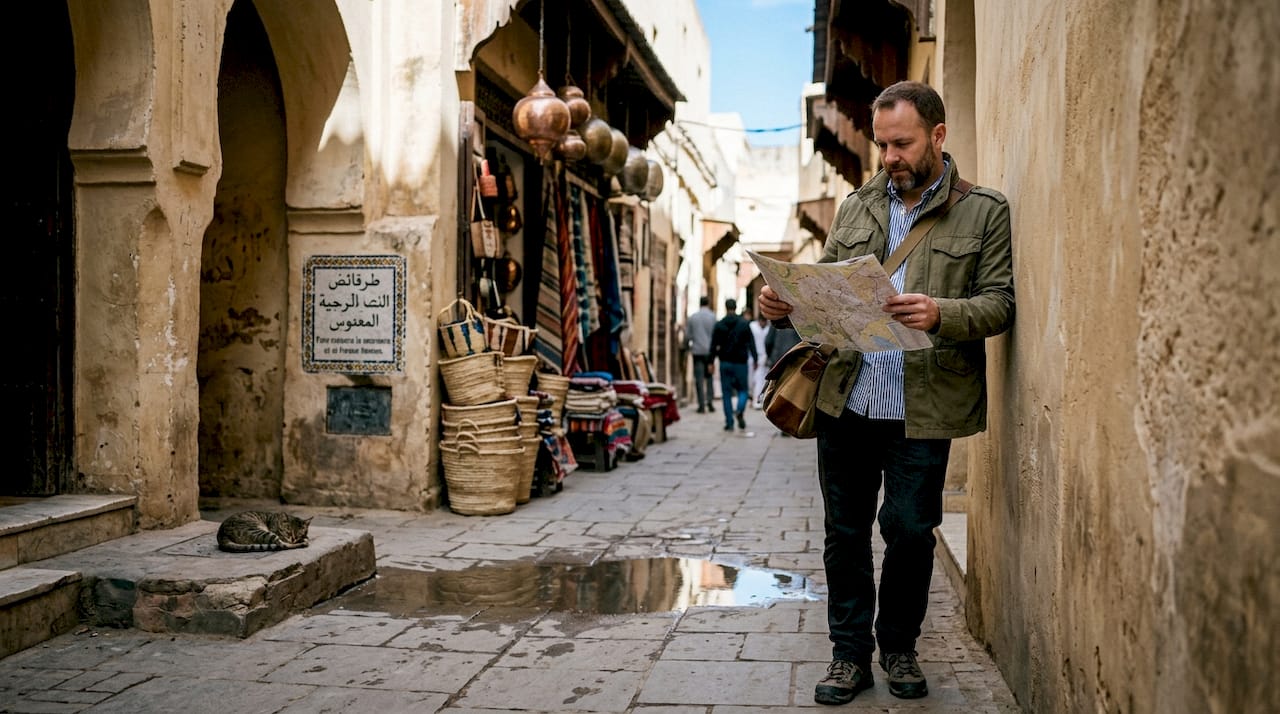
Fez is one of those cities that stops you cold the moment you step inside its gates. The world’s largest car-free urban area, Fez el-Bali spans 300 hectares and winds through more than 9,000 alleyways, founded in 789 CE and UNESCO-listed since 1981. No cars, no motorbikes weaving through traffic, just the sound of hammers on copper, the smell of spices, and centuries of living history pressing in from every direction. For luxury travelers and culture enthusiasts, Fez offers something rare: a city where authentic tradition and genuine comfort exist side by side, and where every corner holds a story worth knowing.
Table of Contents
- Fez’s storied past: From imperial capital to UNESCO treasure
- Navigating the Fez medina: Sensory immersion and essential tips
- Architectural masterpieces: Madrasas, mosques, and living history
- Living crafts and tradition: Workshops, tanneries, and artisan heritage
- Luxury accommodations: The finest riads and hotels for immersive stays
- Craft your own luxury journey in Fez
- Frequently asked questions
Key Takeaways
| Point | Details |
|---|---|
| World’s largest car-free medina | Fez el-Bali’s ancient streets create an unmatched, walkable experience for cultural immersion. |
| Luxury meets heritage | Fez’s lavish riads, historic sites, and artisan workshops offer a seamless blend of comfort and tradition. |
| Private guides are invaluable | Expert guidance transforms the maze-like medina into an accessible, rewarding adventure. |
| Support living crafts | Ethical shopping sustains Fez’s artisans and preserves endangered traditions for future generations. |
| Plan for sensory wonders | From rich architectural detail to the tannery’s aroma, Fez is a full-spectrum experience for luxury travelers. |
Fez’s storied past: From imperial capital to UNESCO treasure
Fez was founded by Idris I in 789 CE and quickly grew into one of the Islamic world’s most important centers of learning, trade, and culture. By the 13th century, it was the largest city in the world. Scholars, merchants, and artisans from across the Arab world and Andalusia poured in, shaping a city that was cosmopolitan long before that word existed. That layered identity is still visible today in the architecture, the food, and the people.
The medina of Fez el-Bali is a UNESCO-listed treasure recognized for its extraordinary density of medieval Islamic architecture. Walking through it feels less like sightseeing and more like time travel. Preservation is an ongoing challenge: the sheer age of the structures, combined with the pressure of modern tourism and urban growth, means that restoration efforts are constant and critical. For travelers who care about luxury and authentic travel, understanding this context makes every visit more meaningful.
| Key fact | Detail |
|---|---|
| Founded | 789 CE by Idris I |
| UNESCO listing | 1981 |
| Area | 300 hectares |
| Alleyways | Over 9,000 |
| Peak population (medieval) | Largest city in the world |
“Fez el-Bali is not a museum. It is a living city where medieval infrastructure supports a modern population, and that tension is exactly what makes it extraordinary.” — National Geographic
For travelers interested in cultural adventures in Morocco, Fez is the essential starting point. No other Moroccan city carries this depth of layered history in such a compact, walkable space.
Navigating the Fez medina: Sensory immersion and essential tips
The medina is genuinely disorienting, and that is part of its appeal. Streets narrow to shoulder width. Donkeys loaded with goods share the path with schoolchildren and shopkeepers. The medina’s layout follows no grid, no logic that a Western traveler will immediately recognize. Getting lost is not a failure. It is the experience.
That said, a private guide transforms the visit entirely. Private guided tours are essential for navigation and for understanding the context behind what you are seeing, whether that is a 14th-century fountain, a working copper workshop, or a neighborhood mosque. A good guide also knows the best timing: mornings are ideal for the tanneries, when the colors in the dye vats are most vivid and the light is flattering for photography.
Here is what to keep in mind before you enter:
- Wear comfortable, closed-toe shoes. The cobblestones are uneven and the streets can be slick.
- Carry fresh mint. The tannery district has a powerful smell. Mint held under your nose makes it manageable.
- Go early. Most workshops are busiest and most photogenic before noon.
- Agree on a guide fee upfront. Reputable guides charge a set rate. Avoid anyone who approaches you unsolicited near the main gates.
- Bring small bills. Many artisan stalls and small shops do not accept cards.
Pro Tip: Book your private guide through your riad or a vetted agency before you arrive. Last-minute guides near tourist entry points are often commission-driven and will steer you toward shops rather than genuine experiences. For unique luxury activities that go beyond the standard tour, pre-arranged access makes all the difference.
Architectural masterpieces: Madrasas, mosques, and living history
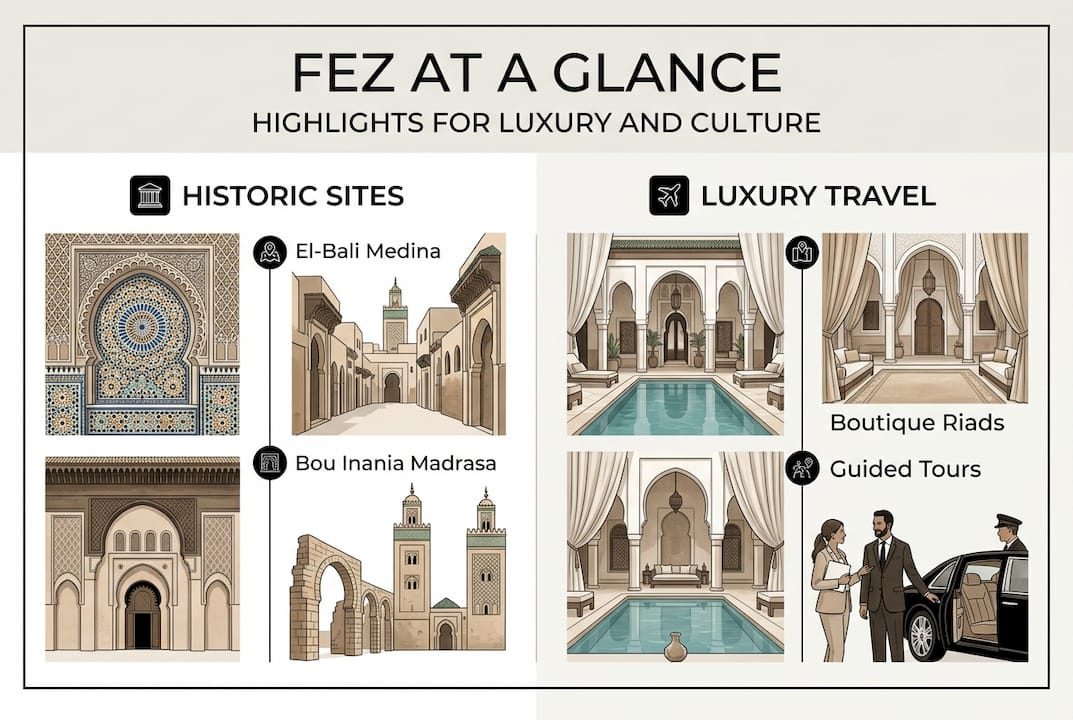
Fez’s architecture is not decorative. It is theological, mathematical, and deeply intentional. Every carved plaster panel, every zellige tile pattern, every cedar wood screen carries meaning rooted in Islamic geometry and Andalusian craftsmanship. Two sites stand above the rest.
The Bou Inania Madrasa, built in the 14th century, is the finest example of Marinid architecture in Morocco. It features zellige tiles, carved cedar, and stucco work of extraordinary precision, and it is the only madrasa in Fez still used for Friday prayers. Non-Muslim visitors can enter the courtyard and study the craftsmanship up close, which is a rare privilege in a working religious space.
Al Quaraouiyine is even older. Founded in 859 CE, it is recognized as the world’s oldest continuously operating degree-granting university. The mosque itself is closed to non-Muslims, but the library, restored in 2016, is occasionally accessible. The architecture blends Almohad and Andalusian influences in a way that feels both ancient and alive.
| Site | Built | Highlight | Visitor access |
|---|---|---|---|
| Bou Inania Madrasa | 14th century | Zellige, cedar, stucco | Open to all |
| Al Quaraouiyine | 859 CE | Oldest university | Mosque closed to non-Muslims |
| Nejjarine Fountain | 18th century | Mosaic tilework | Public square |
“The geometry in these buildings is not ornamental. It is a visual language encoding cosmological ideas that scholars are still interpreting today.” — National Geographic
For travelers exploring historic sites in Morocco, these two buildings alone justify the trip to Fez. Spend time here. Do not rush.
Living crafts and tradition: Workshops, tanneries, and artisan heritage
Fez is Morocco’s artisan capital, and the Chouara Tannery is its most iconic image. Dating to the 11th century, the tannery uses the same medieval methods today: stone vats filled with natural dyes, workers treading hides by foot, and a process that has barely changed in a thousand years. The smell is intense. The sight is unforgettable. Leather shops surrounding the tannery offer elevated viewing platforms, and most will hand you a sprig of mint at the door.
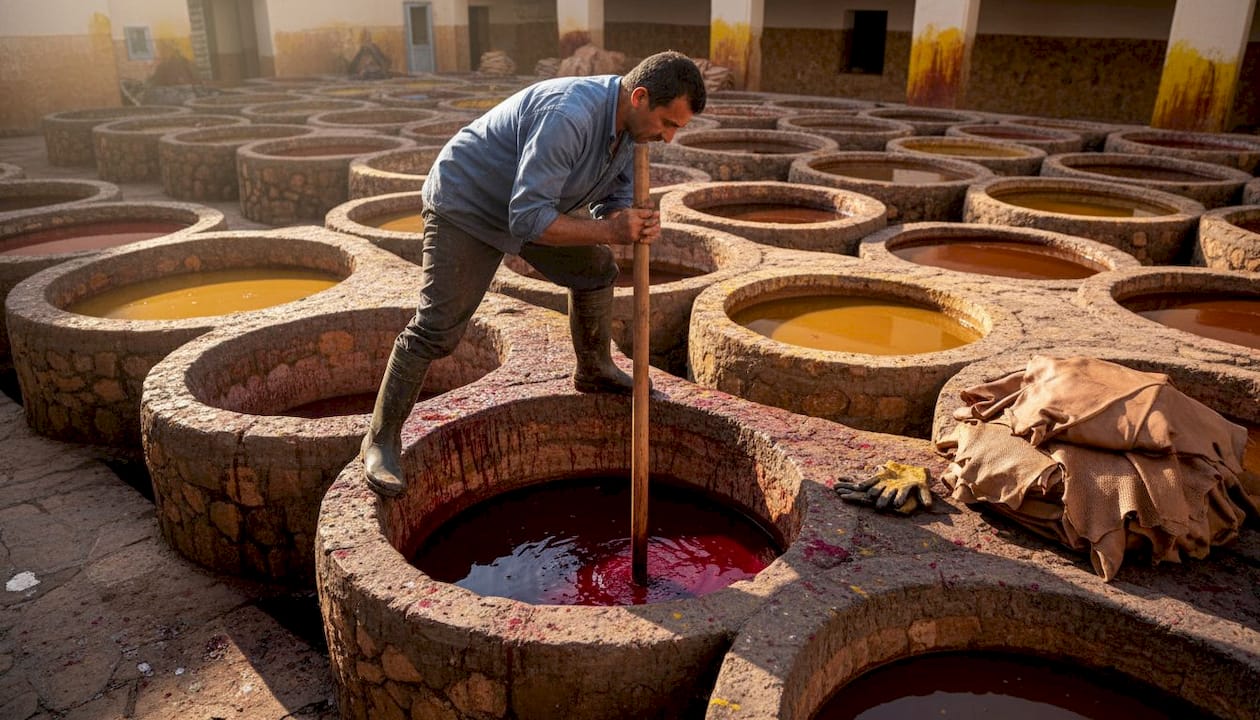
Beyond the tannery, Fez supports a wide range of traditional crafts including zellige tile-making, hand-thrown pottery, carpet weaving, and copper and brass smithing. Many of these trades rely on an apprenticeship system that is increasingly endangered as younger generations move toward other work. Visiting the Ain Nokbi district, where many workshops are concentrated, puts you directly in contact with artisans who have spent decades mastering their craft.
Here is how to make the most of the artisan experience:
- Visit workshops before shops. Seeing the process first gives you a genuine appreciation for what you are buying.
- Ask questions. Most artisans welcome curiosity. A guide can translate and provide context.
- Buy directly from the maker when possible. This supports the artisan rather than a middleman.
- Negotiate respectfully. Bargaining is expected, but aggressive haggling undervalues skilled work.
- Look for quality markers. Hand-cut zellige has slight irregularities. Machine-made tiles are perfectly uniform and far less valuable.
Pro Tip: The best time to visit the tannery is mid-morning on a sunny day. The natural light hits the dye vats at an angle that makes the colors pop, and the workers are most active. For artisanal experiences in Morocco that go deeper than a quick look, ask your guide about arranging a short workshop session with a local craftsman. Some artisans offer hands-on demonstrations for small groups. You can also explore artisan crafts in Fez through curated cultural programs that connect travelers directly with master craftspeople.
Luxury accommodations: The finest riads and hotels for immersive stays
A riad is not just a place to sleep. It is an architectural experience. These traditional Moroccan houses are built around a central courtyard, often with a fountain, citrus trees, and rooms arranged on multiple levels. In Fez, the best riads have been restored with extraordinary care, blending original tilework and carved plaster with modern amenities like hammams, rooftop terraces, and gourmet kitchens.
The numbers speak for themselves. Top-rated luxury options include Riad Laaroussa, rated 4.9 out of 5 on TripAdvisor across 1,813 reviews; Riad Fes Relais and Chateaux, scoring 9.1 out of 10 on Booking.com; Palais Amani, a restored 17th-century palace; and Riad Al Fassia Palace, rated 4.8 out of 5. These are not generic luxury hotels. Each one is a curated cultural experience.
What to look for when choosing your riad:
- Location within the medina. Some riads are a 20-minute walk from the main sites. Others are steps away from Bou Inania.
- Hammam access. A private hammam session is one of the most restorative experiences in Morocco.
- Rooftop views. The best riads offer panoramic views over the medina’s rooftops and minarets.
- Cooking classes. Several top riads offer hands-on Moroccan cooking sessions with their chefs.
- Staff knowledge. The best riad teams double as informal guides, offering recommendations that no travel app can match.
For a deeper look at luxury accommodations in Morocco, pairing your riad stay with a private tour and a cooking class creates an experience that is genuinely hard to replicate anywhere else. One Forbes-featured luxury riad in Fez was praised specifically for bringing Moroccan heritage and artistry to life through its restoration and guest programming.
Craft your own luxury journey in Fez
Fez rewards travelers who plan with intention. The city’s depth means that a rushed visit barely scratches the surface, while a well-designed itinerary can feel genuinely transformative. At Moroccotravel1.com, we build private and custom Morocco tours around exactly what you want: handpicked riad stays, vetted private guides with real expertise, and insider access to workshops and sites that most visitors never find. Whether you are considering an 8-day luxury Morocco tour that moves through Fez, the Sahara, and Marrakech, or a focused cultural stay in the medina, we handle every detail so you can focus on the experience itself. Reach out and let us help you design something worth remembering.
Frequently asked questions
What is the best time of year to visit Fez for luxury travelers?
March to May and September to November offer mild weather, vibrant festivals, and fewer crowds. These shoulder seasons are ideal for morning tannery visits and comfortable medina exploration.
Are guided tours recommended for exploring the medina?
Absolutely. Private guides are essential for navigating the medina’s 9,000-plus alleyways and for understanding the cultural and historical context behind what you are seeing.
How can I support authentic artisan crafts in Fez?
Shop directly from workshops, ask about the maker’s background, and prioritize pieces that show handmade irregularities. Ethical shopping supports endangered apprenticeships and keeps traditional crafts alive.
What amenities should I expect at luxury riads in Fez?
Expect hammams, rooftop terraces, authentic restored architecture, gourmet dining, and attentive staff. Many top riads also offer cooking classes and cultural programs as part of the guest experience.
What should I expect visiting Chouara Tannery?
Expect vivid dye vats, intense smells, and a chance to watch 11th-century techniques still in daily use. Bring fresh mint, go in the morning, and use an elevated viewing platform for the best perspective.


