

TL;DR:
- Morocco’s history is deeply rooted in its people, architecture, food, and daily rituals.
- Exploring multiple cities reveals a layered Roman, Berber, Islamic, and colonial cultural continuum.
- Slowing down and engaging locally offers authentic, transformative insights into Morocco’s living history.
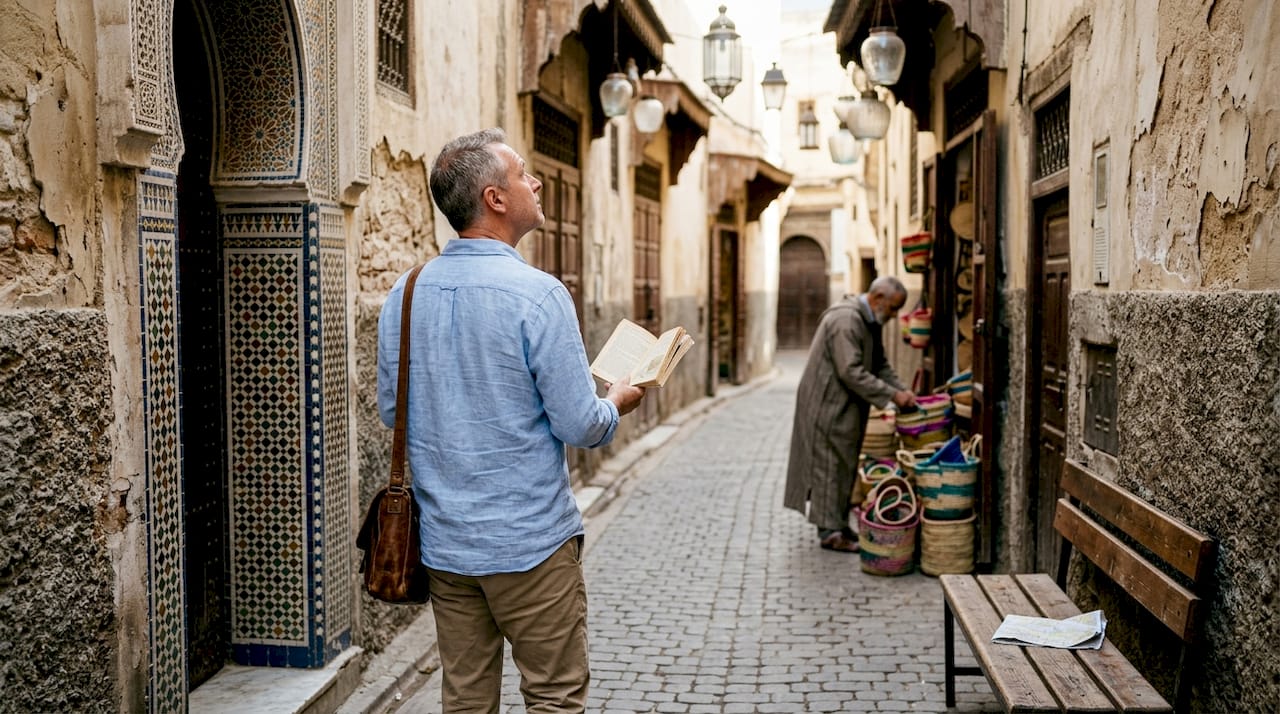
Most visitors to Morocco leave with photos of minarets and souks but feel oddly disconnected from the stories behind them. You walk through a 1,000-year-old medina and sense something ancient and alive, yet the surface-level tour bus experience keeps you at arm’s length from it. Morocco’s history is not a museum exhibit. It breathes through its people, its architecture, its food, and its daily rituals. This guide will show you how to plan, where to go, and how to engage with local traditions so that Morocco’s past becomes something you genuinely feel, not just something you photograph.
Table of Contents
- Understanding Morocco’s historical landscape
- Gathering what you need: Planning for immersive historical travel
- Step-by-step: Experiencing Morocco’s history firsthand
- Mistakes to avoid and ways to deepen your historical journey
- What most guides miss: Why slowing down unlocks Morocco’s living history
- Take the next step: Customized tours for true Moroccan history
- Frequently asked questions
Key Takeaways
| Point | Details |
|---|---|
| Start with local context | Understand Morocco’s layered historical periods before visiting key sites. |
| Pair old and new | Combine ancient ruins and thriving medinas for a holistic historical experience. |
| Hire local guides | Local experts make history come alive with stories and access you’d miss solo. |
| Dig deeper, go slower | Slow travel and hands-on experiences foster real connection to Morocco’s heritage. |
| Avoid common tourist traps | Balance iconic stops with local markets, home stays, and storytelling for authenticity. |
Understanding Morocco’s historical landscape
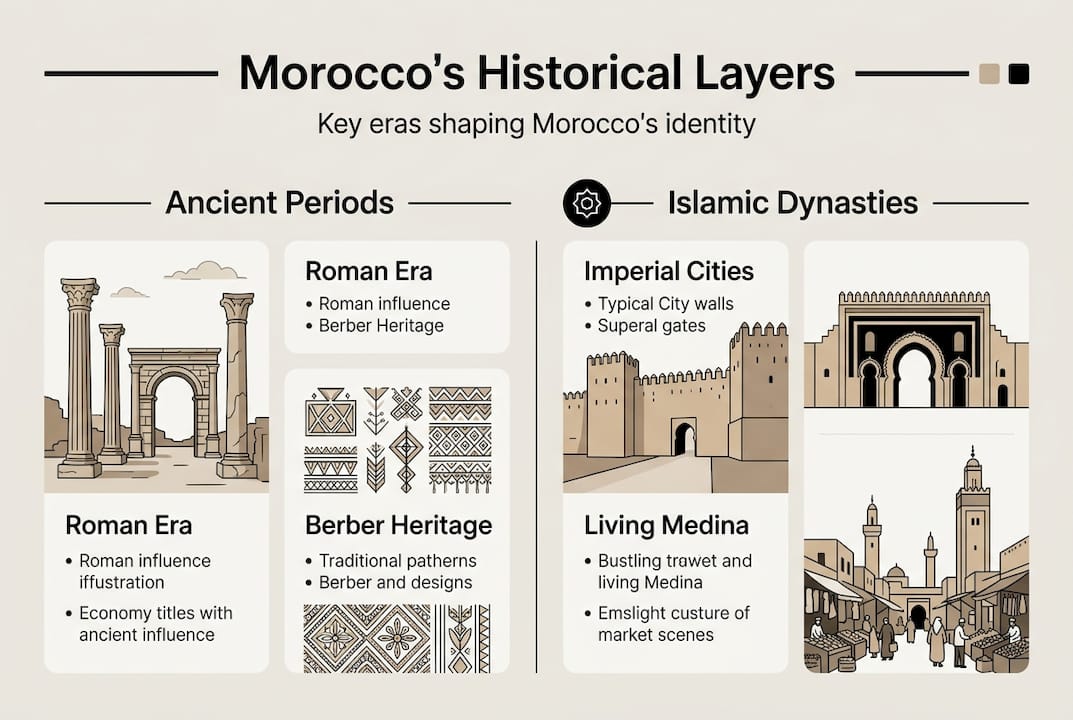
Before you can connect with Morocco’s history, you need to understand the layers beneath it. This country was shaped by at least four major cultural epochs, and each one left physical and living traces you can still experience today.
The Roman era gave Morocco the ruins of Volubilis, a remarkably preserved city near Meknes. The Berber (Amazigh) heritage predates even that, woven into the language, music, and architecture of the Atlas Mountains and southern regions. Then came the Islamic golden age, which produced the imperial cities of Fes, Marrakech, Meknes, and Rabat, each with its own personality and architectural style. Finally, the French and Spanish colonial period layered European boulevards and administrative buildings over older medinas, creating a fascinating visual tension you can see in cities like Casablanca and Tetouan.
Here is a quick comparison of Morocco’s four imperial cities to help you plan:
| City | Historical focus | Best known for | Crowd level |
|---|---|---|---|
| Fes | Islamic medieval | Oldest university, tanneries | Moderate |
| Marrakech | Saadian dynasty | Jemaa el-Fna, souks | High |
| Meknes | Alaouite dynasty | Bab Mansour, Volubilis proximity | Low |
| Rabat | Colonial and modern | Kasbah des Oudaias, Hassan Tower | Low to moderate |
What sets each city apart is not just architecture but atmosphere. As noted by The Times travel coverage, Fes offers a more authentic and less touristy experience compared to Marrakech, making it ideal for travelers who want genuine immersion.
Key regions to prioritize include:
- The Fes medina: A UNESCO World Heritage site and the world’s largest car-free urban area
- Volubilis: Roman ruins that sit just 30 kilometers from Meknes
- The Draa Valley: Ancient kasbahs and Berber villages along a historic caravan route
- Chefchaouen: A blue-painted mountain town with deep Andalusian and Berber roots
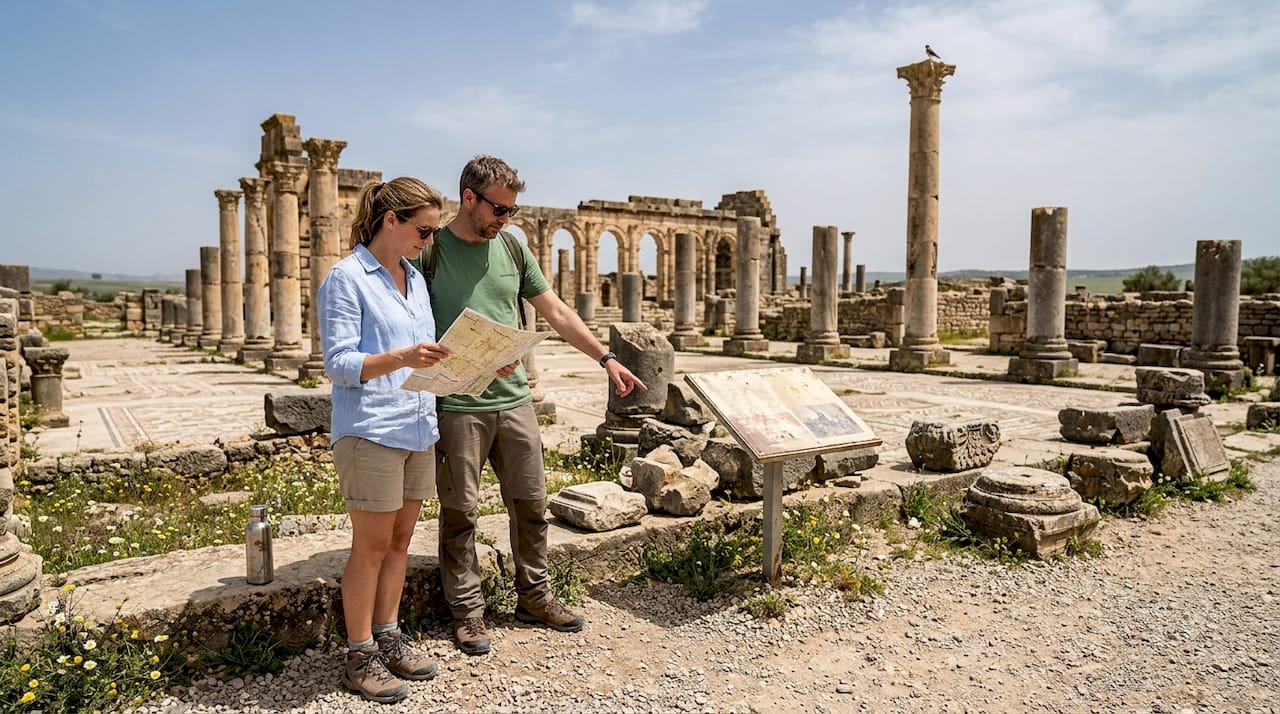
Pairing Volubilis with Meknes and Fes gives you a rare historical continuum, moving from Roman occupation through Berber tribal culture into Islamic civilization, all within a single day’s drive. Explore more about top cultural cities to map your priorities before you book.
Gathering what you need: Planning for immersive historical travel
With Morocco’s diversity in mind, let’s look at how to prepare yourself for a connecting, immersive journey.
Timing matters more than most travelers realize. Spring (March to May) and fall (September to November) offer the most comfortable temperatures for walking medinas and visiting outdoor ruins. Ramadan is a fascinating time to visit if you want to witness Moroccan spiritual culture up close, but many restaurants and sites operate on reduced hours, so plan accordingly.
Here is a practical resource table to build your preparation toolkit:
| Resource | Purpose | Where to find it |
|---|---|---|
| Local guide services | Context and access | Tour agencies, riads |
| Darija (Moroccan Arabic) phrasebook | Basic communication | Bookstores, apps |
| Offline maps (Maps.me) | Navigation in medinas | App stores |
| UNESCO site list for Morocco | Site prioritization | UNESCO website |
| Festival calendar | Timing cultural events | Morocco tourism board |
Follow these steps to plan effectively:
- Research the historical periods relevant to the cities on your list before you arrive
- Book a local guide for at least your first full day in each major medina
- Download offline maps because GPS signal drops inside dense medinas
- Learn 10 to 15 phrases in Darija or French to open doors and conversations
- Contact a tour agency early to customize your itinerary around festivals or special access sites
Pairing sites like Volubilis with imperial cities creates a Roman-Berber-Islamic history continuum that no single city can offer alone. Review Morocco travel tips for logistics and also look into custom Morocco packages if you want an expert to handle the sequencing for you.
Pro Tip: Ask your riad host to recommend a neighborhood guide rather than a tourist office guide. Neighborhood guides know the hidden courtyards, the family-run workshops, and the stories that never make it into guidebooks.
Step-by-step: Experiencing Morocco’s history firsthand
You’ve prepared. Now follow these steps to truly experience history with all your senses.
-
Start in Fes. The Fes el-Bali medina is the most intact medieval city in the Arab world. Spend at least three days here. Visit the Bou Inania Madrasa, watch leather being dyed at the Chouara Tannery from a rooftop terrace, and walk the alleyways without a fixed destination. The Fes medina is more authentic and less touristy than Marrakech, which means your interactions feel real, not staged.
-
Visit Volubilis and Meknes together. Drive or take a day trip from Fes. Volubilis shows you Morocco before Islam, with intact Roman mosaics and triumphal arches. Meknes, just 30 minutes away, shows you the Alaouite dynasty’s ambition through its massive gates and royal granaries.
-
Engage with people, not just places. Ask your guide to arrange a home-cooked lunch with a local family. Attend a storytelling evening in a riad courtyard. Visit a cooperative where artisans make zellige tilework or hand-knotted rugs. These moments are where history becomes personal.
-
Explore Marrakech with intention. The city is iconic for good reason, but go beyond Jemaa el-Fna. The Saadian Tombs, the Bahia Palace, and the Mellah (historic Jewish quarter) reveal layers of Marrakech that most visitors never reach. Check out our guide to exploring Marrakech for a deeper route.
-
End in Rabat or Casablanca. Rabat’s Kasbah des Oudaias and the unfinished Hassan Tower offer a quieter, more contemplative finish to your journey. Learn more about historic Rabat to plan this final leg well.
“The medina of Fes is not a relic. It is a living city where the 13th century and the 21st century exist in the same alleyway.”
Pro Tip: In Fes, hire a guide certified by the city’s official guide association. They carry a badge and are trained in both history and ethics, meaning they won’t steer you into commission-based shops.
Mistakes to avoid and ways to deepen your historical journey
As you go, keep these important warnings and enrichment strategies in mind for a truly transformational trip.
The biggest mistake cultural travelers make is treating Morocco like a highlight reel. They hit Marrakech for two days, snap photos of the same five spots, and leave feeling vaguely unsatisfied. The second biggest mistake is skipping local guides entirely and relying on apps or generic audio tours that strip away human context.
Here are the most common pitfalls and how to avoid them:
- Only visiting major tourist sites: Iconic spots are worth seeing, but balance them with neighborhood walks, local markets, and smaller towns like Azrou or Moulay Idriss
- Not hiring a local guide: A good guide doesn’t just explain what you’re looking at. They tell you who built it, why it matters, and what it means to people living there today
- Skipping hands-on activities: A cooking class, a pottery session in Safi, or a weaving workshop in the Atlas Mountains connects you to living traditions in ways that sightseeing cannot
- Rushing between cities: Moving every day means you never get deep enough into any one place to feel its rhythm
- Ignoring smaller medinas: As noted in Fes coverage by The Times, Fes offers a more authentic and less touristy experience compared to Marrakech, and that principle applies to many smaller cities too
To truly deepen your journey, consider a homestay in a traditional riad, attending a Gnawa music evening, or joining a local family for a Friday couscous lunch. These are not tourist performances. They are invitations into daily life. Browse unique things to do in Morocco for curated ideas, and read more about authentic travel in Morocco to build a trip that goes beyond the surface.
What most guides miss: Why slowing down unlocks Morocco’s living history
Here is something most travel articles won’t tell you: the best historical experiences in Morocco happen when you stop trying to experience history.
Conventional travel wisdom pushes you to maximize sites per day. See more, cover more, check more boxes. But Morocco punishes that approach. Its history is not stored in plaques and exhibit halls. It lives in the rhythm of a morning call to prayer echoing through a medina, in the way a craftsman folds brass into geometric patterns his grandfather taught him, in the tea poured for you without your asking.
We’ve seen travelers spend six days in Morocco and leave knowing less about it than someone who spent three days sitting in one neighborhood. The difference is pace. When you slow down, locals start talking to you. When you linger in a cafe, the owner tells you about the street’s history. When you get lost, you find the city’s actual texture.
The travelers who come back most transformed are those who built in unplanned hours. They didn’t fill every slot. They left room for the unexpected detour, the extended conversation, the second glass of mint tea. That’s where Morocco’s layered stories reveal themselves. For help structuring a trip that balances exploration with genuine depth, look into planning cultural tours with experienced local partners.
Take the next step: Customized tours for true Moroccan history
Ready to experience Morocco’s history, not just see it? At Moroccotravel1.com, we design private and small-group tours built around meaningful historical engagement, not rushed itineraries. Our local guides provide access to sites, families, and traditions that standard tours simply don’t reach. Whether you want to trace the Roman-to-Islamic continuum from Volubilis to Fes or spend a week immersed in the culture of the imperial cities, we can build the right journey for you. Start with our Grand Tour itinerary for a fully structured 14-day experience, or browse all Morocco tours packages to find the right fit for your travel style and timeline.
Frequently asked questions
What is the best time of year to explore Morocco’s historical sites?
Spring (March to May) and fall (September to November) offer the most comfortable conditions for visiting historical sites, with mild temperatures and manageable crowd levels at major medinas and ruins.
How can I avoid overly touristy experiences in Morocco?
Spend more time in cities like Fes, which is more authentic and less touristy than Marrakech, and hire local neighborhood guides rather than relying on large group tours.
Which Moroccan city offers the deepest historical immersion?
Fes is widely regarded as Morocco’s most historically rich city, with its ancient medina functioning as a living, working community that has changed little in centuries.
What should I pack for immersive historical travel in Morocco?
Bring comfortable walking shoes, modest clothing that covers shoulders and knees for mosque visits, a French or Darija phrasebook, and extra cash for local guides, market purchases, and spontaneous experiences.


