

TL;DR:
- Moroccan cuisine is a layered blend of Berber, Arab, Andalusian, and Mediterranean influences emphasizing slow cooking and complex spices.
- Signature dishes include tagine, couscous, pastilla, and harira, each reflecting regional and cultural traditions.
- Authentic Moroccan food values traditional cooking methods and communal dining, often experienced through home-cooked meals and luxury riads.
Choosing what to eat on a luxury trip to Morocco is genuinely overwhelming, in the best possible way. The country’s cuisine is a sensory adventure built on centuries of layered influence. Moroccan cuisine draws from Berber foundations with Arab, Andalusian, and Mediterranean currents weaving through every recipe, emphasizing slow cooking, complex spice blends, and a bold sweet-savory balance that feels unlike anything else in the world. In this guide, we’ll walk you through the essential dishes, the dining customs that give meals their meaning, and the best luxury experiences where you can taste it all firsthand.
Table of Contents
- Understanding Moroccan cuisine: History and signature flavors
- Top Moroccan dishes every traveler should try
- Moroccan cooking and dining traditions
- Where to enjoy authentic Moroccan cuisine on a luxury journey
- Why authentic Moroccan food is about more than just flavor
- Experience Moroccan cuisine on your next luxury trip
- Frequently asked questions
Key Takeaways
| Point | Details |
|---|---|
| Diverse culinary influences | Moroccan food draws from Berber, Arab, Andalusian, and Mediterranean traditions for a unique flavor palette. |
| Must-try dishes | Tagine, couscous, and pastilla are essential Moroccan dishes every visitor should taste. |
| Flavors and spices | Signature spices like ras el hanout and preserved lemons create Morocco’s iconic sweet-savory flavors. |
| Dining as experience | Moroccan dining emphasizes communal sharing, ritual, and hospitality that define the culinary culture. |
| Luxury food experiences | Historic riads and cooking classes offer authentic, immersive ways to enjoy Moroccan cuisine in style. |
Understanding Moroccan cuisine: History and signature flavors
Moroccan food didn’t arrive fully formed. It evolved over thousands of years as traders, conquerors, and migrants each left something behind. The indigenous Berber people built the foundation: slow-cooked stews, grain-based dishes, and a deep respect for preserved ingredients. Arab influence brought aromatic spice blends and new cooking methods. Andalusian refugees fleeing Spain in the 15th century introduced citrus, almonds, and a refined sweetness. Mediterranean neighbors added olives, olive oil, and fresh vegetables. The result is a cuisine that feels both ancient and alive.
What makes Moroccan food instantly recognizable is its spice vocabulary. Ras el hanout can contain up to 30 spices, including cumin, ginger, saffron, cinnamon, and paprika, and it’s the backbone of countless dishes. Preserved lemons and olives add a briny, fermented depth that no fresh substitute can replicate. In the southwest, argan oil brings a nutty richness that’s entirely unique to Morocco.
Key Moroccan spices at a glance
| Spice | Flavor profile | Common use |
|---|---|---|
| Ras el hanout | Warm, complex, floral | Tagines, couscous, marinades |
| Cumin | Earthy, slightly bitter | Kefta, soups, roasted vegetables |
| Saffron | Floral, honey-like | Chicken dishes, rice, pastilla |
| Cinnamon | Sweet, woody | Lamb tagines, pastries, tea |
| Ginger | Bright, peppery | Most savory dishes |
| Paprika | Smoky, mild heat | Chermoula, fish, salads |
The flavor profile you’ll encounter most is sweet meeting savory. Lamb cooked with prunes and almonds. Chicken braised with preserved lemon and olives. Vegetables layered with honey and warm spices. This isn’t accidental. It reflects a culinary philosophy that treats contrast as harmony.
Essential Moroccan pantry staples:
- Preserved lemons (adds brightness and fermented depth)
- Ras el hanout (the master spice blend)
- Argan oil (nutty, earthy finishing oil)
- Harissa (spicy chili paste, often served on the side)
- Orange blossom water (used in desserts and some savory dishes)
Pro Tip: Before your trip, read up on Morocco travel tips so you arrive knowing which regional specialties to seek out in each city.
With this foundation, let’s explore what truly makes Moroccan food unforgettable.
Top Moroccan dishes every traveler should try
Now that you know the flavors and ingredients, here’s what to taste firsthand. Moroccan cuisine has a handful of dishes so iconic that skipping them would be like visiting Italy and avoiding pasta. But beyond the classics, there are hidden gems that reward curious eaters.
The essential Moroccan dishes, ranked by must-try priority:
- Tagine — The undisputed centerpiece of Moroccan cooking. A conical clay pot traps steam for self-basting, using minimal liquid and low, slow heat. Aromatics go on the bottom, protein in the middle, vegetables on top. Spices are bloomed first to unlock their full depth. The result is fall-apart tender meat in a sauce so rich it coats the back of a spoon.
- Couscous — Traditionally served on Fridays after mosque, this semolina dish is steamed multiple times for a light, fluffy texture. It’s piled high with slow-cooked vegetables and meat, then finished with a sweet onion and raisin topping called tfaya.
- Pastilla — A flaky warqa pastry filled with pigeon (or chicken), almonds, eggs, and spices, then dusted with powdered sugar and cinnamon. Sweet and savory in one extraordinary bite.
- Harira — A hearty tomato, lentil, and chickpea soup traditionally eaten to break the fast during Ramadan. Thick, warming, and deeply spiced.
- Mechoui — Whole lamb slow-roasted in a pit until the meat pulls apart with your fingers. Often served at celebrations and large gatherings.
Comparing the two most iconic dishes
| Feature | Tagine | Couscous |
|---|---|---|
| Cooking vessel | Conical clay pot | Couscoussier (steamer) |
| Primary ingredient | Meat or vegetables | Semolina grain |
| Cooking time | 2 to 3 hours | 1 to 2 hours |
| Best occasion | Daily meals, restaurants | Friday family lunch |
| Regional variation | High (city to city) | Moderate |
Authenticity matters when you’re eating tagine. A real one is cooked slowly in clay, not rushed in a metal pan. When you experience Marrakech, look for restaurants that serve tagines still bubbling from the oven rather than pre-plated versions. For a broader sense of what authentic Moroccan cuisine looks like across the country, regional variations tell a fascinating story.
Pro Tip: In coastal cities like Essaouira, order fish tagine with chermoula sauce. It’s a regional specialty that most inland visitors never discover.
Moroccan cooking and dining traditions
To truly understand a culture, step into its kitchen. The Moroccan table is not just a place to eat. It’s a stage for hospitality, generosity, and connection. Understanding how meals are structured will transform your experience from tourist to guest.
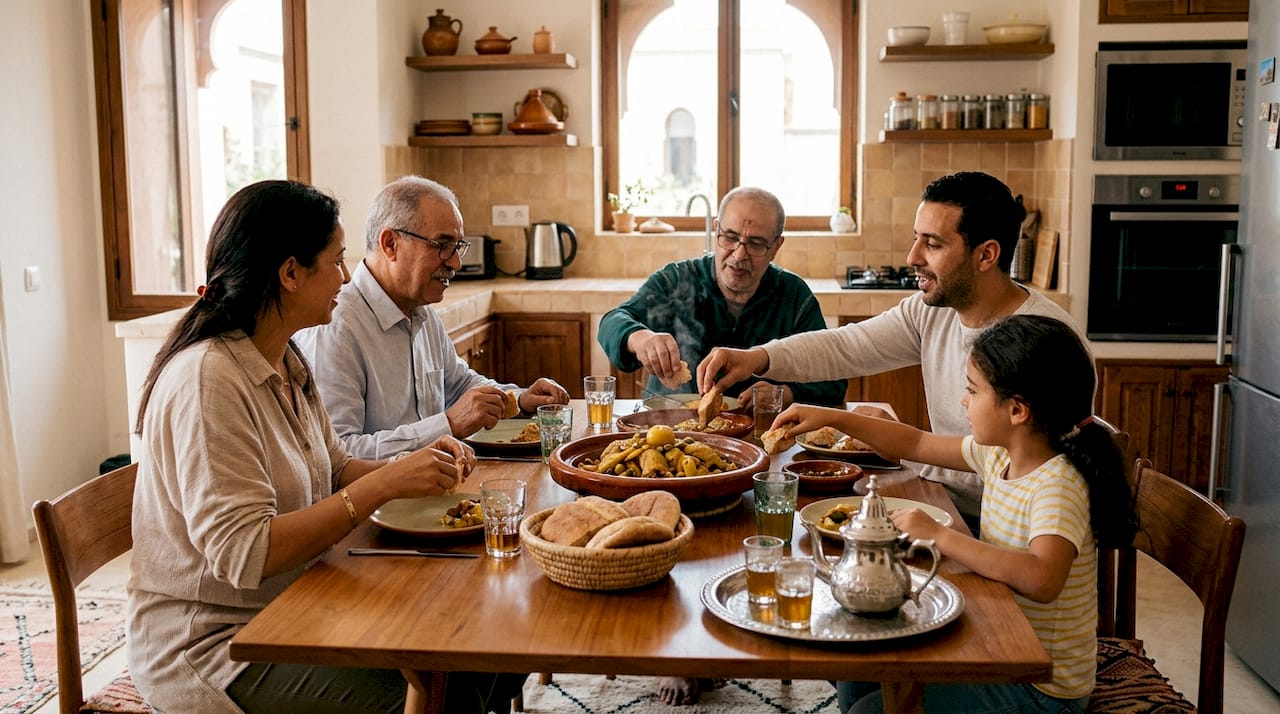
Moroccan meals are built around communal sharing. Food is served from large platters and eaten with bread and the right hand. Mint tea is poured three times, each pour with a different significance: the first like life, the second like love, the third like death. Hospitality is shown through abundance. Refusing food can feel like an insult, so pace yourself early in the meal.
“In Morocco, feeding a guest well is not just politeness. It is a moral obligation woven into the culture itself.”
Key dining customs every traveler should know:
- Meals often begin with a spread of cold salads, olives, and bread before the main course arrives
- The host typically serves guests first and will keep refilling your plate unless you signal you’re done
- Eating with your left hand is considered impolite in traditional settings
- Saying “bismillah” (in the name of God) before eating is a common and respected custom
- Dessert is usually fresh fruit or pastries, followed by mint tea
Family meals in Morocco are long, slow affairs. Lunch is the main meal of the day, often lasting two or more hours. Dinner tends to be lighter. During Ramadan, the entire rhythm shifts: harira, dates, and chebakia (sesame cookies) break the fast at sunset in a ritual called iftar.
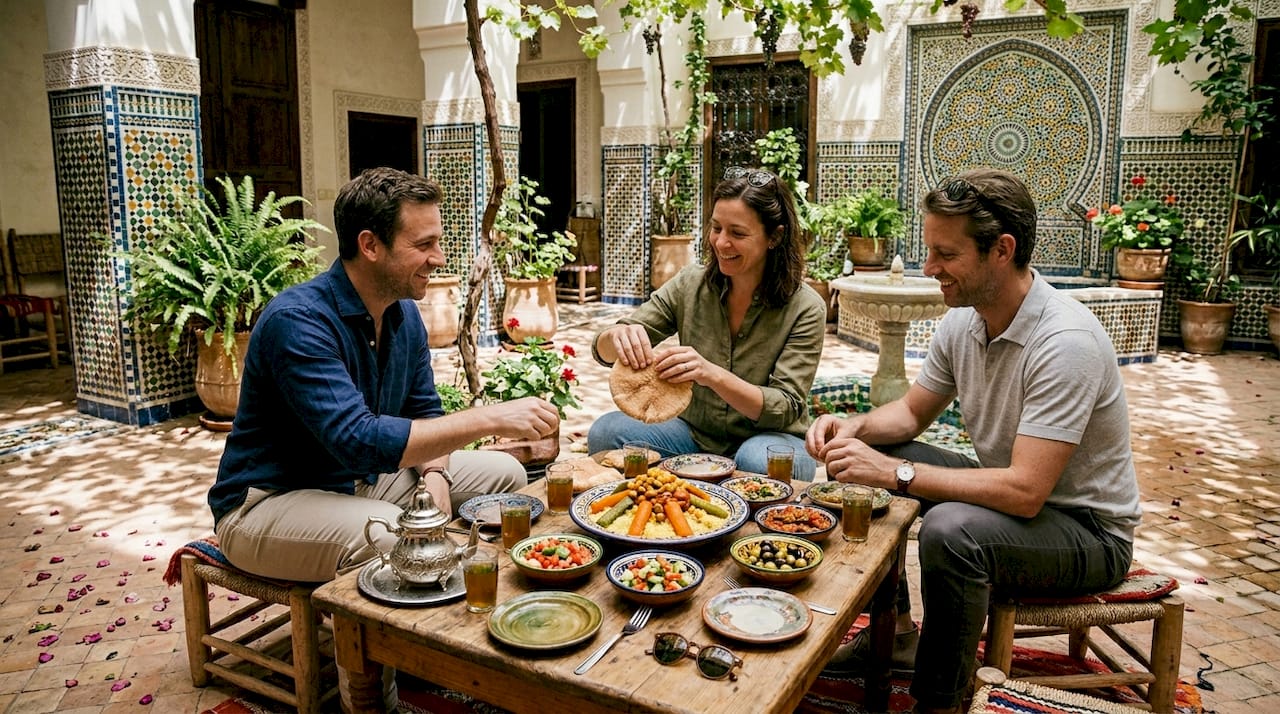
For travelers, the best way to experience these traditions is to seek out a home-cooked meal or a riad dining experience rather than a tourist restaurant. Guides who specialize in authentic travel in Morocco can arrange exactly this kind of access.
Where to enjoy authentic Moroccan cuisine on a luxury journey
So, where should you go to savor Morocco’s best flavors in style? The good news is that luxury and authenticity are not mutually exclusive in Morocco. In fact, the country’s finest dining experiences often happen in the most intimate, traditional settings.
Top places and experiences for food-focused luxury travelers:
- Historic riads in Fez and Marrakech — Properties like Le Vrai Traditionnel riad and Palais Narwama serve traditional multi-course meals in stunning courtyard settings. These aren’t just restaurants. They are living museums of Moroccan hospitality.
- Rooftop dining in Marrakech’s medina — Eating above the rooftops as the call to prayer echoes across the city is an experience that no five-star hotel restaurant elsewhere can replicate.
- Cooking classes inside riads — Many luxury riads offer hands-on cooking sessions where a local chef guides you through making tagine, couscous, or pastilla from scratch. You shop the souks, you cook, you eat.
- Desert camp feasts — In the Sahara near Merzouga, luxury camps serve traditional mechoui and couscous under a sky full of stars. The setting makes every dish taste extraordinary.
- Coastal seafood in Essaouira — Fresh-grilled fish, chermoula, and argan oil salads in a UNESCO-listed port city. For a full picture of luxury Essaouira experiences, the food scene is as compelling as the architecture.
Pro Tip: If you’re spending time in the capital, explore luxury stays in Rabat that include curated dining itineraries. Rabat’s food scene is underrated and far less crowded than Marrakech.
Cooking classes deserve special mention. They are not just activities. They are the single fastest way to understand Moroccan food at a deep level. You learn why preserved lemons are added at the end, not the beginning. You feel the difference between fresh and dried spices. You understand why the clay pot matters.
Why authentic Moroccan food is about more than just flavor
Here’s something most travel guides won’t tell you: the best Moroccan meal you’ll ever have probably won’t happen in a restaurant with a Michelin star or a rooftop view. It will happen in someone’s home, or in a riad courtyard with no menu, where the cook decided that morning what to make based on what was fresh.
There’s a reason clay pot cooking remains the gold standard for tagine even when pressure cookers and Dutch ovens produce technically acceptable results. The clay absorbs and releases moisture in a way that changes the flavor at a molecular level. Traditionalists aren’t being precious. They’re protecting something real.
The same logic applies to the entire Moroccan food experience. You can eat a technically correct tagine in a tourist restaurant and feel nothing. Or you can sit cross-legged on a zellige-tiled floor, share a platter with strangers, and feel like you’ve been let into something private and true. Luxury in Morocco isn’t about thread counts or tasting menus. It’s about access to the real thing.
We believe the travelers who get the most from Morocco are the ones willing to follow a local’s recommendation down an unmarked alley or accept a family’s invitation to lunch. Personalized Morocco tours are built around exactly this kind of access, connecting you with experiences that no amount of solo research can replicate.
Experience Moroccan cuisine on your next luxury trip
Ready to turn knowledge into an unforgettable culinary adventure? At Moroccotravel1.com, we design itineraries that put food at the center of your Morocco experience. From cooking classes in Fez riads to desert feast nights and coastal seafood tours, every meal is a destination in itself. Our Morocco grand tour takes you through the country’s most iconic food cities with local guides who know where the real flavors live. Browse our full range of Morocco tour packages and let us build a journey around what you love most: extraordinary food, genuine culture, and luxury done the Moroccan way.
Frequently asked questions
What is the most famous Moroccan dish?
The tagine is Morocco’s most iconic dish, slow-cooked in a conical clay pot that creates a self-basting environment for incredibly tender results. It’s served across the country in countless regional variations.
How is Moroccan food traditionally served?
Moroccan food is shared from communal platters and eaten with bread and the right hand, with mint tea poured ceremonially in three rounds throughout the meal.
Are there vegetarian dishes in Moroccan cuisine?
Absolutely. Vegetable tagines and couscous with legumes are staples of Moroccan cooking, and many traditional salads, soups, and pastries are naturally meat-free.
What spices are essential in Moroccan food?
The core spices are ras el hanout, cumin, saffron, ginger, cinnamon, and paprika, with preserved lemons and argan oil adding layers of flavor that no spice alone can provide.
Where can travelers get the most authentic Moroccan food experience?
Luxury riads like Le Vrai Traditionnel offer traditional multi-course meals and hands-on cooking classes that deliver both authenticity and comfort in equal measure.


