

TL;DR:
- Morocco’s diverse geography and layered culture offer travelers a rich, authentic experience beyond typical expectations.
- Visiting during spring or fall, understanding local customs, and exploring its imperial cities and landscapes enhance the trip significantly.
Few destinations blur the line between continents as spectacularly as Morocco in Africa. Sitting where the Atlantic meets the Mediterranean, where the Sahara gives way to snow-capped peaks, and where African, Arab, and European cultures have overlapped for centuries, Morocco defies easy description. Most travelers arrive expecting one thing and leave having experienced five. This guide cuts through the obvious and gets into what actually makes Morocco worth your time: the geography, the culture, the cities, the practical realities, and the unspoken rules that separate a good trip from a great one.
Table of Contents
- Key takeaways
- Morocco’s geography in Africa
- Moroccan culture and traditions
- Best places in Morocco to visit
- Practical travel tips for visiting Morocco
- Morocco’s place in Africa today
- My honest perspective on traveling in Morocco
- Plan your Morocco trip with Moroccotravel1
- FAQ
Key takeaways
| Point | Details |
|---|---|
| Geography shapes the experience | Morocco spans four distinct geographic zones, each offering radically different landscapes and climates. |
| Culture runs deep | Berber, Arab, and European traditions have merged over centuries to create Morocco’s living cultural identity. |
| Visit in spring or fall | Optimal travel seasons are spring and fall for the most comfortable outdoor exploration. |
| Currency prep is non-negotiable | The Moroccan Dirham cannot be obtained outside Morocco, so plan your cash exchange on arrival. |
| Tourism is booming | Morocco welcomed 19.8 million visitors in 2025, confirming its status as Africa’s top travel destination. |
Morocco’s geography in Africa
Morocco occupies the northwestern tip of Africa, bordered by the Atlantic Ocean to the west, the Mediterranean Sea to the north, Algeria to the east, and Mauritania to the south. Its northern coastline sits just 14 kilometers from Spain across the Strait of Gibraltar. That proximity to Europe is not just a geographic fact. It explains centuries of trade, conquest, cultural exchange, and the particular cosmopolitan texture you will notice the moment you land.
Four landscapes you will actually travel between
The country divides into four distinct geographic zones, and understanding them transforms how you plan your trip.
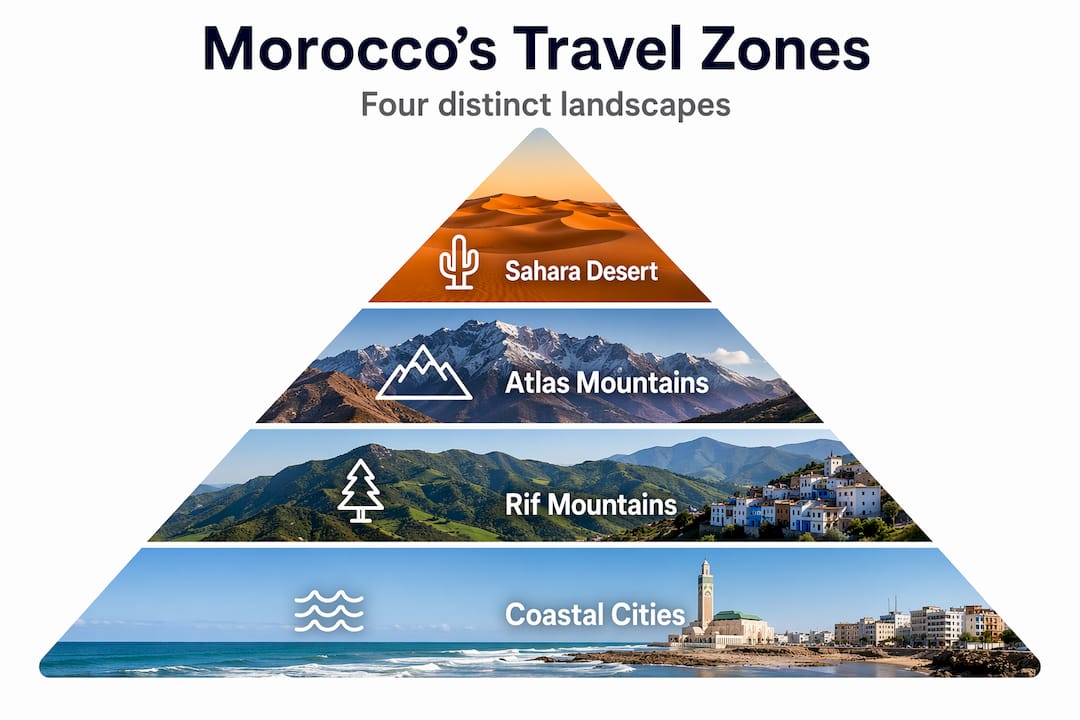
The Atlantic and Mediterranean coasts offer mild temperatures, surf-friendly beaches, and charming port towns like Essaouira and Tangier. The coast is where Morocco feels most accessible to first-time visitors.
The Atlas Mountains run diagonally across the country in three ranges: the High Atlas, Middle Atlas, and Anti-Atlas. The High Atlas contains Jbel Toubkal, the highest peak in North Africa at 4,167 meters. These mountains are the playground of serious trekkers and the home of Berber villages that have changed little in centuries.
The Sahara Desert begins south of the Atlas and stretches into Algeria. The dune fields of Erg Chebbi near Merzouga are what most travelers picture when they think of Morocco. The reality is even more dramatic in person.
The Rif Mountains in the north are a separate range, greener and more rugged than the Atlas, and considerably less visited. For landscape photography in Morocco, the Rif offers genuinely untouched scenery.
| Region | Climate | Best For |
|---|---|---|
| Atlantic Coast | Mild year-round | Beach towns, coastal culture |
| Atlas Mountains | Cold winters, cool summers | Trekking, Berber villages |
| Sahara Desert | Extreme heat in summer, cold nights year-round | Desert camps, dune photography |
| Rif Mountains | Temperate, rainy in winter | Off-the-beaten-path hiking |
The climate variation within a single country this size is remarkable. Marrakech can hit 40°C in July, while Ifrane in the Middle Atlas sits under snow. Temperature extremes are real across all seasons, so packing layers is a practical necessity even in summer.
Pro Tip: If you plan to visit both the Sahara and the Atlas Mountains in a single trip, schedule the desert portion first. By mid-morning the dunes radiate intense heat. Getting there in late fall or early spring, before temperatures peak, makes the difference between an adventure and an ordeal.
Moroccan culture and traditions
Morocco’s cultural identity is genuinely layered in a way that takes more than one visit to fully appreciate. The indigenous Berber people, known as Amazigh, have lived in this region for thousands of years. Arab influence arrived in the 7th century with Islam. Portuguese, Spanish, and French colonial presences added European threads to the fabric. The result is a culture that is neither simply African, nor Arab, nor Mediterranean. It is all three, woven together in ways that are still actively visible in daily life.
Medinas: cities inside cities
Every major Moroccan city has a medina, a historic old quarter that was once the entire city. These are not museums. People live, work, worship, and do business in them every day. The architectural philosophy is intentionally paradoxical: external modesty, internal richness. Plain exterior walls hide extraordinary riads with tiled courtyards, carved plasterwork, and cedar woodwork.
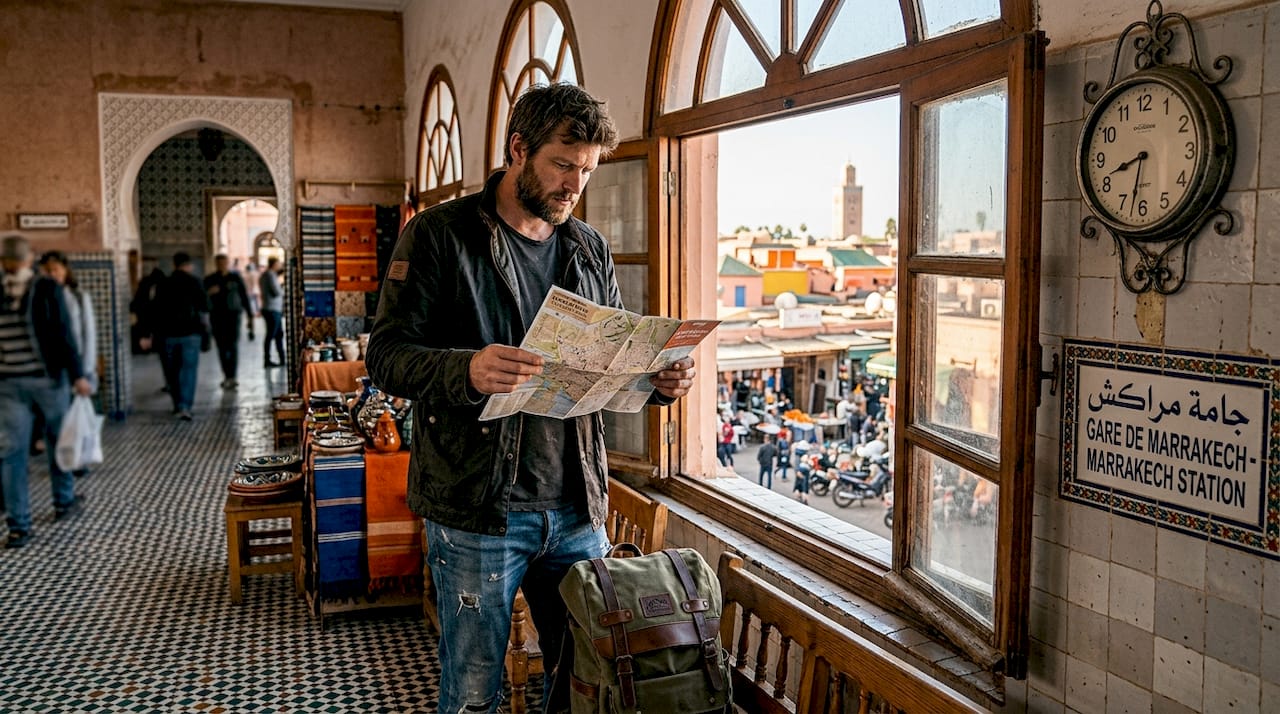
Walking into a medina without a general sense of its layout will get you turned around within ten minutes. That is not a complaint. It is half the experience.
Cultural practices worth knowing before you arrive
A few customs matter more than others for first-time visitors:
- Mint tea is not just a drink. Being offered tea is an act of hospitality, and accepting graciously matters more than whether you actually want a third glass.
- Languages spoken include Darija (Moroccan Arabic), Tamazight (Berber), French, and Spanish in the north. English is growing, particularly among younger Moroccans in cities.
- Dress codes are not enforced with signs, but they are communicated socially. Outside of beach resorts, covering shoulders and knees is standard practice and is genuinely appreciated by locals.
- Right-hand protocol: using the right hand for eating, passing items, and greeting is a fundamental social norm rooted in Islamic tradition.
Pro Tip: Learning five words of Darija before your trip changes how locals interact with you. “Shukran” (thank you), “la shukran” (no thank you), and “bslama” (goodbye) signal respect and immediately shift conversations from transactional to warm.
Photography is one area where Western habits can cause friction. Asking permission before photographing people, particularly in medinas, is not just polite. It is the expectation.
Best places in Morocco to visit
Morocco’s cities, landscapes, and historic sites could fill months of travel. But if your time is limited, knowing what each destination actually offers helps you choose rather than just tick boxes.
The four Imperial Cities
Morocco’s four imperial cities, the historical seats of its royal dynasties, each have a distinct personality worth considering:
- Marrakech is the most visited city in Morocco for good reason. The Djemaa el-Fna square is one of the world’s great public spectacles, shifting from a fruit-juice market in the morning to a carnival of storytellers, musicians, and food stalls by night. The medina here is the most accessible for first-time visitors.
- Fez is older and less polished than Marrakech. The Fez el-Bali medina is a UNESCO World Heritage Site and one of the world’s best-preserved medieval cities. The famous tanneries where leather has been dyed using the same methods for nine centuries are genuinely astonishing. Exploring Moroccan cities starts here for travelers who want depth over spectacle.
- Meknes is frequently overlooked, which makes it one of the more rewarding cities to spend time in. Built by Sultan Moulay Ismail in the 17th century, it has Imperial gates and sprawling granaries on a scale that rivals Versailles without the crowds.
- Rabat, the current capital, has a quieter, more modern feel. Its Kasbah des Oudaias overlooks the Atlantic, and the Hassan Tower is one of Morocco’s most iconic architectural landmarks.
Desert, kasbahs, and mountain villages
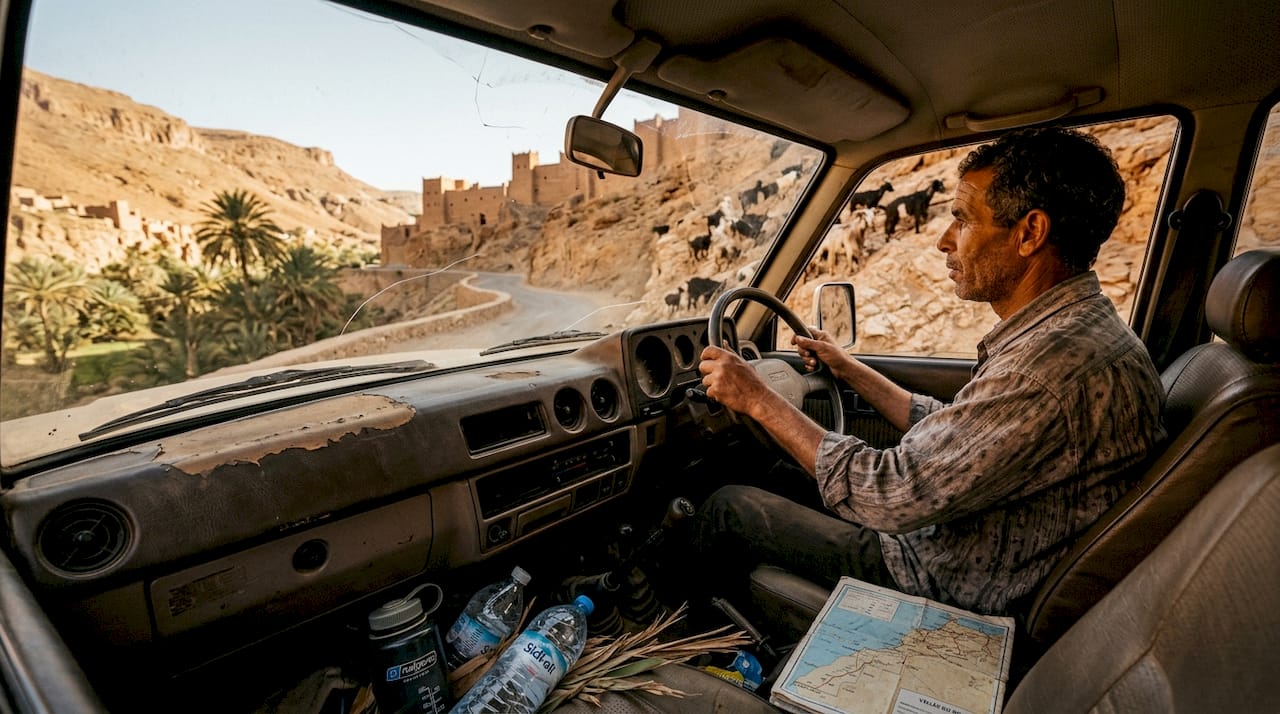
South of Marrakech, the landscape changes dramatically. The road through the Draa Valley and past the kasbah of Aït Benhaddou, a UNESCO-listed fortified village used as a backdrop in dozens of films, leads eventually to the Saharan dunes of Merzouga. Spending a night in a desert camp experience under stars with no light pollution is the kind of memory that does not fade.
For trekkers, the Atlas Mountains Morocco region offers routes ranging from day hikes near Imlil to multi-day ascents of Jbel Toubkal. Berber villages along these routes offer genuine homestay experiences rather than staged tourism.
| Destination | Best For | Crowd Level |
|---|---|---|
| Marrakech | First-time visitors, markets, nightlife | Very high |
| Fez | History, crafts, authentic medina life | Moderate |
| Merzouga | Desert camping, camel treks | Low to moderate |
| Essaouira | Coastal culture, wind sports | Low to moderate |
| Imlil / Atlas | Trekking, Berber villages | Low |
Essaouira deserves special mention. This Atlantic port city has a distinctly different energy from the imperial cities. It is windswept, artistic, and unhurried. The ramparts, the blue fishing boats, and the argan oil markets make it one of the most photogenic places in Morocco for landscape photography.
Practical travel tips for visiting Morocco
Getting the logistics right makes everything else more enjoyable. Morocco is not a difficult country to travel in, but it has specific quirks that trip up unprepared visitors.
When to go: Spring and fall are the sweet spots. March through May and September through November offer temperatures that work for city walking, desert trekking, and mountain hiking. Summer is brutal in the south. Winter is fine in coastal cities but genuinely cold in the mountains and at night in the desert.
Money management: Morocco operates a closed currency zone, meaning Moroccan Dirhams are not available outside the country. You will need to exchange cash at the airport, a bank, or a bureau de change upon arrival. ATMs in cities work reliably. Outside of major hotels and tourist restaurants, credit card acceptance is limited. Bring euros, dollars, or pounds as your exchange base currency.
Getting around:
- Trains connect the major northern cities (Rabat, Casablanca, Fez, Marrakech, and Tangier) reliably and affordably. Book in advance for peak travel periods.
- CTM buses reach cities trains do not, including desert gateways like Ouarzazate. Comfortable and punctual.
- Grands taxis are shared long-distance taxis that depart when full. Negotiating the price in advance is standard practice.
- Petit taxis operate within cities. Always confirm the meter is running or agree on a price first.
Health and food safety: Cuisine in Morocco is genuinely excellent, but street food hygiene varies. Opt for stalls with high turnover and visibly fresh ingredients. Stick to bottled or filtered water. The classic traveler mistake is eating enthusiastically on day one before your stomach has adjusted.
Dealing with touts: In tourist medinas, you may encounter locals who offer to guide you, often leading to a shop where they receive a commission. A polite but firm “la, shukran” works consistently. These interactions are socially common rather than malicious, but knowing the phrase removes the awkwardness entirely.
Pro Tip: Download an offline map of whichever medina you are visiting before you arrive. Google Maps and Maps. me both cover Moroccan medinas in reasonable detail. The streets are too narrow and irregular to rely on live GPS signal alone.
Morocco’s place today
Morocco stands apart from its North African neighbors in ways that matter directly to travelers. Political stability, growing infrastructure, and active international diplomacy have made it one of the continent’s most consistent and welcoming destinations for the past two decades.
The numbers reflect this. Tourism reached 19.8 million visitors in 2025, generating $14.7 billion in revenue. Revenue growth actually outpaced visitor growth, meaning travelers are spending more and staying longer. That signals quality-driven tourism, not just volume.
Morocco’s geographic position is a genuine strategic asset. The Tanger Med port is the largest container port in Africa and the Mediterranean, a symbol of how seriously Morocco takes its role as a trade and logistics hub between Europe and Africa.
| Indicator | Morocco | Regional Context |
|---|---|---|
| Political stability | High | Among the most stable in Africa |
| Tourism infrastructure | Developed | Airports, trains, hotels across categories |
| Internet and mobile access | Good in cities | Growing in rural areas |
| International flight connections | Extensive | Direct routes from Europe, Gulf, Americas |
“Strategic investments in logistics, digital technology, and tourism infrastructure make Morocco a stable and attractive travel destination in Africa.”
For travelers, this translates practically. You will find functioning airports, a mix of budget and luxury accommodation, improving road infrastructure, and a tourism sector that has learned to serve international visitors without losing its authenticity. That balance is rarer than it sounds.
My honest perspective on traveling in Morocco
I have worked with travelers heading to Morocco long enough to know what surprises them. The most consistent one is how much the country resists being summarized.
People arrive expecting the postcard version: the red city, the blue city, the golden dunes. What they actually encounter is a country where the cultural depth lives in the medinas, not in the landmarks. The medina in Fez is not a backdrop for photographs. It is a fully functioning ancient city where you are the temporary visitor, not the main event.
What I have found is that the travelers who get the most out of Morocco are the ones who slow down. They sit in a cafe for an hour instead of rushing to the next attraction. They accept the tea. They get lost, figure out where they are, and get lost again. The country rewards patience in a way that is genuinely different from faster-paced tourism destinations.
The Atlas Mountains section of any Morocco trip also tends to be underestimated. Travelers book the cities and the desert and treat the mountains as a side trip. In my experience, the opposite approach works better. Spend real time in the Atlas. The trekking options range from gentle village walks to multi-day summit expeditions, and the Berber communities you encounter along the way offer a version of Morocco that most visitors never see.
Morocco is not the easiest country to navigate independently on a first visit. But it is one of the most rewarding to return to, because each visit surfaces something you missed the last time.
— Moroccotravel1.com
Plan your Morocco trip with MoroccoTravel1.
If reading this has moved Morocco from a vague idea to a serious plan, the next step is figuring out what kind of trip actually fits your time and interests. Moroccotravel1 specializes in private and custom Morocco tours designed around how you actually want to travel, not just what is easiest to package. Popular options include the 14-day Morocco Grand Tour, which covers the Imperial Cities, Atlas Mountains, and Sahara in a single well-paced itinerary, as well as shorter family and luxury packages for travelers with different priorities. Every tour includes local expert guides, arranged transportation, and pre-vetted accommodations from riads in Fez to desert camps in Merzouga. Browse the full range of Morocco travel packages to find the right fit for your travel style.
FAQ
Where exactly is Morocco located in Africa?
Morocco sits at the northwestern tip of Africa, bordered by the Atlantic Ocean, the Mediterranean Sea, Algeria, and Mauritania. Its northern coast is just 14 kilometers from Spain.
What is the best time of year to visit Morocco?
Spring (March to May) and fall (September to November) offer the most comfortable conditions for travel across Morocco’s diverse regions, from cities to desert and mountains.
Can you get Moroccan currency before you arrive?
No. The Moroccan Dirham is a closed currency and cannot be exchanged outside Morocco. Plan to exchange cash at the airport or use ATMs on arrival.
What are the must-visit cities in Morocco?
Marrakech, Fez, Meknes, and Rabat make up Morocco’s four imperial cities. Fez is widely considered the richest in history, while Marrakech is the most accessible for first-time visitors.
Is Morocco safe for independent travelers?
Morocco is one of the most stable and visitor-friendly countries in Africa, with developed tourism infrastructure. Petty solicitation in medinas is common but manageable with basic awareness and a few key phrases in Darija.


