


- Morocco’s desert features iconic dune fields like Erg Chebbi and Erg Chigaga, offering contrasting experiences from accessible to remote.
- Travelers should plan carefully, choosing their destination based on experience level and desired solitude, with spring and autumn being ideal visiting seasons.
- Engaging with local Berber and Sahrawi cultures enriches the desert journey beyond sightseeing alone.
Morocco Desert is defined by two iconic Sahara dune fields: Erg Chebbi near Merzouga and Erg Chigaga near M’Hamid, each offering a fundamentally different experience of the Moroccan Sahara. These are not the only desert landscapes in the country. The rocky plateau of Agafay sits just 40 kilometers from Marrakech, and the Atlantic-edged deserts of Western Sahara around Dakhla are drawing a new wave of adventure travelers. Whether you want the cinematic orange dunes of Merzouga, the raw solitude of M’Hamid, or a quick sunset escape near the city, Morocco delivers a desert experience calibrated to your ambition and available time.
What are the distinctive desert landscapes in Morocco?
Erg Chebbi and Erg Chigaga are the two primary dune fields travelers encounter when planning a Moroccan desert trip, and they are genuinely different places. Choosing between them shapes your entire itinerary, budget, and the kind of memory you bring home.
Erg Chebbi: the iconic dune sea near Merzouga
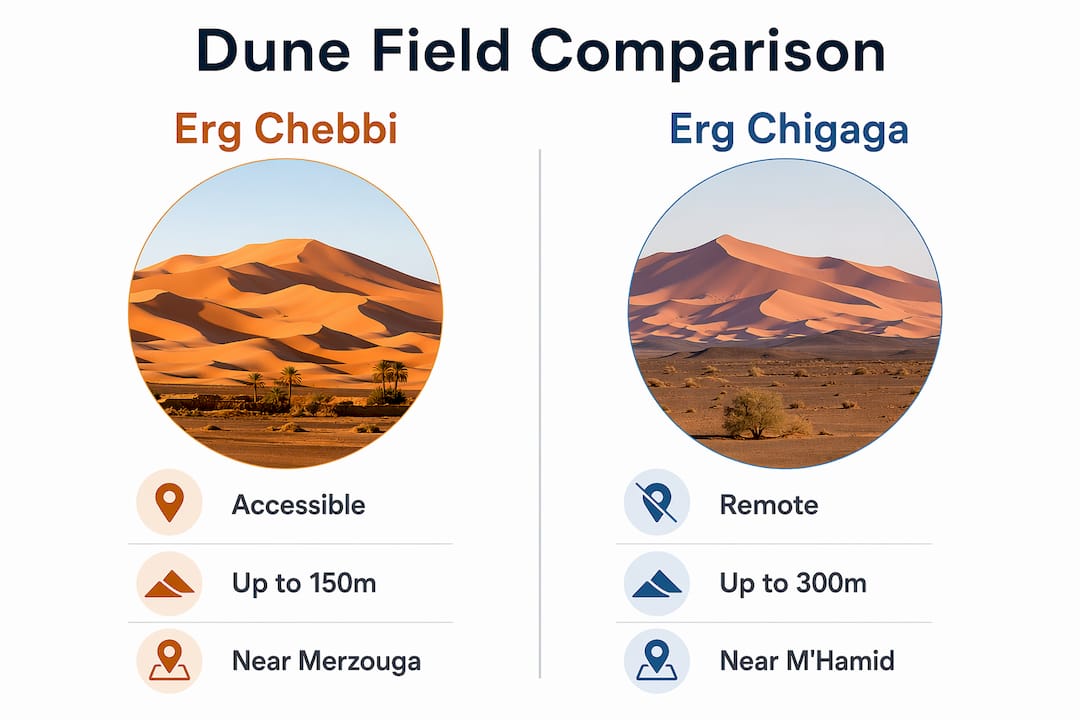
Erg Chebbi is Morocco’s most photographed desert landscape, and the scale justifies the reputation. The dunes reach 150 meters in height, creating a wall of amber sand that rises abruptly from flat stony plains. This is the most accessible of Morocco’s dune fields, with paved roads running directly to Merzouga village and a well-developed infrastructure of desert camps, guesthouses, and tour operators. The accessibility does come with a trade-off: during peak season, the dune edges closest to town can feel crowded, particularly at sunrise. Walking 20 minutes deeper into the dunes solves this immediately.
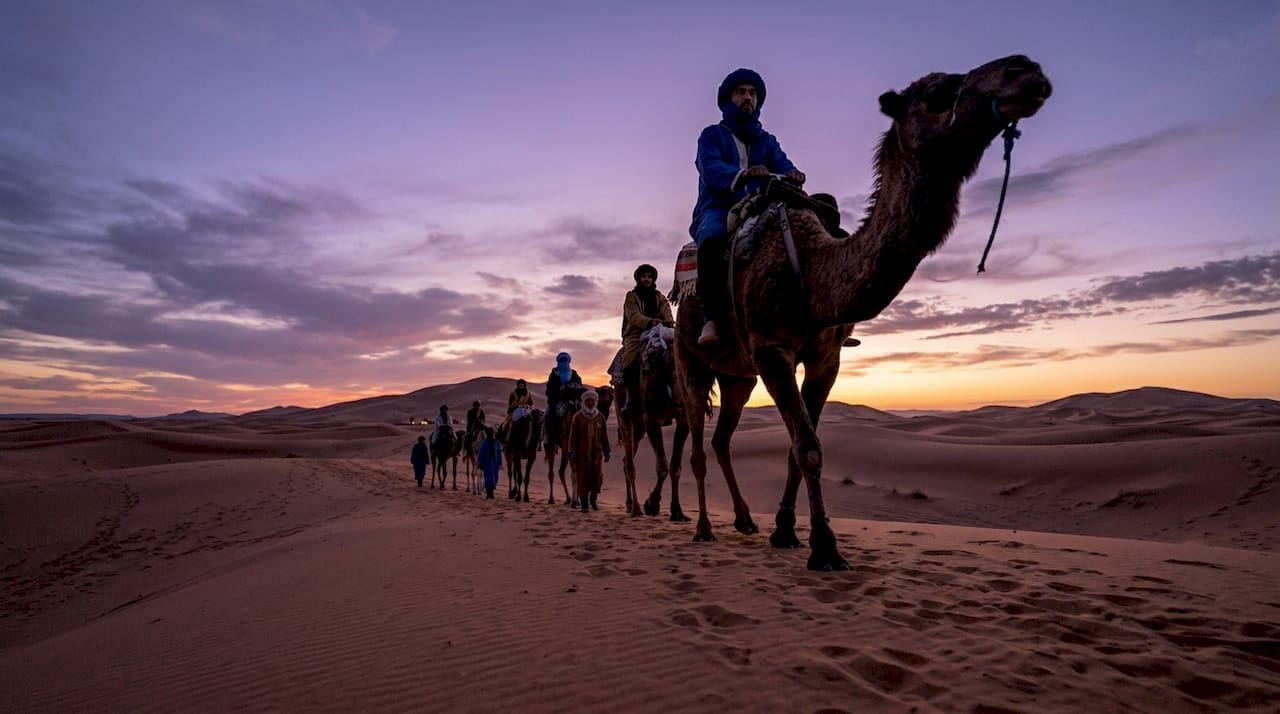
Erg Chigaga: wild dunes for serious desert travelers
Erg Chigaga, located near M’Hamid el Ghizlane, requires a 50-kilometer drive across open piste (unpaved desert track) that demands a 4×4 vehicle and a knowledgeable guide. The reward is a dune field that feels genuinely remote. Visitor numbers are a fraction of Erg Chebbi’s, the camps are fewer and more spread out, and the silence at night is absolute. This is the right choice for travelers who want the Sahara to feel like a discovery rather than a destination.
Comparing Morocco’s main dune fields
| Feature | Erg Chebbi (Merzouga) | Erg Chigaga (M’Hamid) |
|---|---|---|
| Dune height | Up to 150 meters | Up to 100 meters |
| Access | Paved road, standard vehicle | 50 km piste, 4×4 required |
| Crowd level | Moderate to high in peak season | Low year-round |
| Camp options | Abundant, varied quality | Fewer, generally higher quality |
| Best for | First-time visitors, families | Experienced travelers, solitude seekers |
Alternative desert landscapes worth knowing
Agafay’s rocky terrain near Marrakech is not part of the Sahara and has no sand dunes, but it delivers a compelling desert-colored silence that many travelers underestimate. It works perfectly as a short escape from the city without the 560-kilometer drive to Merzouga. In Western Sahara, the coastal city of Dakhla is emerging as a kite-surfing and eco-lodge hub, combining Atlantic Ocean access with genuine desert terrain and Sahrawi cultural encounters.
Pro Tip: If you only have one night for dunes, choose Erg Chebbi. If you have three or more nights and want the Sahara to feel untouched, invest the extra travel time to reach Erg Chigaga.
What unique cultural experiences can travelers have in Morocco’s desert?
The Moroccan desert is not just a landscape. It is home to Berber and Sahrawi communities whose traditions, music, and crafts have shaped the region for centuries. Travelers who engage with this culture rather than bypassing it for the next photo opportunity leave with a far richer understanding of what the desert actually means.
Berber guides in the Merzouga and M’Hamid regions speak Tamazight as their first language and carry knowledge of desert navigation, medicinal plants, and star patterns that no guidebook replicates. Spending an evening in a traditional camp with a Berber guide who plays the guembri (a three-stringed bass lute) and explains the significance of Tuareg indigo clothing is an experience that reframes the entire trip.
Key cultural experiences to prioritize:
- Berber music nights at desert camps: Traditional percussion and string instruments performed around a fire; most quality camps include this as standard.
- Sahrawi market visits in Dakhla and M’Hamid: Local artisans sell hand-woven rugs, silver jewelry, and leather goods at prices that reflect genuine craft rather than tourist markup.
- Gnawa music encounters in Merzouga: The Gnawa tradition, rooted in sub-Saharan African spiritual practice, is performed by local musicians and offers a distinct sound from Berber folk music.
- Cooking with local families: Some operators in Merzouga arrange home visits where travelers learn to prepare tagine and Moroccan mint tea with local families. Moroccotravel1 includes this in several of its cultural desert itineraries.
- Imilchil Marriage Festival: Held annually in the High Atlas near the desert edge, this Berber festival draws thousands and offers a rare window into traditional community life.
Western Sahara’s Sahrawi culture adds another layer entirely. The Sahrawi people have a distinct identity from Morocco’s northern Berber communities, with their own dialect, poetry traditions, and nomadic heritage. Dakhla’s cultural festivals now attract international visitors specifically for this reason.
Pro Tip: Ask your guide to teach you a few phrases in Tamazight before arriving at camp. The response from local hosts is immediate and warm. It signals respect and opens conversations that English alone never would.
How to plan and book a successful Morocco desert adventure
Planning a desert trip in Morocco requires more decisions than most travelers expect. The logistics, timing, and booking choices you make before departure determine whether you get a transformative experience or an overpriced, rushed one.
Best time to visit Morocco’s desert
Spring (March to May) and autumn (September to November) are the ideal windows for visiting the Moroccan Sahara. Daytime temperatures range from 25 to 35°C during these seasons, with cool nights that make sleeping in a desert camp genuinely comfortable. Winter visits are possible and often strikingly beautiful, but nighttime temperatures can drop to 5°C, so packing a proper sleeping bag is non-negotiable. Summer, particularly July and August, pushes daytime heat above 40°C in the dunes and makes extended outdoor activity genuinely dangerous.
Choosing between private and group tours
Private tours consistently outperform group packages for desert experiences in Morocco. Group-operated tours frequently rush itineraries to accommodate multiple stops, leaving travelers with 45 minutes at the dunes before being loaded back onto a bus. A private arrangement gives you control over pace, camp selection, and how long you actually spend in the sand. The price difference is real but smaller than most travelers assume, particularly for groups of two or more.
Step-by-step booking process
- Decide your dune destination first. Erg Chebbi suits first-time visitors and shorter trips. Erg Chigaga suits those with more time and a higher tolerance for remote travel.
- Book your desert camp directly or through a vetted agency. Avoid low-quality arrangements by reading recent reviews on TripAdvisor and Google and by confirming what is included (meals, camel trek, music, bedding) before paying.
- Plan your route from your entry city. The drive from Marrakech to Merzouga covers approximately 560 kilometers and takes 9 to 11 hours with stops. Spreading this over two days with overnight stops in Aït Benhaddou or the Dades Valley is strongly advised. From Fes, the route through Midelt and Errachidia is shorter and equally scenic.
- Arrange transportation in advance. Shared CTM buses reach Merzouga but offer no flexibility. A private driver or rental 4×4 is the standard choice for travelers who want to stop at Todra Gorge, the Draa Valley, or other landmarks along the way.
- Pack for temperature extremes. Sunscreen, a wide-brim hat, and UV-protective clothing for the day. A fleece or down jacket, warm socks, and a sleeping bag liner for the night.
What to pack for desert conditions
- Lightweight, breathable long-sleeve shirts (protects against sun and sand)
- Sturdy closed-toe shoes or hiking sandals
- A headscarf or shemagh for sandstorms
- Electrolyte tablets and a 2-liter water bottle
- A headlamp for navigating camp at night
- Cash in Moroccan dirhams (ATMs do not exist in the dunes)
What activities define the Morocco desert adventure?
The Moroccan desert offers far more than a camel ride and a photo at sunset, though both remain genuinely worth doing. The activity range now spans from meditative stargazing to high-adrenaline sandboarding and coastal kite surfing.
Camel treks at sunrise and sunset remain the signature experience, and for good reason. A one to two-hour ride through the dunes at golden hour produces the kind of image that no filter improves. Most quality desert camps include the camel trek as part of the overnight package, with the ride in at sunset and out at sunrise.
Key activities by category:
- Sandboarding: Available at Erg Chebbi through most camp operators; boards are rented on-site, and the learning curve is short. The dune faces near Merzouga are steep enough to be genuinely fast.
- 4×4 desert tours: The only way to reach Erg Chigaga and the deeper desert zones around M’Hamid. These tours often include stops at fossil beds, ancient kasbahs, and nomad encampments.
- Stargazing: The Moroccan Sahara sits far from major light pollution zones. The Milky Way is visible to the naked eye on clear nights between October and March. Several luxury camps in Erg Chebbi now offer telescope sessions with guides who explain Berber star navigation.
- Eco-tourism in Western Sahara: Solar-powered eco-lodges near Dakhla combine desert camping with Atlantic coastal access. Kite surfing on the Dakhla lagoon is world-class, with consistent wind conditions rated among the best in Africa.
- Wildlife spotting: The Sahara around Merzouga supports fennec foxes, desert monitor lizards, and over 160 bird species, including the rare desert sparrow. Early morning walks before the heat builds are the best window for sightings.
| Activity | Best location | Duration | Difficulty |
|---|---|---|---|
| Camel trekking | Erg Chebbi, Erg Chigaga | 1 to 2 hours | Easy |
| Sandboarding | Erg Chebbi | 1 to 3 hours | Easy to moderate |
| 4×4 desert tour | Erg Chigaga, M’Hamid | Full day | Moderate |
| Stargazing | Both dune fields | Evening | Easy |
| Kite surfing | Dakhla lagoon | Half to full day | Moderate to advanced |
For travelers interested in luxury desert experiences, several camps at Erg Chebbi now offer private tented suites with en-suite bathrooms, heated floors, and gourmet Moroccan dinners prepared by resident chefs.
Key takeaways
The Moroccan desert rewards travelers who plan carefully, choose the right dune field for their experience level, and engage with local Berber and Sahrawi culture rather than treating it as scenery.
| Point | Details |
|---|---|
| Choose your dune field deliberately | Erg Chebbi suits first-timers; Erg Chigaga suits those seeking solitude and willing to travel further. |
| Visit in spring or autumn | March to May and September to November offer the most comfortable temperatures for desert activities. |
| Book private, not group tours | Private arrangements deliver more time at the dunes and better camp quality than rushed group packages. |
| Agafay is not the Sahara | Agafay offers a desert-like atmosphere near Marrakech but has no sand dunes; set expectations accordingly. |
| Western Sahara is worth adding | Dakhla combines genuine desert terrain, Sahrawi culture, and world-class kite surfing in one destination. |
Why I always tell travelers to slow down in the desert
Most travelers I speak with allocate one night to the Moroccan desert and consider it done. That single night is better than nothing, but it misses the point almost entirely. The desert reveals itself slowly. The light at 5 a.m., before the camel trek, when the dunes shift from gray to gold to orange in about 20 minutes, is something you only witness if you are already awake and outside. That does not happen on a rushed itinerary.
My honest recommendation is this: if you are choosing between Erg Chebbi and Erg Chigaga, choose based on who you are as a traveler, not which one appears more in travel magazines. Erg Chebbi is spectacular and accessible. Erg Chigaga is quieter, wilder, and demands more of you. Both are worth it. Neither is better in absolute terms.
The cultural layer is where most travelers leave value on the table. Spending an evening with a Berber guide who grew up in Merzouga and knows every dune by name is a different experience from following a tour group to a designated photo spot. The Morocco desert tours that Moroccotravel1 designs are built around exactly this kind of access because I have seen firsthand how much it changes the trip.
One more thing: avoid the temptation to combine too many destinations in a single itinerary. Marrakech, Fes, Chefchaouen, and the Sahara in seven days sounds ambitious. It is exhausting. The desert deserves at least two nights, ideally three, and the drive there is part of the experience if you stop at Aït Benhaddou and Todra Gorge rather than racing through.
— MoroccoTravel1
Plan your Morocco desert tour with Moroccotravel1
Moroccotravel1 designs private and custom Morocco desert tours that cover Erg Chebbi, Erg Chigaga, and emerging destinations like Dakhla, with itineraries built around your pace and interests rather than a fixed group schedule. Every package includes vetted desert camps, local expert guides, and flexible routing from Marrakech or Fes. For travelers who want the full picture, the 14-day Morocco grand tour combines the Sahara with imperial cities, Atlas mountain trekking, and coastal stops. Couples, families, and solo travelers each get a version of the desert that fits. Browse private Morocco tour packages and start building your itinerary today.
FAQ
What is the best time to visit the Morocco desert?
Spring (March to May) and autumn (September to November) are the best seasons, with daytime temperatures between 25 and 35°C and comfortable nights. Summer heat regularly exceeds 40°C and makes extended outdoor activity in the dunes unsafe.
How do I get from Marrakech to the Sahara desert?
The drive from Marrakech to Merzouga covers approximately 560 kilometers and takes 9 to 11 hours with stops. Spreading the journey over two days with an overnight in Aït Benhaddou or the Dades Valley is the standard approach for most travelers.
What is the difference between Erg Chebbi and Erg Chigaga?
Erg Chebbi near Merzouga is accessible by paved road, features dunes up to 150 meters high, and suits first-time visitors. Erg Chigaga, near M’Hamid, requires a 4×4 vehicle across 50 kilometers of piste and offers a wilder, far less crowded experience.
Is Agafay the same as the Sahara Desert?
No. Agafay is a rocky plateau near Marrakech that offers a desert-like atmosphere but has no sand dunes and is not part of the Sahara. It works well for a short desert-style escape without the long drive to the real dune fields.
What should I pack for a desert camping trip in Morocco?
Pack lightweight long-sleeve clothing for sun protection, a warm jacket and sleeping bag liner for cold nights, a headscarf for sandstorms, a headlamp, electrolyte tablets, and cash in Moroccan dirhams. ATMs are not available in or near the dunes.


