

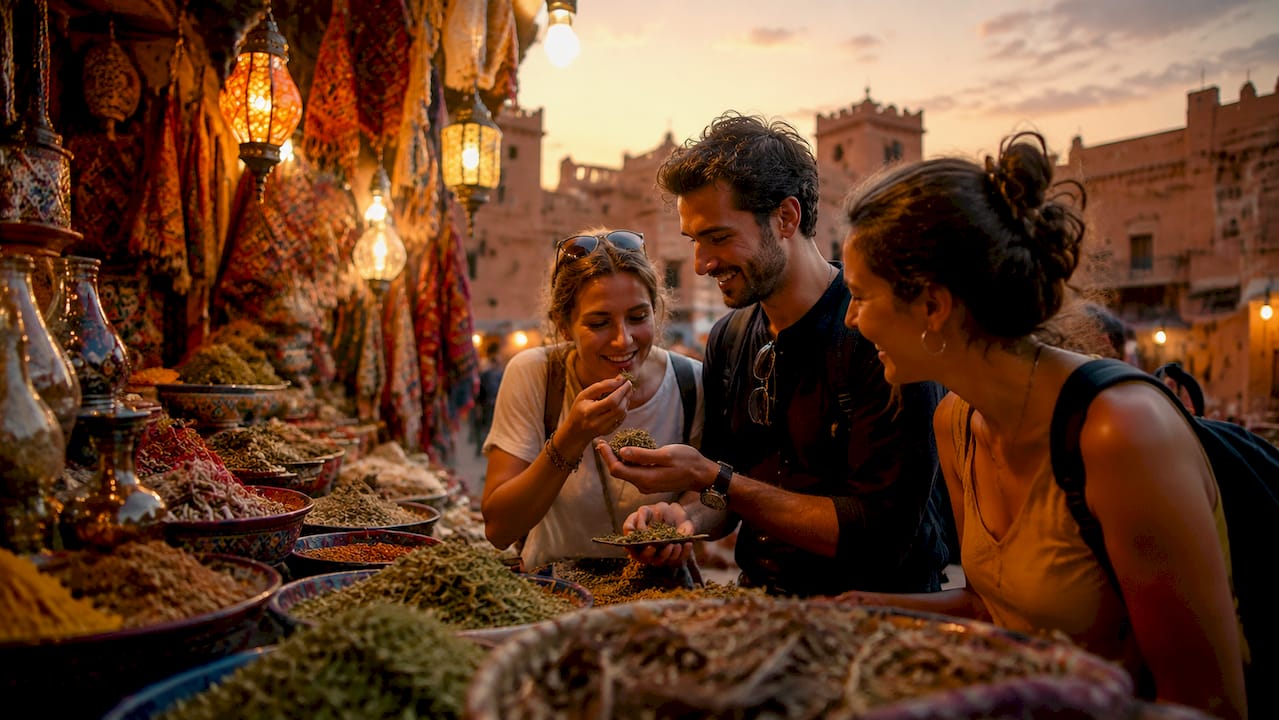
- Ouarzazate is a Moroccan city famous for its film studios, UNESCO sites, and proximity to the Sahara Desert.
- Visitors should spend more than a quick stop to experience its earthen architecture, historic kasbahs, and nearby natural oases.
- The best time to visit is during spring or autumn, and exploring early in the morning enhances the experience at key sites like Aït Benhaddou.
Ouarzazate is a Moroccan city defined by earthen kasbahs, international film production, and direct access to the Sahara Desert. Sitting at 1,151 meters elevation, it earns its nickname “the door to the desert” through geography and culture alike. Few cities in North Africa combine UNESCO World Heritage sites, working film studios, and Berber oasis villages within a single day’s reach. This guide covers everything you need to plan a real visit: key attractions, practical logistics, the best day trips, and why the city rewards travelers who treat it as a destination rather than a layover.
What are the main attractions in Ouarzazate?
Ouarzazate delivers cultural depth that surprises most first-time visitors. The city blends a relaxed urban atmosphere with consistent traditional architecture in warm terracotta tones, a contrast to the pace and density of Marrakech or Fes. That calm makes it easier to absorb what you are actually looking at.
Kasbah Taourirt
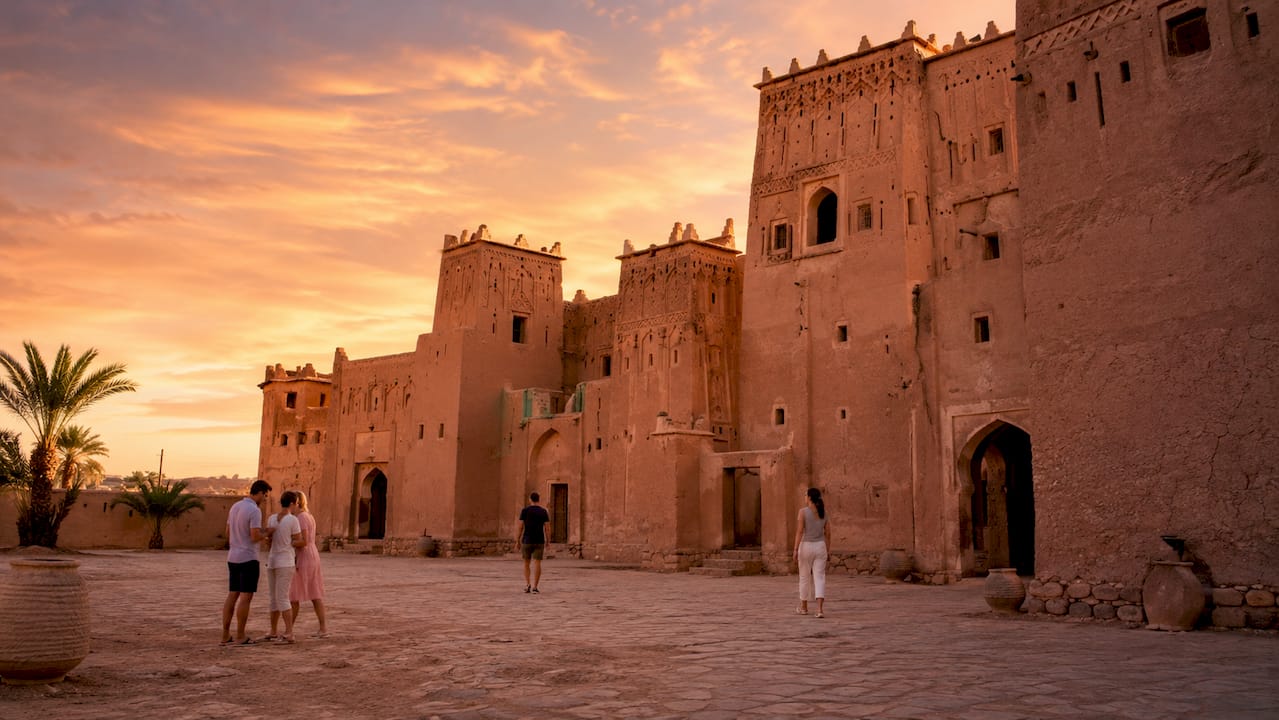
Kasbah Taourirt is the city’s most important historic structure. Built from rammed earth, it served as the power residence of the Glaoui family and functioned simultaneously as a political center, economic hub, and defensive fortress. The earthen construction is not just aesthetic. The thick walls regulate interior temperature in a climate that swings from scorching summer heat to cold winter nights. Walking through its narrow corridors and tiered rooms gives you a direct read on how pre-modern Moroccan society organized power and daily life under one roof.
Film studios: Atlas and CLA
Atlas Studios and CLA are among the world’s largest film production facilities and rank as major tourist draws in their own right. Tours take you through standing sets, prop warehouses, and backlot constructions used in productions ranging from Gladiator to Game of Thrones. The scale is genuinely impressive. Entire Egyptian temples, Roman coliseums, and Tibetan monasteries have been built and rebuilt on these lots. Visiting both studios in a single morning is realistic and gives you a clear picture of why the region attracts major international productions year after year.
Local markets and the Jewish quarter
The medina and local souks around the central avenue offer silver jewelry, woven textiles, and spices at prices well below what you find in Marrakech. The old Jewish quarter, known locally as the Mellah, reflects the multicultural history of southern Morocco before mid-20th-century emigration reshaped the region’s demographics. Spending an hour walking it tells you more about the city’s layered identity than any museum exhibit.
Pro Tip: Visit Kasbah Taourirt in the late afternoon when the low sun hits the earthen walls directly. The terracotta color deepens significantly, and the light makes the architectural detail far more visible than at midday.
How to explore the area around Ouarzazate?
The city’s real power as a base comes from what surrounds it. Within a 90-minute drive, you reach a UNESCO World Heritage site, one of Morocco’s largest palm oases, a hidden desert oasis, and the start of the Draa Valley. No other city in Morocco concentrates this density of natural and cultural excursions in such a compact radius.
Aït Benhaddou
Aït Benhaddou is a UNESCO World Heritage site recognized for its fortified collective housing system, called a ksar. The entire village is built from sun-dried earth and sits on a hillside above a seasonal river crossing. Climbing to the top granary tower takes about 20 minutes and delivers a panoramic view of the Ounila Valley that explains immediately why filmmakers keep returning here.
- Arrive before 9 a.m. Large tour buses from Marrakech typically arrive between 10 a.m. and 11 a.m. Getting there early means you walk the upper levels in near silence.
- Cross the river on foot. Stepping stones cross the shallow river bed. This approach on foot, rather than by bridge, gives you the full frontal view of the ksar that photographs rarely capture.
- Hire a local guide at the entrance. Guides licensed at the site know which families still live inside the walls and can take you into occupied homes, a detail most independent visitors miss entirely.
- Allow at least two hours. Rushing through in 45 minutes is the single most common mistake. The upper sections of the ksar are where the architectural complexity concentrates.
- Combine with a lunch stop in the village below. Several small restaurants serve tagine with a direct view of the ksar. The combination of a slow lunch and a morning visit makes for a complete half-day excursion.
Pro Tip: Visiting Aït Benhaddou early in the morning avoids large tour groups entirely. The difference in experience between an 8 a.m. arrival and a 10:30 a.m. arrival is dramatic.
Skoura Palm Grove and Fint Oasis
Skoura Palm Grove is one of the largest oases near the city, supporting small Berber villages and traditional agriculture within a dense palm canopy. The contrast with the surrounding rocky desert is immediate and striking. Fint Oasis sits closer to the city and offers a quieter alternative. A narrow road descends into a green valley that feels entirely disconnected from the arid plateau above it. Both sites work well as afternoon additions to a morning visit to Aït Benhaddou.
Draa Valley
The Draa Valley stretches south from the city toward Zagora and the pre-Saharan dunes. The drive follows a river valley lined with date palms, fortified villages, and kasbahs in varying states of preservation. For luxury desert tours that include overnight camps in the dunes, the Draa Valley route is the standard approach. Renting a car gives you the most flexibility. A private driver hired through a local agency costs roughly the same as a rental for a day trip and removes the navigation burden entirely.
What practical travel tips should visitors know?
Getting the logistics right makes a significant difference in how much you enjoy the city. The climate alone shapes every decision from what to pack to which months to book.
Best time to visit
Spring and autumn are the best seasons to visit. Temperatures in March, April, October, and November stay in a comfortable range for walking and outdoor excursions. Summer temperatures regularly exceed 40°C, which makes midday activity genuinely difficult. Winter nights drop to near 3–5°C, which catches visitors off guard if they pack only for desert heat. A light jacket and layers are necessary even for a spring or autumn trip.
Getting there
CTM and Supratours buses run reliable daily routes between Marrakech and Ouarzazate. Tickets cost around 100 Moroccan dirhams, approximately $10, and can be purchased online or at the bus station. The journey takes roughly 4 hours over the Tizi n’Tichka mountain pass. The pass itself is one of the most scenic road crossings in Morocco, so a window seat on the right side heading south is worth requesting. Shared taxis also cover this route and run faster but offer less comfort.
Accommodation options
- Riads and guesthouses: Several authentic riads operate within and near the medina. They offer courtyard architecture, home-cooked breakfasts, and direct access to local knowledge from the owners. For guidance on authentic riad stays across Morocco, options near Ouarzazate are well represented.
- Desert camps: For travelers extending their trip toward the dunes, luxury desert camps in the Draa Valley region offer a genuine overnight experience under open sky. Moroccotravel1 covers luxury desert experiences in detail for this region.
- Modern hotels: Several mid-range and upscale hotels operate along the main avenue. They offer reliable air conditioning and parking, which matters if you are renting a car for day trips.
Cultural etiquette
Dress modestly when visiting kasbahs, markets, and villages. Shoulders and knees covered is the standard expectation. Photographing local people requires asking first. Accepting tea when offered in a shop or home is a social courtesy, not an obligation to buy. Learning five words of Moroccan Arabic or Tamazight, the Berber language, earns a disproportionate amount of goodwill from locals.
Pro Tip: Carry small denomination dirhams at all times. Many market stalls, parking attendants, and site entry fees operate cash only, and change is rarely available for large bills.
How does Ouarzazate’s film industry shape its identity?
The city’s reputation as the “Hollywood of Africa” is not marketing language. It reflects a real concentration of production infrastructure, skilled local crews, and a landscape that doubles convincingly for ancient Egypt, the Middle East, and Central Asia.
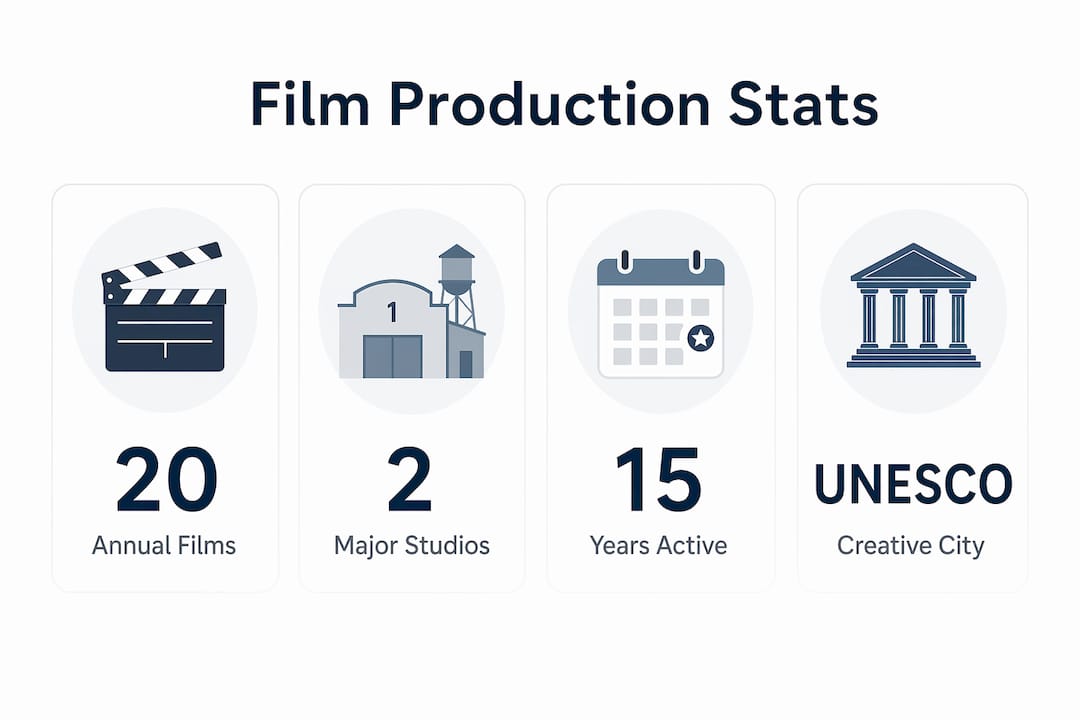
Ouarzazate produces 15 to 20 films annually, making it one of the most active film production hubs on the African continent. That volume supports a local economy of set builders, costume makers, drivers, and catering crews. The film sector actively promotes sustainable tourism and supports social inclusion by drawing employment from surrounding villages and communities.
| Production | Studio Used | Year Released |
|---|---|---|
| Gladiator | Atlas Studios | 2000 |
| Kingdom of Heaven | CLA Studios | 2005 |
| Game of Thrones | Atlas Studios | 2011 onward |
| The Mummy | Atlas Studios | 1999 |
| Babel | CLA Studios | 2006 |
The studios function as tourist attractions independent of any active production. Atlas Studios keeps permanent sets standing, including a full-scale Egyptian temple complex and a Tibetan village. CLA Studios runs guided tours that walk visitors through production logistics, costume archives, and the mechanics of large-scale set construction. Both tours run daily and take approximately 90 minutes each. Combining them into a single morning is the standard approach for visitors with limited time.
The film industry also shapes the city’s cultural identity in less obvious ways. Local artisans have developed craft traditions around prop-making and costume work. Several small workshops near the studios sell handmade items that blend traditional Moroccan craft with cinematic design. These shops offer some of the most distinctive souvenirs in the country, far removed from the mass-produced goods common in Marrakech’s medina.
UNESCO recognized Ouarzazate as a Creative City of Film, a designation that reflects both the volume of production and the city’s commitment to using cinema as a tool for cultural development and community employment. That recognition carries real weight for travelers who want to understand why this city punches well above its size in global cultural terms.
Key Takeaways
Ouarzazate rewards travelers who treat it as a cultural and cinematic destination, not a transit stop, with UNESCO sites, working film studios, and desert oases all within a single day’s reach.
| Point | Details |
|---|---|
| Gateway location | Ouarzazate sits at an elevation of 1,151 meters and provides direct access to the Sahara, Draa Valley, and UNESCO sites. |
| Film industry depth | The city produces 15 to 20 films annually, with Atlas Studios and CLA Studios open for guided tours. |
| Best travel timing | Spring and autumn offer the most comfortable temperatures for outdoor exploration and day trips. |
| Top day trip | Aït Benhaddou, a UNESCO World Heritage ksar, is 30 kilometers away and best visited before 9 a.m. |
| Transport options | CTM and Supratours buses connect Marrakech to Ouarzazate for around $10, with the scenic Tizi n’Tichka pass en route. |
Why I think most travelers underestimate Ouarzazate
Most visitors spend one night here and move on. I understand the logic. Marrakech is magnetic, the Sahara dunes are the stated goal, and Ouarzazate sits in between. But that framing misses what the city actually is.
The earthen architecture here is not a relic. It is a living building tradition that shaped how entire communities organized shelter, water, and defense across centuries of desert climate. Spending a full morning at Kasbah Taourirt, not 20 minutes, changes how you read every other kasbah you see for the rest of your trip. The same applies to the film studios. Walking through Atlas Studios is not just a novelty. It reframes how you understand the landscape around you, because you start to see what filmmakers see: a terrain so visually specific that it has stood in for a dozen different ancient civilizations across a hundred productions.
The cultural hospitality here is also quieter and more genuine than in cities built around mass tourism. A shopkeeper in Ouarzazate is not performing for a crowd. The tea is real, the conversation is real, and the pace allows for it. Travelers who rush through miss the one thing that distinguishes this city from every other stop on a standard Morocco itinerary. Give it two days. You will not regret it.
— Moroccotravel1.com
Plan your Ouarzazate trip with Moroccotravel1.com
Moroccotravel1 builds private and custom Morocco tours that include Ouarzazate as a full destination, not a one-night stop. Packages cover Kasbah Taourirt, Atlas Studios, Aït Benhaddou, and Draa Valley excursions with local expert guides and pre-arranged transport. For families, couples, and solo travelers, the custom Morocco tour packages include accommodation options from city riads to desert camps. The 14-day Morocco Grand Tour covers the full southern circuit, including Ouarzazate, with a structured itinerary and 24/7 support throughout. Browse the full range of itineraries to find the right fit for your travel style and timeline.
FAQ
What is Ouarzazate known for?
Ouarzazate is known as Morocco’s film production capital and as the gateway to the Sahara Desert. It is home to Atlas Studios, CLA Studios, and the nearby UNESCO World Heritage site of Aït Benhaddou.
When is the best time to visit Ouarzazate?
Spring and autumn are the best seasons, with comfortable temperatures for outdoor exploration. Summer heat regularly exceeds 40°C, making midday activity difficult.
How do I get to Ouarzazate from Marrakech?
CTM and Supratours buses run daily between Marrakech and Ouarzazate for around 100 dirhams, approximately $10. The journey takes about 4 hours over the Tizi n’Tichka mountain pass.
Is Aït Benhaddou worth visiting from Ouarzazate?
Aït Benhaddou is one of Morocco’s most significant historic sites and sits just 30 kilometers from the city. Arriving before 9 a.m. avoids tour groups and gives you the site largely to yourself.
What accommodation options exist in Ouarzazate?
Options range from traditional riads and guesthouses in the medina to modern hotels along the main avenue and luxury desert camps in the surrounding region. Riads offer the most direct connection to local culture and hospitality.


