

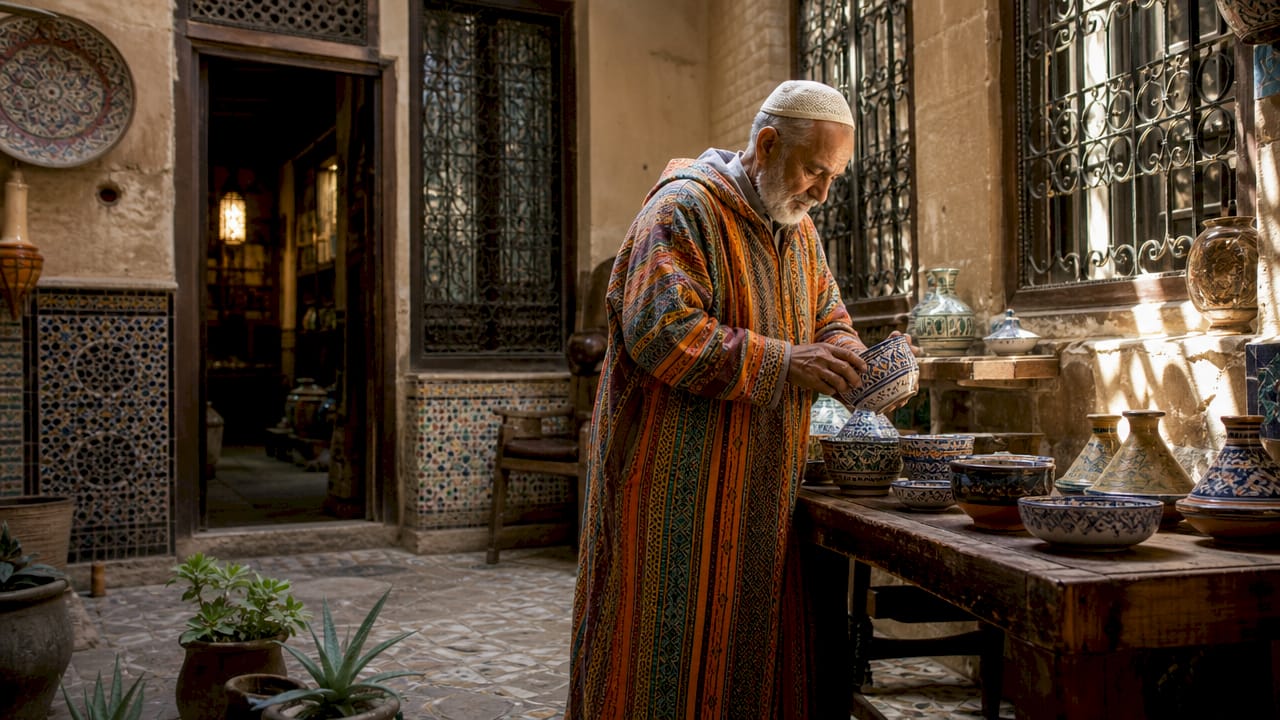
- Fez City is Morocco’s cultural heart, featuring two UNESCO-listed medina quarters with well-preserved medieval architecture.
- Visitors should focus on exploring Fes el-Bali, Fes Jdid, and the Ville Nouvelle, each offering distinct experiences and historical significance.
- Navigating the medina requires planning, such as using offline maps and hiring guides to overcome confusing alleyways and enhance cultural understanding.
Fez City is the cultural and historical capital of Morocco, defined by two UNESCO-listed medina quarters that together form one of the best-preserved medieval urban environments on earth. The city comprises three distinct zones: Fes el-Bali, Fes Jdid, and the French colonial Ville Nouvelle. Each zone carries its own architectural character, social rhythm, and visitor experience. For travelers drawn to living history, ancient craft traditions, and streets that have changed little in a thousand years, Fez delivers something no other Moroccan city can match.
What are the main neighborhoods that make up Fez City?
Fez is not one uniform place. It is a functioning historic urban system split into three zones with sharply different characters. Understanding those zones before you arrive saves confusion and shapes a far better visit.
Fes el-Bali: the ancient medina
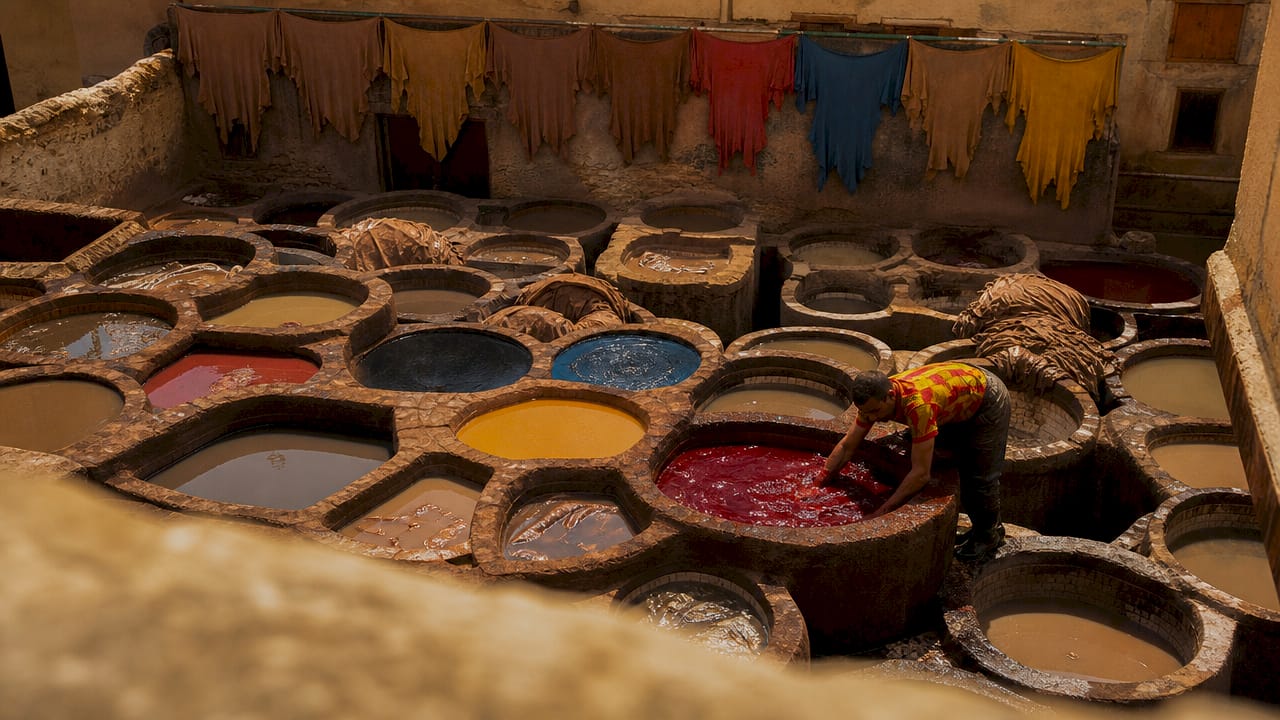
Fes el-Bali is the oldest part of the city and the one most travelers picture when they think of Fez. It covers roughly 300 hectares of car-free urban area, preserving a pre-modern street fabric that has survived largely intact. The medina holds the city’s main mosques, madrasas, souks, and tanneries within a dense web of alleys that can disorient even experienced travelers. Inscribed as a UNESCO World Heritage Site in 1981, Fes el-Bali is recognized for both its visual integrity and its cultural value as a living city rather than a museum.
Fes Jdid: the royal citadel
Fes Jdid was founded in 1276 by the Marinid dynasty as a royal administrative center. It sits directly west of Fes el-Bali and contains the Royal Palace, the Mellah Jewish quarter, and a series of historic gardens and administrative buildings. The atmosphere here is noticeably calmer than Fes el-Bali. Streets are wider, crowds are thinner, and the architecture shifts from dense commercial to formal and ceremonial. Visitors who skip Fes Jdid miss a critical piece of the city’s political and social history.
Ville Nouvelle: the French colonial city
Ville Nouvelle was built during the French Protectorate period in the early 20th century. It offers wide boulevards, cafes, banks, and modern hotels that provide a practical base for travelers who prefer contemporary amenities. Most international restaurants and ATMs are concentrated here. Ville Nouvelle is not a cultural destination in itself, but it functions as a comfortable anchor point for day trips into the medinas.
Key differences at a glance:
- Fes el-Bali: oldest medina, UNESCO listed, car-free, dense souks and religious monuments
- Fes Jdid: 13th-century royal citadel, Royal Palace, Mellah quarter, quieter streets
- Ville Nouvelle: French colonial grid, modern amenities, international dining, easy transport links
How can visitors navigate Fez’s historic medinas effectively?
Navigating Fez’s car-free medieval medina is the single greatest logistical challenge of any visit. The street pattern was not designed for modern wayfinding. Alleys split, merge, and dead-end without warning. Signage exists but is inconsistent. The good news is that a few practical strategies make the difference between a frustrating afternoon and a genuinely memorable one.
Pro Tip: Download an offline map app like Maps.me or Google Maps with the Fez medina downloaded before you arrive. Cell data inside the dense medina can be unreliable, and offline maps have saved countless visitors from extended detours.
- Start at Bab Bou Jeloud. The iconic western gate is the main entry point into Fes el-Bali and the clearest orientation landmark in the medina. Every guided tour and most self-guided routes begin here. When in doubt, ask locals to point you back to Bab Bou Jeloud.
- Limit yourself to one or two clusters per half-day. Visitors do best focusing on 1–2 medina clusters per session rather than trying to cover the entire medina in a single push. The 300-hectare car-free zone is physically demanding, and fatigue leads to poor decisions and missed details.
- Hire a licensed local guide for at least one session. A licensed guide from the official Fez tourism office costs a fixed rate and provides context that no map or guidebook can replicate. They know which alley leads to the best view of the tanneries, which madrasa is currently open, and which souk sells authentic craft versus tourist reproductions.
- Visit key sites early in the morning. The medina comes alive by mid-morning and reaches peak density by noon. Arriving at major sites like the Chouara Tannery or the Bou Inania Madrasa before 9 a.m. means smaller crowds and better light for photography.
- Use the gates as anchors. Fes el-Bali has multiple historic gates, including Bab Rcif, Bab Guissa, and Bab el-Ftouh. Learning two or three gate names gives you reliable reference points when alleys become disorienting.
For first-time travelers to Morocco, the first-timer’s Morocco guide from Moroccotravel1 covers medina navigation in detail, including practical advice on car-free zones and transport options between neighborhoods.
What are the must-see attractions in Fez?
Fez holds more significant cultural sites per square kilometer than almost any other city in North Africa. The challenge is not finding things to see. The challenge is choosing which ones to prioritize.
Chouara Tannery
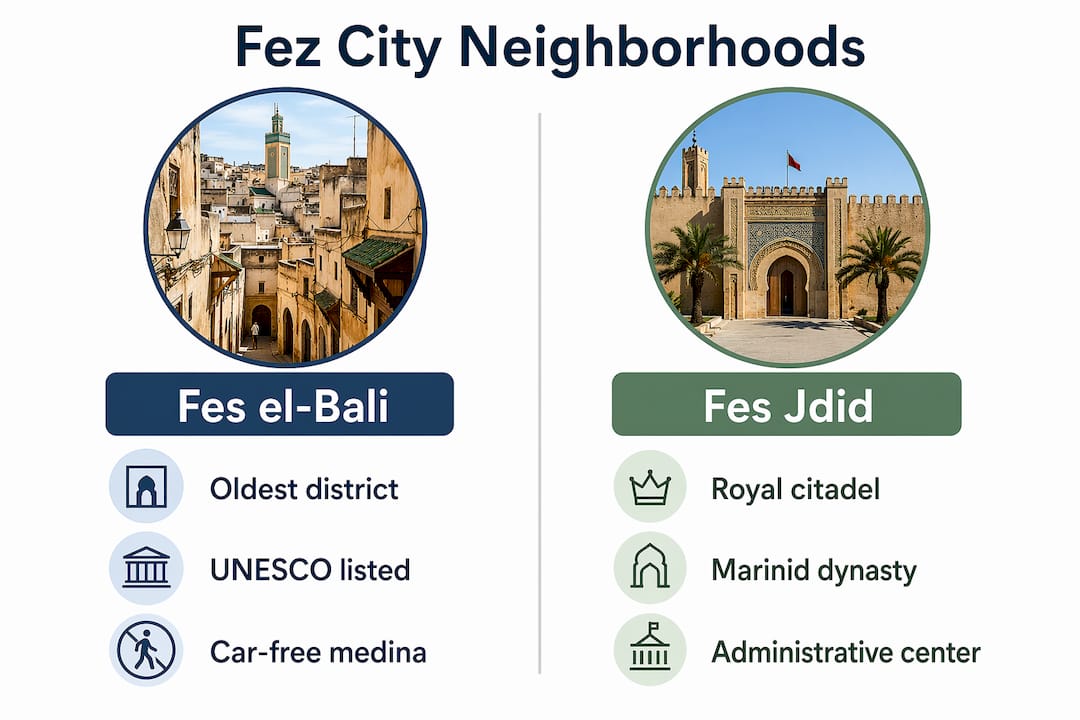
The Chouara Tannery is Fez’s most photographed site and one of its most visceral experiences. Stone dye vats filled with saffron, poppy, and indigo sit in a courtyard that has operated continuously for centuries. Workers stand knee-deep in the vats, treating hides using methods that predate the industrial era. The tannery is a working industrial site within a living neighborhood, not a static exhibit. The smell is intense. Leather shops surrounding the tannery offer balconies with direct views and typically provide sprigs of mint to visitors. Go in the morning when the colors are most vivid.
University of al-Qarawiyyin
The University of al-Qarawiyyin is widely recognized as the world’s oldest continuously operating university, founded in the 9th century. That claim makes Fez one of the oldest centers of higher learning on earth. The university is still active and not fully open to non-Muslim visitors, but its exterior courtyard and the adjacent Al-Qarawiyyin Mosque are architectural landmarks worth seeing from the outside. The surrounding neighborhood, called the Qarawiyyin quarter, contains some of the medina’s finest historic buildings.
Bab Bou Jeloud and the historic gates
Bab Bou Jeloud was built in 1913 under French administration, designed to emulate traditional Moroccan style while also serving as a controlled access point into the medina. Its exterior face is covered in blue zellige tilework; the interior face uses green. The gate is the most photographed landmark in Fez and the natural starting point for any medina walk. Knowing that it is a 20th-century French-era structure built to look ancient adds a layer of nuance to the experience.
Historic madrasas and souks
Key cultural sites to prioritize:
- Bou Inania Madrasa: a 14th-century Marinid school with exceptional carved stucco and cedar woodwork, open to non-Muslim visitors
- Attarine Madrasa: smaller than Bou Inania but equally detailed, located near the Al-Qarawiyyin Mosque
- Souk el-Attarine: the spice and perfume market, one of the most sensory-rich souks in the medina
- Souk Nejjarine: the woodworkers’ souk, centered on the Nejjarine Fountain and a beautifully restored caravanserai now housing a museum of wooden crafts
- Royal Palace of Fes Jdid: the ornate golden gates of the palace are not open to the public, but the exterior is one of the finest examples of Moroccan royal architecture
For travelers interested in luxury stays near these sites, Moroccotravel1 has a detailed guide to Fez’s top riads and upscale accommodations within walking distance of the medina’s main attractions.
How does Fez’s layered history shape the visitor experience?
The distinct original purposes of Fes el-Bali and Fes Jdid explain why the two medinas feel so different from each other. Fes el-Bali developed as the city’s commercial and religious engine. Its streets were built around trade routes, mosque access, and craft production. Fes Jdid was built as a royal and administrative buffer, physically separate from the commercial medina and designed to project political authority.
“The medina of Fez is not a relic. It is a city that has been continuously inhabited, adapted, and argued over for more than a thousand years. Every gate, every alley, and every tannery vat reflects a decision made by someone at a specific moment in history.”
That layering shows up in the architecture. Fes el-Bali’s streets are narrow because they evolved organically around foot and donkey traffic. Fes Jdid’s avenues are wider because they were planned for processions and military movement. Visitors who understand this distinction read the city differently. A dead-end alley in Fes el-Bali is not a planning failure. It is a boundary between a private residential quarter and a public commercial one.
| District | Original function | Dominant character today |
|---|---|---|
| Fes el-Bali | Commercial and religious hub | Dense souks, mosques, madrasas, tanneries |
| Fes Jdid | Royal citadel and administration | Palace grounds, Mellah quarter, gardens |
| Ville Nouvelle | French colonial administrative city | Modern hotels, restaurants, transport links |
Bab Bou Jeloud exemplifies this layering directly. The gate blends authentic Moroccan style with colonial-era urban planning, presenting a face that looks centuries old while serving a very modern function: managing the flow of people and goods into the medina. Recognizing that tension makes the gate more interesting, not less. Fez rewards travelers who look past the surface.
For travelers planning a multi-city itinerary, the 7-day imperial cities tour from Moroccotravel1 pairs Fez with Meknes, Rabat, and Marrakech, giving full context to Morocco’s royal urban history.
Key Takeaways
Fez City is Morocco’s most historically layered destination, defined by three distinct urban zones that each demand a different approach from travelers.
| Point | Details |
|---|---|
| Three distinct zones | Fes el-Bali, Fes Jdid, and Ville Nouvelle each offer a different atmosphere and visitor experience. |
| UNESCO-listed medinas | Both Fes el-Bali and Fes Jdid are inscribed as a UNESCO World Heritage Site for their cultural and architectural value. |
| Navigate in clusters | Limit exploration to one or two medina clusters per half-day to manage the 300-hectare car-free zone effectively. |
| Prioritize key landmarks | Chouara Tannery, al-Qarawiyyin University, Bab Bou Jeloud, and the historic madrasas are the non-negotiable stops. |
| History shapes layout | Understanding the original functions of each district makes the architecture and street patterns far more readable. |
What I’ve learned from spending real time in Fez’s medinas
Most travel writing about Fez focuses on the visual spectacle: the tannery colors, the blue gate, the carved stucco. That framing is accurate but incomplete. What actually defines a visit to Fez is the physical and sensory intensity of moving through a living medieval city on foot, for hours, with no car access and no easy shortcuts.
My honest advice is to resist the instinct to cover everything. Travelers who try to hit every major site in two days leave exhausted and with a shallow impression of each place. Travelers who spend a full morning in one quarter of Fes el-Bali, eat lunch at a local restaurant, and return to the same area in the late afternoon leave with something that actually stays with them.
The tanneries are a good example of managing expectations. The Chouara Tannery is genuinely extraordinary. It is also genuinely pungent. The mint sprigs the leather shops hand out are not decorative. Go anyway. The sight of workers in the dye vats, surrounded by the same stone infrastructure that has been there for centuries, is one of the most direct encounters with pre-industrial craft production available anywhere in the world.
I also think the value of a licensed local guide is consistently underestimated. Not because you cannot navigate solo, but because the medina’s meaning is embedded in details that are invisible without context. A guide who grew up in Fez will point to a doorway and explain that it marks the boundary between two historic craft guilds. That kind of knowledge does not appear on any map. Pair one guided session with independent exploration and you get the best of both approaches. Moroccotravel1’s authentic riad stays are worth considering as a base, since staying inside the medina rather than in Ville Nouvelle changes the entire rhythm of a visit.
Fez is not a city that performs for tourists. It is a city that continues to exist, loudly and completely, whether you are watching or not. That is exactly what makes it worth the effort.
— Moroccotravel1.com
Plan your Fez visit with Moroccotravel1’s tour packages
Moroccotravel1.com offers a range of Morocco tour packages that include Fez as a core destination, from the 7-day imperial cities itinerary to the 14-day grand tour covering the country’s most significant cultural sites. Each package includes guided medina tours led by licensed local experts, private transportation between cities, and accommodation in hand-picked riads and boutique hotels. Moroccotravel1 also builds custom itineraries for travelers who want a Fez-focused trip rather than a multi-city circuit. For families, couples, and solo cultural explorers, the full range of private and custom Morocco tours is available on the Moroccotravel1 website with 24/7 booking support.
FAQ
What is Fez City known for?
Fez City is known for its two UNESCO-listed medina quarters, Fes el-Bali and Fes Jdid, which together preserve one of the world’s most intact medieval urban environments. The city is also famous for the Chouara Tannery, the University of al-Qarawiyyin, and its historic souks and madrasas.
Where exactly is Fez located in Morocco?
Fez is located in north-central Morocco, roughly midway between the Atlantic coast and the Algerian border. It sits in the Saiss plain at the foot of the Middle Atlas mountains and is accessible by train from Casablanca and Marrakech.
Is the Fez medina really car-free?
Yes. Fes el-Bali covers approximately 300 hectares and is largely inaccessible to cars. Visitors and residents move entirely on foot, with donkeys and small motorized carts used for heavy goods. This car-free layout is one of the defining features of the medina experience.
How many days do you need to visit Fez properly?
Two full days is the practical minimum for covering the main sites in Fes el-Bali and Fes Jdid. Three days allows for a more relaxed pace, including time in Ville Nouvelle and a half-day for sites outside the medina walls.
What is the best time of year to visit Fez?
Spring (March through May) and fall (September through November) offer the most comfortable temperatures for walking the medinas. Summer months bring intense heat that makes extended foot travel in the dense alleys physically demanding.


