

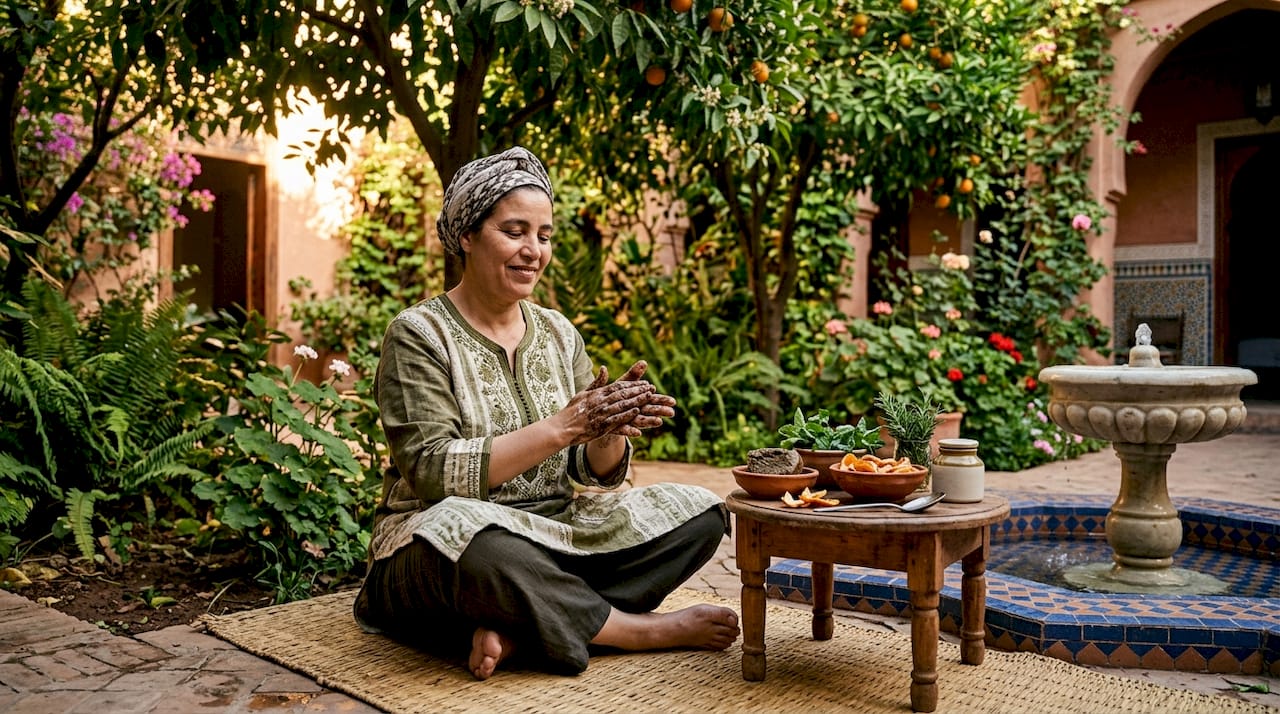
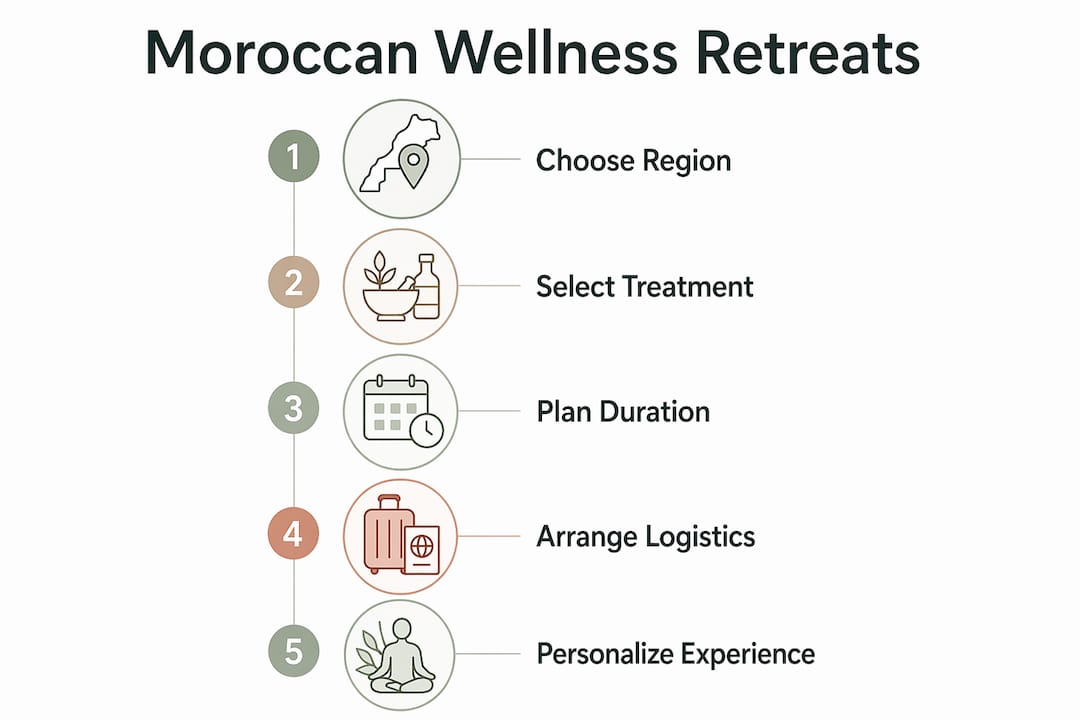
- Moroccan wellness retreats combine ancient healing rituals, natural landscapes, and cultural activities to restore body and mind.
- Different regions offer unique experiences, from Marrakech’s spa riads and the Atlas Mountains’ nature immersion to the Sahara’s silence and the Atlantic coast’s surf-and-yoga programs.
- Personalizing visits with private activities, proper planning, and cultural engagement enhances the transformative potential of each retreat.
Moroccan wellness retreats are defined as immersive programs that combine ancient healing rituals, natural landscapes, and cultural engagement to restore body and mind. This guide covers every major region, from the luxury spa riads of Marrakech to the silent meditation camps of the Sahara, along with the traditional treatments that make Morocco’s wellness scene unlike anywhere else. You will find practical advice on booking, budgeting, and personalizing your stay, whether you are planning a weekend escape or a month-long intensive. Moroccotravel1 has helped travelers across all experience levels design stays that go far beyond a standard spa break.
What are the best Moroccan wellness retreat locations?
Morocco’s retreat destinations span four distinct regions, each with its own character and wellness focus. Choosing the right one depends on what you want to feel when you leave.
Marrakech is the most accessible starting point. The city’s medina is packed with luxury spa riads where hammam rituals, argan oil treatments, and rooftop yoga sessions sit alongside vibrant souks and historic architecture. The sensory contrast, quiet courtyard one moment and the call to prayer the next, is part of what makes Marrakech retreats so memorable. Travelers who want cultural depth alongside their spa time consistently choose this city.
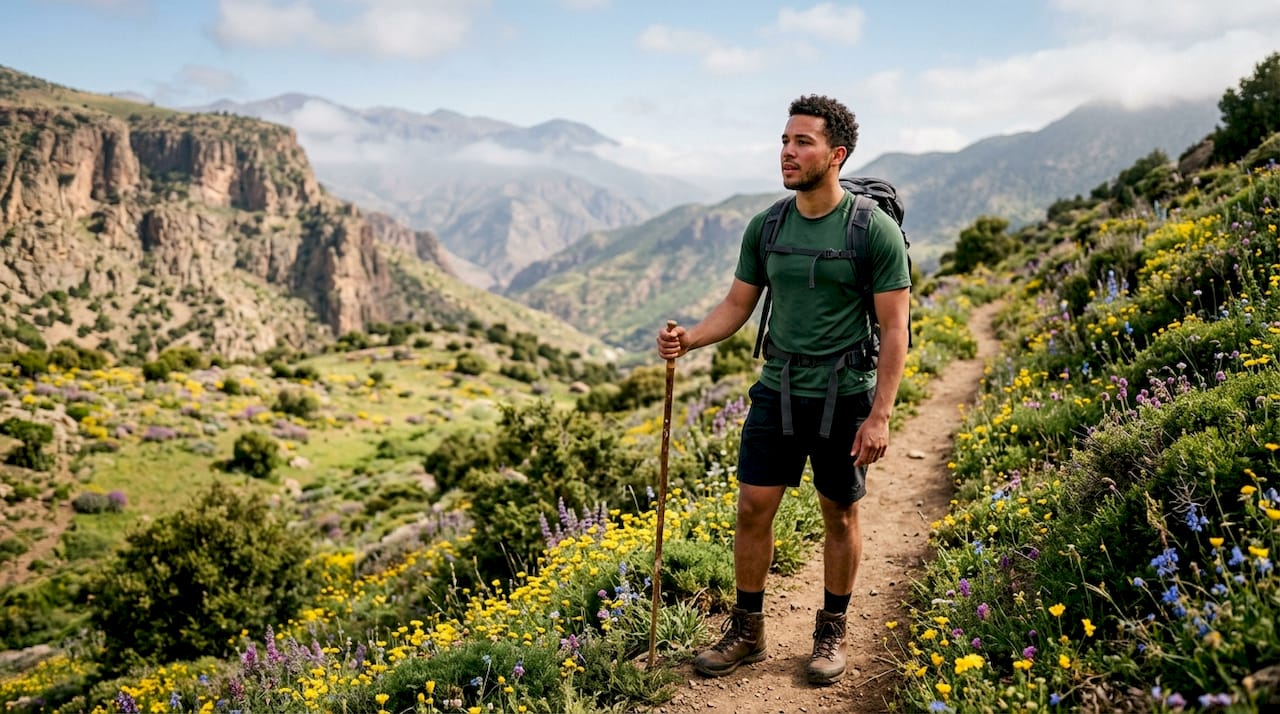
The Atlas Mountains attract a different kind of traveler. Retreats here center on hiking, breathwork, and nature immersion at elevations that clear the mind quickly. Berber villages dot the valleys, and many lodges integrate traditional Amazigh healing practices into their programs. The air is cooler, the pace is slower, and the silence is genuine.
The Sahara is the most dramatic setting. Desert retreats focus on meditation, stargazing, and disconnection from digital life. The absence of light pollution makes the night sky a wellness tool in itself. Many travelers report that a single night in the open desert resets their sense of perspective more effectively than a week in a city spa.
The Atlantic coast, particularly Essaouira and Taghazout, has built a strong reputation for surf-and-yoga retreats. The top wellness regions each draw a specific traveler profile, and the Atlantic coast draws those who want physical challenge alongside mindfulness. Wind, waves, and wide beaches create a natural backdrop for movement-based programs. Yoga and sailing combinations, like those offered through Equilibrium experiences in Taghazout, add a nautical dimension that few other destinations can match.
Best times to visit:
- October through March is peak retreat season. Temperatures are mild across most regions, making outdoor activities comfortable.
- April and May offer warm days and fewer crowds, particularly in Marrakech and the Atlas Mountains.
- June through September is best avoided for desert and mountain retreats due to extreme heat, though coastal locations remain viable.
- Ramadan brings a different energy to medinas. Some travelers find it deeply moving; others prefer to plan around it for easier access to restaurants and services.
Pro Tip: Book Atlas Mountain retreats for March or April when wildflowers cover the valleys and daytime temperatures stay below 75°F. It is the most visually rewarding window of the year.
What traditional treatments define a Moroccan spa retreat?
The traditional hammam is the defining treatment of any authentic Moroccan wellness stay. The hammam ritual follows a multi-step sequence: you enter a warm steam room, a therapist applies black soap made from olives, you rest while the soap opens your pores, then vigorous exfoliation with a kessa glove removes dead skin, followed by a rhassoul clay mask and a final argan oil massage. The full process takes 60–90 minutes and leaves skin noticeably softer for days.
Black soap, known locally as beldi soap, is made from fermented olives and eucalyptus. It is not a luxury add-on. It is the functional first step that makes the kessa exfoliation effective. Skipping it produces a far less thorough result. Rhassoul clay, sourced from the Atlas Mountains, draws out impurities while conditioning the skin. These are not marketing ingredients. They are materials Moroccan families have used for generations.
Argan oil deserves its own attention. Pressed from the nuts of the argan tree, which grows almost exclusively in southwestern Morocco, the oil is rich in vitamin E and essential fatty acids. Visiting women’s cooperatives where argan oil is hand-pressed connects you to the source of the product being applied to your skin. That connection changes the experience from a transaction into something more meaningful.
The steps of a complete hammam session, in order:
- Warm room entry. Sit in the steam room for 10–15 minutes to open pores and relax muscles.
- Black soap application. The therapist applies Beldi soap and leaves it to work for several minutes.
- Kessa exfoliation. A rough mitt removes dead skin cells. The amount of skin lifted is often surprising to first-timers.
- Rhassoul clay mask. Clay is applied to the face and body, left to draw out impurities, then rinsed away.
- Argan oil massage. The session closes with a full-body massage using cold-pressed argan oil.
- Rest period. You are wrapped in towels and given mint tea. This step is not optional. It is where much of the recovery happens.
Beyond the hammam, coastal retreats offer thalassotherapy, which uses seawater and marine algae in therapeutic baths and wraps. Essaouira’s Atlantic position makes it a natural hub for this treatment. Thermal baths in hammams improve circulation, decrease inflammation markers, and support cardiovascular function. Week-long wellness retreats produce psychological well-being improvements that last up to six months. That is a meaningful return on a one-week investment.
Pro Tip: Tell your therapist about any skin sensitivities before the session starts, not after the kessa glove is already in use. Rosacea, eczema, and recent sunburn all require a modified approach.
How can travelers personalize their wellness experience in Morocco?
Generic retreat packages deliver generic results. The travelers who leave Morocco most transformed are those who build private, specific experiences around their own needs. Private-access experiences like exclusive market cooking classes with local chefs and medina walks before the gates open to the public create a depth of immersion that no group tour can replicate.
The most effective way to personalize a Moroccan wellness stay:
- Arrange a private cooking class in a local home. Learning to prepare harira soup or bastilla with a Marrakchi family is a cultural wellness practice, not just a culinary activity. Food preparation in Morocco is communal and meditative.
- Visit an argan oil cooperative. Watching women crack argan nuts by hand and press the oil gives context to every treatment you receive afterward. Cultural participation is often more restorative than passive resort stays.
- Schedule a private medina walk. Hire a local guide for an early morning walk through Fes or Marrakech before the crowds arrive. The medina at 6:30 AM is a completely different place.
- Add a rest day to your itinerary. Top-tier wellness experiences integrate rest days to prevent retreat fatigue. A day with no scheduled activities often produces the most clarity.
- Bring your own yoga mat and skincare. Relying on venue-provided gear is often insufficient for specialized wellness practices. Your own mat and trusted products maintain hygiene and routine consistency.
Logistics are the hidden variable in retreat quality. Delegating transfers, menu planning, and activity coordination to local partners frees you to focus entirely on the experience. When you are not managing transportation or troubleshooting restaurant bookings, your nervous system actually gets to rest. That is the point.
Artisan workshops add another layer. Leather tanning in Fes, pottery in Safi, and weaving in the Atlas Mountains are not tourist attractions. They are living traditions. Spending two hours with a craftsperson who has practiced the same skill for 30 years is a form of mindfulness that no guided meditation can replicate.
Pro Tip: Ask Moroccotravel1 to arrange a private chef dinner in your riad’s courtyard. It costs less than a restaurant meal at a comparable level and creates an experience that stays with you far longer.
What logistics should you know before booking a Moroccan retreat?
Planning a wellness retreat in Morocco requires decisions across four categories: accommodation type, timing, duration, and budget. Getting these right before you book prevents the most common sources of disappointment.
Accommodation types and what they offer:
| Type | Best for | Typical setting |
|---|---|---|
| Luxury spa riad | Cultural immersion, hammam access | Marrakech and Fes medinas |
| Desert camp | Meditation, stargazing, silence | Merzouga, Zagora, Sahara |
| Mountain lodge | Hiking, nature therapy, cool air | Atlas Mountains, Toubkal |
| Coastal hotel or surf camp | Yoga, surf, thalassotherapy | Essaouira, Taghazout |
Retreat durations range from weekend escapes to month-long intensives. A weekend in a Marrakech riad gives you a genuine taste of hammam culture. A week in the Atlas Mountains allows for a real physical reset. A month-long program in any region produces the deepest behavioral change but requires advance planning for visas, insurance, and accommodation availability.
Budget planning requires separating public hammam costs from luxury resort pricing. A public hammam in a Moroccan city costs the equivalent of a few dollars and delivers an authentic experience. A private hammam session at a five-star riad spa can cost $80–$150. Both are valid. The difference is privacy, product quality, and the level of personalization in the treatment.
Women-only retreats in the Sahara require specific advance planning. Modesty contracts, private bathrooms, and all-female staff must be confirmed well before arrival. These protocols are not bureaucratic formalities. They are the foundation of a safe and comfortable experience in a remote desert setting. Confirm every detail in writing at least 60 days before your departure date.
Coastal retreats need contingency planning for weather. Atlantic winds in Essaouira can shut down outdoor yoga sessions without warning. Private medina walks and indoor contingency spaces are standard features of well-organized luxury retreats. Ask your organizer what the backup plan is before you commit to a program.
Group retreats benefit most from a single local logistics partner who handles all ground operations. Local partner expertise enables smooth daily operations without the operational stress that derails the wellness purpose of the trip. A good local partner knows which roads flood in February, which restaurants can handle 20 guests on short notice, and which guides speak the languages your group needs.
Key Takeaways
Moroccan wellness retreats deliver the deepest results when travelers combine authentic traditional treatments, regional immersion, and deliberate advance planning.
| Point | Details |
|---|---|
| Choose your region by goal | Marrakech suits cultural spa seekers; the Sahara suits those needing silence and reset. |
| Book hammam treatments in advance | Communicate skin sensitivities before arrival to get a safe, effective session. |
| Personalize beyond the spa menu | Private cooking classes, argan cooperatives, and medina walks add lasting value. |
| Plan logistics through local partners | Delegating transfers and scheduling frees your attention for the wellness experience itself. |
| Confirm women-only retreat protocols early | Modesty contracts and staff arrangements must be finalized at least 60 days before arrival. |
What I have learned from Morocco’s wellness culture
The most common mistake travelers make is treating a Moroccan wellness retreat like a spa vacation with an exotic backdrop. It is not that. The hammam is not a luxury amenity. It is a social institution that Moroccan families have used weekly for centuries. When you enter a hammam with that understanding, the experience shifts from a service transaction to a genuine cultural exchange.
I have seen travelers spend significant money on five-star riad packages and leave feeling vaguely disappointed. The retreats that produce real transformation are almost always the ones where the traveler engaged with something outside the property walls. A morning at an argan cooperative. A conversation with a Berber guide about mountain plant medicine. A shared meal in a family home in the Draa Valley. These moments cost very little and stay with you for years.
The other thing I would tell any traveler planning a Moroccan wellness stay: build in more time than you think you need. Morocco operates at its own pace. The medina does not care about your schedule. The desert does not care about your itinerary. The travelers who surrender to that rhythm, rather than fight it, are the ones who return home genuinely changed. A personalized Morocco itinerary that includes buffer time is worth far more than a packed program that leaves no room for the unexpected.
Moroccan wellness is not a product. It is a relationship with a place, its people, and traditions that predate modern spa culture by centuries. Approach it with curiosity and respect, and it will give you more than you planned for.
— Moroccotravel1.com
Plan your Moroccan wellness retreat with Moroccotravel1
Moroccotravel1 designs custom Morocco wellness packages built around your specific goals, whether that means a hammam-focused city stay in Marrakech, a silent meditation program in the Sahara, or a surf and yoga week on the Atlantic coast. Every itinerary includes vetted local partners for ground logistics, pre-arranged treatments, and accommodation matched to your comfort level and budget. The team handles transfers, activity scheduling, and cultural experiences so you arrive focused on rest and immersion, not coordination. Travelers planning group or women-only retreats receive dedicated support for all protocol arrangements. Browse Morocco wellness packages or explore the 9-day Marrakech to Sahara itinerary to see how a fully supported retreat comes together.
FAQ
What is the best time of year for wellness retreats in Morocco?
October through March is peak retreat season across most of Morocco. Temperatures are mild, outdoor activities are comfortable, and hammam sessions feel especially restorative in cooler weather.
How much does a traditional hammam experience cost?
A public hammam costs the equivalent of a few dollars. A private hammam session at a luxury riad spa typically runs $80–$150, depending on the treatments included.
Do I need to book hammam treatments in advance?
Booking in advance is strongly recommended, especially at popular riads in Marrakech. Communicate any skin sensitivities before your session so the therapist can adjust the treatment safely.
Are women-only retreats available in the Sahara?
Women-only Sahara retreats are available but require specific advance planning. Modesty contracts, private bathrooms, and all-female staff arrangements must be confirmed at least 60 days before arrival.
How long should a first-time Morocco wellness retreat be?
A week-long retreat gives first-time travelers enough time to experience a hammam, engage with local culture, and feel a genuine physical and mental reset. Week-long wellness programs produce well-being improvements that can last up to six months.


