

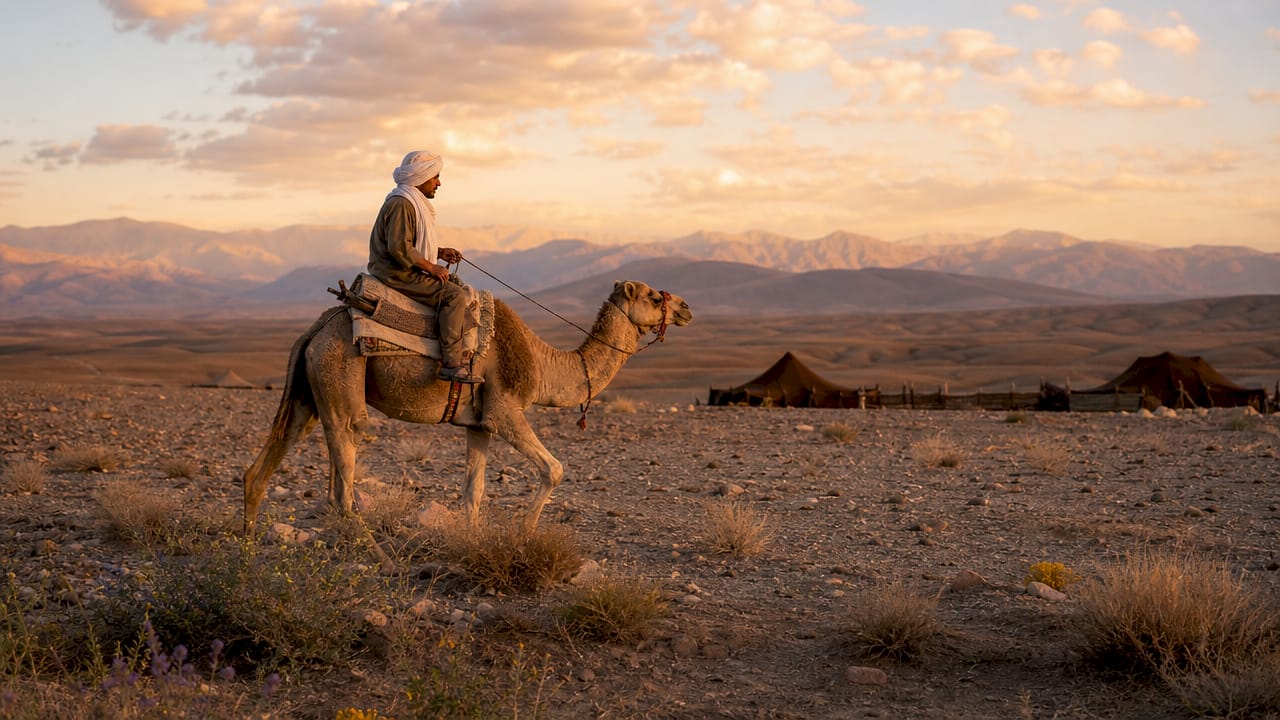
- The Agafay Desert in Morocco is a rocky plateau located less than an hour from Marrakech, known for its lunar-like terrain and adventure activities.
- Unlike the Sahara, it is a reg desert with volcanic stone and gravel, offering quad biking, camel rides, and cultural dinners.
- Visiting in spring or fall provides the best weather, and sustainable tourism supports local Berber communities.
The Agafay Desert is a rocky, volcanic stone plateau located 30–40 km southwest of Marrakech, offering camel rides, quad biking, Berber cultural dinners, and lunar-like terrain that no sandy Sahara destination can replicate. Most travelers reach it in under an hour from Marrakech, making it the most accessible desert experience in the country. Unlike the Sahara’s towering sand dunes, Agafay is classified as a “reg” desert, a geologic term for a flat, stone-covered plateau. That distinction shapes every activity, every view, and every photo you will take there. Moroccotravel1 includes Agafay in several of its curated Morocco desert tours precisely because the terrain delivers adventure and culture within a single-day trip or overnight stay.
What makes the Agafay Desert landscape unique?
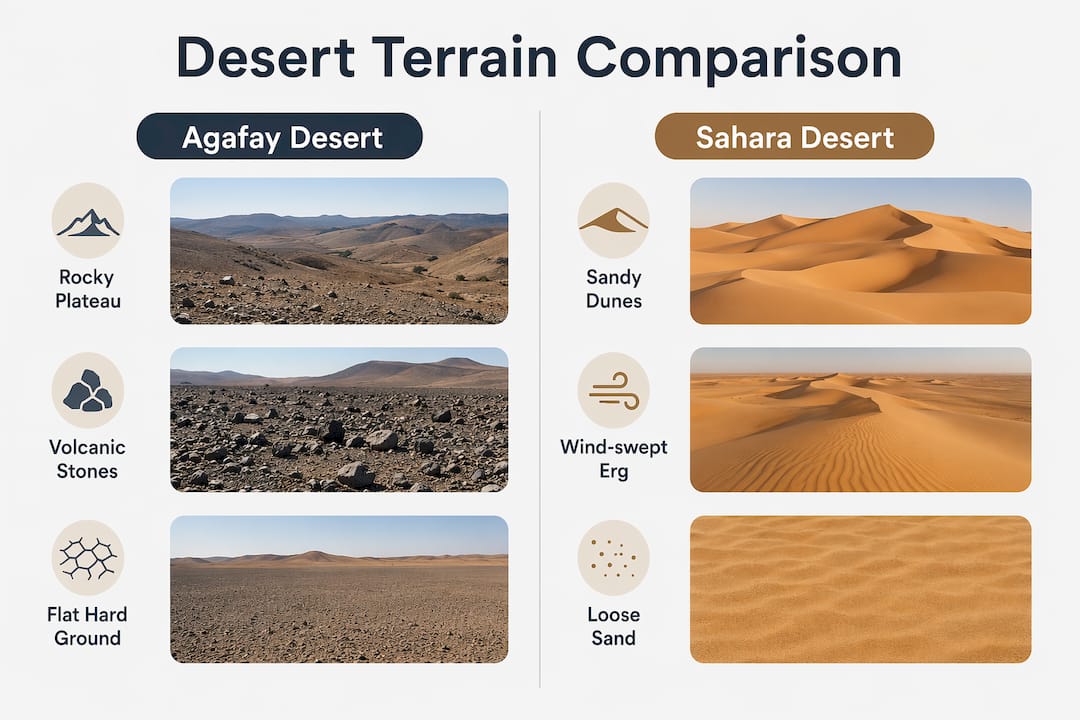
Agafay is a reg desert, not an erg. That single geological fact separates it from the Sahara and explains why the experience feels so different. A reg is a flat, hard-packed plateau of volcanic stone and gravel. An erg is a sea of shifting sand dunes. Agafay’s rocky terrain includes dry riverbeds called wadis, stone dunes shaped by wind erosion, and wide open plateaus that stretch to the horizon.
The visual contrast here is striking. On clear days, the snow-capped peaks of the High Atlas Mountains rise directly behind the desert floor. That combination of barren stone in the foreground and white mountain peaks in the background creates a photographic composition you will not find anywhere else in Morocco. The village of Lalla Takerkoust, with its large man-made reservoir, sits at the edge of the desert and adds a further visual contrast: still blue water against dry, cracked earth.
The atmosphere at Agafay is often described as lunar. The absence of vegetation, the pale gray and ochre tones of the stone, and the vast silence combine to create a sensory experience that feels remote despite being less than an hour from a major city. That paradox is exactly what draws travelers who want desert immersion without a two-day drive to Merzouga.
Pro Tip: Visit in the late afternoon to catch the golden hour light on the stone plateau. The warm tones of the rock intensify dramatically in the hour before sunset, and the High Atlas Mountains glow pink behind you.
Agafay vs. Sahara: key terrain differences
| Feature | Agafay Desert | Sahara Desert (Erg Chebbi) |
|---|---|---|
| Terrain type | Rocky red plateau | Sandy erg dunes |
| Distance from Marrakech | 30–40 km | Approx. 560 km |
| Travel time | 40–60 minutes | 8–10 hours |
| Best activity | Quad biking, dune buggies | Camel trekking, sandboarding |
| Nighttime experience | Stargazing, Berber camps | Stargazing, Berber camps |
| Altitude | Approx. 700 m above sea level | Near sea level |
What are the top activities in Agafay Desert?
Agafay desert experiences cover a wide range, from high-speed off-road adventures to slow, meditative cultural evenings. The terrain and the proximity to Marrakech make it possible to pack multiple activities into a single visit.
Quad biking and off-road adventures
Quad biking at Agafay is faster and more technically demanding than quad biking on sandy dunes. The hard, stony ground allows higher speeds and sharper cornering. Riders cover dry riverbeds, rocky ridges, and open plateaus on routes that typically last 1–2 hours. Dune buggies are also widely available and suit groups or families who want a shared off-road experience. Most operators provide helmets, goggles, and a guide who leads the route.
Camel rides at sunset
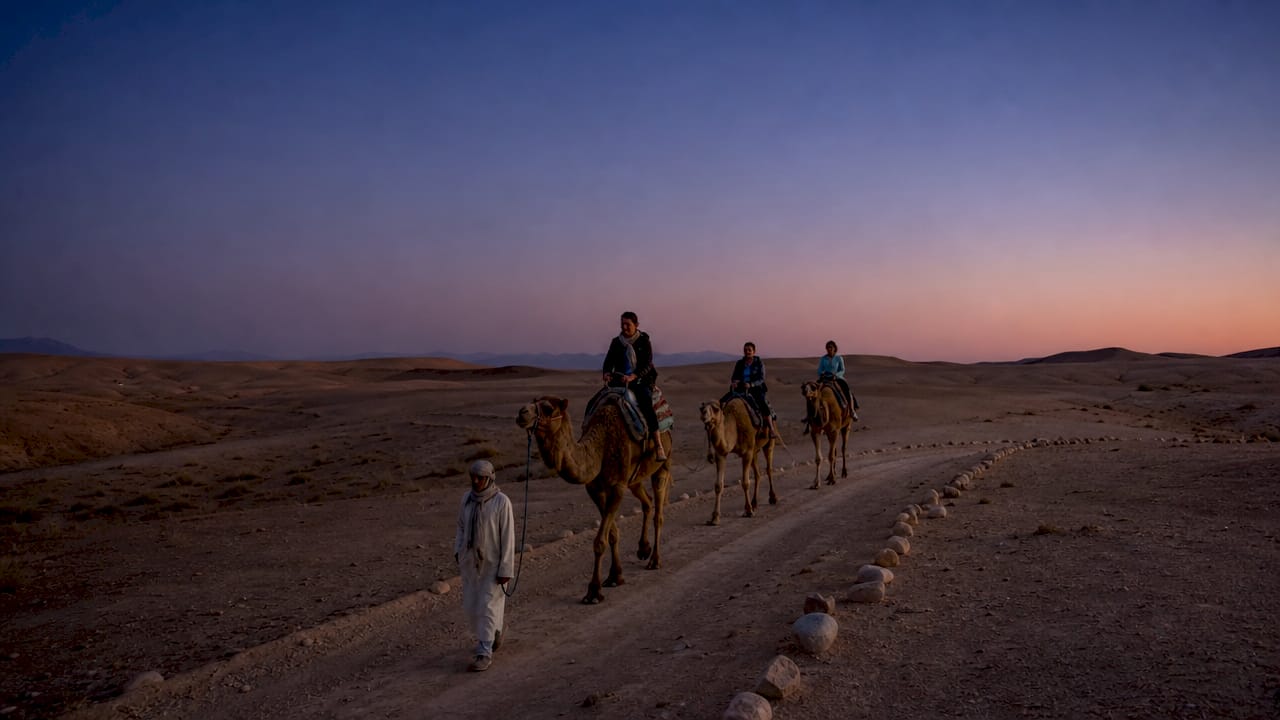
Sunset camel rides along Berber trails are the most photographed activity in the desert. Rides typically last 30–60 minutes and follow paths used by local herders for generations. The pace is slow and the views are wide. Guides often stop at elevated points where the High Atlas Mountains frame the horizon behind you.
Traditional Berber dinners and evening shows
The evening experience at an Agafay camp is where cultural immersion peaks. A traditional Moroccan feast typically includes slow-cooked tajines, couscous, fresh bread, and rounds of mint tea. After dinner, live Gnawa or Berber music fills the camp. Fire shows performed by local artists follow, and the evening ends under one of the clearest night skies in the region.
The minimal light pollution at Agafay makes stargazing exceptional. On moonless nights, the Milky Way is visible with the naked eye. Some camps provide telescopes and a guide who explains the constellations using traditional Berber navigation knowledge.
Argan oil cooperative visits
Several tours include a stop at a local argan oil cooperative near the desert. Women from Berber communities demonstrate the traditional hand-cracking and cold-pressing process that produces argan oil. The visit is educational and directly supports the cooperative’s income. You can purchase oil, amlou (a paste of argan oil, almonds, and honey), and handmade cosmetics at fair prices set by the cooperative.
Pro Tip: Book a combined quad biking and dinner package rather than separate activities. Operators bundle both at a lower total cost, and the transition from high-energy riding to a calm Berber dinner makes for a satisfying arc to the day.
Here is a summary of the main activities and what each one delivers:
- Quad biking: Fast, technical off-road riding on hard, stony terrain. Best for adventure seekers aged 16 and older.
- Dune buggy tours: Shared off-road vehicles for groups or families. Covers more ground than quad bikes.
- Sunset camel rides: Slow, scenic rides along traditional Berber trails. Best for first-time desert visitors.
- Berber cultural dinner: Multi-course Moroccan meal with live music and fire shows. Best experienced at a camp rather than a day-trip restaurant.
- Stargazing: Clear skies with minimal light pollution. Most impactful on nights with a new moon.
- Argan cooperative visit: Cultural and educational stop supporting local Berber women’s income.
How to plan your visit to Agafay Desert
Planning a visit to Agafay is straightforward compared to organizing a Sahara trip. The short distance from Marrakech removes the need for multi-day logistics, but a few decisions still shape the quality of your experience significantly.
Best time to visit Agafay
The best seasons for visiting Agafay are spring (March through May) and fall (September through November). Daytime temperatures during these months stay in the range of 20–28°C, which is comfortable for outdoor activities. Summer (June through August) brings intense heat, with midday temperatures regularly exceeding 38°C. If you visit in summer, plan all activities for early morning or after 5 p.m. Winter (December through February) is mild during the day but cold at night, sometimes dropping near freezing. Bring a warm layer for any overnight stay between November and March.
Getting there from Marrakech
The most direct route from Marrakech takes 40–60 minutes by car via the Route d’Amizmiz. Three transportation options cover most travelers:
- Private car or taxi: The fastest and most flexible option. Negotiate a fixed round-trip price before departure. A private taxi from Marrakech to Agafay and back typically costs 300–500 Moroccan dirhams depending on waiting time.
- Organized day tour: Includes transport, a guide, and activities in one package. Moroccotravel1 offers guided desert excursions that bundle transport, camel rides, and dinner into a single booking.
- Rental car: Gives full flexibility for timing and stops. A standard sedan handles the paved road to the desert without issue.
Accommodation options and costs
Agafay Desert accommodations range from budget-friendly traditional tents to high-end glamping setups with private plunge pools and air conditioning. A standard overnight stay for two people at a mid-range camp costs around 120 euros. That price typically includes dinner, breakfast, and a camel ride. Luxury camps with private tents, premium bedding, and curated menus exceed 300 euros per night for two. That price point competes with five-star Marrakech hotels, but the experience of sleeping in the desert is categorically different.
For travelers who want the full luxury desert camp experience without the Sahara’s distance, Agafay is the clear choice.
What to pack
Packing for Agafay requires balancing heat protection during the day and warmth at night. The essentials:
- Sunscreen with SPF 50 or higher. The stone terrain reflects UV radiation intensely.
- A lightweight scarf or shemagh. Useful for dust during quad biking and warmth after sunset.
- Closed-toe shoes. Sandals are not suitable for quad biking or walks on rocky terrain.
- A warm layer for evenings. Temperatures drop quickly after sunset, even in spring and fall.
- A power bank. Camps often have limited charging facilities.
How does Agafay support sustainable ecotourism?
Agafay Desert tourism has grown quickly, and the best operators have built sustainability into their model from the start. The desert’s fragile stone ecosystem and the Berber communities that depend on it require a specific approach to tourism that goes beyond recycling bins and solar panels.
Eco-friendly camps at Agafay use locally sourced materials for tent construction, including traditional Berber wool and canvas. Water conservation is a central concern. The desert receives very little rainfall, and groundwater is limited. Responsible camps collect and reuse greywater for irrigation and use composting toilets to reduce wastewater output.
Local Berber communities benefit directly when tourism is structured around community partnerships. The most responsible operators hire local guides, source food from nearby farms, and route a portion of camp fees back to village development funds. Argan oil cooperative visits are a direct example of this model working in practice.
Travelers can support these efforts through specific choices:
- Choose camps that employ local guides rather than guides bused in from Marrakech.
- Buy directly from argan cooperatives rather than from souvenir shops in the city.
- Stay on marked trails during quad biking to avoid damaging the stone crust, which takes decades to recover from vehicle tracks.
- Carry out all waste from the desert, including food packaging and plastic water bottles.
- Ask your operator whether they have a water conservation policy before booking.
Cultural respect matters as much as environmental care. Berber music, food, and craft traditions are not props for tourist entertainment. They are living practices maintained by real communities. Engaging with them attentively, asking questions, and paying fair prices for handmade goods all contribute to keeping those traditions economically viable.
Key Takeaways
The Agafay Desert is the most accessible and geologically distinct desert experience in Morocco, combining rocky-terrain adventure with authentic Berber culture less than an hour from Marrakech.
| Point | Details |
|---|---|
| Unique terrain | Agafay is a rocky, arid plateau, not a sandy Sahara erg, making it ideal for quad biking and off-road driving. |
| Close to Marrakech | Located 30–40 km from Marrakech, the desert is reachable in 40–60 minutes by car. |
| Cost range | Standard overnight camps cost around 120 euros for two; luxury options exceed 300 euros per night. |
| Best seasons | Spring and fall offer the most comfortable temperatures for outdoor activities. |
| Eco-tourism impact | Choosing local guide operators and argan cooperatives puts money directly into Berber communities. |
What I have learned from spending time in Agafay
The first thing that surprised me about Agafay was the silence. Marrakech is one of the loudest cities I have ever visited. The medina, the souks, the motorbikes. Then you drive 45 minutes and step into a landscape where the only sound is wind moving across stone. That contrast is more dramatic than any scenery.
I have taken clients to both Agafay and the Sahara, and the question I get most often is, “Which one is better?” My honest answer is that they are not comparable. The Sahara is a pilgrimage. Agafay is a revelation. The Sahara requires two days of travel each way and rewards you with iconic sand dunes. Agafay rewards you with something harder to photograph but easier to feel: the sense that you have stepped out of the modern world without leaving your afternoon behind.
Quad biking at Agafay is genuinely fast. The hard ground lets you push the throttle in a way that soft sand never allows. I have seen riders who were nervous at the start of a session grinning uncontrollably 20 minutes in. The terrain does that. It builds confidence quickly because the bike responds predictably.
The Berber hospitality at the camps is not performance. The mint tea is brewed the same way whether there are two guests or twenty. The music is played by people who grew up with it. First-time visitors should resist the urge to rush through dinner and get back to Marrakech. The evening, the fire, the stars—that is the actual experience. Give it the time it deserves.
— Moroccotravel1.com
Plan your Agafay Desert trip with Moroccotravel1.com
Moroccotravel1.com builds Morocco desert tours around real experiences, not generic itineraries. The agency’s 5-day Marrakech and desert package includes Agafay desert excursions with camel rides, Berber dinners, and guided quad biking. For travelers who want more time in the country, the 14-day Morocco Grand Tour combines Agafay with the Sahara, imperial cities, and the High Atlas Mountains. Every itinerary is customizable, and the team provides 24/7 support from booking through return. Families, couples, and solo travelers all find packages built for their pace and budget at Moroccotravel1.
FAQ
How far is the Agafay Desert from Marrakech?
The Agafay Desert sits 30–40 km southwest of Marrakech, with a typical drive time of 40–60 minutes by car via the Route d’Amizmiz.
Is the Agafay Desert sandy like the Sahara?
No. Agafay is a rocky reg plateau made of volcanic stone and gravel, not a sandy ergs desert. The terrain is flat, hard-packed, and visually distinct from Sahara sand dunes.
What is the best time to visit Agafay?
Spring (march through may) and fall (september through november) offer the most comfortable temperatures for activities in Agafay desert. Summer heat regularly exceeds 38°C at midday, so early morning or late afternoon visits are necessary in those months.
How much does an overnight stay at Agafay cost?
A standard overnight camp for two people costs around 120 euros, typically including dinner, breakfast, and a camel ride. Luxury glamping options exceed 300 euros per night.
Can I visit the Agafay Desert as a day trip from Marrakech?
Yes. The short drive makes Agafay ideal for a half-day or full-day excursion. Most day-trip packages include transport, quad biking or a camel ride, and a traditional Moroccan lunch or dinner.


