


- Morocco offers a diverse travel experience rooted in imperial cities, Sahara dunes, and coastal towns, rewarding cultural, natural, and adventure seekers.
- Visiting Marrakech, Fes, the Sahara, and less-known towns like Essaouira or Chefchaouen in optimal weather maximizes enjoyment and authenticity.
- Travelers should plan 10 to 14 days, use guides in complex medinas, carry cash, and embrace bargaining to fully immerse themselves in Morocco’s rich heritage.
Morocco is defined by a rare combination of ancient imperial cities, Saharan dunes, Atlantic coastlines, and mountain ranges that together make it one of the most varied travel destinations on earth. The best destinations in Morocco include Marrakech, Fes, the Sahara Desert near Merzouga, Essaouira, Chefchaouen, and Rabat, each delivering a distinct experience that rewards different traveler types. Whether you want to lose yourself in a 1,000-year-old medina, ride a camel across towering dunes, or watch the Atlantic roll in from a fortified harbor town, Morocco delivers. This guide covers every major stop, what makes each one worth your time, and the practical knowledge you need to travel smart.
What are the best destinations in Morocco for culture?
Morocco’s imperial cities form the backbone of any serious cultural itinerary. Marrakech, Fes, Meknes, and Rabat each served as a seat of power at different points in Moroccan history, and that legacy shows in every gate, palace, and tiled courtyard you encounter.
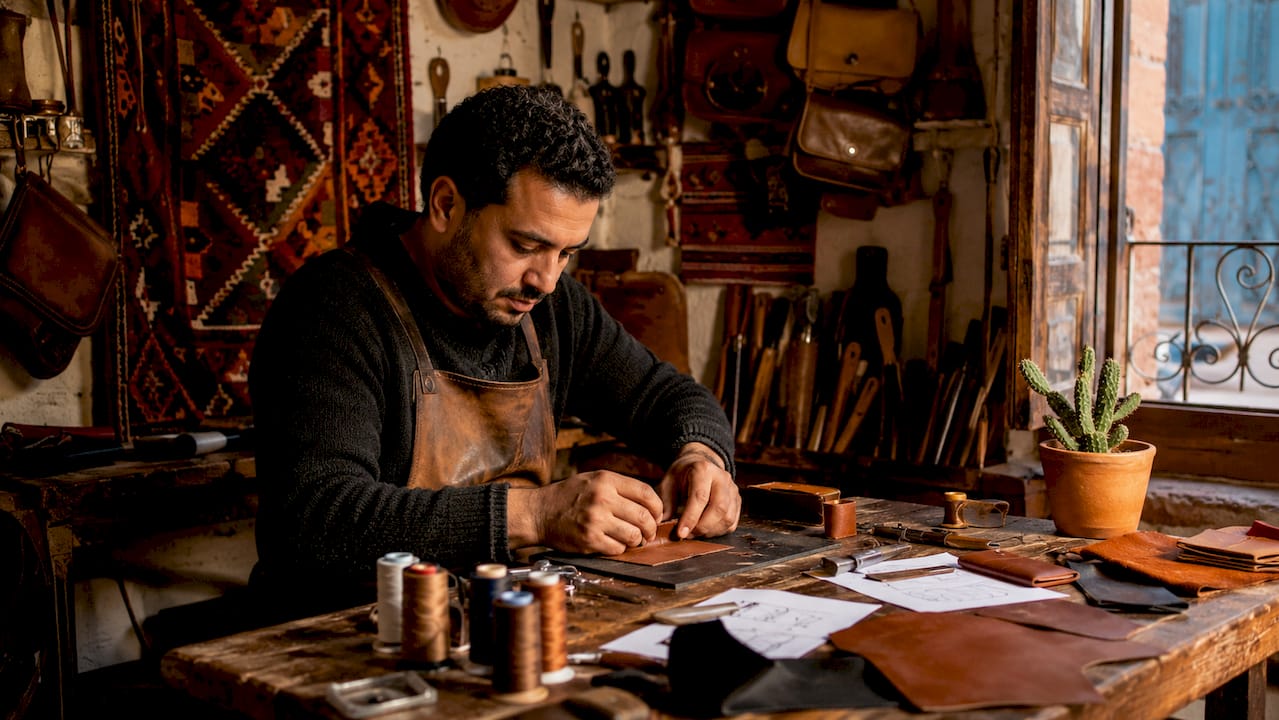
Marrakech is the most visited city in Morocco, and for good reason. The medina pulses around Jemaa el-Fnaa, a UNESCO-listed square that transforms from a daytime market into an open-air theater of musicians, storytellers, and food stalls after dark. The Bahia Palace, Saadian Tombs, and Majorelle Garden give you three completely different windows into Moroccan history and design. The souks radiating off Jemaa el-Fnaa are organized by trade, so you move from leather workers to spice merchants to weavers within a few hundred meters.
Fes is the intellectual and spiritual center of Morocco. Its medina, Fes el-Bali, is the largest medieval car-free city in the world, and it requires at least two full days with an expert guide to appreciate properly. The Chouara Tannery, where leather has been dyed in stone vats using the same methods since the 11th century, is one of the most photographed scenes in North Africa. The University of al-Qarawiyyin, founded in 859 AD, is recognized as the oldest continuously operating university on earth.
Meknes sits just 60 kilometers from Fes and offers a quieter version of imperial grandeur. The Bab Mansour gate is considered one of the finest examples of Moroccan architecture anywhere in the country. Because Meknes draws fewer tourists than Marrakech or Fes, you can move through its medina without the pressure of persistent vendors, which makes it a genuinely pleasant half-day or full-day stop.
Rabat, the current capital, is increasingly promoted as a hidden gem for travelers who want authentic experiences without the crowds. The Hassan Tower, Chellah necropolis, and Kasbah of the Udayas offer serious historical depth in a city that feels more relaxed than Marrakech.
- Marrakech: best for first-time visitors, nightlife, and design
- Fes: best for history, architecture, and religious heritage
- Meknes: best for a quieter imperial city experience
- Rabat: best for authenticity and avoiding tourist saturation
Pro Tip: In Fes and Marrakech, hire a certified guide for your first day. The medinas are genuinely disorienting, and a knowledgeable local will give you cultural context that no map or app can replicate.
Which destinations offer the best adventure and nature in Morocco?
Morocco’s natural geography is as dramatic as its cities. The country contains the Sahara Desert, the Atlas and Rif mountain ranges, Atlantic and Mediterranean coastlines, and deep river gorges, all within a country roughly the size of California.
- Erg Chebbi near Merzouga is the most spectacular desert destination in Morocco. The dunes rise over 450 feet tall across approximately 40 square miles of shifting sand, making them among the tallest in the Sahara. That scale means a sunrise camel trek or an overnight stay in a luxury desert camp feels genuinely remote and cinematic, not like a tourist attraction with a velvet rope.
- The Atlas Mountains offer a completely different kind of adventure. The High Atlas, which includes Jebel Toubkal at 4,167 meters, is the highest peak in North Africa and a serious trekking destination. The Middle Atlas around Ifrane and Azrou gives you cedar forests, Barbary macaques, and cooler temperatures that provide real relief from summer heat in the lowland cities.
- Todra Gorge and Dades Gorge are two of Morocco’s most dramatic landscapes. Todra’s canyon walls rise 300 meters on either side of a narrow river corridor, creating a slot canyon effect that is extraordinary at dawn when the light hits the rock face. Dades, sometimes called the Valley of Roses, is lined with kasbahs and almond trees and rewards a slow drive more than a quick stop.
- Essaouira on the Atlantic coast is Morocco’s wind capital, which makes it the top destination in the country for kitesurfing and windsurfing. The consistent Atlantic trade winds draw serious water sports enthusiasts from across Europe. Beyond the beach, Essaouira’s 18th-century Portuguese ramparts and blue-and-white fishing harbor give it a character that no other Moroccan coastal town matches.
- Chefchaouen in the Rif Mountains offers hiking trails through pine and oak forests alongside the famous blue-painted streets of the medina. The town sits at around 600 meters’ elevation, which keeps temperatures comfortable even in July and August when the rest of Morocco bakes.
Experts recommend mixing Marrakech and Fes with Sahara and Essaouira to avoid sensory overload on any single type of experience. That contrast between city noise and desert silence is what makes a Morocco itinerary feel complete rather than repetitive.
How do coastal and lesser-known towns improve your Morocco trip?
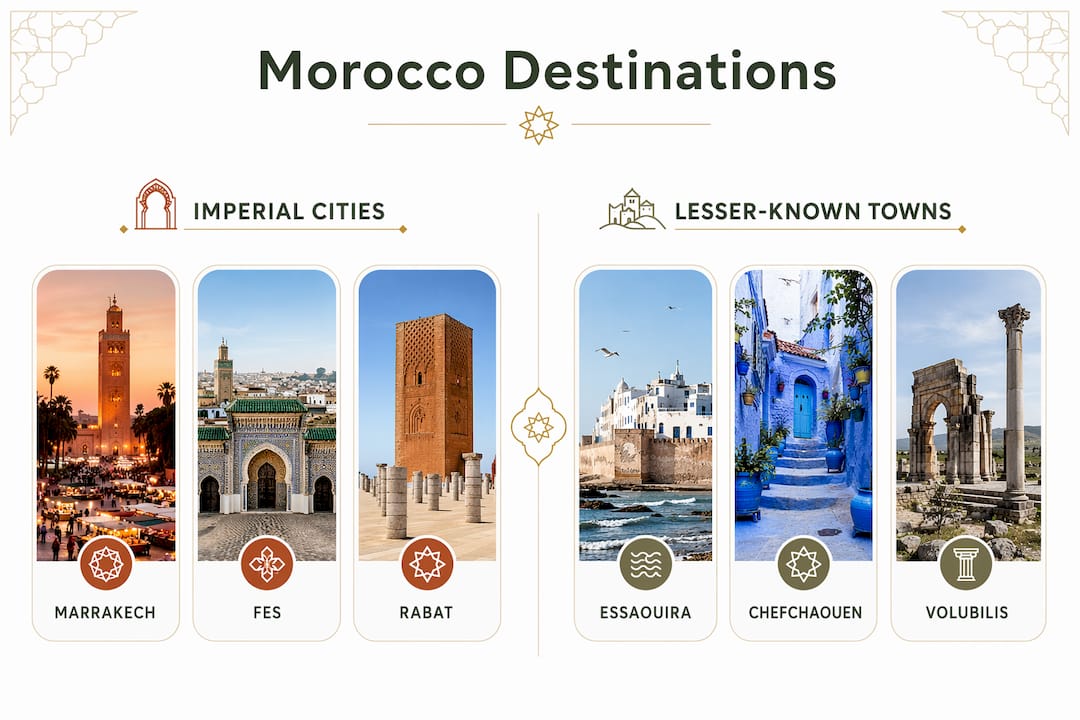
Morocco’s most popular cities are genuinely worth visiting, but the country’s lesser-known stops are where many travelers find their most memorable moments. Essaouira, Chefchaouen, Volubilis, and Rabat each offer something the big-name cities cannot.
| Destination | Best for | Crowd level | Unique feature |
|---|---|---|---|
| Essaouira | Beach, music, relaxation | Moderate | Gnawa music festival, UNESCO medina |
| Chefchaouen | Photography, hiking, calm | Growing | Blue-painted streets, Rif Mountain setting |
| Volubilis | Roman history, archaeology | Low | Best-preserved Roman ruins in Morocco |
| Meknes | Imperial architecture, day trips | Low | Bab Mansour gate, proximity to Volubilis |
| Rabat | Authentic city life, history | Low to moderate | Chellah, Kasbah of the Udayas |
Essaouira holds UNESCO World Heritage status for its medina and 18th-century fortifications. The annual Gnawa World Music Festival draws international artists and audiences every June, turning the town into one of the most culturally rich events in North Africa. Outside of festival season, Essaouira runs at a pace that feels almost Mediterranean compared to Marrakech.
Chefchaouen is often reduced to its photogenic blue streets, but that undersells the town. The surrounding Rif Mountains offer day hikes to waterfalls and viewpoints that most visitors skip entirely. The local market on Mondays and Thursdays sells produce and crafts from surrounding villages, giving you a glimpse of rural Moroccan commerce that the tourist souks of Marrakech cannot replicate.
Volubilis, located 33 kilometers north of Meknes, contains the best-preserved Roman ruins in Morocco. Mosaics depicting Orpheus, Bacchus, and Diana remain largely intact in open-air settings. The site is rarely crowded, which means you can walk through a 2,000-year-old Roman forum in near silence. Pairing Volubilis with Meknes as a single day trip from Fes is one of the smartest moves on any Morocco itinerary.
Rabat’s growing profile as an authentic destination adds real value for travelers who want to see how Moroccans actually live rather than how they perform for tourists. The Agdal neighborhood has good cafes, bookshops, and restaurants that cater primarily to locals.
What practical tips help you get the most from Morocco’s top places?
Knowing what to see in Morocco is only half the equation. How you move through the country, when you go, and how you handle money and local customs determines whether your trip feels smooth or stressful.
Timing your visit correctly is the single biggest factor in comfort. October averages 27°C in Marrakech, making it the most comfortable month for walking tours of the medina and outdoor markets. Summer temperatures in Marrakech regularly exceed 38°C, which turns a two-hour medina walk into an endurance test. Spring, from March through May, is the second-best window, particularly for the Atlas Mountains and the Dades Valley when wildflowers are in bloom.
Pro Tip: Travelers from the UK benefit from direct flights under three hours to Marrakech and visa-free entry for up to 90 days, which makes Morocco one of the most accessible long-weekend or two-week destinations from Western Europe.
Here are the practical considerations every traveler should know before arriving:
- Cash is king. Morocco operates largely on cash, and dirhams are the only accepted currency in souks, small restaurants, and most riads. Draw cash at the airport ATM on arrival and keep small bills for tipping guides, drivers, and riad staff.
- Tipping is expected. Guides, drivers, and restaurant servers expect tips as part of their income. Budget roughly 20 to 50 dirhams per service interaction as a baseline.
- Bargaining is part of the culture. Souk bargaining is a ritual that requires politeness, patience, and a willingness to walk away. Starting at 40 to 50 percent of the asking price and negotiating from there is standard practice. Walking away often brings the seller back with a better offer.
- Use certified guides in medinas. The medinas of Fes and Marrakech are genuinely difficult to navigate alone. A certified guide from the local tourism office costs around 300 to 500 dirhams for a half-day and pays for itself in time saved and context gained.
- Balance your itinerary. Spending three consecutive days in Marrakech’s medina without a break leads to sensory fatigue. Alternating between a city day and a day trip to the Atlas Mountains or the Ourika Valley resets your energy and gives you a more complete picture of Morocco.
The contrast between city vibrancy and desert stillness is what separates a good Morocco trip from a great one. Build that contrast into your schedule deliberately rather than leaving it to chance.
Key takeaways
Morocco’s best destinations reward travelers who combine imperial cities with desert and coastal escapes, use local guides in complex medinas, and visit in October or spring for optimal conditions.
| Point | Details |
|---|---|
| Lead with imperial cities | Marrakech and Fes anchor any Morocco itinerary with unmatched cultural depth and historical sites. |
| Add desert for contrast | Erg Chebbi near Merzouga delivers the Sahara experience that makes Morocco feel unlike any other destination. |
| Include a coastal stop | Essaouira or Chefchaouen provides sensory relief and a slower pace after the intensity of the medinas. |
| Visit in October or spring | October’s 27°C average in Marrakech makes it the most comfortable month for walking-heavy itineraries. |
| Carry cash and bargain confidently | Morocco’s cash economy and souk culture require dirhams, small bills, and a willingness to negotiate. |
Why the contrast is the whole point
After years of planning and experiencing Morocco trips, the single observation I keep returning to is this: travelers who only visit Marrakech and Fes leave satisfied. Travelers who add the Sahara and a coastal town leave transformed.
The medinas are extraordinary, but they are also relentless. The noise, the crowds, the sensory density of a Fes souk on a busy afternoon can be genuinely overwhelming, even for experienced travelers. What the desert does, specifically a night at Erg Chebbi under a sky with no light pollution for 100 kilometers in any direction, is reset everything. You remember why you travel in the first place.
I also think the conventional wisdom of “spend most of your time in Marrakech” is wrong for most travelers. Marrakech is the easiest entry point, but Fes is the more rewarding city for anyone with genuine curiosity about Islamic architecture, medieval urban planning, or traditional craftsmanship. The depth of engagement with historical sites in Fes is simply higher, provided you have a good guide.
Rabat is the recommendation I give most often to repeat visitors who feel like they have already done Morocco. It is a functioning modern capital with serious historical assets and almost none of the tourist theater that can make Marrakech feel performative. Spend two days there and you will see a version of Morocco that most visitors never encounter.
The ideal trip length is 10 to 14 days. Anything shorter forces you to rush the medinas. Anything longer and you have room to add the Draa Valley, the Tafilalt oasis region, or a slow drive through the Middle Atlas. Morocco rewards time. Give it as much as you can.
— Moroccotravel1
Plan your Morocco trip with Moroccotravel1
Moroccotravel1 designs private and custom Morocco tour packages built around exactly the destinations covered in this guide. Whether you want a 7-day imperial cities tour through Marrakech, Fes, and Meknes, a 14-day grand tour that takes you from Casablanca to the Sahara and back through the Atlantic coast, or a fully customized itinerary built around your travel dates and interests, the team at Moroccotravel1 handles every detail. Explore the full range of private Morocco tour packages to find the itinerary that fits your travel style, group size, and budget. Every package includes local expert guides, vetted accommodations, and 24/7 support throughout your trip.
FAQ
What are the must-see sites in Morocco for first-time visitors?
Marrakech’s Jemaa el-Fnaa square, the medina of Fes, Erg Chebbi dunes near Merzouga, and Essaouira’s Atlantic harbor are the four experiences that define Morocco for most first-time visitors. Adding Chefchaouen and the Roman ruins at Volubilis gives you a more complete picture of the country’s range.
When is the best time to visit Morocco?
October is the best month to visit Marrakech, with average temperatures of 27°C that make walking tours comfortable. Spring, from March through May, is the second-best window, particularly for the Atlas Mountains and the Dades Valley.
How many days do you need to explore Morocco properly?
Ten to fourteen days gives you enough time to cover Marrakech, Fes, the Sahara Desert, and at least one coastal town without rushing. A week is workable for a focused itinerary covering two or three cities.
Is Fes or Marrakech better for cultural experiences?
Fes delivers greater cultural depth for travelers interested in Islamic architecture, medieval history, and traditional craftsmanship. Marrakech is more accessible and better suited to first-time visitors or shorter trips. Both cities require at least two full days and benefit significantly from a certified local guide.
Do I need cash in Morocco?
Morocco operates largely on cash, and dirhams are required in souks, small restaurants, and most riads. Draw dirhams from an ATM on arrival, carry small bills for tipping, and budget for souk bargaining where card payments are rarely accepted.


