

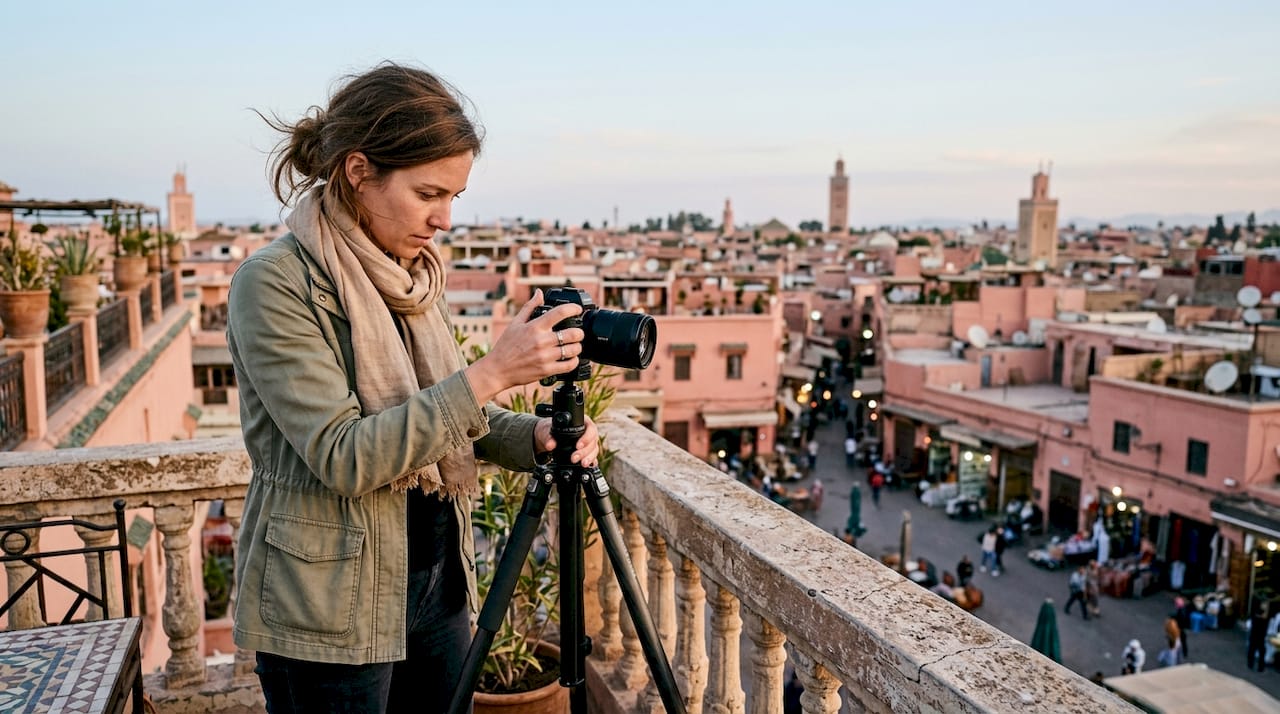
- Morocco offers a highly visual landscape with diverse locations perfect for photography.
- Planning your timing, engaging respectfully with locals, and traveling light can significantly improve your shots.
- Exclusive spots like Dades Valley and Skoura Oasis provide authentic images away from crowded tourist sites.
Morocco is defined as one of the world’s most photogenic travel destinations, where ancient medinas, Saharan dunes, and cobalt blue alleyways collide in a single frame. 68% of the 13 million annual tourists who visit Morocco cite photography as a primary motivation. That number tells you something important: competition for the best shot is real, and planning matters. Whether you’re chasing your next Morocco Instagram spot or building a full content library, this guide gives you the locations, techniques, and cultural knowledge to do it right.
What are the top Morocco Instagram spots for stunning photos?
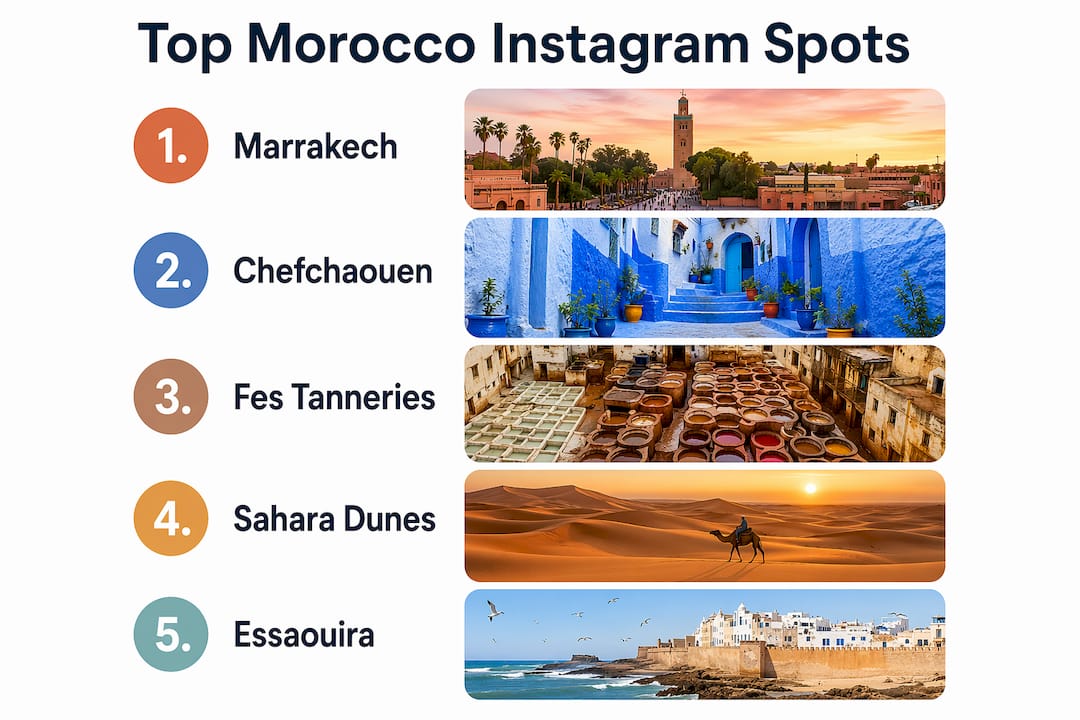
Morocco’s most photogenic places span six distinct visual worlds, from the rose-red walls of Marrakech to the Atlantic-facing ramparts of Essaouira. Each location offers a completely different aesthetic, which means you can build a varied, high-impact feed from a single two-week trip. The best Moroccan cities for photography each bring something the others cannot replicate.
Marrakech: the red city’s visual power
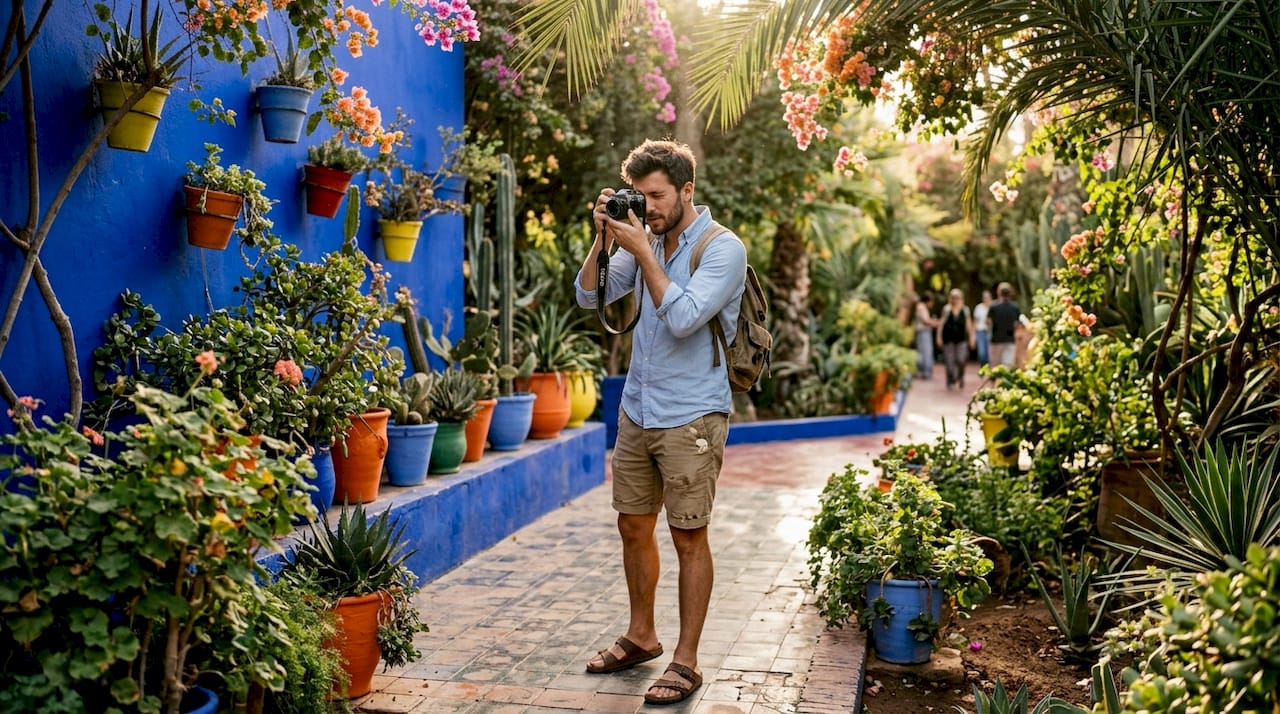
Marrakech delivers the most concentrated density of photogenic scenes in Morocco. The Jardin Majorelle, with its electric cobalt blue walls and vivid yellow pots, is the single most reproduced image in Moroccan travel photography. The Jemaa el-Fna square at dusk, filled with smoke from food stalls and the glow of lanterns, gives you a chaotic, cinematic energy that no filter can manufacture. The medina’s narrow derbs, or alleyways, offer geometric shadow play that rewards anyone willing to wake up early.
Chefchaouen: the blue city
Chefchaouen is the defining Morocco Instagram spot for color-focused photographers. Every wall, staircase, and flowerpot in the medina is painted in layered shades of blue, from pale sky to deep indigo. The effect is unlike anywhere else on earth. The Ras el-Maa waterfall at the edge of the medina adds a natural contrast that breaks up the blue monotony and gives you a fresh compositional option.
Fes, Sahara, and beyond
Top Instagram locations across Morocco include the Fes tanneries, the Sahara Desert dunes near Merzouga, the Essaouira harbor, and the Aït Ben Haddou kasbah. The Fes tanneries, viewed from the leather shop balconies above, give you a bird’s-eye shot of circular dye vats in terracotta, saffron, and mint green. The Sahara at sunrise produces long shadow lines across the dunes that make even a smartphone shot look like a magazine cover. Essaouira’s blue fishing boats against white walls and a gray Atlantic sky create a moodier, more editorial palette.
Here is a quick reference for matching locations to visual styles:
| Location | Visual Style | Best Shot |
|---|---|---|
| Jardin Majorelle, Marrakech | Bold color contrast | Cobalt walls, yellow pots |
| Chefchaouen medina | Monochromatic blue | Staircase alleys, flower pots |
| Fes tanneries | Aerial, color grid | Dye vats from above |
| Sahara Desert, Merzouga | Minimalist, vast | Dune ridgelines at sunrise |
| Essaouira harbor | Moody, coastal | Blue boats, Atlantic backdrop |
| Aït Ben Haddou | Ancient, cinematic | Kasbah towers, desert light |
Beyond these icons, Morocco holds a second tier of photogenic places that most travelers skip entirely. The Dades Valley’s rose-red rock formations, the Skoura Oasis palm groves, and the High Atlas mountain villages all offer scenes with zero crowd interference and genuine local life in the frame.
Pro Tip: Pack a wide-angle lens or use your smartphone’s ultra-wide mode for the Fes tanneries. The standard focal length cuts off the full grid of dye vats and loses the shot’s impact.
How can you apply Morocco travel photography tips for respectful, authentic shots?
Respectful photography in Morocco is not optional etiquette. It is the difference between a portrait that feels alive and one that feels stolen. Asking permission using the phrase “Mumkin ntsawer?” produces a 60% approval rate from locals. Unsolicited photography earns approval only 15% of the time. Those numbers make the case clearly: asking works.
Gear that actually helps you
Modern smartphones released since 2024 handle 90% of Morocco’s photography situations without issue. That matters because heavy camera bags slow you down in crowded souks and signal “tourist with expensive gear” in ways that invite unwanted attention. A mirrorless camera with one versatile zoom lens covers the remaining 10% of situations where a phone falls short, such as low-light interiors in riads or long-distance shots of desert caravans.
Overpacking heavy camera gear limits your mobility and kills your ability to move fast through a medina. The best shots in Morocco often happen in the 30 seconds between one alley and the next. You need to be light enough to react.
Cultural etiquette you cannot skip
- Ask before shooting portraits. Use “Mumkin ntsawer?” and accept a “no” graciously. A refused shot is better than a confrontation.
- Tip performers and guides. Tipping is expected when photographing performers at Jemaa el-Fna or camel guides in the Sahara. Budget 10–20 Moroccan dirhams per interaction.
- Avoid hammams and government buildings. Photography is strictly forbidden in hammams and government sites. Violations can result in equipment confiscation.
- Build rapport first. A brief conversation before raising your camera produces more relaxed, natural portraits than any candid approach.
- Respect prayer times. Photographing the exterior of mosques is generally fine, but entering for photos is not permitted for non-Muslims.
The fishing technique
The fishing technique is the most effective method for candid street photography in Morocco. You identify a well-lit spot with strong compositional elements, position yourself, and wait for subjects to walk into the frame naturally. This approach is less intrusive than following people through a souk and consistently produces more genuine images. Human connection before shooting yields portraits that feel alive rather than staged.
Pro Tip: In the Marrakech medina, find a doorway with warm morning light falling across it and wait. Within ten minutes, a local carrying bread, a child in a djellaba, or a merchant arranging goods will walk through your frame.
When should you visit Morocco Instagram spots for the best light and fewest crowds?
Timing is the single variable that separates a good Morocco shot from a great one. The same location at 7:00 AM and 11:00 AM can look like two different countries. Early morning from 6:00 AM to 8:00 AM delivers the softest light and the fewest tourists at popular spots like Chefchaouen and the Marrakech medina. That two-hour window is your most valuable asset.
Here is a practical timing framework for the most-visited locations:
- Chefchaouen blue alleys: Arrive by 6:30 AM. By 9:00 AM, tour groups fill the main staircases, and the light turns harsh. The blue walls photograph best under overcast skies or in the soft window just after sunrise.
- Jardin Majorelle, Marrakech: Book the first entry slot of the day. The garden opens at 8:00 AM and fills quickly. The cobalt walls need even, diffused light, not direct midday sun, which bleaches the color.
- Fes tanneries: Visit in the morning when the dye vats are most active and the light falls directly into the pits. Afternoon visits often find the vats partially empty and the light blocked by surrounding buildings.
- Sahara Desert dunes: Shoot at sunrise and sunset only. Midday light flattens the dunes completely and removes all shadow definition. Sunrise gives you cooler tones and longer shadows; sunset gives you warm amber and dramatic silhouettes.
- Jemaa el-Fna square, Marrakech: This location reverses the rule. Dusk and early evening are the peak visual moments, when food stalls ignite and the square fills with performers, smoke, and lantern light.
- Essaouira harbor: Overcast mornings work best here. The Atlantic coast is frequently cloudy, and that diffused light suits the blue and white color palette perfectly.
Seasonal considerations
March through May and September through November are the strongest months for photography across Morocco. Summer heat in July and August pushes temperatures above 100°F in inland cities, which empties the streets during midday and creates harsh, flat light. Winter in December and January brings snow to the High Atlas, which creates dramatic mountain shots but limits desert access. The Sahara is most comfortable and most photogenic in October and November, when the light is golden and the temperature is manageable.
Pro Tip: Schedule your Sahara camp night around the new moon. The absence of moonlight turns the desert sky into a natural astrophotography studio. The Milky Way is visible to the naked eye from Merzouga on clear nights.
Which hidden Morocco Instagram spots offer unique shots away from the crowds?
The most exclusive content on any Morocco feed comes from locations that most travelers never reach. These spots require more planning, but they deliver images that no one else in your audience has seen.
- Aït Ben Haddou: This UNESCO World Heritage kasbah sits 30 kilometers from Ouarzazate and has appeared in productions, including Game of Thrones and Gladiator. The best shot is from the hill directly opposite the kasbah at sunrise, when the mud-brick towers glow amber against a pale sky. Crowds are thin before 9:00 AM.
- Dades Valley: The Dades Gorge road winds through red rock formations that look like a Martian landscape. The “monkey fingers” rock formations near the village of Aït Arbi are almost entirely absent from mainstream travel content. A guided Morocco tour that includes the Dades Valley gives you access to viewpoints that independent travelers rarely find.
- Skoura Oasis: The palm grove outside Skoura contains ancient kasbahs half-buried in vegetation. The visual contrast between the mud-brick ruins and the dense green palms is unlike anything in the major cities. Staying in a local riad near Skoura puts you inside the oasis at dawn, when the light filters through the palms in long golden shafts.
- High Atlas villages: The Berber villages above Imlil and around the Ourika Valley offer portraits of daily mountain life that feel completely removed from the tourist circuit. Women in traditional dress, men leading mules along narrow paths, and children playing in stone-walled courtyards are all present and accessible to respectful photographers.
- Merzouga village: Most photographers shoot the dunes and ignore the village itself. The weekly market, the local pottery workshops, and the Gnawa musicians who gather near the main square give you cultural content that the dune shots cannot provide.
Respecting local customs in these remote areas matters more, not less, than in the cities. Smaller communities have less experience with camera-wielding visitors. Always introduce yourself, explain your purpose, and offer to share images with subjects when possible. That gesture builds trust and often opens doors to scenes that no amount of money or planning can manufacture.
Key Takeaways
Morocco’s most photogenic locations reward photographers who plan their timing, travel light, and engage respectfully with local communities before raising a camera.
| Point | Details |
|---|---|
| Top locations to prioritize | Jardin Majorelle, Chefchaouen, Fes tanneries, Sahara dunes, and Aït Ben Haddou cover the widest visual range. |
| Best shooting window | Arrive at popular spots between 6:00 AM and 8:00 AM for soft light and minimal crowds. |
| Permission phrase that works | “Mumkin ntsawer?” earns a 60% approval rate for portraits versus 15% for unsolicited shots. |
| Gear strategy | A 2024-era smartphone handles 90% of Morocco’s photography needs; leave heavy gear at home. |
| Hidden spots for exclusive content | Dades Valley, Skoura Oasis, and High Atlas villages deliver crowd-free, authentic images. |
What I’ve learned shooting Morocco after dozens of trips
The most common mistake photographers make in Morocco is treating it like a backdrop. They arrive at Chefchaouen, photograph the blue walls, and leave without speaking to a single person. The walls are beautiful. But the woman hanging laundry between them, the old man reading on a blue step, and the child chasing a cat through the alley—those are the images that actually stop a scroll.
I’ve found that the photographers who come back with the strongest content are almost always the ones who spent the most time talking and the least time shooting. A ten-minute conversation with a spice merchant in the Fes medina led me to a rooftop I never would have found on any map. The shot from that rooftop, looking down over a maze of flat roofs and satellite dishes and minarets, became the most-shared image I’ve ever posted from Morocco.
The fishing technique changed how I work in souks entirely. Instead of chasing the action, I find a doorway with good light, set my exposure, and wait. The patience required is uncomfortable at first. After twenty minutes, you stop thinking about the shot and start actually seeing the place. That shift in attention is exactly when the best frames appear.
My honest advice on gear: leave the tripod in the hotel for anything except astrophotography in the Sahara. A tripod in a Marrakech souk is a liability. It slows you down, attracts attention, and signals that you are there to extract images rather than experience the place. Travel light, stay mobile, and you will come home with better work.
The role of social media in Moroccan travel culture is shifting. Locals in Chefchaouen and Marrakech are increasingly aware of their value as content subjects. Some have become skilled at negotiating compensation. That is not a problem. It is a fair exchange. Budget for it, approach it with respect, and you will find that the transaction often leads to a genuine connection rather than a commercial one.
— Moroccotravel1.com
Plan your Morocco photography trip with Moroccotravel1.com
Moroccotravel1.com builds itineraries around the locations and experiences described in this guide. The Morocco Grand Tour 14-day package covers Marrakech, Chefchaouen, Fes, the Sahara, and Aït Ben Haddou in a single trip, with local guides who know which rooftops, doorways, and viewpoints produce the strongest shots. For photographers who want a broader sweep of the country’s top destinations, Moroccotravel1’s custom tour options let you build an itinerary around your specific visual goals. Every package includes transportation, accommodation in riads and desert camps, and 24/7 support throughout your trip.
FAQ
What is the single best Morocco Instagram spot for first-time visitors?
Chefchaouen’s blue medina is the most immediately striking location for first-time visitors, offering a consistent, high-impact visual palette that photographs well in almost any light.
What does “Mumkin ntsawer?” mean, and when should I use it?
“Mumkin ntsawer?” means “May I take your photo?” in Moroccan Arabic. Use it before photographing any person, especially in markets and rural areas, to earn consent and build goodwill.
Is a professional camera necessary for Morocco travel photography?
Modern smartphones released since 2024 cover 90% of Morocco’s photography situations. A mirrorless camera adds value for low-light interiors and long-distance desert shots, but it is not required.
When is the best time of year to photograph Morocco?
March through May and September through November offer the best combination of light quality, comfortable temperatures, and manageable crowd levels across most of Morocco’s top photo locations.
Are there places in Morocco where photography is prohibited?
Photography is strictly forbidden in hammams and government buildings throughout Morocco. Violating these restrictions can result in equipment confiscation and legal consequences.


