


- Taking a Moroccan cooking class provides a lasting cultural experience that deepens understanding of traditions, flavors, and community.
- Such classes, often led by local dadas, focus on slow techniques, authentic recipes, and market sourcing, offering valuable insights into Moroccan cuisine.
- Choosing the right class depends on location, instructor authenticity, and desired immersion level, enhancing your overall travel experience.
Taking a morocco cooking class is one of the few travel experiences that stays with you long after your flight home. You do not just learn recipes. You learn why Moroccan mothers have been stirring the same pot for centuries, why saffron gets added at a specific moment, and why the meal itself is an act of community. This guide walks you through what makes Moroccan cuisine so distinct, what different class formats offer, how to pick the right one for your style, and what a full cooking day actually looks and feels like from the souk to the shared table.
Table of Contents
- Key takeaways
- The essence of Moroccan cuisine
- Types of Moroccan cooking classes available
- How to choose the right Morocco cooking class
- What to expect on your cooking class day
- Tips for making the most of your cooking class
- What I’ve learned from Moroccan dadas and slow kitchens
- Plan your Morocco trip around the table
- FAQ
Key takeaways
| Point | Details |
|---|---|
| Authenticity starts with the instructor | Classes taught by a traditional ‘dada’ deliver generational recipes, not tourist-adapted versions. |
| Slow cooking is the real technique | Patient marinating and low-heat preparation create the depth of flavor Moroccan cuisine is known for. |
| Classes suit every skill level | Moroccan food classes are hands-on and participatory, designed for beginners and experienced cooks alike. |
| The market visit matters | A walk through a souk before cooking teaches ingredient sourcing and sharpens your understanding of flavors. |
| Cultural context beats recipe collection | The ‘why’ behind each technique is what transforms a cooking lesson into a genuine cultural experience. |
The essence of Moroccan cuisine
Before you walk into any kitchen in Marrakech or Fez, it helps to understand what you are actually dealing with. Moroccan food is not fast, and it is not simple. It is the result of centuries of Berber, Arab, Andalusian, and sub-Saharan African influences layered onto each other like the spices in a tagine.
The spices that define everything
The spice vocabulary in Moroccan cooking is unlike any other cuisine. Cumin, cinnamon, paprika, ginger, turmeric, and the celebrated ras el hanout blend are not used sparingly. Moroccan spices are combined freely for both flavor and their perceived health benefits, which reflects a culinary philosophy rooted in generosity and well-being. When your instructor adds a generous pinch of cumin to a salad dressing, they are not measuring. They are trusting a tradition.
Saffron deserves its own mention. Morocco produces some of the world’s finest saffron in the Talaouine region, and it shows up in dishes from chicken tagines to bastilla. A good Morocco cooking class will teach you how to bloom it properly rather than just tossing it in dry.
Sweet meets savory, and both win
What surprises most first-time visitors is how comfortably sweet and savory coexist on a Moroccan plate. Moroccan cuisine balances sweet and savory using warm spices alongside preserved lemons and olives. Cinnamon appears in meat dishes. Honey shows up with almonds next to a savory pastry. Preserved lemons add a bright, fermented punch that no fresh lemon can replicate.
This balance is not accidental. It reflects a deliberate philosophy about flavor being complete only when contrasts are present. Learning this in a cooking class changes how you taste the food at every restaurant you visit afterward.
The tagine technique and the dada tradition
The tagine is not just a dish. It is a method. Slow cooking in covered tagines traps steam, keeps meat tender, and allows sauces to develop over low heat. You cannot rush it. This is why patient marinating and low-heat cooking are the real secrets behind a great tagine, not fancy ingredients or professional equipment.
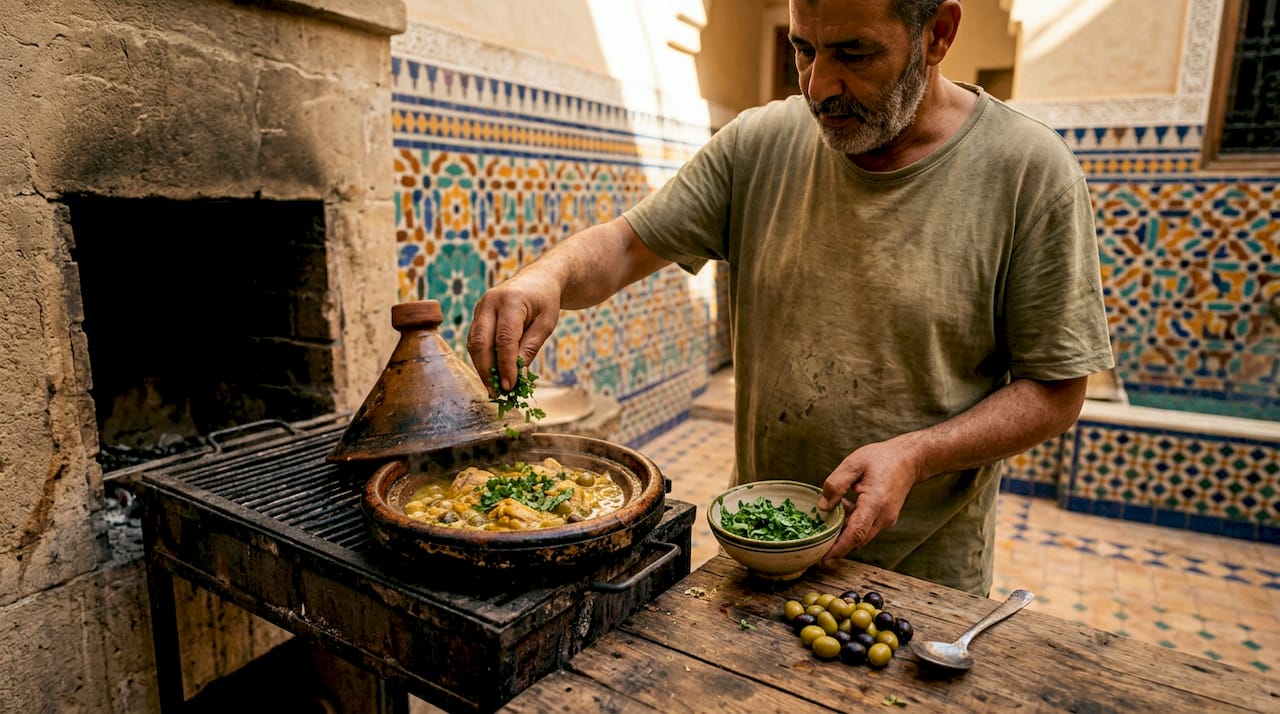
Then there are the dadas. These are traditional Moroccan female cooks who function as living recipe archives. Dadas are highly esteemed guardians of family recipes passed down through generations. Their presence in a Moroccan cuisine workshop is one of the clearest signals that what you are about to learn is real, not staged for tourists.
Pro Tip: When researching Moroccan food classes, look at the instructor biography, not just the menu. A class led by a dada or a local family chef will give you cultural depth that a restaurant-trained chef simply cannot replicate.
Types of Moroccan cooking classes available
Not all cooking experiences in Morocco are built the same. The format you choose shapes everything from how much you learn to how the day actually feels. Here is a breakdown of the main options travelers encounter.
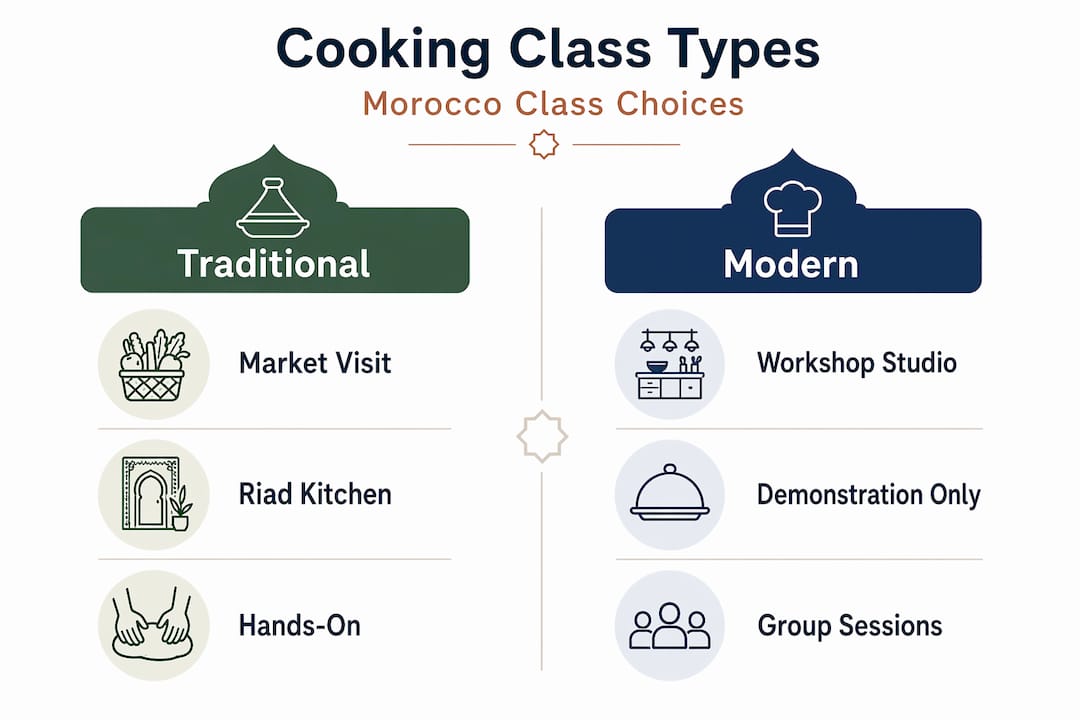
| Class Type | Setting | Best For | Duration |
|---|---|---|---|
| Market visit + riad kitchen | Traditional riad, souk included | Deep cultural immersion | 3 to 5 hours |
| Cooking school program | Formal school kitchen | Technique-focused learners | 3 to 4 hours |
| Private home or family setting | Local home | Intimate, authentic experience | Half day |
| Resort or hotel class | Hotel kitchen | Convenience and comfort | 2 to 3 hours |
| Multi-day culinary tour Morocco | Various locations | Serious food travelers | 2 to 5 days |
The riad kitchen experience is the most popular among travelers seeking genuine cultural immersion. You start with a short walk through a local souk and then move into a traditional courtyard kitchen where the cooking happens, surrounded by zellige tilework and mint-scented air.
Here is what you can generally expect a well-structured Moroccan food class to cover:
- Starters: Moroccan salads like zaalouk (roasted eggplant with tomato) or briouats (stuffed pastry triangles)
- Main course: A tagine, typically chicken with preserved lemon and olives or a lamb version with prunes and almonds
- Bread: Khobz, the everyday Moroccan round bread, which is easier to make than you think
- Dessert: Chebakia (sesame honey cookies) or fresh fruit with orange blossom water
- Mint tea ceremony: The closing ritual that is as much theater as it is hospitality
Cooking classes accommodate all skill levels, from complete beginners to experienced home cooks. The focus is participation, not performance. Nobody is graded, and nobody goes home hungry.
How to choose the right Morocco cooking class
With dozens of options available in cities like Marrakech, Fez, Essaouira, and even in villages near the Atlas Mountains, choosing the right class takes a bit of strategy. Here is a practical framework.
- Verify the instructor’s background. A class taught by a dada or a local family cook offers authentic recipes that have not been simplified for tourists. Booking a class taught by a DADA gives you access to generational knowledge rather than a version designed to be quick and crowd-pleasing.
- Consider the location within Morocco. Marrakech classes tend to be more widely available and polished. Fez offers deeper medina immersion. A cooking experience in Morocco’s Atlas Mountain villages tends to be smaller, rawer, and more personal. The top cities for culinary culture each offer something distinct, so match the city to the depth of experience you want.
- Decide between group and private. Group classes (typically 6 to 12 people) have a social energy that can be genuinely fun. Private classes move at your pace and allow for more questions. If you are traveling as a couple or with a specific dietary requirement, a private room is usually worth the extra cost.
- Read the class menu carefully. A class that only teaches one dish is a short experience. Look for programs that include a market walk, at least three dishes, and a mint tea demonstration. The traditional Moroccan recipes covered should include starters, a main, dessert, and bread if possible.
- Check what is included in the price. The best cooking lessons in Morocco include market costs, all ingredients, the shared meal, and recipe copies sent afterward. Surprises at checkout kill the mood.
- Look at recent reviews specifically. Not overall venue reviews, but reviews of the cooking class itself. Look for comments about the instructor’s warmth, the depth of cultural explanation, and whether participants felt hands-on rather than like spectators.
Pro Tip: If a class description mentions “demonstration only,” keep looking. A genuine hands-on cooking class should have you chopping, stirring, and assembling from the first ten minutes.
What to expect on your cooking class day
Here is how a typical Morocco cooking class day flows from start to finish. Knowing the structure ahead of time lets you relax into the experience rather than spending the first hour figuring out what comes next.
- Morning market walk. Most classes begin with a guided visit to a local souk or covered market. Market visits teach participants to source fresh produce, herbs, and spices the way Moroccan home cooks do. Your instructor will explain how to choose ripe tomatoes, which stalls sell the best preserved lemons, and how to identify real saffron from imitation.
- Kitchen orientation. Back in the riad or cooking school, you get introduced to your workspace. Tools include a traditional tagine, a couscoussier (a two-tiered steamer), a mortar for spice grinding, and the various clay and ceramic dishes Moroccan cooking relies on.
- Spice lesson and flavor building. Before anything goes on the heat, you learn the spice blends. This is often the most intellectually engaging part of the class. Understanding how layering and balancing spices like cumin, cinnamon, and saffron requires patience changes how you approach every recipe you will ever cook.
- Hands-on preparation. You cook. Dishes typically covered include chicken tagine with preserved lemon and olives, at least two salads, bread, and a dessert. The instructor guides each step, explains the reasoning, and shares stories about where each recipe comes from.
- Mint tea ceremony. Near the end of the session, someone teaches you how to prepare Moroccan mint tea. Mastery of the mint tea ritual is a cultural highlight. The pour from height, the fresh mint, and the sugar that is not optional: it is a window into Moroccan hospitality that words cannot fully capture.
- The shared meal. You sit down together and eat everything you made. This is not a rushed plating exercise. It is a relaxed, social meal that reflects exactly how Moroccan families eat.
- Recipes by email. Most classes send recipe copies electronically after the session so you can recreate the dishes at home. Keep them. You will use them more than you expect.
“A cooking class in Morocco is fundamentally a cultural exchange. The recipes are the vehicle, but the destination is understanding how people live.”
Tips for making the most of your cooking class
Showing up is the easy part. Getting the most out of a learn-Moroccan-cooking experience takes a bit of intentional engagement. These tips come from travelers who have done it, not from brochures.
- Ask the “why” at every step. Why does the onion go in before the spices? Why is the tagine never stirred? Focusing on the reasoning behind techniques rather than just the steps creates a deeper and more transferable understanding of Moroccan cooking.
- Wear comfortable, practical clothes. If your class includes a market walk in the medina, wear closed-toe shoes and light layers. Mornings in Moroccan medinas can be cool, and kitchen sessions get warm fast.
- Take notes on the spice ratios. Instructors often measure by feel rather than by exact quantity. Write down what you observe, even approximately, because the recipe email will not capture everything the instructor shows you in the moment.
- Be patient with slow cooking. Moroccan tagines often need 45 minutes or more at low heat. Do not hover. Use that time to talk to your instructor, ask about their family’s version of the dish, or explore the iconic dishes and traditions that shape what you are making.
- Bring home edible souvenirs. A small bag of ras el hanout from the market, a jar of preserved lemons, or a packet of orange blossom water weighs almost nothing and costs very little. These ingredients will make your recreations at home taste noticeably more authentic than anything from a supermarket spice rack.
- Respect kitchen customs. In many traditional Moroccan households and riad kitchens, the left hand is not used when handling food. Ask your instructor if there are any customs specific to their kitchen, and follow them. It shows respect and deepens the cultural exchange.
Pro Tip: If you want a souvenir that is both practical and meaningful, buy a small clay tagine from the market during your class walk. Your instructor can often point you to the right stall and negotiate a fair price on your behalf.
What I’ve learned from Moroccan dadas and slow kitchens
I have stood in riad kitchens in Marrakech watching a dada work, and the thing that strikes you immediately is the absence of urgency. There is no clock anxiety, no shortcutting, no compromise on the layering of flavors. I came in thinking I knew something about cooking. I left understanding that patience is itself a technique.
The mint tea moment is the part most visitors underestimate. In my experience, travelers treat it as a nice ending to the class. But watching a DADA pour tea from height, controlling the froth, and adjusting the sugar with the same precision she brings to her spice blends: that is when you understand that Moroccan hospitality is not an attitude. It is a practiced skill.
What changed my cooking back home was not the recipes. It was the shift in mindset. Authentic cooking classes offer cultural exchange that opens a window into community life. Once you understand that a tagine is meant to be slow because slow is how you show respect for the people eating it, you cook differently. You stop rushing everything.
My advice to anyone planning a culinary tour in Morocco is this: do not treat the cooking class as a half-day activity slotted between sightseeing stops. Treat it as one of the main events. Book it early in your trip so that every meal you eat afterward lands with new meaning. You will taste things you would have missed before.
— Moroccotravel1.com
Plan your Morocco trip around the table
A Morocco cooking class is most powerful when it sits inside a well-designed itinerary rather than stands alone. At Moroccotravel1.com, we build travel packages that treat food and culture as central experiences, not optional add-ons.
Whether you are exploring the medinas of Marrakech and Fez on the 14-day grand Morocco tour or diving into a shorter desert and city combination, cooking class experiences can be woven directly into your schedule. Couples on a honeymoon package find that a private morning class followed by a riad lunch is one of the most memorable parts of their trip. Families traveling with children discover that learning to make Moroccan bread together breaks the ice with a place that might otherwise feel overwhelming. For travelers who want everything coordinated, our custom Morocco vacation packages include class bookings, transport to and from the venue, and expert local guides who can enrich the experience with context before and after you cook. Reach out to Moroccotravel1 to start building an itinerary where the kitchen is part of the adventure.
FAQ
What is included in a typical Morocco cooking class?
Most classes include a market walk for ingredient sourcing, hands-on preparation of three to five dishes, a Moroccan mint tea ceremony, a shared meal, and recipe copies sent by email after the session.
How long does a Morocco cooking class last?
Most half-day cooking classes in Morocco run between three and five hours, covering a market visit and full meal preparation. Multi-day culinary programs are also available for more serious learners.
Do I need cooking experience to join a Moroccan food class?
No prior experience is needed. Classes are designed to be participatory and accommodate complete beginners as well as experienced home cooks, with a focus on cultural immersion rather than technical skill.
What makes a Moroccan cooking class authentic?
The clearest authenticity markers are an instructor with traditional roots (particularly a dada), use of generational recipes rather than simplified tourist versions, and a setting that reflects genuine Moroccan home cooking rather than a hotel kitchen demonstration.
Which Moroccan city offers the best cooking experience?
Marrakech offers the widest variety of Moroccan cuisine workshops and is the most accessible. Fez is known for deeper medina immersion and more traditional instruction styles. Both cities are excellent starting points for a memorable cooking experience in Morocco.


