

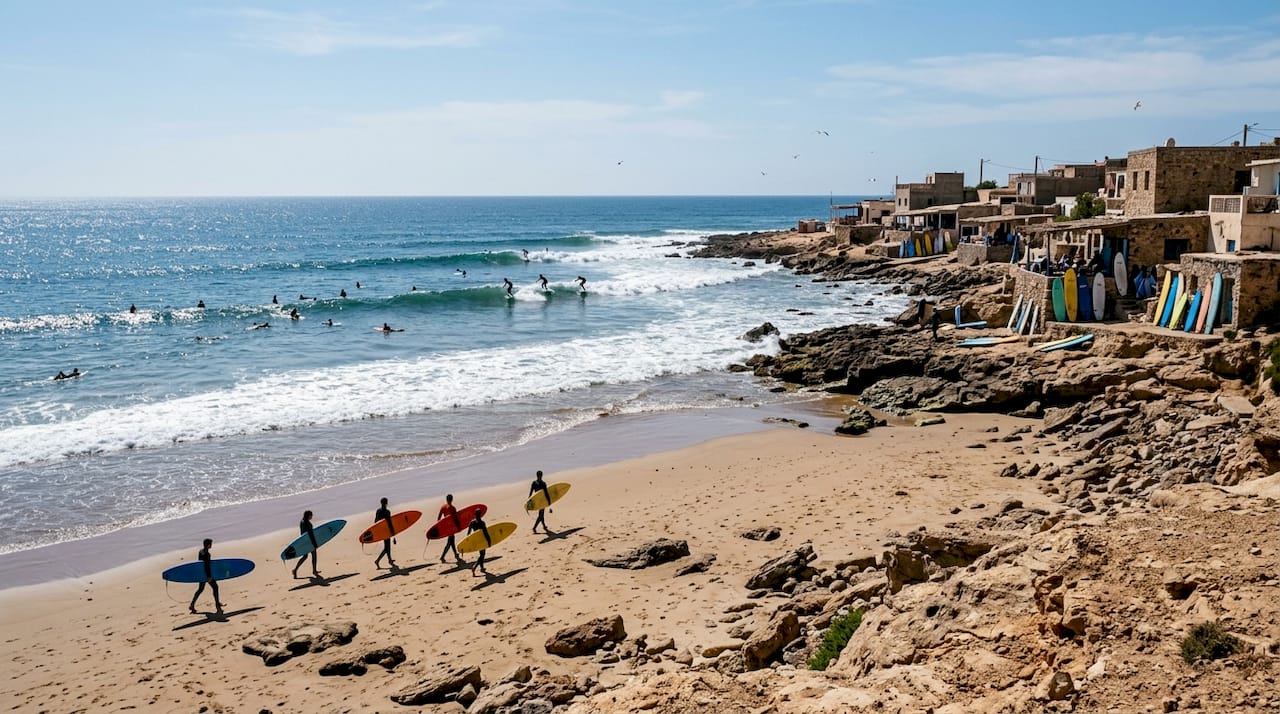
- Morocco offers a 1,200-kilometer Atlantic coastline with world-class surf spots best visited from November through March.
- The most popular regions are Taghazout, Imsouane, and Essaouira, each suited to different skill levels and wave types.
- Booking an all-inclusive surf camp starting around €299 provides access to lessons, gear, and cultural experiences in a convenient, affordable package.
Morocco surfing is defined by a 1,200-kilometer Atlantic coastline that delivers world-class point breaks, long rolling waves, and wind-driven beach breaks across three distinct surf regions. The prime surf season runs from November through March, when consistent North Atlantic swells produce the most powerful and reliable conditions. Taghazout, Imsouane, and Essaouira are the three surf hubs every serious traveler needs to know. Each region serves a different skill level and wave preference, making Morocco one of the most accessible and rewarding surf destinations in the world for beginners and advanced surfers alike.
What is the best time to surf in Morocco?
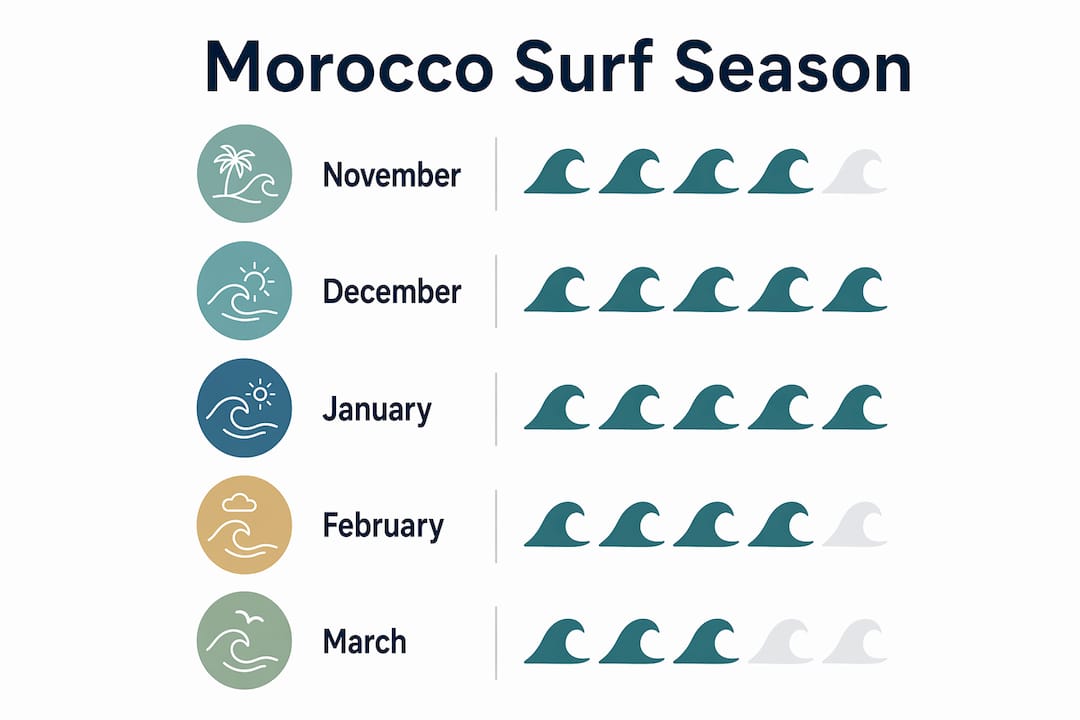
Timing is the single most important factor in planning a successful surf trip to Morocco. The peak surf season runs from November through March, driven by powerful North Atlantic swells that hit the coastline with consistency and size. Water temperatures in autumn sit between 20°C and 22°C, making wetsuits optional for many surfers early in the season. By January and February, a 3 mm to 4 mm wetsuit becomes standard.
The surf season breaks down into three distinct windows, each with its own character:
- October to November: Swells build steadily. Crowds are lighter than peak winter, water is warm, and conditions suit intermediate surfers looking for quality waves without heavy competition in the lineup.
- December to February: The core of the season. North Atlantic swells deliver powerful, consistent waves at spots like Anchor Point and Imsouane. This window is best for experienced surfers chasing size and power.
- March to April: Swells taper off but remain surfable. Crowds thin out, prices drop, and the weather warms. This window suits intermediate surfers and those combining surf with broader travel.
Summer is a different story entirely. From June through September, swells shrink, and the Alizé trade winds create choppy, unpredictable surface conditions. Expecting prime surf in summer leads to disappointment. The point breaks that define Morocco’s reputation go flat, and the wind makes most beach breaks messy. Surfers who arrive in July hoping for the conditions they saw online in January will find a very different ocean.
Pro Tip: Book your Morocco surf trip for late October or early November. You get warm water, building swells, and a fraction of the December crowds. It is the season’s best-kept window.
The wind factor deserves specific attention. Offshore winds in the morning are common along the Taghazout coast during winter, grooming wave faces and creating ideal conditions. By afternoon, onshore winds often pick up and deteriorate surface quality. Experienced surfers plan their sessions for dawn or early morning and use afternoons for rest, culture, or exploring the medina.
Which are the best surf spots in Morocco?
Morocco’s surf regions each offer a distinct experience. The three main areas serve different skill levels, wave types, and travel styles.
Taghazout and Tamraght
Taghazout is Morocco’s surf capital. The village sits 20 kilometers north of Agadir and hosts a cluster of right-hand point breaks that work best from october through march. Anchor Point is the most famous wave in Morocco. It is a powerful, long right-hander that breaks over a rocky reef and can hold waves of serious size. Anchor Point draws experienced surfers from across Europe and beyond during peak season, and the lineup gets competitive and crowded.
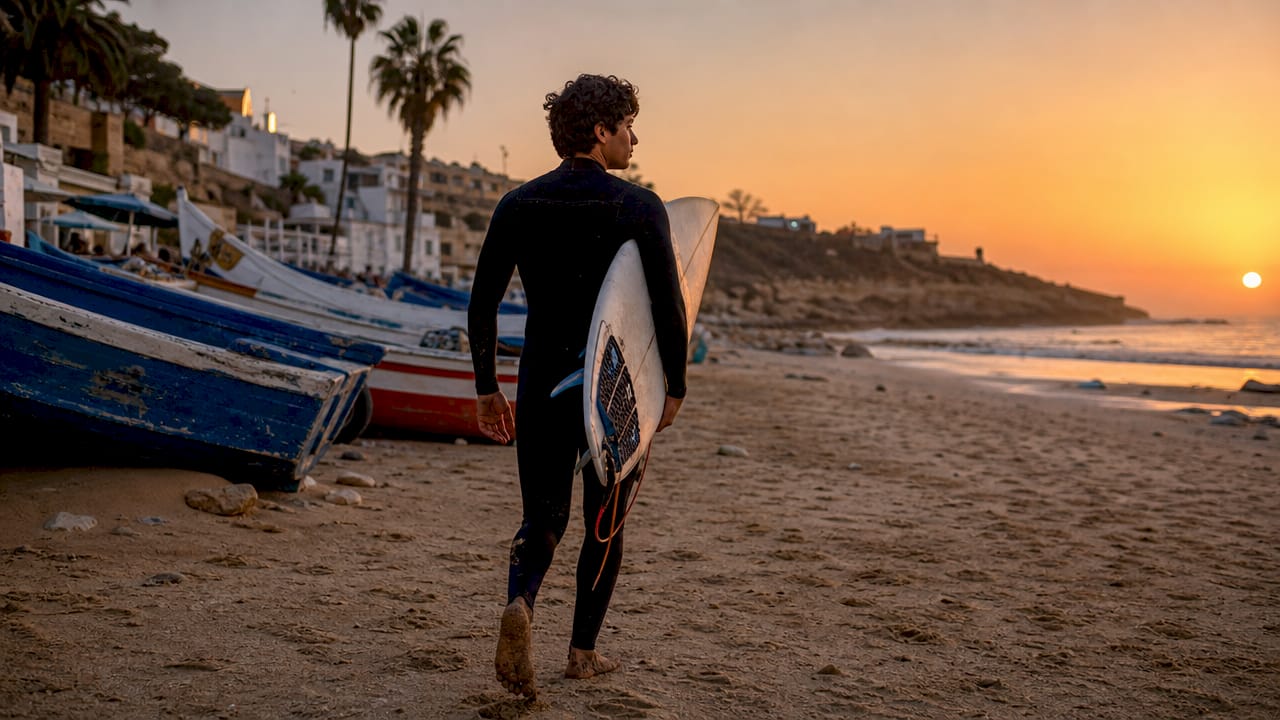
Tamraght, just south of Taghazout, offers a quieter alternative. The village sits close to the same breaks but attracts fewer crowds. Surfers who want access to world-class waves without the intensity of Taghazout’s peak-season lineups often base themselves in Tamraght. Other notable spots in the area include Panoramas and Banana Beach, both of which are far more forgiving for beginners and intermediate surfers than Anchor Point.
Pro Tip: If you are an intermediate surfer visiting in December or January, skip Anchor Point and spend your first two days at Panoramas. You will build confidence on quality waves before stepping up to the main breaks.
Imsouane Bay
Imsouane sits roughly 90 kilometers north of Agadir and holds the longest right-hand wave in North Africa. Imsouane’s wave can run for up to 600 meters on a solid set, giving surfers an unusually long ride by any global standard. That length makes it a favorite for longboarders and beginners who want time on the wave to practice turns and footwork.
The catch is the paddle back. After a 600-meter ride, surfers face a 200–300 meter paddle back to the take-off zone. Using the point channel rather than paddling through the break conserves energy significantly. Surfers who ignore the channel burn out quickly and cut their sessions short. Imsouane also has a second break called the Cathedral, which is shorter, hollower, and better suited to intermediate and advanced surfers.
Essaouira and Sidi Kaouki
Essaouira sits further north along the Atlantic coast and operates on a different energy entirely. The Essaouira region is famous for wind, which makes it a world-class kitesurfing and windsurfing destination. For traditional surfing, the beach breaks at Sidi Kaouki, 25 kilometers south of Essaouira, offer a relaxed and uncrowded alternative. Waves here are wind-driven and less consistent than the point breaks further south, but the atmosphere is mellow and the scenery is striking.
| Surf spot | Wave type | Best skill level | Peak season |
|---|---|---|---|
| Anchor Point, Taghazout | Right-hand point break | Advanced | December to february |
| Panoramas, Taghazout | Mellow right-hander | Beginner to intermediate | October to march |
| Imsouane Bay | Long right-hand point | All levels | November to february |
| Imsouane Cathedral | Short, hollow break | Intermediate to advanced | November to february |
| Sidi Kaouki, Essaouira | Beach break | Beginner to intermediate | October to april |
What should you expect from a Morocco surf camp?
A Morocco surf camp is the most efficient way to experience the country’s waves, especially for first-time visitors. Surf camps serve surfers of all levels by combining expert local knowledge with daily logistics support. You do not need to research swell forecasts, figure out transport, or guess which spot is working on a given day.
A typical all-inclusive surf camp package covers:
- Accommodation: Most camps offer shared or private rooms in surf houses or riads close to the beach. Quality ranges from basic to boutique depending on price.
- Meals: Breakfast and dinner are standard inclusions. Moroccan food, including tagine, fresh bread, and mint tea, is a genuine highlight of the camp experience.
- Surf lessons and coaching: Daily sessions with qualified instructors cover technique, ocean safety, and spot selection. Lessons are grouped by level.
- Equipment rental: Boards, wetsuits, and leashes are included in most packages. Beginners typically use foam boards; intermediates can request shortboards or mid-lengths.
- Transfers: Airport pickups from Agadir Al Massira Airport typically cost around €30 extra and are bookable through the camp.
All-inclusive packages start at around €299 for five days, covering accommodation, meals, equipment, and lessons. That price point makes Morocco one of the most affordable surf camp destinations in Europe and North Africa. Comparable packages in Portugal or the Canary Islands run significantly higher.
The cultural dimension of a Morocco surf camp sets it apart from surf trips elsewhere. Evenings often include yoga sessions, communal dinners, and time in the medina. Many camps organize day trips to Agadir, Taghazout village, or the souks in nearby towns. Surfing in Morocco is not just about the waves. The combination of Saharan light, Atlantic swell, and Moroccan hospitality creates an experience that surfers return to repeatedly.
Pro Tip: Ask your camp whether they use local surf guides for daily spot selection. Local guides read conditions dynamically and will move the group to a different break if the primary spot is blown out. That flexibility is worth more than any fixed itinerary.
What travel logistics should surfers know before going to Morocco?
Getting to Morocco’s surf zones is straightforward once you know the entry points. Agadir Al Massira Airport is the primary gateway for most surf travelers. It sits within 30 minutes of Taghazout and 90 minutes of Imsouane. Marrakech Menara Airport and Casablanca Mohammed V Airport are secondary options, but both require transfers of two hours or more to reach the main surf hubs.
Key logistics to plan before you arrive:
- Board transport: Most airlines charge for surfboard bags. Budget €50–€80 each way for a standard board bag on European carriers. Many surf camps rent quality boards on-site, which eliminates the hassle entirely.
- Ground transport: Shared taxis and local buses connect Agadir to Taghazout and Imsouane at low cost. Private transfers are faster and more comfortable, especially with gear.
- Accommodation outside camps: Guesthouses and riads in Taghazout and Tamraght fill up fast in December and January. Book at least six weeks ahead for peak season. The best time to visit in terms of value and availability is October or early November.
- Currency: The Moroccan dirham is the local currency. ATMs are available in Agadir and Taghazout. Most surf camps and guesthouses accept card payments, but carry cash for local markets and taxis.
Local surf culture in Morocco is welcoming but has its own norms. Respect in the lineup matters. Dropping in on locals at Anchor Point is not tolerated and will create tension quickly. Female surfers surf freely at all major spots, though modest dress is appreciated in the villages away from the beach. The surf community around Taghazout is genuinely international, and most local surfers are friendly and generous with spot knowledge if you approach with respect.
The Morocco surf season aligns well with European winter escapes. Flights from London, Paris, and Madrid to Agadir are frequent and affordable from October through March. The combination of short flight times, low costs, and world-class waves makes Morocco the most accessible surf destination for European travelers.
Key takeaways
Morocco surfing delivers world-class waves from November through March across three distinct regions, with Taghazout, Imsouane, and Essaouira each serving different skill levels and travel styles.
| Point | Details |
|---|---|
| Peak season timing | Surf from November through March for consistent North Atlantic swells and quality conditions. |
| Best spots by level | Beginners thrive at Panoramas and Imsouane Bay; advanced surfers target Anchor Point and Cathedral. |
| Surf camp value | All-inclusive camps from around €299 for five days cover lessons, gear, meals, and local guidance. |
| Airport access | Fly into Agadir Al Massira Airport for the fastest access to Taghazout and Imsouane. |
| Avoid summer | Summer swells are small and winds are erratic; peak point break conditions do not exist from june through september. |
What I have learned from Morocco’s surf after years of visits
The most common mistake surfers make in Morocco is choosing the wrong spot for their level. Anchor Point looks incredible in photos and videos. It is a genuinely world-class wave. But it is also fast, powerful, and unforgiving, and the lineup in January is packed with experienced surfers who know exactly what they are doing. I have watched intermediate surfers paddle out there, get caught inside on a set, and spend 45 minutes getting worked before retreating to the beach exhausted and deflated. That is not a surf trip. That is a survival exercise.
The surfers who leave Morocco with the biggest smiles are the ones who matched their spots to their actual levels, not their aspirational levels. Imsouane Bay is one of the most joyful waves I have ever surfed. A 400-meter ride on a longboard in warm autumn light, with the fishing village behind you and the Atlas Mountains in the distance, is an experience that stays with you. You do not need to charge Anchor Point to have a meaningful Morocco surf trip.
The cultural side of Morocco also rewards openness. Surfers who treat the trip as purely a wave-hunting mission miss half of what makes Morocco extraordinary. The food, the medinas, the light in the late afternoon over the Atlantic, the mint tea after a session. These are not distractions from surfing. They are the reason Morocco keeps pulling people back year after year. Plan your sessions for the morning, and give your afternoons to the country itself.
Moroccotravel1 has helped many adventure travelers build Morocco trips that combine surf with broader cultural experiences, and that balance consistently produces the most memorable trips. A week at a surf camp in Taghazout followed by two days in Marrakech is a combination that works on every level.
— Moroccotravel1.com
Plan your Morocco surf trip with Moroccotravel1.com
Moroccotravel1.com builds private and custom Morocco tours for surfers and adventure travelers who want more than a standard package. Whether you want a surf-focused week in Taghazout, a longer trip combining Imsouane and Essaouira, or a full Morocco experience that pairs Atlantic waves with desert camps and medina stays, Moroccotravel1 handles the logistics from airport transfers to accommodation. The team includes local experts who know the surf regions and the cultural highlights equally well. For travelers who want a structured itinerary with room to explore, the 14-day grand tour covers Morocco’s major surf and cultural destinations in one well-paced trip.
FAQ
What is the best time of year to surf in Morocco?
The best time to surf in Morocco is from November through March, when North Atlantic swells deliver consistent, powerful waves at spots like Anchor Point and Imsouane Bay. Water temperatures in autumn range between 20°C and 22°C, making early season conditions particularly comfortable.
Where are the best surf spots in Morocco for beginners?
Beginners should head to Panoramas or Banana Beach near Taghazout, or Imsouane Bay, where long, mellow waves provide plenty of time to practice. Anchor Point and Cathedral are reserved for experienced surfers due to their power and speed.
How much does a Morocco surf camp cost?
All-inclusive surf camp packages in Morocco start at around €299 for five days, covering accommodation, meals, equipment rental, and surf lessons. Airport transfers from Agadir typically add around €30 to the total cost.
Which airport should I fly into for Morocco surfing?
Agadir Al Massira Airport is the best entry point for surf travelers, placing you within 30 minutes of Taghazout and 90 minutes of Imsouane. Marrakech and Casablanca airports require significantly longer transfers to reach the main surf zones.
Can beginners take surfing lessons in Morocco?
Surfing lessons in Morocco are widely available at surf camps and independent schools in Taghazout, Tamraght, and Imsouane. Most camps group students by skill level and provide foam boards, wetsuits, and qualified instructors as part of their standard packages.


