

- Morocco’s historical layers shape nearly every aspect of its tourism, making the country a living archive.
- Travelers experience Morocco through architecture, crafts, festivals, and cuisine that reflect its diverse civilization influences.
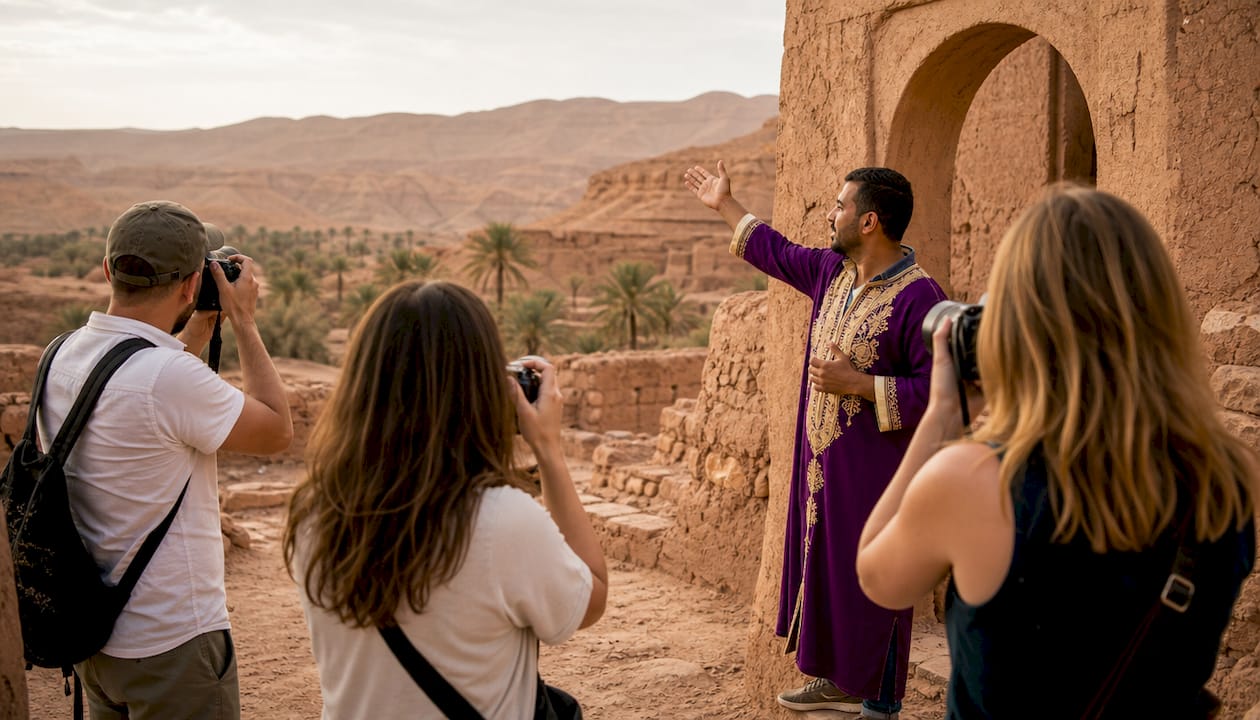
- Visiting key sites like Fez el-Bali, Marrakech, Volubilis, and Meknes offers a deep understanding of the country’s rich and ongoing history.
History defines the role of history in Moroccan travel more than scenery, cuisine, or climate ever could. Morocco is a living archive of Amazigh, Arab, Andalusian, and Mediterranean civilizations, each layer visible in its medinas, monuments, and daily rituals. Morocco’s tourism sector reached 17.4 million arrivals in 2024, a 20% increase over 2023, and cultural heritage sites drive the majority of that growth. That number tells you something direct: travelers are not coming for beaches alone. They come because Morocco’s past is still present, still breathing, and still worth crossing an ocean to experience.
How the role of history in Moroccan travel shapes every experience
Morocco’s cultural identity is a layered inheritance combining Amazigh, Arab, Andalusian, and Mediterranean influences. No other country in North Africa offers this density of overlapping civilizations in a single trip. That layering is not abstract. You feel it in the cedar woodwork of a Fez riad, in the call to prayer echoing over a Roman ruin, and in the Gnaoua musicians performing in a square that has functioned as a public gathering space for centuries.
Morocco holds 16 cultural traditions recognized by UNESCO as Intangible Cultural Heritage, a list that has grown since 2008. Jemaa el-Fna square in Marrakech was the first public space in the world to receive UNESCO recognition for its living cultural practices. That distinction matters because it signals that Morocco’s heritage is not confined to museums. It lives in performance, craft, and community.
These historical layers show up in four specific ways that travelers encounter directly:
- Architecture: Moroccan medinas blend Andalusian arches, Amazigh geometric tilework, and Arab courtyard design into a single streetscape.
- Crafts: Artisan traditions like zellige tilework, leather tanning, and copper engraving trace back centuries and remain practiced in the same districts today.
- Festivals: Events like the Fez Festival of World Sacred Music draw on the city’s role as a medieval center of Islamic scholarship.
- Cuisine: Dishes like bastilla and harira carry the fingerprints of Andalusian refugees who resettled in Moroccan cities after 1492.
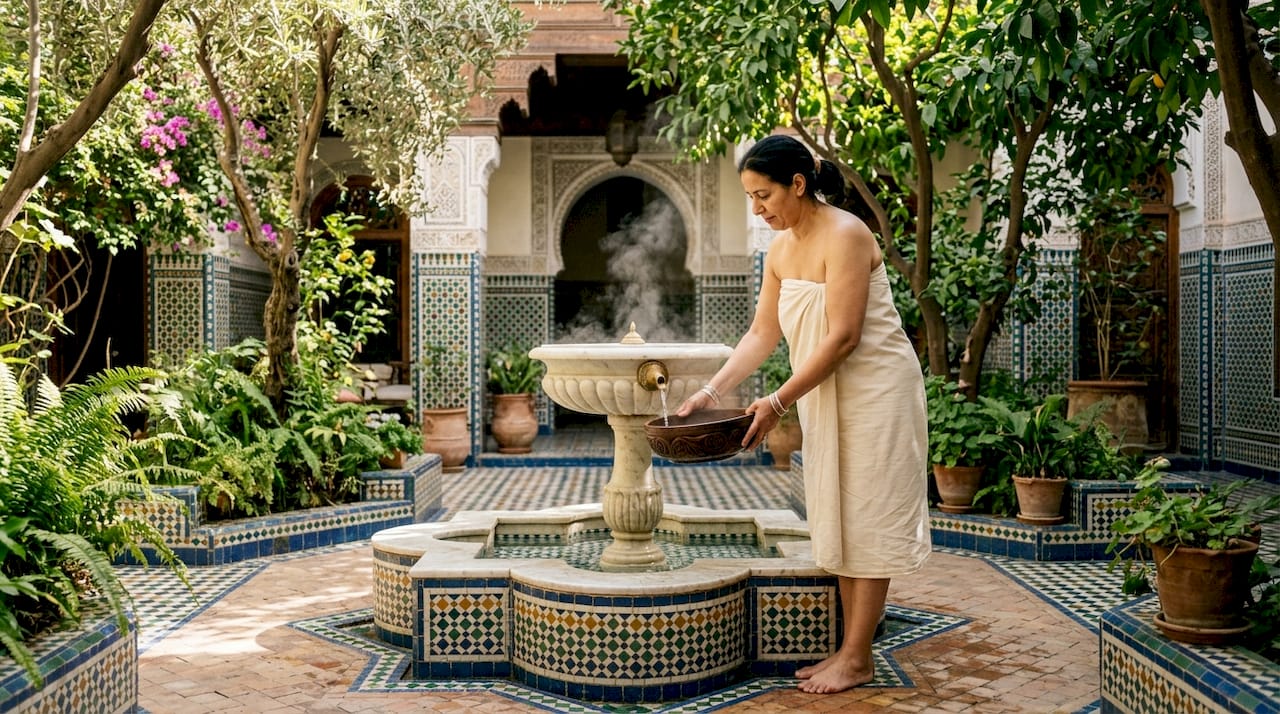
Pro Tip: Visit a traditional hammam in the medina before touring major monuments. The ritual itself is a form of living history, unchanged in its essentials for over 500 years.
The synthesis of these traditions gives travelers something rare. Most destinations offer history as a backdrop. Morocco offers it as the main event.
What are the most historically significant sites in Morocco?
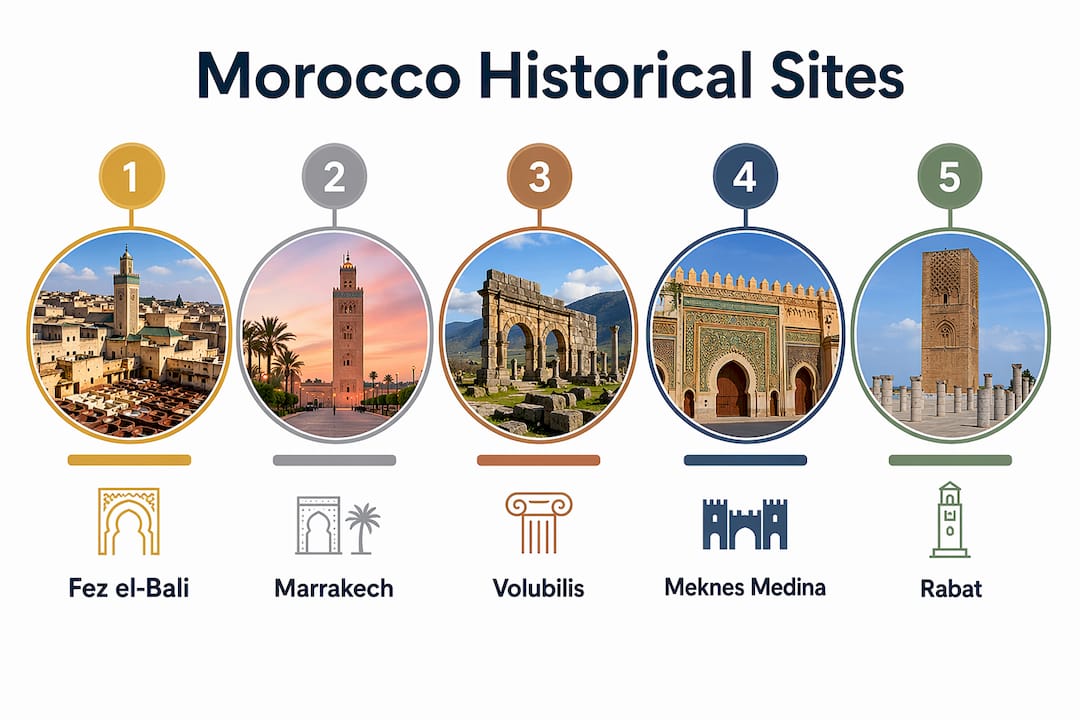
Morocco’s most visited historical sites concentrate in its four imperial cities: Fez, Marrakech, Meknes, and Rabat. Each served as a royal capital at different points in Moroccan history, and each carries a distinct architectural and cultural character. Travelers who visit all four gain a timeline of Moroccan civilization rather than a single snapshot.
Fez el-Bali
Fez el-Bali is the world’s largest car-free urban area, with over 9,000 alleys threading through its medieval core. Founded in the 9th century, it contains the University of al-Qarawiyyin, widely recognized as the oldest continuously operating university in the world. The medina’s tanneries, mosques, and madrasas have changed little in layout since the 14th century. Fez is not a reconstructed heritage site. It is a functioning city that happens to be medieval.
Marrakech
Marrakech holds six UNESCO World Heritage Sites, but its appeal goes beyond official recognition. The city’s success as a destination reflects decades of government investment in accessibility, narrative, and infrastructure. The Saadian Tombs, the Bahia Palace, and the Ben Youssef Madrasa each represent a different dynasty and a different aesthetic chapter in Moroccan history. Travelers who visit Marrakech’s historical layers with a knowledgeable guide leave with a coherent story, not just a collection of photographs.
Volubilis
Volubilis is Morocco’s most significant Roman site and one of the best-preserved in the entire Mediterranean region. Over 62% of the site remains unexcavated, which means travelers are visiting a history still actively unfolding. That figure reframes the experience entirely. You are not seeing a finished exhibit. You are standing at the edge of an ongoing discovery.
| Site | Period | Key Feature |
|---|---|---|
| Fez el-Bali | 9th century onward | Oldest university; 9,000+ alleys |
| Jemaa el-Fna, Marrakech | 11th century onward | First UNESCO-recognized public space |
| Volubilis | 3rd century BC onward | 62%+ still unexcavated Roman ruins |
| Meknes Medina | 17th century | Ismail-era gates and granaries |
| Rabat Kasbah | 12th century onward | Almohad fortifications; UNESCO listed |
Pro Tip: Combine a visit to Volubilis with nearby Moulay Idriss Zerhoun, the hilltop town where Morocco’s founding dynasty is buried. Most tour itineraries skip it, but the combination gives you 2,000 years of history in a single afternoon.
The top cities in Morocco for cultural travel each reward a different kind of historical curiosity. Fez rewards scholars. Marrakech rewards sensory learners. Volubilis rewards those who think in geological time.
How does history influence the authenticity of Moroccan tourism?
The tension between authentic heritage and commercial tourism is real in Morocco, and travelers who understand it make better choices. The concept of “layered inheritance” describes Morocco’s cultural identity accurately. The risk is that popular destinations reduce that inheritance to a product: a photo opportunity, a souvenir market, a staged performance.
Marrakech illustrates this tension most clearly. Its UNESCO status and government investment have made it one of Africa’s most visited cities. That success brings crowds, rising prices, and experiences calibrated for tourists rather than for genuine cultural exchange. The medina’s Djemaa el-Fna square still functions as a living cultural space, but the ratio of performers to spectators has shifted dramatically over the past two decades.
Authentic travel quality in Morocco emerges not from UNESCO status alone, but from sustained investment and narrative curation over decades. Heritage designation initiates protection. It does not guarantee a meaningful traveler experience. The difference lies in how governments, local communities, and tour operators choose to present what they have inherited.
Morocco’s government has maintained consistent ministerial leadership through political changes and environmental crises, including the 2023 earthquake. That continuity matters because heritage tourism requires long-term planning, not short-term campaigns. The country’s target of 26 million tourists by 2030 raises a legitimate question: can Morocco scale its tourism sector without diluting the historical density that makes it worth visiting?
Travelers can protect their own experience by making deliberate choices:
- Avoid peak-season crowds in Marrakech by visiting in April or October, when the medina functions more like a neighborhood than a theme park.
- Seek out secondary cities like Meknes, Chefchaouen, or Taroudant, where historical sites receive fewer visitors and local life remains less staged.
- Choose guides with formal training in Moroccan history, not just navigation. The difference in depth of explanation is significant.
- Stay in a riad rather than a chain hotel. The architecture itself is a history lesson, and riad owners often carry deep knowledge of their neighborhood’s past.
The historical significance in Moroccan tourism is most vivid when travelers move beyond the obvious circuit and engage with the country’s past on its own terms.
How can travelers meaningfully explore Morocco’s historical sites?
Meaningful engagement with Morocco’s history requires preparation, the right companions, and a willingness to slow down. The most common mistake travelers make is treating historical sites as a checklist. Morocco rewards a different approach.
- Hire a licensed local guide for medina visits. Fez el-Bali’s 9,000+ alleys make self-navigation genuinely difficult, and getting lost without a guide costs time and context. A trained guide connects the physical space to the historical narrative, explaining why a particular street was the domain of Jewish merchants or why a specific mosque faces an unusual direction.
- Read one book before you go. Tahir Shah’s In Arabian Nights or Elias Canetti’s The Voices of Marrakesh gives travelers a frame of reference that no guidebook provides. Arriving with a mental map of Morocco’s cultural history makes every site more legible.
- Visit the Bou Inania Madrasa in Fez. Built in the 14th century under the Marinid dynasty, it is one of the finest examples of Islamic architecture in the world. Most travelers walk past it. Those who enter encounter carved stucco, cedar latticework, and a courtyard that has not changed in 700 years.
- Spend time at Volubilis in the early morning. The site opens before the tour buses arrive. Walking the Roman mosaics at sunrise, with the Atlas Mountains visible in the distance, is one of the most historically charged experiences available anywhere in North Africa.
- Combine urban and rural heritage. Morocco’s cultural heritage extends well beyond its cities. The kasbahs of the Draa Valley, the fortified granaries called agadirs in the Anti-Atlas, and the painted rock art of the Saharan foothills all represent chapters of Amazigh history that most travelers never encounter.
- Engage with living traditions, not just monuments. Attend a Gnaoua music performance in Essaouira, watch a master craftsman work in a Fez cooperative, or join a cooking class rooted in historical recipes. Morocco’s past is not only in its stones. It is in its people and their daily practices. The role of local cuisine in tourism is particularly strong in Morocco, where food traditions carry centuries of cultural memory.
- Allow for unplanned time. The most historically resonant moments in Morocco often happen off the itinerary: a conversation with a calligrapher in a Rabat souk, or stumbling into a neighborhood mosque’s courtyard during a quiet afternoon.
Key Takeaways
Morocco’s historical depth is the single most powerful driver of traveler satisfaction, and engaging with it deliberately produces a fundamentally different trip than surface sightseeing.
| Point | Details |
|---|---|
| History drives tourism growth | Morocco reached 17.4 million arrivals in 2024, with cultural heritage sites as the primary draw. |
| Layered civilization is the core asset | Amazigh, Arab, Andalusian, and Mediterranean influences create a density of experience found nowhere else in the region. |
| Key sites reward preparation | Fez, Marrakech, Volubilis, and Meknes each represent distinct historical eras and require context to fully appreciate. |
| Authenticity requires active choices | Travelers who choose licensed guides, secondary cities, and off-peak timing experience Morocco’s history more genuinely. |
| Living traditions matter as much as monuments | UNESCO-recognized practices like Gnaoua music and Jemaa el-Fna’s cultural performances are as historically significant as any ruin. |
What I’ve learned about history and Moroccan travel after years of guiding visitors
Most travelers arrive in Morocco expecting a beautiful country. They leave surprised by how much they felt. That gap between expectation and experience is almost always explained by history.
The travelers who get the most out of Morocco are not necessarily the ones who visit the most sites. They are the ones who stop long enough to ask why something exists. Why is the tannery in that exact location? Why does the medina wall curve at that angle? Why does this city have three distinct neighborhoods with three different architectural styles? Those questions lead to answers that no photograph can capture.
The tension between commodification and authenticity is real, and I will not pretend otherwise. Parts of Marrakech have become a performance of Morocco rather than Morocco itself. But that tension exists in every historically significant destination, from Rome to Kyoto. The solution is not to avoid popular sites. It is to approach them with enough knowledge to see past the surface.
What consistently surprises me is how much of Morocco’s history remains genuinely unknown, even to well-traveled visitors. The fact that over 62% of Volubilis is still underground is not a footnote. It is an invitation. Morocco is not a country where history has been fully told. It is a country where the telling is still underway. Travelers who understand that leave with something more than memories. They leave with questions worth carrying home.
— Moroccotravel1.com
How Moroccotravel1 brings Morocco’s history to life
Moroccotravel1 designs tours specifically for travelers who want historical depth, not just scenic highlights. The 7-day Imperial Cities tour covers Fez, Marrakech, Meknes, and Rabat with expert local guides who specialize in Moroccan history and architecture. For travelers who want a broader sweep, the 14-day Grand Tour adds Volubilis, the Draa Valley kasbahs, and Saharan heritage sites to the itinerary. Every package includes licensed guides, curated accommodations in historic riads, and itineraries built around cultural immersion rather than checkbox tourism. Private and custom options let you shape the historical focus around your specific interests. Browse the full range of Morocco tour packages to find the itinerary that matches your depth of curiosity.
FAQ
What is the role of history in Moroccan travel?
History gives every site and experience in Morocco its meaning and context. Without it, a medina is a maze; with it, the same medina is a 1,000-year-old city still functioning as its founders intended.
Which historical sites in Morocco are most worth visiting?
Fez el-Bali, Marrakech’s Jemaa el-Fna, Volubilis, and the Meknes medina are the most historically significant. Each represents a different era and civilization in Morocco’s layered past.
Do I need a guide to explore Morocco’s historical medinas?
A licensed guide is strongly recommended for Fez el-Bali, which contains over 9,000 alleys and is the world’s largest car-free urban area. Guides provide historical context that transforms navigation into education.
How does UNESCO recognition affect the travel experience in Morocco?
Morocco holds 16 UNESCO-recognized Intangible Cultural Heritage traditions. UNESCO status initiates protection, but the quality of the traveler experience depends on sustained government investment and how local communities present their heritage.
Is Morocco’s historical tourism growing or declining?
Morocco’s historical tourism is growing. The country recorded 17.4 million arrivals in 2024 and is targeting 26 million by 2030, with cultural heritage sites remaining the primary driver of international interest.


