

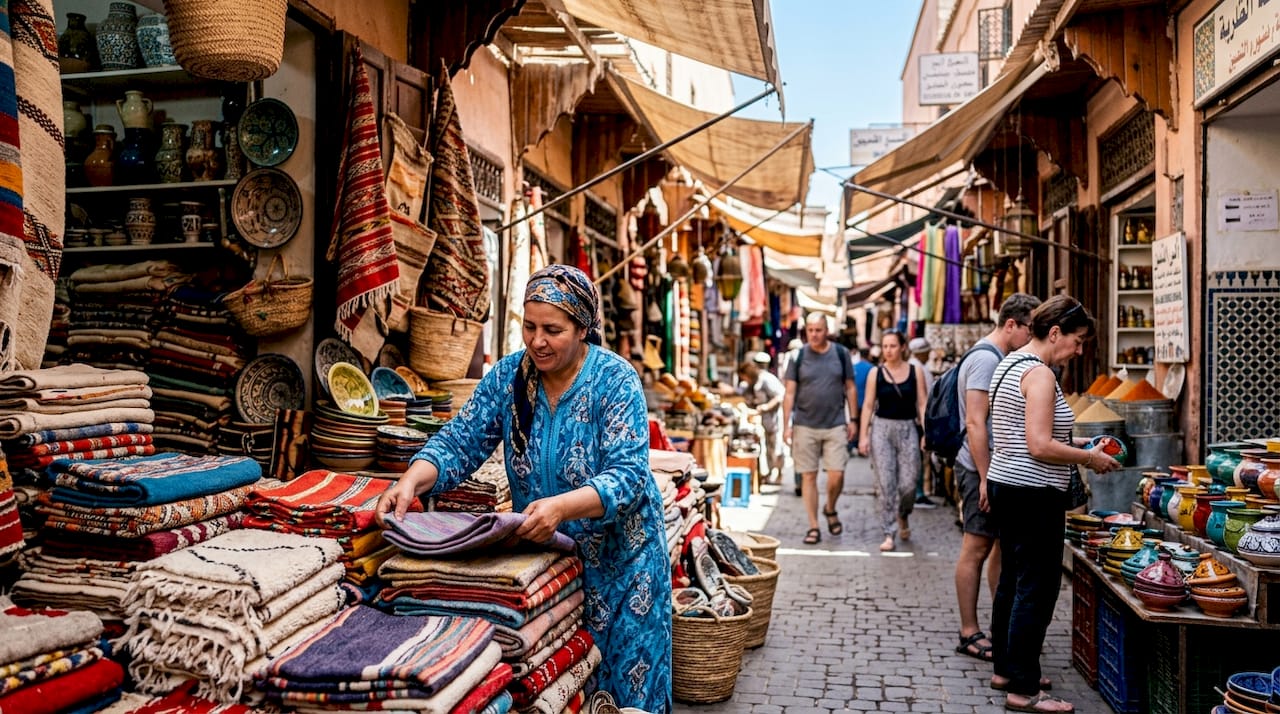
- Morocco’s cultural diversity is constitutionally protected, reflecting influences from seven distinct civilizations.
- Its geography, including mountains, desert, and coasts, shapes varied regional cultures and experiences.
- Travelers see Morocco’s layered traditions through living crafts, unique cuisine, and historic sites, requiring slow exploration and research.
Morocco is defined by a cultural and geographic diversity found nowhere else on Earth. Seven distinct civilizations, including Arab, Berber, Andalusian, Saharan, African, Mediterranean, and Hebrew, have each left a permanent mark on the country’s identity. That layering is not accidental. Morocco sits at the crossroads of Africa, Europe, and the Middle East, and its geography has shaped every trade route, language, and dish that travelers encounter today. Understanding what makes Morocco unique means recognizing that the country is not one thing. It is many things at once, held together by a national identity that is formally pluralist and genuinely lived.
What makes Morocco unique among world travel destinations?
Morocco’s uniqueness is a formal constitutional fact, not just a travel brochure claim. The 2011 constitution officially recognizes Arab-Islamic, Amazigh (Berber), Saharan-Hassani, African, Mediterranean, Andalusian, and Hebrew influences as equal pillars of Moroccan identity. No other country in the Arab world has codified that level of cultural pluralism into its founding law. That legal commitment translates directly into what travelers see, hear, taste, and experience on the ground.
The country’s Moroccan cultural heritage is also internationally recognized. UNESCO has inscribed 16 elements of Moroccan intangible cultural heritage, including Gnawa music and traditional couscous preparation. That number reflects the sheer range of living traditions still practiced daily, not preserved in museums. Travelers who arrive expecting a single “Arab” culture quickly discover something far more textured.
Geography amplifies that cultural complexity. Morocco contains the High Atlas Mountains, the Sahara Desert, and both Atlantic and Mediterranean coastlines within its borders. Few countries of comparable size offer that range of terrain. Each zone has its own climate, architecture, food, and dialect, which means a two-week trip can feel like visiting four distinct countries.
Pro Tip: Plan your itinerary to cross at least two geographic zones. Moving from a coastal city like Essaouira to a mountain village in the Atlas and then into the Sahara gives you a firsthand sense of how dramatically Morocco shifts in character.
How Morocco’s cultural heritage shapes its distinct identity
Morocco’s cultural identity is a synthesis built over more than a thousand years. The Amazigh (Berber) people are the country’s oldest documented inhabitants, and their language, Tamazight, now holds co-official status alongside Arabic. That recognition matters because it signals that Morocco’s cultural depth is not decorative. It is structural.
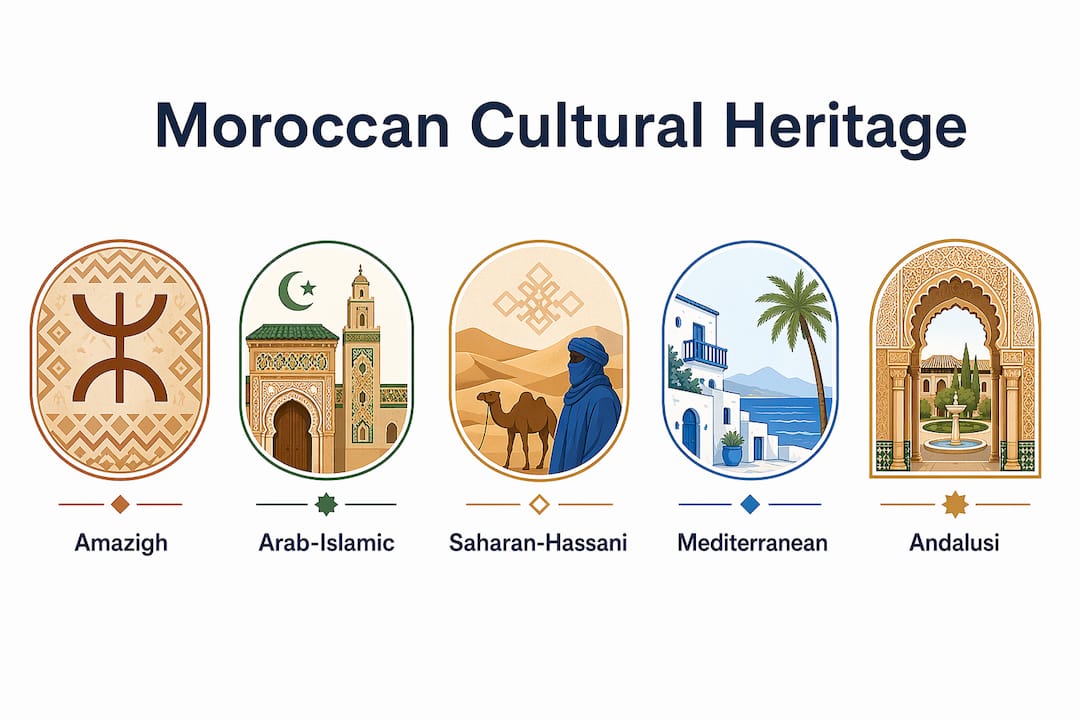
The Arab-Islamic influence arrived in the 7th century and shaped Morocco’s religion, architecture, and legal traditions. Andalusian refugees fleeing the Spanish Reconquista in the 15th century brought with them music, garden design, and culinary techniques that still define cities like Fes and Tetouan. The Saharan-Hassani tradition of the deep sSouthcontributes its own poetry, music, and nomadic customs. Each layer sits on top of the previous one without erasing it.
UNESCO’s recognition of Gnawa music as intangible cultural heritage illustrates how these layers interact. Gnawa is rooted in sub-Saharan African spiritual practice, absorbed into Moroccan life centuries ago, and now performed at festivals and street corners across the country. Travelers who attend a Gnawa ceremony in Essaouira or Marrakech are witnessing a living tradition, not a staged performance.
The government’s Label Maroc initiative reinforces this living heritage with legal protection. Launched to safeguard traditional craftsmanship, Label Maroc legally protects products like zellige mosaic tilework and hand-woven textiles from imitation. The program integrates economic and social dimensions, meaning artisans earn fair income while their techniques survive. When you buy a certified zellige piece, you are purchasing something with legal provenance and cultural weight.
- Gnawa music: Sub-Saharan African spiritual roots, now a UNESCO-recognized Moroccan tradition performed at major festivals.
- Zellige tilework: Geometric mosaic art protected under Label Maroc, found in mosques, riads, and palaces across the country.
- Couscous traditions: UNESCO-inscribed communal food practice shared across North African cultures but distinctly Moroccan in preparation and ceremony.
- Tamazight language: Co-official Berber language, taught in schools and used in media, reflecting Morocco’s commitment to its oldest cultural roots.
- Andalusian music: Brought by 15th-century refugees from Spain, still performed in northern Moroccan cities with instruments and scales unchanged for 500 years.
Pro Tip: Visit a cooperative workshop in Fes or Marrakech rather than a souvenir market. Cooperatives employ certified artisans, and you can watch zellige cutting or leather dyeing in real time. The quality difference is immediate and obvious.
What geographic features define Morocco’s distinct landscapes?
Morocco’s geography is the reason its culture is so layered. The country functions as a permeable membrane between Africa, Europe, and the Middle East, channeling trade, people, and ideas rather than blocking them. Historically, trade routes followed the edges of Morocco’s terrain, hugging mountain valleys and coastlines because the central terrain was too harsh to cross directly. That geographic logic still shapes where Moroccan cities sit and how their cultures developed.
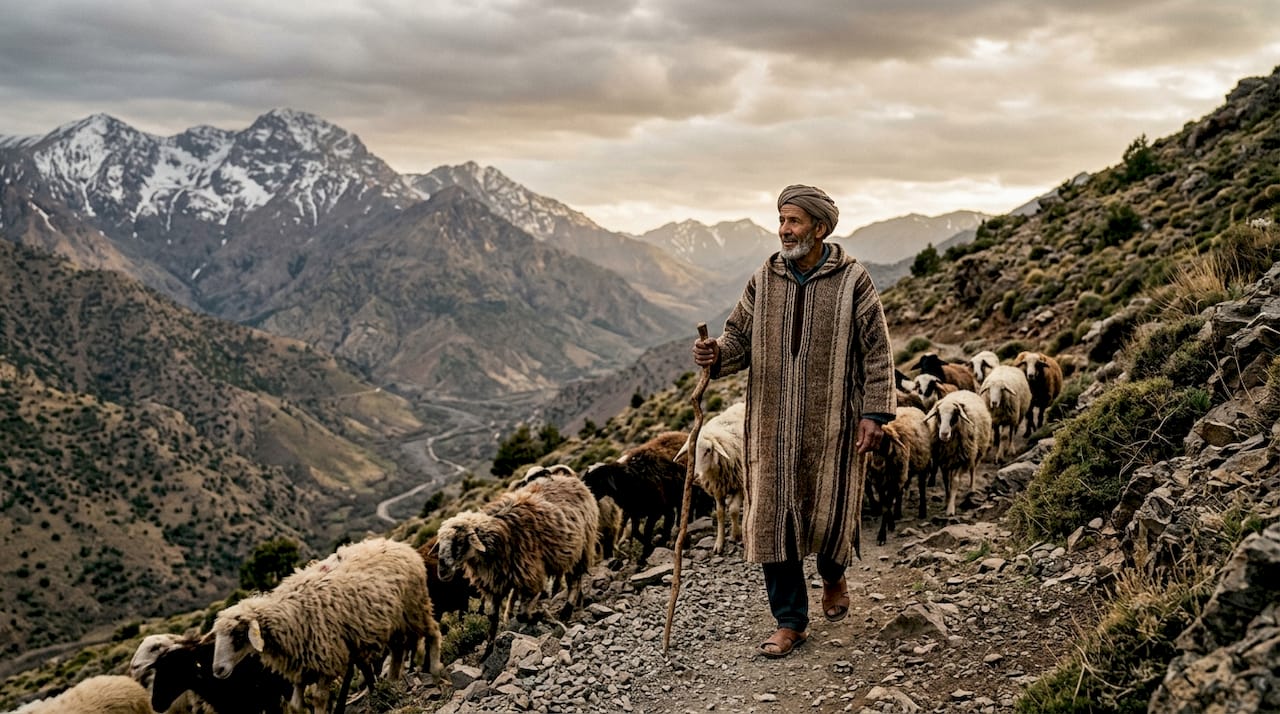
The High Atlas Mountains divide the country’s climate and culture as sharply as any political border. North of the Atlas, you find Mediterranean vegetation, French and Spanish colonial architecture, and Atlantic-facing cities. South of the Atlas, the landscape turns arid, the architecture shifts to earthen kasbahs, and the Sahara begins. The Ksar of Aït Ben Haddou, a UNESCO World Heritage site, is the most famous example of this southern earthen architecture, built from local clay and straw in a style that has survived for centuries.
| Geographic zone | Key features | Signature experience |
|---|---|---|
| High Atlas Mountains | Ski resorts, Berber villages, trekking trails | Trekking to Toubkal, North Africa’s highest peak |
| Sahara Desert | Sand dunes, oases, nomadic culture | Overnight camel trek and desert camp near Merzouga |
| Atlantic coast | Wild beaches, historic ports, surf breaks | Surfing and medina walks in Essaouira |
| Mediterranean coast | Fishing villages, Spanish-influenced towns | Exploring the blue city of Chefchaouen |
| Pre-Saharan valleys | Kasbahs, palm groves, dramatic gorges | Driving the Road of a Thousand Kasbahs |
The Sahara Desert deserves particular attention because it is not simply a backdrop. Desert culture in Morocco includes nomadic Tuareg and Sahrawi traditions, camel herding, and a hospitality code that travelers consistently describe as transformative. A Sahara adventure in the Erg Chebbi dunes near Merzouga puts travelers inside that culture rather than outside looking in.
Natural features in Morocco also change over time. Legzira Beach on the Atlantic coast was famous for its dramatic rock arches, but erosion has altered the landscape significantly since older guidebooks were written. Travelers should verify current conditions before planning visits to specific natural landmarks.
Pro Tip: Cross the Atlas via the Tizi n’Tichka pass by road rather than flying directly to Marrakech from the north. The drive takes you through Berber villages and dramatic mountain scenery that most travelers miss entirely.
What unique cultural experiences and traditions can travelers explore?
Morocco’s cities are the most concentrated expression of its cultural complexity. Marrakech, Fes, Casablanca, and Meknes each carry the title of Imperial City, meaning they served as Morocco’s capital at different points in history. Each one has a distinct character shaped by its geography, ruling dynasty, and trade connections.
Fes el-Bali is the world’s largest car-free urban area and one of the best-preserved medieval cities on Earth. Navigating it requires a local guide because the medina’s 9,000-plus alleyways follow no grid logic. A guide does more than prevent you from getting lost. They explain which alley leads to the tanners’ quarter, which fountain dates to the 14th century, and which family has operated the same brass workshop for six generations. That context transforms a walk into an education.
Moroccan cuisine is itself a unique attraction. It blends Amazigh, Middle Eastern, Mediterranean, and African influences into a culinary tradition ranked among the best in the world. The combination of preserved lemons, argan oil, ras el hanout spice blends, and slow-cooked tagines produces flavors that are genuinely unlike any other cuisine. Food also functions as a social ritual in Morocco. Sharing a meal is an act of trust, and being invited into a Moroccan home for couscous on a Friday is one of the most authentic experiences the country offers. Understanding how local cuisine shapes tourism helps travelers appreciate why food is not a side note in Morocco. It is a primary reason to visit.
- Souks and artisan crafts: Marrakech’s Jemaa el-Fna square and surrounding souks sell everything from hand-stamped leather to hand-knotted Berber rugs. Prices are negotiated, and the process is part of the experience.
- Moussem festivals: The Moussem of Moulay Idriss in August draws pilgrims and travelers to Morocco’s holiest town for a spiritual festival rarely visited by tourists. It offers a window into Moroccan religious life that no guided tour can replicate.
- Riad stays: Traditional courtyard houses converted into boutique hotels place travelers inside Moroccan domestic architecture. Staying in a Moroccan riad means waking up surrounded by zellige tilework, carved plaster, and cedar wood ceilings.
- Hammam rituals: The traditional Moroccan bathhouse is a social institution, not a spa treatment. A neighborhood hammam visit costs a fraction of a hotel spa and delivers a far more authentic experience.
- Cooking classes: Learning to make a tagine or bastilla (a savory-sweet pastry) in a Marrakech cooking school gives travelers a skill they carry home and a story they tell for years.
How does Morocco balance ancient traditions with modern development?
Morocco’s ability to hold tradition and modernity together is not accidental. It is the result of deliberate policy choices made at the highest levels of government.
- Constitutional pluralism: The 2011 constitution formally recognized Morocco’s multicultural identity, giving legal standing to Amazigh culture, Saharan traditions, and minority heritage alongside Arab-Islamic identity. That legal framework prevents any single cultural narrative from dominating.
- Medina preservation alongside urban growth: Moroccan cities have expanded dramatically in the past three decades, but the historic medinas of Fes, Marrakech, and Meknes remain protected. New construction happens outside the old walls, not inside them. Travelers can walk through a 12th-century medina and then take a taxi to a modern shopping district within 15 minutes.
- Label Maroc and craft economy protection: The government’s heritage protection program gives traditional artisans legal and economic tools to compete in a global market without abandoning their techniques. A zellige craftsman in Fes can now certify his work and sell it internationally with legal protection against imitation.
- Language policy: Arabic and Tamazight are both official languages. French remains widely used in business and education. Spanish is common in the north. That multilingualism is not a problem Morocco is trying to solve. It is a feature Morocco has chosen to maintain.
- Festival and cultural programming: Government and civil society organizations fund festivals like the Fes Festival of World Sacred Music and the Gnawa World Music Festival in Essaouira. These events attract international audiences while keeping traditional art forms economically viable for their practitioners.
Morocco’s unique luxury experiences reflect this balance well. High-end travelers can stay in a riad with 16th-century architecture and 21st-century plumbing, eat a chef-prepared tagine using a recipe unchanged for 300 years, and then attend a contemporary art exhibition in Casablanca the next morning.
Key Takeaways
Morocco’s distinctiveness comes from a constitutionally protected cultural pluralism combined with geographic variety that no single itinerary can fully capture.
| Point | Details |
|---|---|
| Constitutional cultural pluralism | Morocco’s 2011 constitution officially recognizes seven distinct cultural influences as equal pillars of national identity. |
| UNESCO heritage recognition | 16 elements of Moroccan intangible cultural heritage are UNESCO-inscribed, including Gnawa music and couscous traditions. |
| Geographic range | The Atlas Mountains, Sahara Desert, and two coastlines create four distinct travel environments within one country. |
| Living craft traditions | Label Maroc legally protects traditional craftsmanship like zellige tilework, giving artisans economic and legal standing. |
| Cuisine as cultural expression | Moroccan food blends Amazigh, Arab, Mediterranean, and African influences into a globally ranked culinary tradition. |
What I’ve learned after years of watching travelers experience Morocco
Most travelers arrive in Morocco expecting a single story. They leave realizing they encountered at least four. That gap between expectation and reality is the most consistent thing I observe, and it is worth addressing directly before you book.
The travelers who get the most out of Morocco are the ones who resist the urge to rush. Fes rewards slowness. Spending three days in the medina instead of one means you stop being a tourist and start being a temporary resident. You find the bakery where locals bring their dough to be baked in the communal oven. You hear the call to prayer from five different mosques at slightly different times, each one a reminder that this city has been doing this for a thousand years.
The less-visited sites are often the most revealing. The Moussem of Moulay Idriss in August is one of the most spiritually charged events in North Africa, and most international travelers have never heard of it. The Ramakech Sculpture Art Park requires a prior appointment but delivers an art experience that feels genuinely surreal against the Moroccan landscape. These are not hidden gems in the clichéd sense. They are simply places that reward travelers who do their research.
My honest view is that Morocco’s greatest asset is its refusal to flatten itself for outside consumption. The country does not present a simplified version of its culture to make visitors comfortable. It presents the real thing, complexity included. That can feel disorienting at first. It becomes the reason you want to come back.
— MoroccoTravel1.com
Plan your Morocco trip with Moroccotravel1.com
Moroccotravel1.com specializes in private, customizable tours that put Morocco’s full cultural and geographic range within reach. Whether you want to spend two weeks crossing from Casablanca’s art deco boulevards to the Sahara’s dunes or focus on the imperial cities of Fes and Marrakech, the itineraries are built around your pace and interests. The best Morocco tour packages include local expert guides, hand-selected riads and desert camps, and activity bookings from cooking classes to Atlas Mountain treks. Travelers who want a structured but flexible introduction to the country can explore the 14-day Morocco Grand Tour, which covers the country’s key cultural and natural highlights in a single well-paced itinerary. Every package includes 24/7 support and eco-conscious travel options.
FAQ
What is Morocco’s cultural heritage officially recognized as?
Morocco’s 2011 constitution formally recognizes Arab-Islamic, Amazigh, Saharan-Hassani, African, Mediterranean, Andalusian, and Hebrew influences as equal components of national identity. UNESCO has separately inscribed 16 elements of Moroccan intangible cultural heritage.
Why is Moroccan cuisine considered unique?
Moroccan cuisine blends Amazigh, Middle Eastern, Mediterranean, and African culinary traditions into a single cooking style ranked among the best in the world. Signature techniques include slow-cooked tagines, preserved lemons, argan oil, and complex spice blends like ras el hanout.
Do I need a guide to visit Moroccan medinas?
A local guide is strongly recommended for complex medinas like Fes el-Bali, which contains more than 9,000 alleyways with no grid layout. Guides provide historical context that transforms navigation into genuine cultural learning.
What geographic zones can travelers experience in Morocco?
Morocco contains the High Atlas Mountains, the Sahara Desert, the Atlantic coast, and the Mediterranean coast within its borders. Each zone has its own climate, architecture, cuisine, and cultural traditions.
What is the Moussem of Moulay Idriss?
The Moussem of Moulay Idriss is an annual religious festival held in August in Morocco’s holiest town. It offers authentic cultural and spiritual immersion that most international tourists do not encounter on standard itineraries.


