

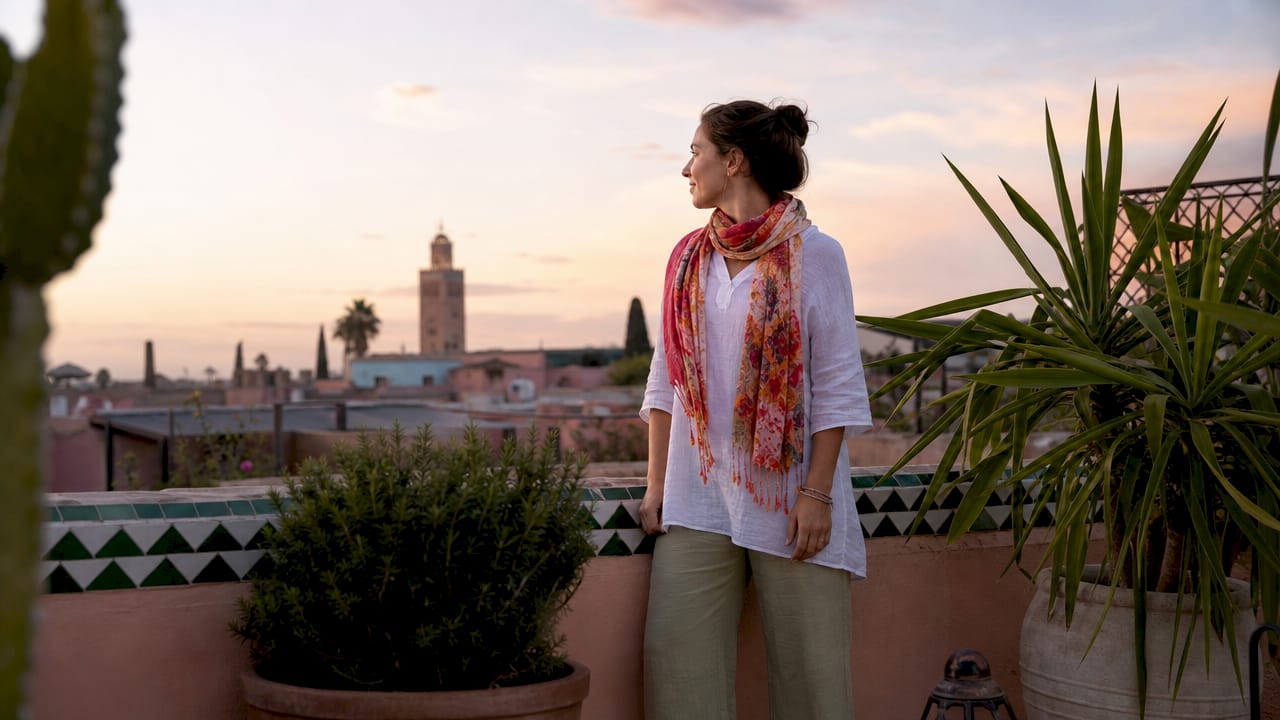
- In Morocco, travelers must dress modestly by covering shoulders and knees in public spaces to respect cultural values.
- Fabrics like linen and cotton are best for the climate, while layering and versatile accessories like scarves improve comfort across environments.
Knowing what to wear in Morocco means understanding one core rule: cover your shoulders and knees in most public spaces. That single principle shapes every packing decision you make, from fabric choices to footwear. Morocco’s dress code reflects Islamic cultural values, and respecting those norms makes your trip smoother, safer, and more rewarding. The right Morocco travel attire also has to handle intense heat, dusty medina streets, cool desert nights, and the occasional upscale riad dinner. Get this right, and you spend your energy on the country, not on uncomfortable clothing.
What to wear in Morocco: the core dress code rules
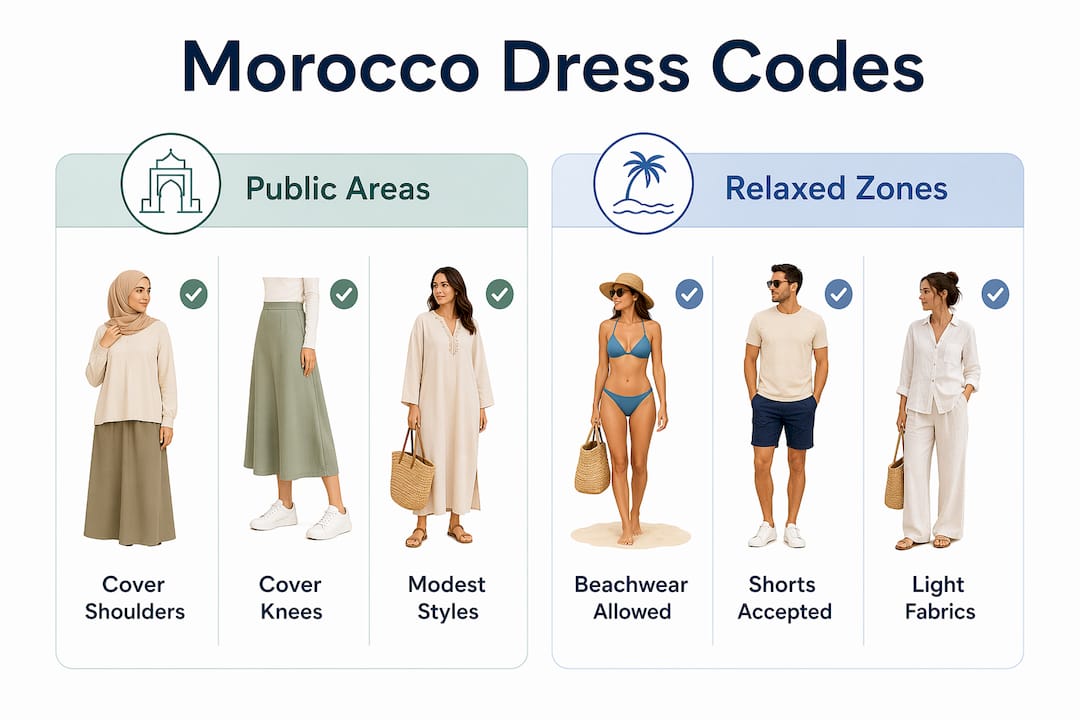
Morocco’s dress code is defined by modesty in public spaces, particularly in medinas, rural villages, and religious sites. Covering shoulders and knees is the baseline expectation for both men and women across most of the country. This is not a suggestion. Travelers who ignore it attract unwanted attention, especially in conservative areas like the Fes medina or small Berber villages.
The rules shift depending on where you are. Beach resorts in Agadir and coastal towns like Essaouira allow standard Western beachwear. Modern urban districts in Casablanca and Rabat are more relaxed than traditional medinas. The key is reading your environment and adjusting accordingly.
Mosques and religious sites
Mosque visits require the strictest dress standards. Men must wear long trousers and sleeved shirts; women must cover their shoulders, arms, legs, and often their hair. Removing shoes before entering mosques or riads is standard practice. Carry a scarf specifically for these visits so you are never caught underprepared.
Ramadan and conservative periods
During Ramadan, the dress code tightens across the board, even in areas that are usually more relaxed. Wearing sleeveless tops or shorts in public during daylight hours draws strong disapproval. Packing an extra layer or two for a Ramadan trip is not optional. It is the respectful baseline.
Men’s dress code
Men’s clothing norms are more relaxed overall, but shorts shorter than knee-length attract attention in medinas and should be avoided there. Long trousers and collared shirts are expected at religious sites and smart casual restaurants. Shorts work fine at beach resorts and coastal towns.
Pro Tip: Pack a lightweight button-down shirt you can throw over a t-shirt when entering a mosque or a conservative neighborhood. It takes up almost no space and solves every modesty problem instantly.
Which fabrics and styles work best for Morocco’s climate?
Linen and cotton are the two best fabric choices for Morocco. They breathe well, dry quickly, and keep you cooler in direct sun than any synthetic alternative. Travelers who pack heavy synthetic fabrics consistently regret it by day two. Denim is the most common mistake. It is heavy, slow to dry, and miserable in 100°F heat.
Morocco’s climate is not uniform. The Sahara Desert hits extreme heat during the day, but desert nights can drop to 10–15°C even in summer. The Atlas Mountains can reach freezing temperatures. Layering is not just for style. It is a practical necessity.
Here is a ranked list of clothing priorities for Morocco’s climate and terrain:
- Lightweight linen or cotton trousers. These cover your knees, breathe well, and work in medinas, desert camps, and restaurants without looking out of place.
- Long-sleeve breathable tops. Loose-fitting cotton or linen shirts protect your arms from sun and satisfy modesty requirements simultaneously.
- A packable fleece or light jacket. Non-negotiable for desert evenings and any Atlas Mountain excursion. Fold it into your day bag every morning.
- Maxi skirts or dresses for women. Lightweight, modest, and versatile. A maxi dress in a solid color works from Medina to Riad dinner without changing.
- Closed-toe shoes with grip. Medina terrain involves cobblestones, narrow alleys, and uneven tiles. Sandals are fine for beach days, but closed shoes protect your feet during long medina walks.
- Comfortable sandals. Birkenstock-style or leather sandals work well for coastal towns and riad courtyards where the terrain is predictable.
The scarf: Morocco’s most useful travel item
A scarf is the single most versatile item in your Morocco bag. Scarves serve as sun shields, dust barriers, modesty covers, and evening wraps. One lightweight cotton or muslin scarf handles all four functions. Buy a locally woven one in the first souk you visit. It costs almost nothing, and you will use it every single day.
Pro Tip: Tie your scarf loosely around your shoulders when entering a medina. You look intentional rather than reactive, and you are already covered if you stumble into a mosque or a conservative neighborhood.
What are the best outfits for different Moroccan destinations?
The right outfit depends entirely on where you are going that day. Morocco packs multiple climates and cultural contexts into one country, and your wardrobe needs to match.
Marrakech and Fes medinas
These are the most visited and most conservative urban environments in Morocco. The best outfits for Marrakech medina combine modesty with practicality.
- Women: Loose linen trousers or a maxi skirt, a breathable long-sleeve top, and a scarf draped over the shoulders. Flat closed-toe shoes are non-negotiable given the cobblestone terrain.
- Men: Lightweight chinos or linen trousers, a collared shirt, and leather sneakers or walking shoes. Avoid shorts entirely in the medina.
- Both: A crossbody bag with a zipper. Secure bags protect belongings in crowded souks where pickpocketing is a real concern.
Desert camps and Sahara excursions
Desert attire needs to handle sand, dust, heat, and cold in the same 24-hour period. Loose, long clothing actually protects better than shorts in the desert because it blocks sun and sand simultaneously. For camel rides and ATV excursions, wear long trousers that you do not mind getting dusty. Closed shoes are mandatory. Sandals fill with sand within minutes. Bring your packable jacket for the evening campfire, because the temperature drop after sunset is dramatic.
Agadir, Essaouira, and coastal towns
Beach resorts and coastal towns follow standard Western beachwear norms. Swimwear is appropriate on the beach and at resort pools. Cover up with a sarong or light dress when walking into town. Essaouira is more relaxed than inland medinas but still benefits from modest clothing in the market areas.
Rural and Berber villages
Rural Morocco is the most conservative context you will encounter. Long trousers, covered shoulders, and closed shoes are the minimum. Avoid anything tight-fitting. Travelers who dress modestly in villages consistently report warmer interactions with local families and easier access to authentic experiences. This is one area where your clothing directly shapes your experience.
Riad dinners and upscale restaurants
Smart casual is the standard for riad dinners and upscale Moroccan restaurants. For women, a midi dress or tailored trousers with a blouse works well. For men, chinos and a collared shirt are appropriate. You do not need formal wear, but you should step up from your Medina walking clothes. Many riads have beautiful courtyard settings where dressing thoughtfully adds to the atmosphere. For tips on choosing the right accommodation, Moroccotravel1’s guide to Morocco riads covers what to expect from authentic riad stays.
| Destination | Recommended attire |
|---|---|
| Marrakech or Fes medina | Linen trousers, long-sleeve top, closed shoes, scarf |
| Sahara Desert camp | Loose long clothing, closed shoes, packable jacket |
| Agadir or Essaouira beach | Swimwear on beach, cover-up in town |
| Rural Berber village | Full modest coverage, nothing tight-fitting |
| Riad dinner or restaurant | Smart casual: midi dress or chinos and collared shirt |
How to pack smartly for a trip to Morocco
A capsule wardrobe built around mix-and-match pieces is the most practical approach for Morocco. Packing lightweight long pants, maxi skirts or dresses, breathable tops, a scarf, and layers for evenings covers every situation you will encounter. The goal is maximum versatility with minimum luggage.
Here is a comparison of what to pack versus what to leave home:
| Pack this | Leave this behind |
|---|---|
| Linen or cotton trousers (2–3 pairs) | Heavy denim jeans |
| Breathable long-sleeve tops (3–4) | Sleeveless tops for medina use |
| Maxi skirt or dress (1–2 for women) | Short skirts or shorts for medina |
| Packable fleece or light jacket | Heavy wool sweater |
| Closed-toe shoes with grip | Flip-flops as primary footwear |
| Lightweight scarves (2) | Bulky shawls |
| Crossbody bag with zipper | Open-top tote bags |
| Sun hat or wide-brim cap | No sun protection |
Accessories that earn their weight
Three accessories make a real difference in Morocco. First, a secure crossbody bag with a zipper protects your belongings in crowded markets without slowing you down. Second, a wide-brimmed sun hat or a packable cap blocks direct sun during desert excursions and long medina walks. Third, a pair of lightweight scarves, one for modesty and one for dust or sun, handles situations your clothing alone cannot. For broader preparation advice, Moroccotravel1’s guide on what to know before visiting Morocco covers cultural etiquette, safety tips, and practical logistics.
Pro Tip: Buy one or two locally made scarves or a djellaba in the first market you visit. Wearing local clothing in rural areas and small towns signals respect and often opens doors that stay closed for tourists in Western attire.
Footwear deserves its own planning. Travelers may walk 10–15km per day in medinas like Marrakech and Fes. That distance on cobblestones destroys unprepared feet. Bring one pair of broken-in closed-toe walking shoes and one pair of comfortable sandals for beach days and riad courtyards. Do not rely on sandals as your primary medina shoe. You will regret it by noon on day one.
Key Takeaways
Dressing well in Morocco requires modest, breathable clothing that adapts to medinas, deserts, coastlines, and everything in between.
| Point | Details |
|---|---|
| Cover shoulders and knees | This is the baseline dress code for medinas, rural areas, and religious sites across Morocco. |
| Choose linen or cotton | Natural fabrics handle Morocco’s heat far better than synthetics or denim. |
| Layer for temperature swings | Desert nights and Atlas Mountain visits require a packable jacket even in summer. |
| Carry a scarf daily | One lightweight scarf covers modesty needs, sun protection, and dust in a single item. |
| Match attire to the destination. | Beachwear suits coastal resorts, smart casual fits riad dinners, and full modest coverage is needed in rural villages. |
What I have learned from watching travelers get this wrong
After years of helping travelers prepare for Morocco through Moroccotravel1, the pattern is consistent. Travelers who pack for the weather alone struggle. Travelers who pack for both the weather and the culture thrive.
The most common mistake is treating Morocco like a beach holiday with a few cultural stops. Someone shows up in Marrakech in shorts and a tank top, spends the first day feeling uncomfortable and stared at, then buys a cheap cover-up from a souk vendor that does not fit well. The fix is simple: pack one or two modest outfits before you leave home, and you never have that day.
The second mistake is underestimating footwear. Medina streets look manageable in photos. They are not. Uneven cobblestones, sudden steps, and wet tiles after rain make sandals genuinely dangerous. I have seen travelers turn an ankle in the Fes medina on day two of a ten-day trip. Broken-in walking shoes are not optional.
The insight most travelers miss is that dressing modestly does not mean dressing badly. A well-cut linen trouser and a loose cotton shirt look sharp in any Moroccan context. Buying a locally made djellaba or a hand-woven scarf adds authenticity and makes you look like someone who came to engage with the culture, not just photograph it. Local vendors notice. Local families notice. The quality of your interactions shifts noticeably when you make that effort.
Scarves are the one item I tell every traveler to prioritize above everything else. They solve problems you have not anticipated yet. If you are planning a trip that includes unique cultural experiences beyond the standard tourist circuit, your clothing choices will matter even more. Dress like you belong, and Morocco opens up.
— Moroccotravel1.com
Plan your Morocco trip with expert guidance from Moroccotravel1
Moroccotravel1 designs tours that account for every context you will encounter, from Marrakech medinas to Sahara Desert camps to coastal towns. The 14-Day Morocco Grand Tour covers the country’s major destinations with local expert guides who provide cultural context, including practical advice on dress codes and local customs at each stop. Moroccotravel1’s itineraries are built around authentic experiences, not just sightseeing, so you arrive at each destination prepared and confident. Browse the full range of private Morocco tour packages to find the itinerary that fits your travel style, group size, and budget.
FAQ
What is the basic dress code in Morocco?
Cover your shoulders and knees in public spaces, especially in medinas and religious sites. Beach resorts and coastal towns allow standard Western attire.
Can women wear shorts in Morocco?
Shorts are acceptable at beach resorts and coastal towns but attract unwanted attention in medinas, rural villages, and religious sites. Maxi skirts or linen trousers are the practical alternative.
What should I wear in Marrakech specifically?
Lightweight linen trousers or a maxi skirt, a breathable long-sleeve top, a scarf, and closed-toe shoes with good grip cover every situation in the Marrakech medina.
Do I need to cover my hair in Morocco?
Hair covering is required for women visiting mosques. It is not expected in general public spaces, though a scarf is useful to carry for mosque visits and conservative neighborhoods.
What fabrics work best for Morocco’s heat?
Linen and cotton are the top choices. They breathe well, dry quickly, and keep you cooler than synthetic fabrics or denim in Morocco’s intense summer heat.


