

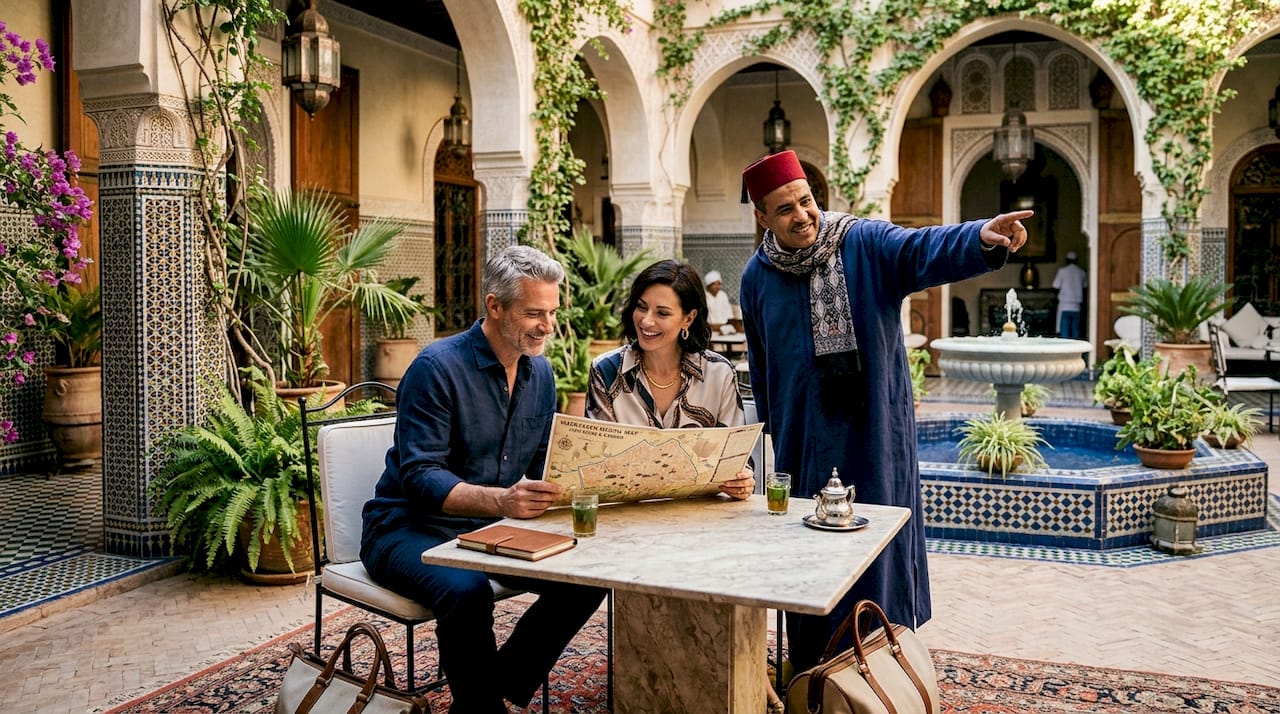
- Many travelers mistakenly view Morocco as solely a backpacker destination, missing out on its cultural experiences.
- Optimal visits occur in spring and autumn when mild weather allows for immersive sightseeing in cities, deserts, and mountains without discomfort.
- Personalized tours with local guides and boutique accommodations ensure authentic, memorable encounters that go beyond standard travel highlights.
Most travelers assume Morocco is a backpacker destination. They picture crowded hostels, chaotic souks, and budget riads squeezed into narrow alleyways. That assumption is wrong, and it costs curious travelers some of the most refined travel experiences available anywhere in the world. Morocco sightseeing tours, when planned with intention, deliver a level of cultural depth and physicality that rivals anything you’d find in Tuscany or Kyoto. Spring (March through May) and autumn (September through November) are the optimal windows for experiencing Morocco at its most comfortable and accessible. This guide shows you exactly how to plan it right.
Table of Contents
- Best seasons and planning tips for Morocco sightseeing tours
- Top Moroccan destinations for immersive sightseeing tours
- Guided cultural tours and local experiences for authentic immersion
- Unique accommodations and desert camps enhancing sightseeing tours
- Customizing your Morocco sightseeing tour itinerary for an unforgettable journey
- Why authentic local guidance and tailored experiences define true in Morocco sightseeing tours
- Explore premium Morocco sightseeing tours tailored to your dreams
- Frequently asked questions
Key Takeaways
| Point | Details |
|---|---|
| Optimal seasons | Spring and autumn offer the best weather for enjoyable and comfortable Morocco sightseeing tours. |
| Advance booking | Secure accommodations and prime experiences by booking tours 3 to 6 months in advance. |
| Licensed guides | Hiring authorized local guides enhances safety and cultural immersion during medina explorations. |
| Unique stays | Riads and desert camps combine authentic ambiance with modern comforts for memorable stays. |
| Customized itineraries | Personalizing your itinerary ensures your Morocco tour matches your interests and travel style. |
Best seasons and planning tips for Morocco sightseeing tours
Having introduced Morocco’s appeal for tourists, understanding when to visit and how to book ensures you enjoy these sights at their best.
The timing of your trip shapes everything. Walk a medina in 95-degree July heat, and you’ll spend half your tour inside a café. Visit the same medina in April, with temperatures in the mid-60s and golden afternoon light filtering through the mashrabiya screens overhead, and it becomes one of the most memorable afternoons of your life.
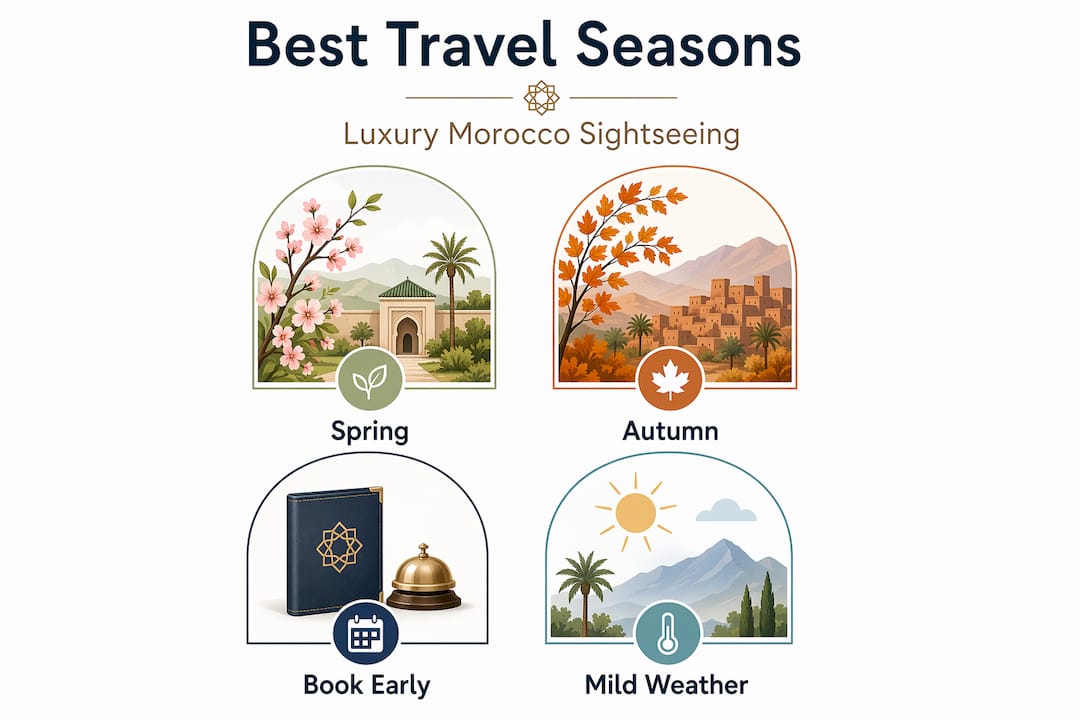
The best time for Morocco sightseeing tours is spring (March through May) and autumn (September through November), with mild daytime temperatures that make medina walks and Sahara camps genuinely enjoyable rather than something to endure. Mornings are cool enough for long walking tours through ancient quarters, and desert nights drop to a comfortable chill that makes sleeping under the stars feel magical rather than miserable.
Here is what to keep in mind when planning your travel window:
- Spring (March through May): Rose festivals in the Dades Valley, wildflowers across the Atlas foothills, and full operational capacity at riads and tour operators
- Autumn (September through November): Fewer crowds than spring, date harvest season in the south, and some of the clearest desert skies of the year
- Summer (June through August): Extreme heat in Marrakech and the Sahara, with temperatures regularly exceeding 104°F, making outdoor sightseeing genuinely uncomfortable
- Winter (December through February): Mild in coastal cities like Essaouira, but cold desert nights and occasional snow in the Atlas Mountains require careful planning
“Travel in Morocco is not just about where you sleep. It is about when you arrive and how prepared you are to meet the country on its own terms.”
Pro Tip: Insiders recommend booking tours 3 to 6 months ahead of spring or autumn travel to secure prime riad rooftops and desert camps at 20 to 30% lower rates than peak-summer prices. The best private guides also fill up fast during these windows, so early booking is not optional if you want the best.
For a detailed breakdown of travel windows by activity type, the best time to visit Morocco resource on MoroccoTravel1 covers seasonal nuances that most general travel sites miss entirely.
Top Moroccan destinations for immersive sightseeing tours
Having picked the best time to visit and how to prepare, let’s explore the must-see destinations where immersive cultural experiences come alive.
Morocco is not one single destination. It is five or six destinations layered into a single country, each with its own architecture, cuisine, dialect, and emotional texture. The mistake most first-time visitors make is treating it like a single city trip. The travelers who leave genuinely transformed are the ones who move through at least three distinct regions.
Major cities like Marrakech and Fez operate at full capacity during spring, making it easier to access riads, book guided tours, and arrange private transportation. That full capacity also means you need to plan ahead, but the payoff is access to Morocco at its most alive and functional.
Here are the destinations that belong on any serious Morocco travel excursion:
- Marrakech: The Jemaa el-Fna square at dusk, rooftop riad dinners with Atlas Mountain views, the Majorelle Garden, and the labyrinthine souks of the medina. Sightseeing in Marrakech rewards travelers who slow down and look up.
- Fez: Fez is the cultural soul of Morocco, featuring one of the largest car-free urban zones in the world, with rich history and traditional craftsmanship that no other Moroccan city can replicate. The Chouara Tannery alone is worth the trip.
- Chefchaouen: The blue-washed mountain town that photographs beautifully but rewards visitors even more in person, with cool air, cedar forests, and a pace of life that feels genuinely restorative.
- Merzouga and the Sahara: The gateway to Erg Chebbi, Morocco’s most dramatic dune landscape, where camps sit at the edge of an ocean of sand.
- The Atlas Mountains: Berber villages, walnut groves, and high-altitude passes that connect the coast to the desert and reward travelers who take the scenic route.
| Destination | Best for | Signature experience |
|---|---|---|
| Marrakech | Culture, stays | Rooftop riad dinner, Jemaa el-Fna at night |
| Fez | History, craftsmanship | Medina walk, tannery viewing platforms |
| Chefchaouen | Photography, relaxation | Blue medina exploration, cedar forest hikes |
| Merzouga | Desert adventure | Camel trek, camp, stargazing |
| Atlas Mountains | Nature, Berber culture | Village homestay, Tizi n’Tichka pass drive |
| Essaouira | Coastal culture | Rampart walks, fresh seafood, wind sports |
For a deeper look at how these cities compare for cultural travel, the guide to top Moroccan cities for culture breaks down each destination by traveler type and interest.
Guided cultural tours and local experiences for authentic immersion
Understanding the key destinations, next is how guided tours transform visits into rich, enlightening cultural immersions.
There is a version of Morocco you see as a solo tourist wandering without context. You see beautiful tiles, smell unfamiliar spices, and feel slightly overwhelmed. Then there is the version you experience with a licensed local guide who grew up three streets from the tannery and knows which dye vat the master craftsman uses for saffron yellow. These are not the same experience.
Hiring licensed local guides for first-day medina orientation helps avoid pickpockets and builds your bargaining knowledge in the souks, typically costing around $20 per half day. That is one of the best investments you can make on any Morocco travel excursion. A good guide does not just point at buildings. They translate the city for you.
What licensed guides actually unlock for you:
- Medina navigation: The old medinas of Marrakech and Fez have thousands of unmarked alleyways. A guide turns a potential two-hour frustration into a purposeful, story-rich walk.
- Artisan workshop access: Many of the best carpet weavers, zellige tile makers, and leather workers operate in spaces tourists never find independently. Guides have relationships with these craftspeople.
- Souk bargaining: Knowing the difference between a tourist price and a fair price requires local knowledge. Guides teach you the signals and phrases that shift the negotiation entirely.
- Historical context: Seeing the Bou Inania Madrasa is one thing. Understanding that it was built in the 14th century as a political statement by a sultan trying to legitimize his rule adds a layer of meaning that changes how you look at every carved cedar panel.
- Safety and comfort: Licensed guides registered with the Moroccan Ministry of Tourism carry identification and are accountable. Unofficial guides, however friendly, are not.
Pro Tip: Ask your guide to take you to the neighborhood where they grew up. The best guides in Fez and Marrakech will show you a completely different city than the one in any guidebook, including the bakery where locals bring their dough to be baked in a communal oven, a tradition that has continued for centuries.
If you want to go beyond standard tours, you can customize Morocco tours to include private cooking classes, hammam rituals, and artisan workshop sessions that most group itineraries skip entirely.
Unique accommodations and desert camps enhancing sightseeing tours
From cultural storytelling to unique stays, the next section explores how accommodations become an integral part of your Morocco sightseeing tour.
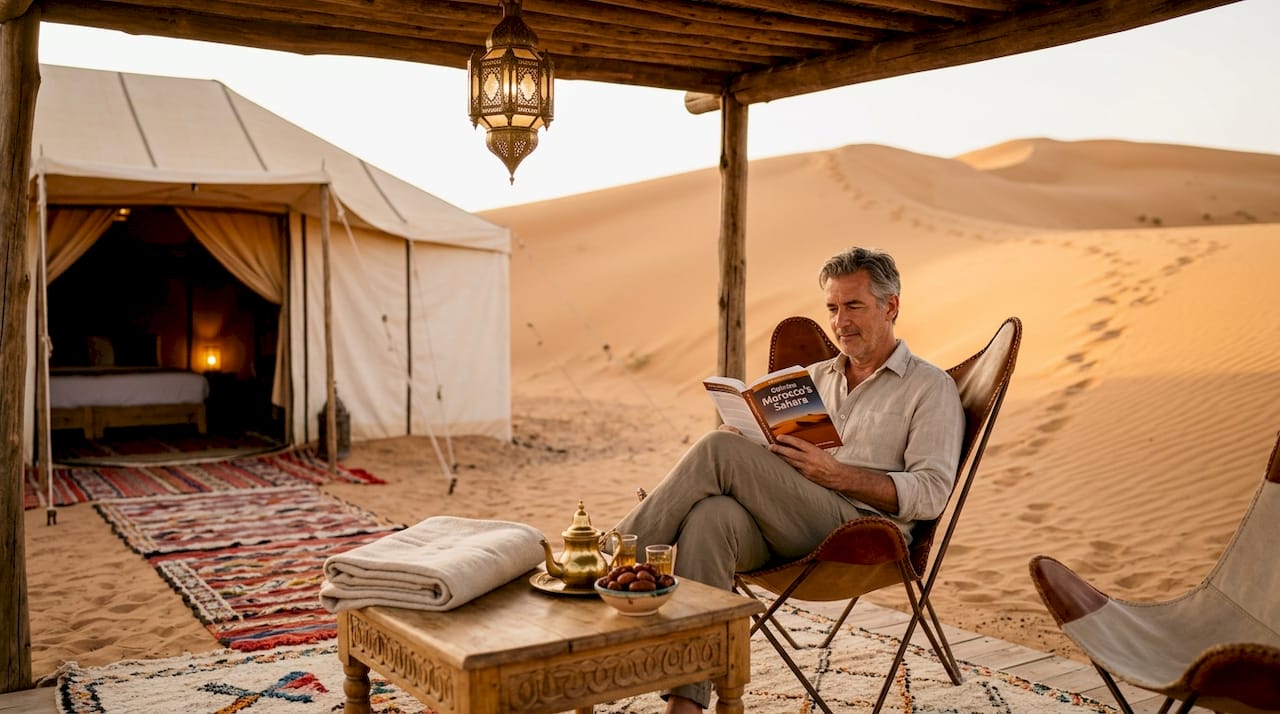
Where you sleep in Morocco is not a logistical detail. It is part of the experience itself. A well-chosen riad in Marrakech’s medina does not just give you a bed. It gives you a courtyard fountain, hand-painted plasterwork, a rooftop terrace with mint tea at sunset, and a staff that treats hospitality as a cultural practice rather than a job function.
Here is what distinguishes accommodations in Morocco from standard hotel stays:
- Rooftop riads in Marrakech: The best riads are former merchant homes converted into boutique guesthouses with eight to twelve rooms, each decorated with authentic Moroccan craftsmanship. Rooftop terraces offer unobstructed views over the medina’s roofline toward the Atlas Mountains.
- Boutique hotels in Fez: Several restored palaces (called dars) in the Fez el-Bali medina have been converted into intimate hotels with private courtyards, plunge pools, and in-house chefs who specialize in traditional Fassi cuisine.
- Desert camps: Desert camps offer comfortable stays with crystal-clear skies and comfortable temperatures in October, making desert excursions both stunning and genuinely enjoyable. The best camps near Merzouga include private tent suites with proper beds, en-suite bathrooms, and fire pits for evening gatherings.
- Atlas Mountain lodges: Stone-built lodges in the Ourika Valley and around Imlil combine local architecture with underfloor heating, wood-burning fireplaces, and panoramic mountain views.
Pro Tip: When booking a riad, ask specifically for a room that does not face the street. Interior courtyard-facing rooms are quieter, cooler in summer, and give you the full sensory experience of waking up to the sound of the fountain rather than the medina’s morning traffic.
The difference between a good Morocco sightseeing tour and a truly memorable one often comes down to the accommodation choices. For a curated look at what is available, the guide to Morocco desert experiences covers the best camps and lodges by region and traveler type.
Customizing your Morocco sightseeing tour itinerary for an unforgettable journey
With a sense of the accommodations, learn next how to personalize your entire Morocco tour for a unique and unforgettable experience.
The most common itinerary mistake travelers make in Morocco is trying to see everything in seven days. You end up spending more time in transit than in any single place, and the country becomes a blur of tile patterns and tagine dishes. The travelers who leave Morocco wanting to return are the ones who chose depth over breadth.
Here is a practical approach to building your itinerary:
- Define your primary interest first. Are you here for Islamic architecture, Sahara landscapes, Berber culture, food, or all of the above? Your answer determines which regions deserve the most time.
- Choose a realistic duration. Ten to fourteen days is the minimum for a genuinely immersive tour that covers imperial cities and the desert without feeling rushed.
- Build in at least one slow day per city. The best moments in Morocco happen when you are not trying to reach the next attraction. A morning spent in a medina cafe watching the neighborhood wake up teaches you more than three rushed mosque visits.
- Decide on your travel style. A private car with a driver-guide gives you maximum flexibility. Small group tours offer social connection and lower cost. Fully private custom tours give you the most control over pace and content.
- Layer in signature experiences. A cooking class in Marrakech, a hammam session in Fez, a camel trek at sunset in Merzouga. These are not add-ons. They are the moments you will actually remember.
Multi-day tour packages covering deserts, gorges, and the Atlas Mountains are negotiable for discounts when booked in advance, which makes flexible travel more accessible than most travelers expect.
| Tour length | Best for | Regions covered |
|---|---|---|
| 7 days | First-time visitors, city focus | Marrakech, Fez, Atlas day trips |
| 10 days | Families, balanced itineraries | Imperial cities, Sahara, coastal stop |
| 14 days | Honeymooners, deep immersion | Full imperial circuit, desert, mountains, coast |
| 18+ days | Adventure travelers, slow travel | All regions plus Rif Mountains, Draa Valley |
For travelers who want a starting framework, the guide to perfect Morocco travel packages breaks down options by duration and traveler type. And if you want to think through the seasonal dimension of your itinerary, the resource on planning a Morocco vacation adds useful weather-specific context.
Why authentic local guidance and tailored experiences define true in Morocco sightseeing tours
Here is an opinion that the travel industry does not say loudly enough: the thread count of your riad sheets matters far less than the quality of the person walking you through the medina the next morning.
The travel market has spent decades equating comfort with quality. Five-star ratings, private plunge pools, curated minibar selections. These things are pleasant. They are not what makes a Morocco sightseeing tour genuinely extraordinary. What makes it extraordinary is the moment a licensed guide from Fez explains why the geometric patterns on a 14th-century madrasa wall encode a specific theological argument. Or when a Berber host in the Atlas Mountains invites you to help knead bread before dinner. No hotel rating system captures that.
We have seen travelers spend enormous sums on the most visually impressive riads in Marrakech and leave feeling like they watched Morocco through glass. And we have seen travelers stay in more modest accommodations with an exceptional private guide and leave feeling like they actually lived inside the country for a week. The difference is always the human connection, not the amenity list.
The other thing worth saying plainly: group tours, even well-run ones, are structurally incapable of delivering true cultural immersion. When you move in a group of twelve, local people respond to you as a group. They perform hospitality rather than extend it. The artisan in the souk shows you his tourist-facing work. The guide covers the highlights efficiently. Everything is technically accurate and experientially thin.
Custom Morocco tours built around private guides, flexible daily schedules, and locally owned accommodations are not a premium upgrade. They are a fundamentally different category of travel. The price difference is real but smaller than most people assume, especially when you factor in what you actually get for it.
True luxury in Morocco is being known by name at the riad, having a guide who adjusts the day’s plan because you mentioned over breakfast that you love ceramics, and sitting in a courtyard at dusk with no agenda and nowhere to be. That is the experience worth planning for.
Explore premium Morocco sightseeing tours tailored to your dreams
Ready to experience Morocco’s magic firsthand? MoroccoTravel1 specializes in exactly the kind of travel this article describes: private, culturally immersive, and built around your specific interests and pace. Whether you are drawn to the imperial cities, the Sahara, or the Atlantic coast, there is a package designed for you. The Morocco Grand Tour 14-day itinerary covers the full sweep of the country with expert local guides and handpicked stays at every stop. Families traveling with children will find the Morocco family tour package, 10 days, thoughtfully structured for mixed-age groups. Browse the full range of best Morocco tour packages and connect with the team to start building your itinerary today.
Frequently asked questions
When is the best time to book Morocco sightseeing tours for travelers?
Book 3 to 6 months ahead of spring (March through May) or autumn (September through November) travel to secure prime accommodations and better rates on riad rooftops and desert camps.
Why should I hire a licensed local guide for Morocco sightseeing tours?
Licensed guides provide safe medina navigation, genuine cultural context, and souk bargaining knowledge, with medina orientation costing around $20 per half day, making them one of the highest-value investments on any Morocco trip.
What makes desert camps in Morocco suitable for travelers?
The best desert camps near Merzouga combine authentic Moroccan design with private tent suites and proper bathrooms, and crystal-clear skies with comfortable temperatures in spring and autumn make the stargazing experience genuinely exceptional.
How can I customize my Morocco sightseeing tour to fit my interests?
Choose your tour duration, prioritize the regions that match your interests (imperial cities, desert, coast, or mountains), and opt for a private itinerary with a licensed guide. Multi-day packages covering deserts and mountains can often be negotiated for advance-booking discounts, giving you flexibility without sacrificing quality.


