

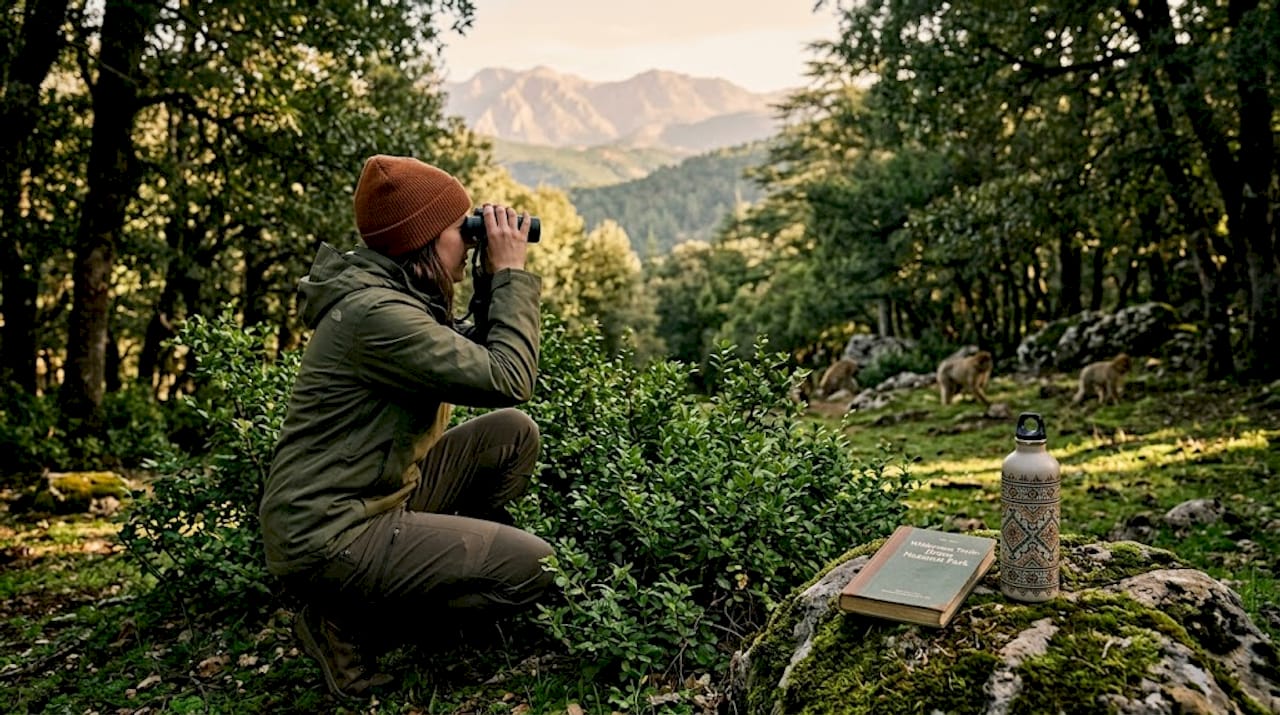
- Morocco offers a remarkable natural diversity, bridging European and African species within a short flight.
- Responsible wildlife travel involves guided visits, respecting habitats, and choosing operators committed to low-impact tourism.
- Cross-habitat itineraries enhance the experience by showcasing Morocco’s unique ecological zones and protecting its iconic species like the Barbary macaque and Northern Bald Ibis.
Few travelers realize that Morocco packs more ecological variety into a four-hour drive than most countries manage across entire regions. From Atlantic wetlands teeming with flamingos to cedar forests sheltering primates to star-filled Saharan skies above sand cat territory, Morocco nature and wildlife travel offers something genuinely rare: a bridging point between European and sub-Saharan African species, all within a short flight from major European cities. As Naturetrek notes, Morocco offers an irresistible mix of convenience and astonishing natural diversity. This guide helps you experience it responsibly.
Table of Contents
- The diverse landscapes and wildlife habitats of Morocco
- Top national parks to witness Morocco’s wildlife responsibly
- Spotlight on iconic species: Barbary macaque and Northern Bald Ibis
- Planning your nature adventure: Cross-habitat itineraries for richer experiences
- Tips for eco-conscious wildlife travel in Morocco
- Why authentic eco-travel in Morocco requires more than just visiting parks
- Explore Morocco sustainably with expert-guided eco-tour packages
- Frequently asked questions
Key Takeaways
| Point | Details |
|---|---|
| Diverse habitats near | Morocco’s close range of coastal, mountain, and desert ecosystems offers rich wildlife in compact trips. |
| Protected parks matter | National parks with guided viewing and conservation programs minimize disturbance and support rare species. |
| Choose responsible tours | Selecting eco-conscious operators who educate visitors protects vulnerable wildlife and habitats. |
| Cross-habitat itineraries | Combining multiple ecosystems in one trip enhances species diversity and the overall nature experience. |
| Respect wildlife rules | Maintain distance, do not feed animals, and follow local guidelines to ensure ethical wildlife encounters. |
The diverse landscapes and wildlife habitats of Morocco
Morocco’s ecological identity is built on contrast. The country sits at the crossroads of the Western Palearctic and Afrotropical zones, which means species from both Europe and deeper Africa share the same territory. That overlap is rare anywhere on earth, and it is the core reason Morocco’s nature and wildlife travel has grown so quickly among serious eco-travelers.
The country’s major habitats each host distinct, iconic wildlife. Morocco’s habitats range from Mediterranean coasts to Atlas forests to Saharan deserts, hosting species like greater flamingos, Barbary macaques, fennec foxes, and addaxes. Each zone functions as its own world, yet they sit close enough that a single itinerary can move between all three.
Here is a breakdown of Morocco’s key natural regions and what lives in them:
- Atlantic and Mediterranean coast: Coastal lagoons and estuaries like Merja Zerga and the Souss-Massa estuary attract massive flocks of migratory birds. Greater flamingos wade in shallow pools year-round, while slender-billed gulls and Audouin’s gulls patrol the shoreline. The Northern Bald Ibis, one of the world’s rarest birds, nests on protected coastal cliffs near Agadir.
- Middle and High Atlas Mountains: Cedar forests above 1,500 meters are the stronghold of the Barbary macaque, the only wild primate native to Africa north of the Sahara. Golden eagles soar above rocky ridges, and Atlas cedar forests shelter rare butterflies and endemic reptiles. Snow leopard territory this is not, but the Atlas leopard, though critically rare, has been documented here.
- Pre-Saharan steppes and Saharan desert: The transition zones between mountains and full desert hold their own surprises. Houbara Bustards stalk through scrub, and Lanner Falcons hunt above open plains. In the deep Sahara, nocturnal species like the fennec fox and sand cat operate in temperatures that would stop most mammals cold.
- Argan forest and Anti-Atlas foothills: Morocco’s endemic Argan tree zone supports a unique ecosystem found nowhere else on earth. Barbary ground squirrels, Egyptian mongooses, and a remarkable diversity of raptors inhabit this scrubby, sun-baked landscape.
When choosing Morocco travel packages, understanding which habitat aligns with your priority species saves you from generic itineraries that skim the surface of each zone without giving you meaningful time in any of them.
Top national parks to witness Morocco’s wildlife responsibly
Knowing the landscapes, let’s see where to safely observe this wildlife at Morocco’s premier parks. Morocco has ten national parks, but not all are equally set up for responsible wildlife tourism. The ones below have infrastructure, ranger presence, and conservation programs that make your visit both rewarding and low-impact.
- Souss-Massa National Park: Located south of Agadir along the Atlantic coast, this is the crown jewel of Moroccan birding. Souss-Massa is home to the Northern Bald Ibis with guided viewing pavilions to reduce disturbance plus rare species like the scimitar-horned oryx. The pavilion system here is genuinely impressive. Visitors watch from fixed, screened structures that keep human silhouettes invisible to nesting birds.
- Ifrane National Park: Sitting in the Middle Atlas at elevations above 1,600 meters, Ifrane is the most important site for Barbary macaque conservation in Morocco. Cedar forests here are ancient and dense, and the park has active reforestation programs. Moroccan wildlife photography enthusiasts rate this as one of the most accessible primate photography sites in Africa.
- Talassemtane National Park: This lesser-known park near Chefchaouen in the Rif Mountains protects rare endemic flora, including the Moroccan fir, found only here. The Barbary partridge, short-toed snake eagle, and Levaillant’s woodpecker are regular sightings for patient observers.
- Tazekka National Park: Near Taza in the Middle Atlas, Tazekka combines dramatic gorges, cedar forests, and open plateaus. It is a strong option for nature excursions in Morocco that combine hiking with wildlife observation, particularly for raptors and mountain reptiles.
Comparison of Morocco’s top wildlife parks
| Park | Primary species | Best season | Guided access required |
|---|---|---|---|
| Souss-Massa | Northern Bald Ibis, Flamingo, Oryx | March to May, Sept to Nov | Yes, pavilion-based |
| Ifrane | Barbary Macaque, Golden Eagle | April to June, Sept to Oct | Recommended |
| Talasemtan | Barbary Partridge, endemic flora | April to June | Recommended |
| Tazekka | Raptors, reptiles, cedar forest | March to May | Optional |
Pro Tip: Book guided morning sessions at Souss-Massa rather than self-guided afternoon walks. Northern Bald Ibis activity peaks in the two hours after sunrise, and the pavilion guides know exactly which colony clusters are active each week.
Pairing park visits with well-planned Morocco trips packages ensures you have the logistics handled so you can focus entirely on observation rather than navigation.
Spotlight on iconic species: Barbary macaque and Northern Bald Ibis
With parks in mind, let’s focus on two emblematic species to appreciate and protect during your travels. These two animals represent Morocco’s conservation story in concentrated form. Understanding their pressures makes you a more informed visitor and a more effective advocate for the habitats they need.
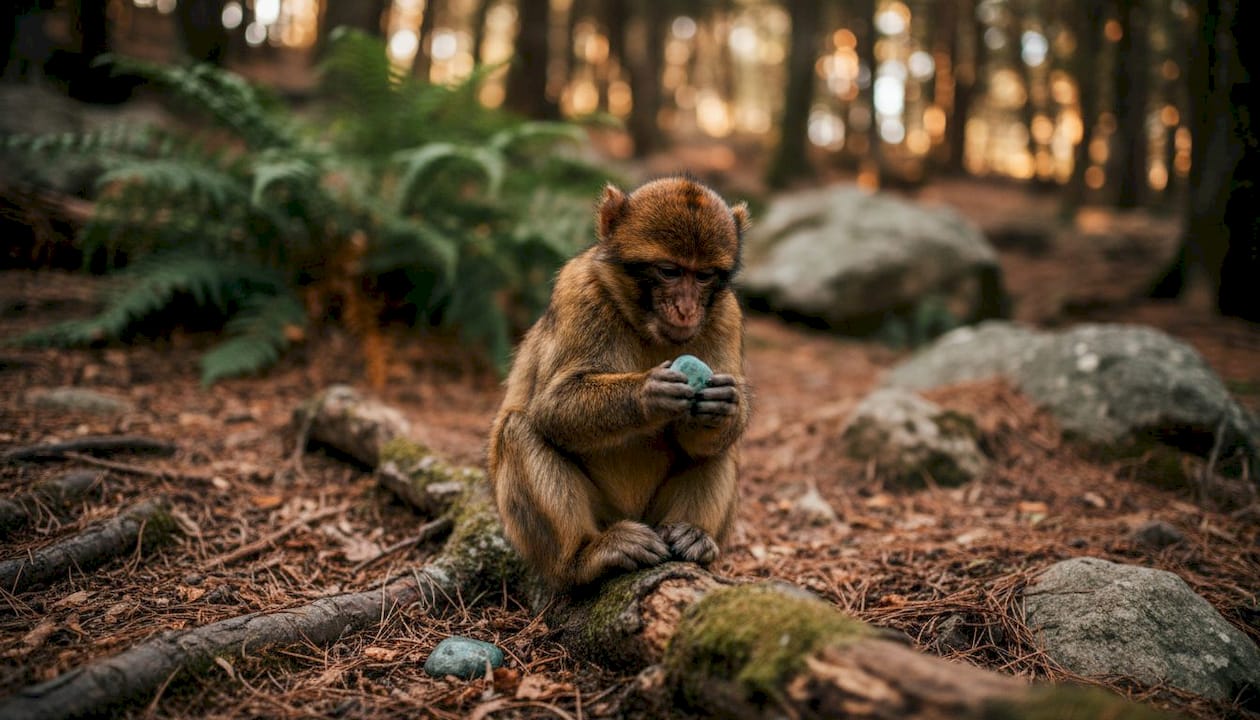
The Barbary Macaque
The Barbary macaque is the only wild primate in Africa north of the Sahara, and it is in trouble. Barbary macaques in Ifrane declined 40% in 40 years due to habitat pressures, a statistic that reframes every roadside vendor offering macaque photo opportunities as a conservation problem, not a cultural attraction.
Here is what responsible viewing looks like in practice:
- Choose operators with no-feed policies. Macaques fed by tourists lose foraging instincts and become dependent on human contact, which increases disease transmission and reduces their ability to survive in the wild.
- Stay on designated trails. The cedar forest understory is fragile. Repeated off-trail foot traffic compacts soil, kills root systems, and degrades the habitat these animals depend on.
- Keep a minimum of a 5-meter distance. Macaques are curious and will approach you. Resist the urge to engage. Maintaining distance protects both you and the animal.
- Photograph without flash. Flash photography at close range stresses primates and can alter their behavior for hours after the encounter.
- Report unethical operators. If you see a guide using food to lure macaques for photos, document it and report it to the park authority. This practice is illegal in protected areas.
The Northern Bald Ibis
This bird was once widespread across Europe, the Middle East, and North Africa. Today, Morocco holds one of only two wild populations on earth. The Souss-Massa colony numbers roughly 600 to 700 individuals, and it exists because of intensive protection and carefully managed visitor access.
Pro Tip: The Northern Bald Ibis nests between February and June. Visiting outside this window means you will see the birds feeding on coastal plains rather than at nesting sites. Both experiences are valuable, but nesting season observation from the pavilions is genuinely extraordinary.
For travelers interested in desert wildlife experiences, the contrast between coastal ibis colonies and Saharan nocturnal mammals makes a compelling case for cross-habitat itineraries.
Planning your nature adventure: Cross-habitat itineraries for richer experiences
Having chosen species and parks, here is how you can maximize your wildlife encounters by combining Morocco’s diverse habitats. Single-zone trips are fine for specialists, but most eco-conscious travelers get far more value from itineraries that move across Morocco’s ecological bands.
Morocco’s cross-habitat itineraries stack multiple biogeographic zones for richer species variety than single-region trips. In practical terms, this means you can realistically see Atlantic shorebirds, Middle Atlas primates, and Saharan desert mammals in a single 10- to 14-day trip if the routing is planned correctly.
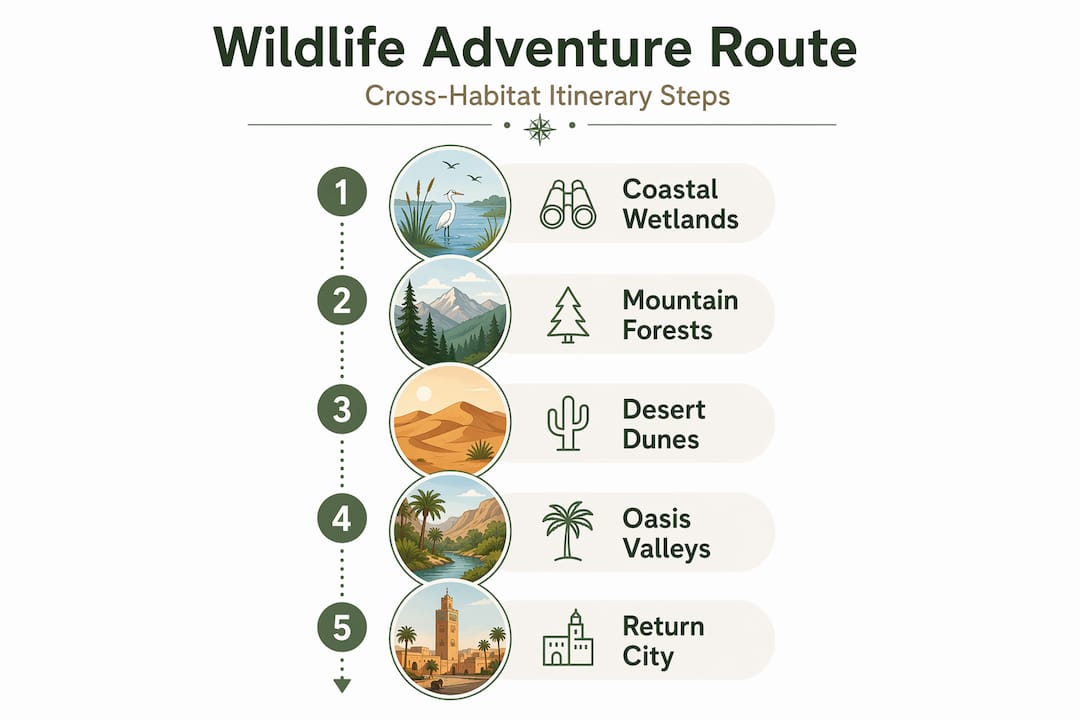
Sample cross-habitat itinerary structure
| Days | Region | Target wildlife | Habitat type |
|---|---|---|---|
| 1 to 3 | Souss-Massa and Agadir coast | Northern Bald Ibis, Flamingo, waders | Coastal wetland |
| 4 to 6 | Ifrane and Middle Atlas | Barbary Macaque, Golden Eagle, cedar forest birds | Mountain forest |
| 7 to 9 | Merzouga and Erg Chebbi | Fennec foxes, desert larks, reptiles | Saharan desert |
| 10 to 12 | Anti-Atlas and Argan zone | Raptors, Barbary ground squirrels, endemic flora | Scrub and foothills |
Key principles for building a sustainable cross-habitat itinerary:
- Allow at least two full days per habitat zone. Wildlife activity follows dawn and dusk rhythms. One-day stops mean you miss the best observation windows entirely.
- Travel between zones in the middle of the day. Midday is the quietest period for most wildlife. Use transit time then, not early morning or late afternoon.
- Work with operators who limit group sizes. Groups of four to six people cause significantly less disturbance than groups of fifteen. This matters most in forest and wetland habitats.
- Build in unscheduled time. The best wildlife encounters in Morocco are unplanned. A flexible itinerary lets you stay longer when something extraordinary appears.
Booking Morocco desert tours as part of a broader cross-habitat plan gives you the Saharan component without sacrificing the coastal and mountain segments that make Morocco’s nature experiences genuinely distinctive.
Tips for eco-conscious wildlife travel in Morocco
To safely and ethically enjoy the richness of Morocco’s wildlife, keep these eco-conscious travel principles in mind. Morocco’s protected areas are under real pressure from tourism growth, and individual traveler choices accumulate into either conservation support or habitat damage.
Guided education and controlled access are essential in parks like Souss-Massa to protect sensitive species. The difference between a guided visit and a self-guided wander is not just convenience. It is the difference between a bird that continues nesting undisturbed and one that abandons its clutch because a visitor got too close.
Follow these principles on every Morocco wildlife tour:
- Book guides certified by the park or a recognized conservation body. Certification means the guide has been trained in low-disturbance protocols and knows the species well enough to keep you at safe distances.
- Carry quality binoculars and a long lens. The best wildlife photography Morocco produces comes from distance, not proximity. A 400mm lens at 30 meters beats a phone camera at 3 meters for both image quality and animal welfare.
- Respect seasonal closures. Several nesting areas in Souss-Massa close to visitors between February and June. These closures exist for good reason. Operators who promise access during closed periods are not worth booking.
- Support local conservation projects financially. Many parks have visitor donation programs that fund ranger patrols and habitat restoration. These are not optional extras. They are the mechanism by which your visit converts from tourism into conservation.
- Leave no trace in every habitat. This sounds obvious, but plastic waste in cedar forests and desert zones is a genuine problem. Pack out everything you bring in.
Pro Tip: Download offline maps of each national park before you arrive. Cell coverage in the Atlas and deep desert is unreliable, and knowing your location relative to designated trails prevents accidental habitat disturbance.
Pairing these principles with a guide to sustainable eco travel gives you a broader framework for applying low-impact practices beyond Morocco’s borders. When choosing eco-tourism packages, ask operators directly how they handle these five principles. Their answers tell you everything.
Why authentic eco-travel in Morocco requires more than just visiting parks
Here is an uncomfortable truth about wildlife tourism that most travel content avoids: visiting a national park does not automatically make your trip eco-friendly. The location is almost irrelevant. What matters is how you and your operator behave inside it.
Morocco actually demonstrates this better than most destinations. The biggest eco-outcome lever is operator commitment to low-disturbance viewing protocols like pavilions and guided education, not just the location visited. Souss-Massa’s pavilion system exists precisely because the park authority recognized that well-meaning visitors were loving the Northern Bald Ibis to local extinction. The solution was not to close the park. It was to redesign access so that human presence became invisible to nesting birds.
That model deserves wider adoption, and as a traveler, you can accelerate it by choosing operators who already practice it. When you book a tour that uses fixed observation points, limits group sizes, and briefs participants on species-specific behavior before entering habitat, you are voting with your money for the right approach. When you book the cheapest option that promises guaranteed sightings, you are funding the wrong one.
There is also a patience argument that rarely gets made. Travelers who sit quietly at a single observation point for ninety minutes consistently report better wildlife encounters than those who cover more ground in the same time. Animals habituate to still, quiet observers. They flee from moving groups. The best Morocco nature experiences are not about covering distance. They are about earning trust from animals that have no reason to give it.
Discover Morocco’s fauna on its own terms, and it rewards you. Rush it, and you get nothing but distant shapes and blurry photographs. The operators who understand this are the ones worth choosing eco tours through. They are not hard to identify. Ask them what happens when a client wants to get closer to an animal than the guide recommends. The answer tells you everything about their actual values.
Explore Morocco sustainably with expert-guided eco-tour packages
If you are ready to put these principles into practice, Moroccotravel1.com offers curated tour packages built around responsible wildlife viewing, cross-habitat itineraries, and guides who genuinely know Morocco’s ecosystems. Whether you want to focus on Atlantic birdwatching, Atlas primate encounters, or Saharan nocturnal wildlife, the packages are designed to give you meaningful access without compromising the habitats that make these encounters possible. The 10-day Morocco family tour package and 14-day Morocco grand tour package both incorporate nature stops with local expert guides. Explore the full range of best Morocco tour packages and find the itinerary that fits your wildlife priorities.
Frequently asked questions
What are the best times to visit Morocco for nature and wildlife watching?
Spring (March to May) and autumn (October to November) offer the best conditions, with birdwatching peaking in March to April and October to November across Morocco’s parks, while temperatures remain comfortable for hiking between habitats.
How can I ensure my wildlife travel in Morocco is eco-friendly?
Book guides trained in low-disturbance protocols, follow all park rules, never feed wildlife, and choose operators who use designated pavilions and guided education rather than open-access viewing.
Where can I reliably see Barbary macaques in Morocco?
Ifrane National Park in the Middle Atlas is your best option, though the population has declined roughly 40% over 40 years due to habitat loss, making responsible, guided visits more important than ever.
What makes Morocco’s wildlife travel unique compared to other destinations?
Morocco’s proximity to Europe combined with its overlapping Mediterranean, mountain, and desert habitats creates a species-rich experience that bridges European and African fauna in a way no other single destination can match.
Are guided tours necessary for wildlife viewing in Morocco?
Yes. Guided access and controlled viewing are essential in sensitive parks like Souss-Massa, where unguided visitors risk disturbing nesting Northern Bald Ibises and other protected species that cannot tolerate repeated human intrusion.


