


- Moroccan hammams are centuries-old cultural spaces that combine cleansing rituals, natural ingredients, and community bonding.
- Travelers can choose between affordable public baths or private spas offering comfort, privacy, and guided treatments, depending on their preference.
- Recognizing the ritual’s intensity and cultural significance enhances the authentic experience of Morocco’s rich wellness tradition.
Most travelers arrive in Morocco expecting a basic public bathhouse. What they actually find is one of the most layered, sensory-rich wellness traditions on earth. The Morocco spa and hammam experience combines century-old ritual, natural ingredients, and a genuine sense of cultural belonging that no five-star hotel treatment can replicate. Whether you want to scrub down in a neighborhood hammam for under ten dollars or spend an afternoon in a riad spa with panoramic rooftop views, this guide gives you the full picture so you can choose confidently and show up prepared.
Table of Contents
- Key takeaways
- The Morocco spa and hammam tradition
- What actually happens inside: the ritual explained
- Public hammams vs. private spas
- How to prepare for your hammam visit
- Best cities and venues for hammam experiences
- My honest take on the Morocco hammam experience
- Plan your Morocco trip with hammam experiences included
- FAQ
Key takeaways
| Point | Details |
|---|---|
| Two very different experiences | Public hammams cost $6–$13; private spas run $28–$76+ and include amenities, privacy, and attendants. |
| Ritual follows a set sequence | Expect steam, black soap, a kessa scrub, a clay wrap, and an argan oil massage across a 1.5–3 hour session. |
| Preparation matters | Bring your own supplies to public hammams; private spas supply everything, including robes and disposable garments. |
| Cultural respect is required | Follow gender norms, tip attendants, and enter with an open mind, especially for the intense kessa exfoliation. |
| Cities drive the best options | Marrakech, Fez, Agadir, Casablanca, and Tangier hold the highest concentration of quality hammam venues. |
The Morocco spa and hammam tradition
The hammam is not a modern wellness import. It has been woven into Moroccan daily life for more than a thousand years, and understanding where it comes from makes the experience feel entirely different when you finally step inside.
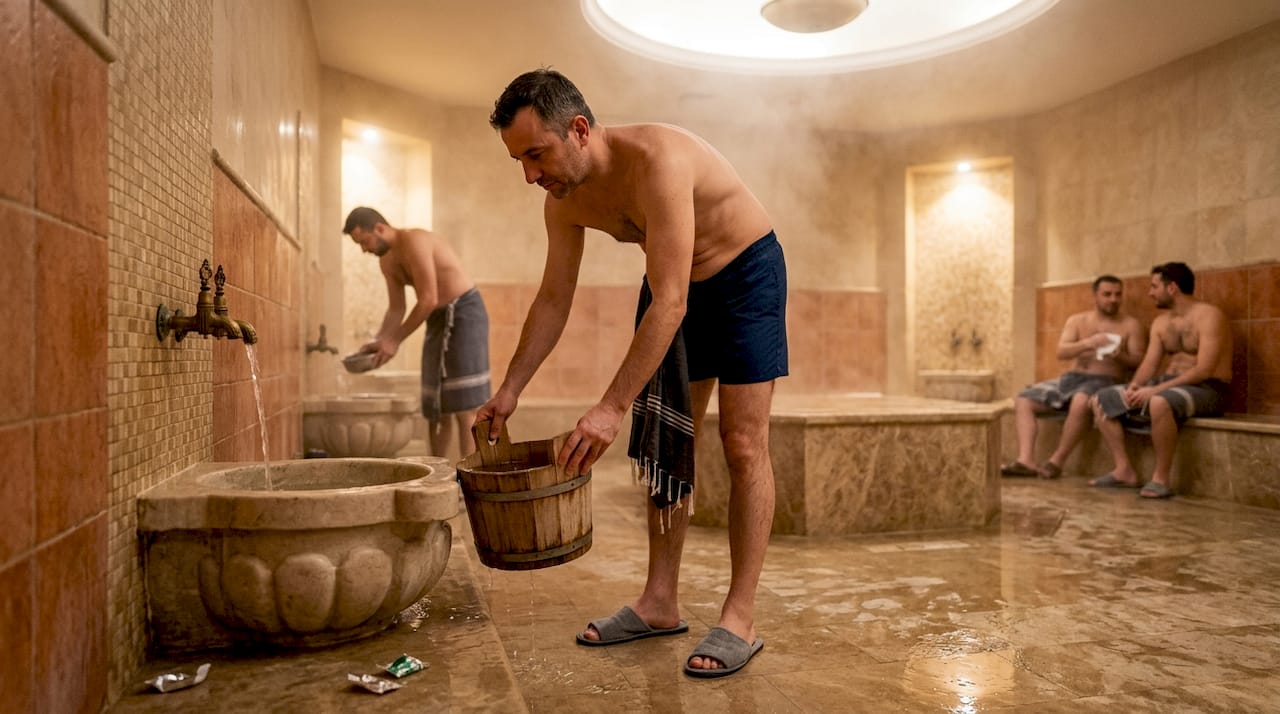
Moroccan hammams build on Roman thermae traditions, adapted through Islamic culture with an emphasis on purification, modesty, and community. The architecture reflects that dual inheritance beautifully. Thick stone walls, domed ceilings with star-shaped vents, and vaulted steam chambers maintain controlled heat and humidity without mechanical systems. The design is simple, functional, and strikingly elegant.
The social role of the hammam
For centuries, hammams served as the social infrastructure of Moroccan neighborhoods. Before private plumbing became standard, the local hammam was where people not only cleaned themselves but also met, gossiped, celebrated, and grieved. Brides visited before their wedding. New mothers returned with their infants. Friends coordinated weekly visits the way people today might plan a coffee catch-up.
Gender customs have always governed hammam culture. Men and women attend separately, either using different facilities or rotating on a schedule. Women’s sessions tend to be longer and more social. Men’s visits are often quicker and more functional. As a traveler, you will always be directed to the appropriate area, so there is nothing to worry about in terms of logistics.
What makes this tradition particularly relevant today is how it has absorbed water scarcity pressures without losing its core identity. Some public hammams have closed temporarily during drought periods due to water shortages, operating only three days a week in some cities. This raises real questions about sustainability and social equity. But it also signals that the hammam remains deeply enough embedded in Moroccan life that communities fight to preserve it even under stress. That is the kind of cultural institution worth experiencing firsthand.
What actually happens inside: the ritual explained
Many travelers misunderstand the hammam as a glorified steam room. The actual ritual is a precise sequence of heat, cleansing, exfoliation, and nourishment that leaves your skin noticeably different. Here is the typical flow from start to finish.
- Steam room entry. You begin in a warm chamber that gradually opens into hotter rooms. The steam opens pores, loosens dead skin, and starts relaxing muscles. Give yourself at least 10 to 15 minutes here before moving forward.
- Black soap application. An attendant or you apply savon beldi, a thick olive oil-based black soap, across the entire body. This soap does not lather like Western soaps. It sits on the skin and softens the surface layer, priming it for exfoliation.
- Kessa scrub. This is the most talked-about step. A rough exfoliating mitt called a kessa is used in long, firm strokes across the skin. Dead skin visibly peels away in gray rolls, which sounds unpleasant until you realize your skin has never felt smoother. The kessa scrub is physically intense and can genuinely surprise first-timers.
- Rinse. Warm water poured from a bucket or shower removes the soap and dead skin. At this point, most people feel significantly lighter.
- Rhassoul clay wrap. A volcanic clay sourced from the Atlas Mountains is applied to the body and sometimes the hair. It draws out impurities, balances oil production, and leaves skin with a matte, refined texture. Leave it on for 5 to 10 minutes before rinsing.
- Argan oil massage. The final step uses Morocco’s most famous export: cold-pressed argan oil. A full massage seals in moisture and relaxes any remaining tension. Argan oil, rhassoul clay, and black soap work together to detoxify, exfoliate, and nourish skin in a way that synthetic spa products rarely match.
The full sequence lasts 1.5 to 3 hours depending on whether you are in a public or private setting and which treatments you add. Block out a full afternoon so you never feel rushed.
Pro Tip: If you are uncomfortable performing the kessa scrub on yourself, request an attendant at the front desk before you begin. This is completely normal and expected. Just remember to tip when you leave.
The difference between public and private experiences shows up most clearly in this ritual. In a public hammam, you perform most steps yourself using supplies you brought from home. In a private spa, trained attendants guide you through each phase, adjusting pressure and timing based on your preferences.
Public hammams vs. private spas
Choosing between a public hammam and a private spa is not really about quality. It is about what kind of experience you are after.
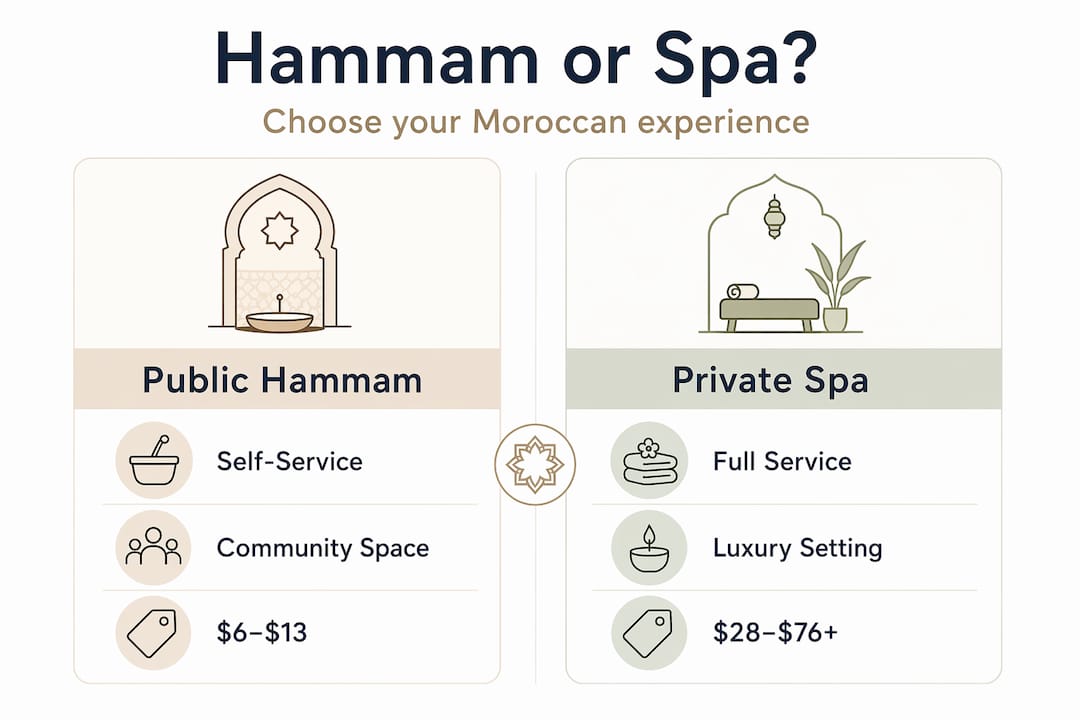
| Feature | Public hammam | Private spa |
|---|---|---|
| Cost | $6–$13 per visit | $28–$76+ depending on services |
| Supplies included | No, bring your own | Yes, robes and disposable garments provided |
| Privacy level | Communal, gender-separated | Private rooms or semi-private areas |
| Cultural immersion | Very high, local community setting | Moderate, curated tourist-friendly environment |
| Amenities | Basic steam rooms and rinse areas | Jacuzzis, massage tables, rooftop areas, temperature-controlled steam |
| Attendant service | Optional; must request and tip | Typically included in service |
| Language barrier | Likely, minimal English spoken | Staff usually speak English or French |
Public hammams are functional community spaces without amenities. Private spas provide controlled steam at 36 to 45 degrees Celsius, separate massage rooms, and in some cases rooftop views across the medina. Neither option is superior. They serve different purposes.
Go to a public hammam if you want to feel what daily Moroccan life actually looks and sounds like. You will share space with local families. You will hear Arabic and Darija. You will navigate bucket rinsing and communal benches. It is raw, real, and deeply memorable.
Choose a private spa if you are new to hammam culture, traveling with a partner for a romantic afternoon, or simply want a guaranteed level of comfort and hygiene. Many riads in Marrakech and Fez have installed their own spa facilities with full hammam packages. These are excellent for first-timers who want the ritual without the unpredictability of a public setting.
A few things worth knowing about what to bring to a public hammam:
- Black soap (savon beldi), available at any souk stall
- A kessa exfoliating mitt
- A plastic mat or sandals for the floor
- Two towels: one for during, one for after
- A change of modest clothing
- Small bills for tipping attendants
Private spas supply all of this, which is precisely what justifies the price difference.
How to prepare for your hammam visit
Good preparation removes the anxiety that many travelers feel before their first hammam experience. A few practical steps make the whole thing significantly more comfortable.
Before you go, avoid shaving or waxing at least 24 hours in advance. The kessa scrub will irritate freshly shaved skin. If you have eczema, psoriasis, or open wounds, consult your doctor before booking. The heat and exfoliation are intense, and sensitive skin conditions may flare up without proper precautions. The true value of the hammam lies in slowing down and reconnecting with your body, and that connection is much harder when you are uncomfortable.
Pro Tip: Book private spa appointments at least two to three days in advance during peak travel seasons. Riad spas in Marrakech fill up fast, especially on weekends and during festival periods.
Here are the most practical etiquette points to keep in mind:
- Speak quietly inside the hammam. It is a place of relaxation, not socializing loudly.
- Keep modesty in mind. Women typically wear swimwear or go topless in public hammams. Men wear swimming shorts.
- Tipping attendants who perform your kessa scrub or massage is customary. Roughly 10 to 20 percent of the service cost is standard.
- Do not rush. Lingering in the warm room after your treatments is not laziness. It is part of the experience.
- Stay hydrated. The heat and exfoliation pull moisture from your body. Drink water before and after.
Timing also matters. Visit a public hammam on a weekday morning to avoid crowds. Many locals visit in the late afternoon and evening. If you go to a private spa, morning slots tend to be calmer and cooler, which is welcome if you are already dealing with Moroccan summer heat outdoors. For travel tips tailored to luxury and cultural experiences across Morocco, planning your hammam visit alongside other activities helps you pace the day without overdoing it.
Best cities and venues for hammam experiences
Nearly 84% of Morocco’s 20 million annual visitors concentrate in five cities, which is exactly where the best hammam and spa options cluster. Each city offers a distinct flavor of the experience.
- Marrakech is the hammam capital of Morocco. The medina has dozens of neighborhood hammams, and riad spas like Riad Vendôme offer private hammam packages with jacuzzis and massage suites starting at around $28. The Marrakech luxury travel scene has grown significantly, with high-end spas now offering full-day wellness programs.
- Fez is home to some of the oldest functioning hammams in the world. El Batha hammam and others near the medina give you an experience that has changed little in centuries. The city’s slower pace makes it ideal for a longer, more meditative visit.
- Agadir caters to beach travelers with resort-style spa facilities. The hammam experience here tends to be more polished and tourist-oriented, but the quality of treatments is consistently high.
- Casablanca offers urban spa facilities that blend Moroccan tradition with contemporary design. These are excellent options for travelers on business trips or short layovers who still want an authentic treatment.
- Tangier is an underrated hammam destination. The city’s Andalusian influences show up in its bathhouse architecture, and prices remain lower than Marrakech.
| City | Best for | Approximate price range |
|---|---|---|
| Marrakech | Full luxury packages, first-timers | $28–$80+ |
| Fez | Historic, authentic public hammams | $6–$25 |
| Agadir | Resort-style, beach travelers | $20–$60 |
| Casablanca | Urban professionals, brief visits | $15–$50 |
| Tangier | Budget travelers, Andalusian character | $6–$30 |
If you want to explore these cities with hammam visits built into your itinerary, Moroccotravel1’s guide to top cities in Morocco covers each destination with useful context for planning your time.
My honest take on the Moroccan hammam experience
I have seen travelers walk out of hammams completely transformed and others walk out mildly confused. The difference almost always comes down to expectations.
What I have learned is that the hammam demands a particular kind of surrender. You are in someone else’s rhythm. The heat decides your pace. The attendant decides the pressure. You cannot check your phone, distract yourself with conversation, or control much of anything. For many travelers, especially those used to spa experiences where they direct everything, that loss of control is the first real hurdle. My advice: let it be uncomfortable for the first ten minutes. The discomfort passes, and what comes after it is genuinely restorative.
I also think most travel articles do first-timers a disservice by softening the kessa scrub description. It is firm. Sometimes it borders on rough. That is not a flaw in the technique. That is what makes it work. Dead skin that has been building up for months cannot be removed with gentle strokes. If you go in braced for intensity, you will find the experience satisfying rather than shocking.
My preference, after watching travelers try both, is to start with a private spa on your first visit and then attempt a public hammam if your schedule allows. The private setting gives you a clean, guided introduction to the ritual. The public setting gives you the culture. Both are worth your time, and neither one alone tells the whole story.
The hammam is also one of the few experiences in Morocco where price is genuinely not the best predictor of quality. Some of the most memorable sessions happen in a neighborhood hammam that costs eight dollars and runs on wood-fired heat. What you pay for in a private spa is comfort, convenience, and control. What you pay for in a public hammam is authenticity. Decide what you need that day, and choose accordingly.
— Moroccotravel1.com
Plan your Morocco trip with hammam experiences included
Moroccotravel1.com builds hammam and spa visits directly into its Morocco tour packages, so you are never left figuring out which venue to trust or how to book across a language barrier. Every itinerary is customized, and the team knows which hammams and private spas consistently deliver for travelers at different comfort levels. For couples, the 10-day Morocco honeymoon tour includes curated spa afternoons in riad settings across Marrakech and Fez. For those who want full coverage across the country, the 14-day grand tour weaves hammam stops into a broader journey through the desert, mountains, and coast. Book early, especially for Marrakech riad spas during high season. Availability moves faster than most travelers expect.
FAQ
What is a Moroccan hammam?
A Moroccan hammam is a traditional bathhouse where visitors undergo a sequence of steam, black soap application, kessa exfoliation, clay treatment, and massage. The ritual typically lasts 1.5 to 3 hours and is deeply rooted in Islamic and Roman bathing traditions.
How much does a Morocco spa and hammam experience cost?
Public hammams cost approximately $6 to $13 per visit. Private spa packages range from $28 to over $76 depending on the treatments included and the facility’s level of luxury.
What should I bring to a public hammam?
Bring your own black soap, a kessa exfoliating mitt, sandals or a mat, two towels, modest swimwear, and small bills for tipping. Private spas supply all of these items.
Is the kessa scrub painful?
The kessa scrub is physically intense but not painful for most people. It uses firm strokes to remove dead skin. First-timers often find it more vigorous than expected. You can request an attendant to perform it and ask them to adjust pressure to your comfort level.
Which city has the best hammam experience in Morocco?
Marrakech offers the widest range of options, from budget public hammams to luxury riad spas. Fez is the best choice for historic authenticity. Agadir suits beach travelers, and Tangier is ideal for budget-conscious visitors who want a less tourist-heavy setting.


