


- Morocco travel insurance provides critical coverage for emergency medical costs, trip cancellations, and adventure activities.
- Travelers should ensure their policy explicitly covers Morocco, includes sufficient evacuation and medical limits, and adds activity riders for hazardous sports.
- Buying early and verifying coverage details help travelers avoid costly surprises during their trip.
Morocco travel insurance is a financial protection plan that covers emergency medical costs, trip cancellations, and adventure activity risks that standard U.S. health plans do not address abroad. Morocco draws millions of visitors each year for its desert dunes, Atlas Mountain treks, and medina markets. Yet travel insurance is not legally required for entry, which leads many travelers to skip it entirely. That is a costly mistake. Providers like World Nomads, Allianz, and SafetyWing offer Morocco-specific plans that cover everything from a Sahara quad biking injury to a flight cancellation caused by a sandstorm.
What does Morocco travel insurance cover?
Morocco trip insurance covers four core areas: emergency medical treatment, medical evacuation, trip cancellation and delay, and baggage loss. Each one addresses a real risk you face the moment you land in Casablanca or step onto a desert trail outside Merzouga.
Emergency medical and hospitalization
Public healthcare in Morocco is basic, and private clinics typically demand upfront payment before treating foreign patients. Your U.S. Blue Cross or Aetna card is not accepted at a Marrakech private hospital. That means a broken leg from a camel trek could cost you thousands of dollars out of pocket before you even leave the country.
Experts recommend at least $50,000 in emergency medical coverage for Morocco travel. That threshold covers most serious injuries and illnesses without leaving you financially exposed. Look for policies that include direct hospital billing so the insurer pays the clinic directly rather than requiring you to pay and seek reimbursement later.
Medical evacuation from remote areas
Medical evacuation is especially critical for travelers heading into the Sahara Desert or the High Atlas Mountains. Hospital facilities in those regions are limited or nonexistent. An air evacuation to Casablanca or Rabat, or even to a European medical center, can cost $50,000 or more without insurance.
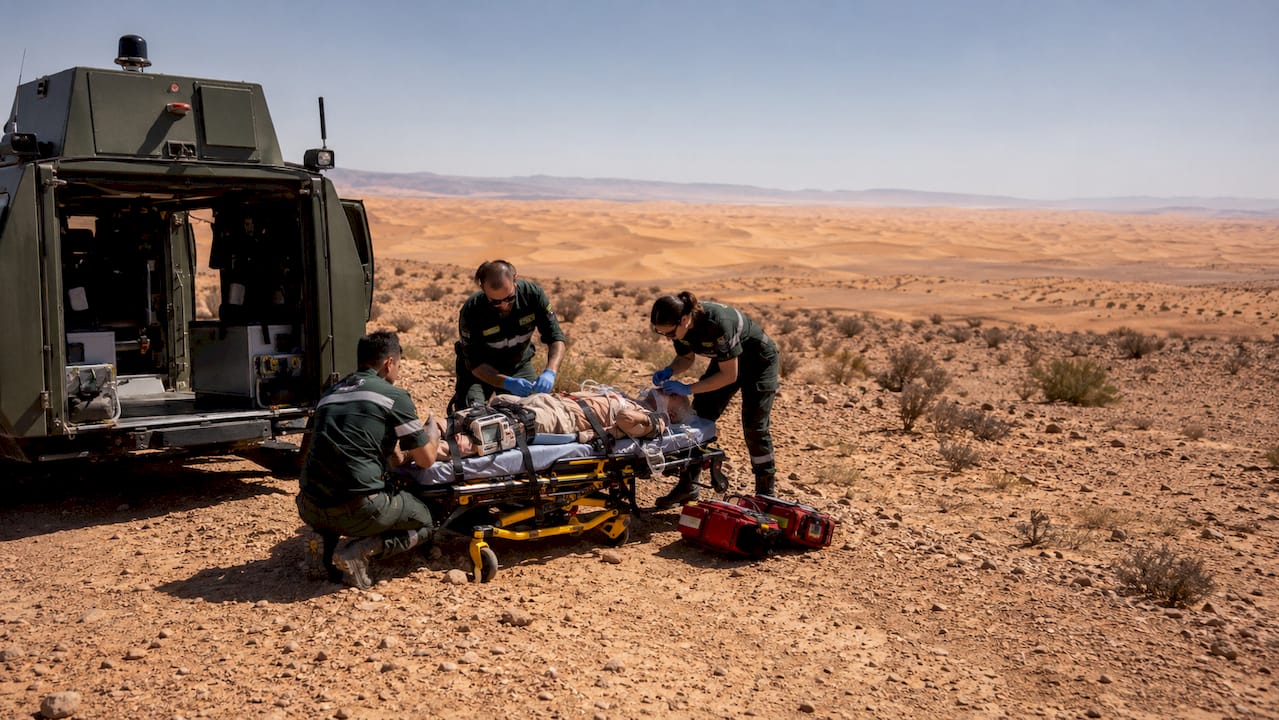
The recommended minimum for evacuation coverage is $100,000. That figure covers air ambulance transport and repatriation back to the United States if needed. Skipping this coverage to save $30 on a premium is one of the most expensive decisions a traveler can make.
Trip cancellation, delay, and baggage loss
Trip interruptions, cancellations, and baggage loss due to strikes, weather, or airline disruptions are frequent issues for Morocco travelers. A canceled connection in Madrid or a delayed Royal Air Maroc flight can cascade into missed riad reservations and prepaid tour deposits.
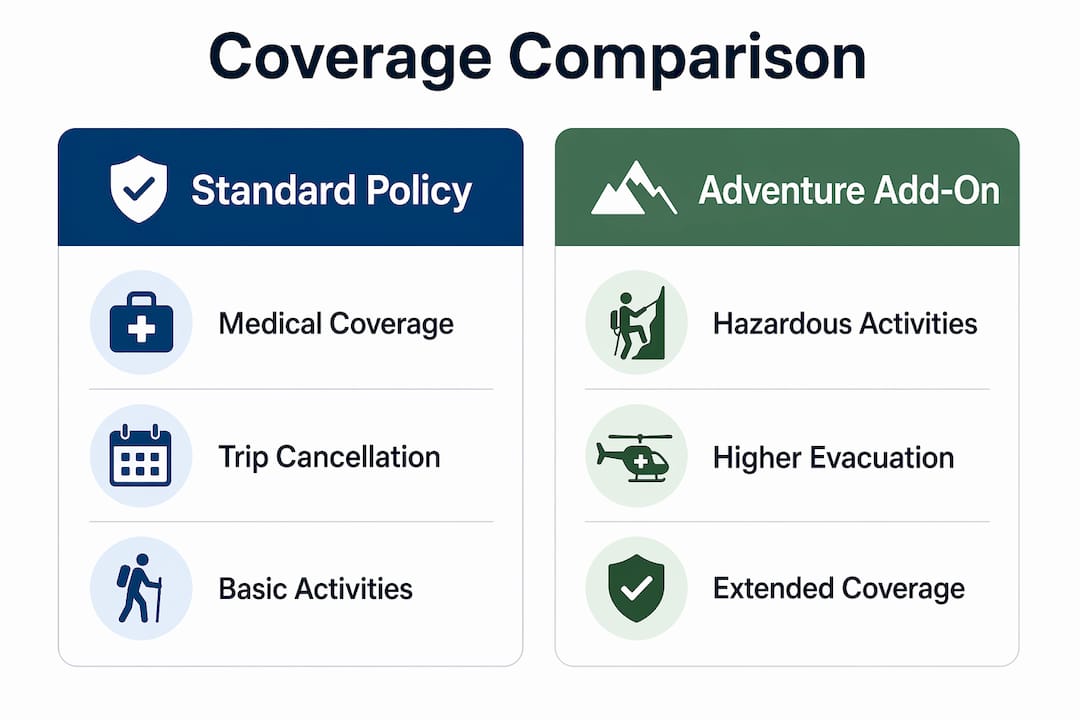
Trip cancellation coverage reimburses nonrefundable costs when you cancel for a covered reason such as illness or a family emergency. Baggage loss coverage protects your gear if your luggage disappears between JFK and Marrakech Menara Airport. These protections matter more than most travelers realize until they need them.
Pro Tip: Buy your policy within 14–21 days of your first trip deposit to unlock the broadest trip cancellation benefits, including pre-existing condition waivers offered by providers like Allianz and Tin Leg.
Does standard insurance cover Morocco adventure activities?
Standard Morocco travel insurance policies frequently exclude activities classified as hazardous sports. That classification covers more activities than most travelers expect, and the gap between what you assume is covered and what actually is covered can be significant.
What counts as a hazardous activity?
Quad biking, dune buggies, and moderate mountain trekking are flagged as hazardous sports by many insurers. These are not fringe activities in Morocco. They are standard offerings on nearly every Merzouga desert tour and Ouarzazate excursion. If you book a quad bike ride through the dunes and crash without the right add-on, your insurer can deny the medical claim entirely.
Many standard policies exclude hazardous activities unless you purchase an adventure sports rider or select a plan specifically designed for active travel. World Nomads is widely recognized for including a broader range of adventure activities in its base plans. SafetyWing covers some outdoor activities but has stricter limits on motorized sports.
Standard vs. adventure policy comparison
| Feature | Standard Policy | Adventure Add-On Policy |
|---|---|---|
| Hiking and trekking | Usually covered | Covered, including high altitude |
| Quad biking and dune buggies | Typically excluded | Covered with declaration |
| Camel trekking | Usually covered | Covered |
| Rock climbing | Excluded | Covered with add-on |
| Medical evacuation from remote areas | Limited | Higher limits, air ambulance |
| Premium cost | Lower | 15–30% higher on average |
The table above shows why adventure travelers cannot treat Morocco health insurance as a commodity purchase. A plan that costs $40 less but excludes quad biking is not cheaper if you end up with a $12,000 medical bill.
Pro Tip: Before purchasing any policy, download the full policy document and search for the exact activity you plan to do. The activity list is usually in the exclusions section, not the marketing summary.
How much does Morocco travel insurance cost?
The average cost of Morocco travel insurance for U.S. travelers is approximately $308, which represents about 4.4% of a typical $7,000 trip cost. That percentage is the industry standard benchmark for evaluating whether a travel insurance quote is reasonable.
What drives the price up or down?
Four variables determine your premium: trip length, total trip cost, your age, and the level of medical and evacuation coverage you select. A 10-day trip for a 35-year-old with $5,000 in nonrefundable costs will cost far less than a 21-day trip for a 60-year-old with $12,000 in prepaid bookings.
Provider pricing also varies meaningfully. Tin Leg offers budget-friendly plans starting around $50–$80 for shorter trips with basic coverage. IMG Global offers mid-range plans with stronger medical limits. Allianz provides premium plans with direct billing networks and 24/7 assistance lines, typically priced higher but with broader support infrastructure.
What you get at each price point
- Budget plans ($50–$100): Basic trip cancellation and medical coverage, often with lower evacuation limits and no adventure activity coverage
- Mid-range plans ($100–$200): Stronger medical limits, evacuation coverage up to $500,000, and some adventure activity inclusion
- Premium plans ($200–$400+): Direct hospital billing, 24/7 emergency assistance, high evacuation limits, and comprehensive adventure sports coverage
The cheapest Morocco trip insurance option is rarely the best value. A plan without direct hospital billing forces you to pay upfront at a Casablanca clinic and wait weeks for reimbursement. That cash flow problem alone makes mid-range plans worth the extra cost.
The real question is not how cheap you can go. It is how much financial exposure you are willing to accept.
For travelers planning desert tours, check the desert health safety checklist to understand what medical risks are most common in remote Moroccan environments. That context helps you match coverage limits to actual risk.
How to buy the right morocco travel insurance
Buying the right Morocco travel insurance requires more than entering your trip dates into a comparison site. The process has five steps that protect you from the most common coverage gaps.
- Purchase before departure. Buy your policy before you leave the United States to activate full trip cancellation coverage. Policies purchased after departure typically exclude cancellation benefits entirely.
- Verify Morocco is explicitly covered. Insurance policies often group Morocco under “Africa” rather than “Europe,” which matters if you are buying a plan marketed for European travel. Confirm the policy document lists Morocco or Africa as a covered region.
- Check for direct hospital payment. Effective policies include direct hospital billing and 24/7 emergency assistance. This feature is non-negotiable given Morocco’s upfront payment requirements at private facilities.
- Declare all planned activities. List every activity you intend to do, including quad biking, hiking, and any motorized excursions. Undeclared activities are the most common reason claims get denied. Providers like World Nomads allow you to specify activities during the purchase process.
- Carry your policy details at all times. Save your policy number, the insurer’s 24/7 emergency line, and your coverage limits in your phone and in a printed copy in your bag. In a medical emergency in the Sahara, you will not have time to search your email.
Pro Tip: If you have a pre-existing condition like diabetes or a heart condition, look specifically for policies with a pre-existing condition waiver. Allianz and Travel Guard both offer this feature when you purchase within a set window of your initial trip deposit.
For a full picture of what to expect when traveling in Morocco, the Morocco travel advisory guide covers current safety conditions and what travelers should prepare for before departure.
Key takeaways
The most effective Morocco travel insurance plan combines strong medical and evacuation coverage with explicit adventure activity protection, purchased before departure and verified to include Morocco by name.
| Point | Details |
|---|---|
| Medical coverage minimum | Carry at least $50,000 in emergency medical coverage since U.S. insurance is not accepted in Morocco. |
| Evacuation coverage threshold | Get at least $100,000 in evacuation coverage for desert and mountain travel where hospitals are scarce. |
| Adventure activity add-ons | Quad biking and dune buggies require explicit policy declarations to avoid claim denial. |
| Geographic verification | Confirm your policy lists Morocco or Africa as covered, not just Europe. |
| Purchase timing | Buy before departure to unlock trip cancellation benefits and pre-existing condition waivers. |
What most travelers get wrong about morocco insurance
After years of helping travelers plan trips across Morocco, I have seen the same mistakes repeat themselves. The most common one is treating travel insurance as a formality rather than a real financial tool.
Most travelers spend hours comparing riad prices and tour itineraries, then spend five minutes picking the cheapest insurance option they can find. That approach works fine until it does not. And in Morocco, the scenarios where it fails are not rare. Food-borne illness from street food in Fez, a sprained ankle on a High Atlas trail, and a delayed flight that collapses a tightly scheduled itinerary. Travelers often fear terrorism risks, but the practical insurance value comes from coverage for common issues like food-borne illnesses and travel delays. Those are the claims that actually get filed.
The second mistake I see constantly is assuming that because an activity is offered on a tour, it must be covered by insurance. That logic does not hold. A tour operator offering quad bikes in Merzouga has no obligation to verify your insurance coverage. The insurer does not care that the activity was on a reputable tour. They care what the policy document says.
My personal recommendation is to treat Morocco insurance as a combined travel and activities package, as the best insurance for Morocco travel should cover both. World Nomads is the strongest default choice for adventure-focused travelers. Allianz is the better pick for travelers prioritizing trip cancellation protection and direct billing support. For longer stays or multi-country trips that include Morocco, SafetyWing’s subscription model offers flexibility that single-trip policies cannot match.
The travelers who get the most out of Morocco are the ones who plan confidently because they know they are covered. That confidence is worth more than the $50 you save by going with the bare-minimum plan.
— Moroccotravel1.com
Plan your morocco trip with confidence
Moroccotravel1 builds custom Morocco tour packages designed around the experiences you actually want, from Sahara Desert camps and Atlas Mountain treks to Marrakech medina tours and Atlantic coast escapes. Every itinerary is built with local expertise and 24/7 support, so you are never navigating a problem alone. When you pair the right Morocco travel insurance with a well-planned itinerary, you travel without the anxiety of what-ifs. Browse the full range of private Morocco tour packages to find the right fit, whether you are planning a 10-day family adventure or a 14-day grand tour across the country’s most iconic destinations.
FAQ
Is travel insurance required to enter Morocco?
Travel insurance is not legally required for U.S. citizens entering Morocco for trips under 90 days. A valid passport is sufficient for entry, but insurance is strongly recommended given Morocco’s upfront payment requirements at private medical facilities.
Does U.S. health insurance work in Morocco?
U.S. health insurance is typically not accepted at Moroccan hospitals or clinics. Travelers must pay out of pocket and seek reimbursement, which is why a dedicated Morocco health insurance plan with direct billing is the practical choice.
What activities require an adventure add-on in Morocco?
Quad biking, dune buggies, and mountain trekking above certain altitudes are classified as hazardous sports by most standard policies. You need an explicit adventure add-on or a provider like World Nomads that includes these activities in its base coverage.
How much does Morocco trip insurance typically cost?
The average cost is approximately $308 for U.S. travelers, representing about 4.4% of a $7,000 trip. Budget plans start around $50, while premium plans with direct billing and high evacuation limits run $200 to $400 or more.
When should I buy Morocco travel insurance?
Buy your policy before your departure date, ideally within 14–21 days of your first trip deposit. Early purchase unlocks trip cancellation benefits and, with many providers, pre-existing condition waivers that are unavailable if you wait.


