


- A well-planned trip to Morocco highlights its diverse landscapes, from imperial cities to deserts and mountains.
- Travelers should focus on key destinations like Marrakech, Fes, and Erg Chebbi, allowing time to experience each thoroughly.
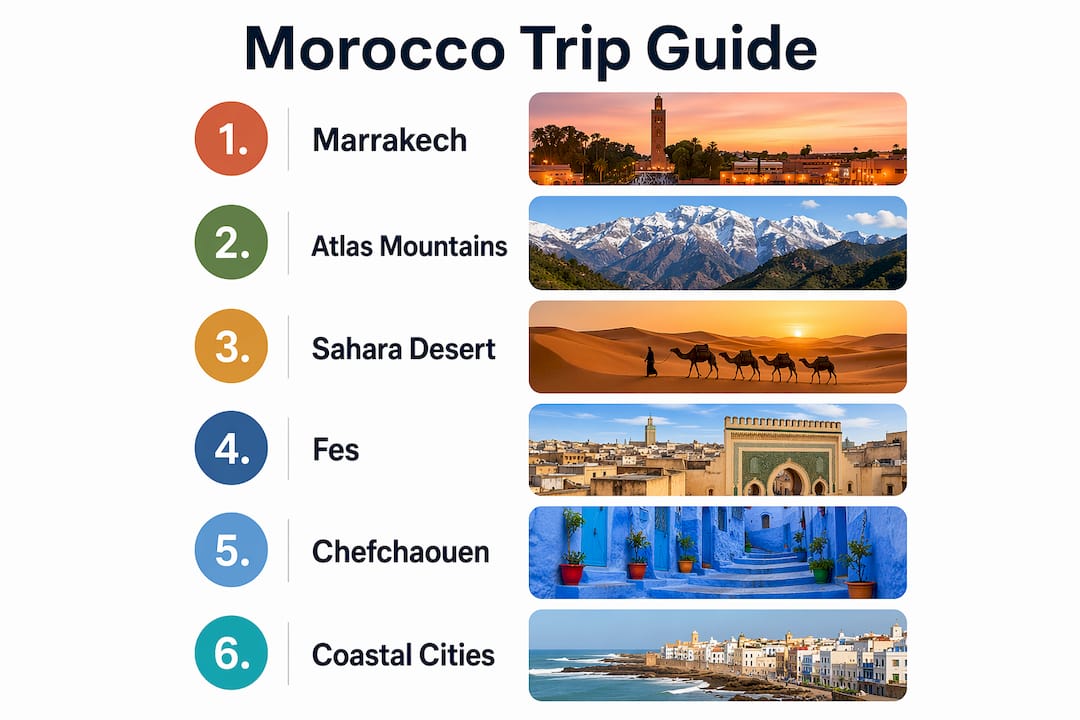
Morocco is one of the most geographically and culturally diverse countries in the world, making a well-planned travel guide for Morocco your single most valuable planning tool. From the medinas of Marrakech and Fes to the towering dunes of Erg Chebbi in the Sahara Desert, this country packs an extraordinary range of experiences into one destination. The Atlas Mountains, the blue streets of Chefchaouen, and the Atlantic coast of Essaouira each offer something completely different. This guide covers the best places to visit in Morocco, practical Morocco travel tips, sample itineraries, transportation advice, and cultural customs that will help you travel smarter and more respectfully.
What are the best places to visit in Morocco?
Morocco’s top destinations split cleanly into four categories: imperial cities, desert, mountains, and coast. Knowing which category fits your interests helps you build a focused Morocco travel itinerary instead of a rushed checklist.
Marrakech: gateway to everything
Marrakech’s medina, souks, and Jemaa el-Fnaa square form the most compelling first stop for any traveler seeking cultural immersion. The square transforms from a daytime market into an open-air performance space at night, with storytellers, musicians, and food stalls filling every corner. The Bahia Palace, Saadian Tombs, and Majorelle Garden are all within easy reach. Marrakech also serves as the main gateway for Atlas Mountain day trips and multi-day desert routes.
Fes: the oldest living medieval city
Fes el-Bali is the world’s largest car-free urban area and one of the best-preserved medieval cities on earth. The famous Chouara Tannery, visible from leather shop terraces above, is one of those sights that genuinely stops you in your tracks. The University of al-Qarawiyyin, founded in 859 AD, is widely recognized as the oldest continuously operating university in the world. Fes rewards slow travelers who spend at least two full days getting lost in its 9,000 streets.
The sahara desert: merzouga and erg chebbi
The Sahara near Merzouga and Erg Chebbi delivers the iconic dune experience most travelers picture when they think of Morocco. The orange dunes of Erg Chebbi rise up to 500 feet and are best experienced at sunrise or sunset from camelback. Most travelers reach Merzouga via a two-day drive from Marrakech through the Draa Valley, which is itself a highlight. Overnight desert camps range from basic Berber tents to luxury setups with private bathrooms and stargazing decks.
Additional destinations worth your time
- Chefchaouen: The blue-painted mountain town in the Rif Mountains is photogenic and genuinely peaceful. It works well as a stop between Fes and Tangier.
- Essaouira: This Atlantic port city offers wind, fresh seafood, and a relaxed medina with strong Portuguese and Gnawa cultural influences.
- Rabat: Morocco’s capital is cleaner and less touristy than Marrakech, with the Hassan Tower, Kasbah of the Udayas, and a well-organized modern city center.
- Meknes: Often skipped, Meknes is an imperial city with monumental gates and a fraction of the tourist crowds found in Marrakech or Fes.
Pro Tip: If you only have time for one lesser-known stop, choose Meknes over a second day in a city you’ve already seen. The Bab Mansour gate alone is worth the detour.
How long should you plan your Morocco trip?
Seven to ten days is the ideal duration for first-time visitors who want to cover Morocco’s major highlights without feeling rushed. That window allows you to visit two or three imperial cities, make a desert run, and still have a day to decompress. Shorter trips of five days work if you focus on one region. Trips of 14 days or more open up the coast, the Rif Mountains, and the deep south.
Mid-range budgets typically run $130–$220 per day, covering comfortable riads, private transfers, and guided tours. Budget travelers staying in hostels and using public buses can manage on significantly less.
Sample itineraries by trip length
5-Day Focused Trip (Marrakech and Atlas Mountains)
- Arrive Marrakech, explore Jemaa el-Fnaa and the souks
- Bahia Palace, Saadian Tombs, Majorelle Garden
- Full-day Atlas Mountains excursion to Ourika Valley or Imlil
- Day trip to Ait Benhaddou (UNESCO-listed ksar)
- Depart from Marrakech
7-Day Balanced Route (Cities and Desert)
- Arrive Marrakech, medina orientation
- Marrakech sights and souks
- Drive to Ouarzazate via Tizi n’Tichka pass
- Continue to Merzouga and arrive at desert camp
- Sunrise dunes, drive to Fez via Ziz Valley
- Full day in Fes medina
- Depart from Fes or Casablanca
For a ready-made version of this route, the 7-day imperial cities itinerary from Moroccotravel1 covers Marrakech, Fes, and the key stops in between with private transport and local guides included.
10-Day Extended Route (Cities, Desert, and Coast)
1–2. Marrakech
3. Atlas Mountains
4–5. Desert (Merzouga)
6. Fes
7. Chefchaouen
8. Tangier or Rabat
9. Essaouira
10. Return to Marrakech or Casablanca
| Trip Length | Best For | Key Stops |
|---|---|---|
| 5 days | City-focused first visit | Marrakech, Atlas Mountains |
| 7 days | Balanced cities and desert | Marrakech, Merzouga, Fes |
| 10 days | Cities, desert, and coast | Above plus Chefchaouen, Essaouira |
| 14+ days | Deep exploration | Full country circuit |
Balanced itineraries connecting imperial cities, mountains, and desert consistently produce the best first-time experiences. Rushing between too many cities without natural scenery in between leaves travelers feeling like they missed the point.
How do you get around Morocco safely?
Transportation in Morocco ranges from excellent to unpredictable depending on the route. Knowing which option to use where saves time and prevents the most common traveler frustrations.
Trains, buses, and private transfers
Morocco’s national rail network, ONCF, runs reliable and comfortable trains between Casablanca, Rabat, Meknes, Fes, and Marrakech. The Casablanca to Marrakech route takes about three hours and costs roughly $15–$25 in second class. For routes not covered by rail, CTM and Supratours buses are the most dependable options. Private transfers booked through a tour operator are the best choice for desert routes, mountain passes, and any journey where timing matters.
Taxis and rideshare apps
Local taxi drivers may not use meters; always agree on a fare before you get in. This applies especially in Marrakech, Fes, and Chefchaouen, where tourist pricing is common. Rideshare apps do operate in some Moroccan cities, but the US State Department cautions travelers about harassment incidents linked to rideshare use in tourist areas. The safest approach is to use hotel-arranged taxis or negotiate directly with a driver at a clearly marked taxi stand.
- Always confirm the fare before entering any taxi
- Use grand taxis (larger shared vehicles) for intercity routes at fixed prices
- Avoid unmarked vehicles offering rides near major tourist sites
- Book desert transfers through a licensed operator, not a street tout
Pro Tip: Download the Maps.me app with Morocco offline maps before you arrive. GPS navigation in medinas is unreliable, but having a reference map prevents you from getting completely turned around in Fes’s 9,000 streets.
For a broader look at staying safe while traveling, the 2026 travel safety checklist from PilotTravelDeals covers practical precautions that apply well beyond Morocco.
Car rental considerations
Renting a car makes sense for travelers who want to explore the Atlas Mountains, the Draa Valley, or the southern desert routes at their own pace. Roads between major cities are generally well-maintained. Mountain passes like Tizi n’Tichka require confident driving, especially in winter. Avoid driving in medinas entirely. Parking outside the old city walls and walking in is always the better choice.
What cultural customs should you know before visiting?
Exploring Moroccan culture respectfully starts before you land. A few specific behaviors make a real difference in how locals receive you and how much you enjoy the experience.
Language and greetings
Learning basic Moroccan Arabic phrases like “Salam” (hello) and “Choukran” (thank you) visibly improves interactions with locals. Moroccans genuinely appreciate the effort, and even a clumsy attempt at a greeting opens doors that staying silent keeps closed. Darija (Moroccan Arabic) differs significantly from Modern Standard Arabic, so phrases learned specifically for Morocco are more useful than generic Arabic. French is widely spoken in cities and works well as a backup.
Souk shopping etiquette
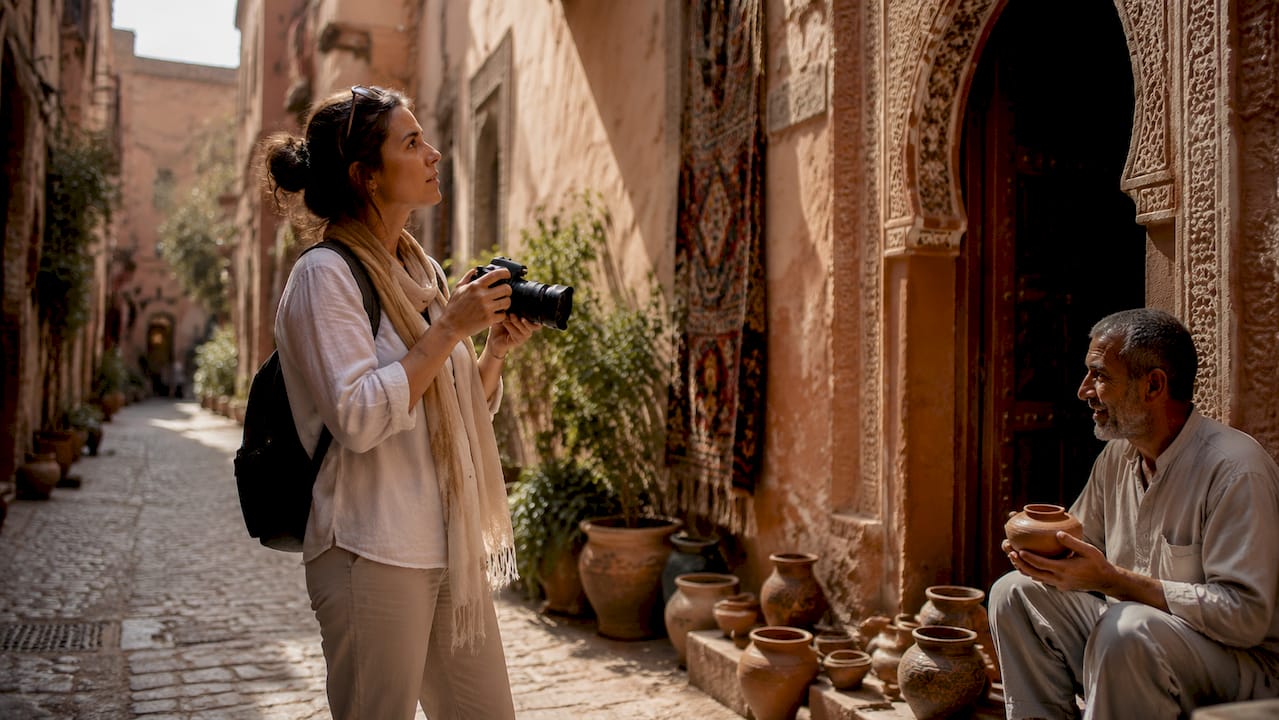
Souk etiquette requires asking the price before touching or engaging with items. Picking up a rug, a lamp, or a piece of pottery signals interest and often triggers a sales pitch that is hard to exit gracefully. Ask the price first, decide whether you want to negotiate, and only handle the item once you’re genuinely considering a purchase. Bargaining is expected and culturally normal. Starting at 40–50% of the asking price is a reasonable opening position in most souks.
Documents, dress, and dining
- Passport security: Keep a digital photo of your passport on your phone for hotel check-ins and desert camp bookings. Handing over your physical passport unnecessarily increases the risk of losing it.
- Dress code: Cover shoulders and knees when visiting mosques, shrines, and rural areas. Marrakech’s tourist zones are more relaxed, but modest dress earns respect everywhere.
- Dining customs: Accept mint tea when offered. Refusing is considered impolite. Meals in Moroccan homes often start with shared dishes, and waiting for the host to begin is standard practice.
- Currency: Morocco’s currency is the Moroccan Dirham (MAD). Cash remains important for souks, small restaurants, and rural areas. Cards work at most hotels and larger restaurants. ATMs are widely available in cities.
The best time to visit Morocco is generally March to May and September to November, when temperatures across the medinas, mountains, and desert are comfortable for walking and outdoor activity. Summer heat in the Sahara regularly exceeds 110°F, which makes desert excursions genuinely uncomfortable from June through August.
Key takeaways
A successful Morocco trip depends on pairing the right destinations with realistic pacing, respectful cultural behavior, and smart transportation choices.
| Point | Details |
|---|---|
| Ideal trip length | Plan 7–10 days to cover cities, desert, and mountains without rushing. |
| Top destinations | Prioritize Marrakech, Fes, Erg Chebbi, and one coastal or mountain stop. |
| Transportation safety | Always agree on taxi fares in advance; use trains for major city routes. |
| Cultural respect | Learn basic greetings, dress modestly, and ask souk prices before touching items. |
| Best travel season | March to May and September to November offer the most comfortable conditions. |
What i’ve learned planning morocco trips for every type of traveler
Most first-time visitors make the same mistake: they try to see too much and absorb too little. I’ve seen travelers rush from Marrakech to Fes to the desert to Chefchaouen in five days and come home exhausted, with memories that blur together. The travelers who leave Morocco genuinely changed are the ones who slow down in Fes for an extra morning, who sit in a desert camp long enough to watch both sunset and sunrise, and who accept a tea invitation from a carpet seller with no intention of buying anything.
The combination of adventure and comfort available in Morocco is genuinely rare. You can sleep in a luxury riad with a rooftop plunge pool one night and wake up in a Berber desert camp the next. That contrast is the point. Trying to standardize the experience by staying only in international hotels or skipping the medinas entirely misses what makes Morocco worth the flight.
My honest recommendation: mix at least one iconic location with one place most travelers skip. Pair Marrakech with Meknes instead of a second Marrakech day. Pair the Sahara with the Draa Valley drive rather than flying over it. The 10-day first-timer’s itinerary we put together at Moroccotravel1 reflects exactly this philosophy. It builds in breathing room without sacrificing the highlights.
Seasonal choice matters more than most guides admit. The coast, mountains, and desert feel dramatically different by season, and the right time to visit depends entirely on what you want to experience. A spring trip to the Atlas Mountains is nothing like a fall trip to the same region. Plan around your priorities, not just the calendar.
— Moroccotravel1.com
Plan your morocco trip with Moroccotravel1.com
Moroccotravel1 offers customizable Morocco tour packages ranging from 7 to 14 days, built around the destinations and experiences covered in this guide. Whether you want a focused imperial cities circuit, a desert adventure through Merzouga, or a full-country route from Casablanca to Marrakech, every itinerary is designed by local experts and includes private transport, hand-picked accommodations, and 24/7 support. Families, couples, and solo travelers each get a tailored plan rather than a generic group tour. The 14-day Morocco Grand Tour covers the country’s full range, from northern medinas to southern dunes, with luxury riad and desert camp stays throughout.
FAQ
What is the best time to visit Morocco?
March to May and September to November offer the most comfortable temperatures for exploring medinas, mountains, and the desert. Summer months bring extreme heat to the Sahara, often exceeding 110°F.
How many days do you need in Morocco?
Seven to ten days is the recommended minimum for first-time visitors to experience the major cities, desert, and at least one natural highlight without feeling rushed.
Is Morocco safe for tourists in 2026?
Morocco is generally safe for tourists. The US State Department advises standard precautions, including pre-negotiating taxi fares and avoiding unmarked rideshare vehicles in tourist areas.
What currency does Morocco use?
Morocco uses the Moroccan dirham (MAD). Cash is important for souks and rural areas, while cards are accepted at most hotels and larger restaurants. ATMs are widely available in cities.
Do I need a visa to visit Morocco?
US citizens do not need a visa for stays up to 90 days in Morocco. Your passport must be valid for at least six months beyond your travel dates, and keeping a digital copy on your phone is strongly recommended.


