


- Essaouira is a Moroccan Atlantic coast city known for its UNESCO medina, wind sports, and seafood.
- Spending at least three nights allows visitors to experience its laid-back atmosphere, vibrant harbor, and historic ramparts.
Essaouira is Morocco’s most distinctive Atlantic coast city, combining a UNESCO World Heritage medina, a working fishing port, and world-class wind sports into one compact destination. Known locally as the “City of Winds,” this coastal gem sits roughly 175 kilometers west of Marrakech and draws travelers who want something slower and more authentic than the imperial cities. The medina blends Moroccan and European architectural styles in a way you won’t find anywhere else in the country. Whether you’re planning a weekend escape or a full week of immersive exploration, Essaouira rewards those who take their time.
What are the top attractions in Essaouira?
Essaouira’s medina is the city’s defining landmark. Designed in 1764 by French architect Theodore Cornut for Sultan Mohammed III, it follows a rare grid-like layout based on European military architecture. That planned structure makes it far easier to navigate than the winding medinas of Fez or Marrakech. You can wander without a map and still find your way back.
The Skala de la Ville ramparts are the most photographed spot in the city. These 18th-century sea-facing fortifications offer sweeping views of the Atlantic, and the old cannons still line the walls. Rampart walks start at 70 MAD, making them one of the best-value experiences in the city. Sunrise and late afternoon are the best times to visit, when the light turns the stone walls gold.
The fishing port is worth visiting at dawn. Blue wooden boats crowd the harbor, fishermen unload the night’s catch, and the smell of fresh seafood fills the air. Entry is free, and the scene is entirely authentic. No performance for tourists, just a working port doing what it has done for centuries.
Place Moulay Hassan is the city’s main square and the social heart of Essaouira. Cafés line the perimeter, musicians play Gnaoua music on the steps, and locals and travelers mix easily. The square connects the medina to the port, making it a natural gathering point at any hour.
- Skala de la Ville ramparts: 70 MAD entry, best at sunrise or late afternoon
- UNESCO medina: Free to explore, grid layout, excellent for independent wandering
- Fishing port: Free at dawn, authentic working harbor with blue boats
- Place Moulay Hassan: Central square, Gnaoua music, café culture
- Art galleries: The medina holds several independent galleries showing local and contemporary Moroccan art
Pro Tip: Walk the full length of the ramparts before entering the medina. The elevated view gives you a spatial understanding of the city that makes the streets below much easier to read.
Which beach and outdoor activities are best in Essaouira?

Essaouira’s beach runs for several kilometers south of the medina and is one of the longest stretches of sand on Morocco’s Atlantic coast. The consistent wind that defines the city also makes it one of the top windsurfing and kitesurfing destinations in Africa. The conditions are not accidental. The geography funnels Atlantic trade winds directly onto the beach with remarkable consistency.
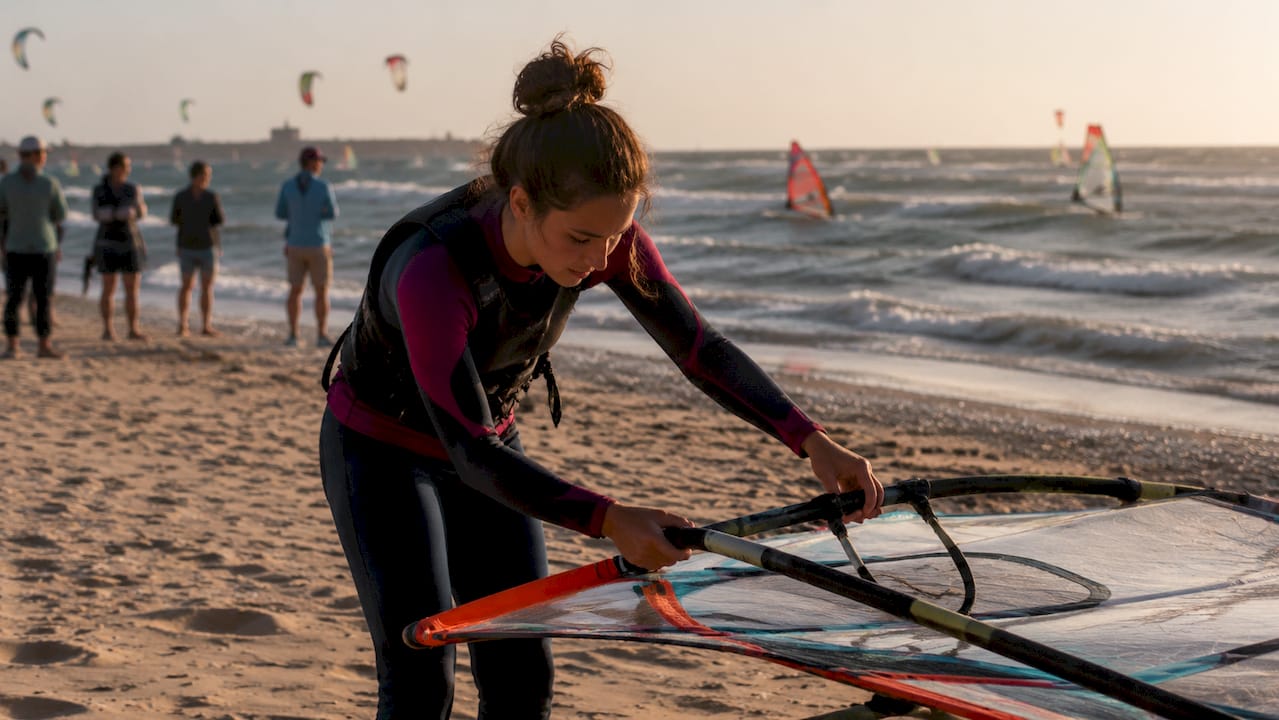
Windsurfing and kitesurfing peak from April to September, when wind speeds are highest and most reliable. Surfing conditions flip in the opposite direction. From October to March, the wind drops, but Atlantic swells increase, creating better waves for surfers. That seasonal split means Essaouira has something for water sports enthusiasts year-round.
The top outdoor activities, ranked by popularity among visitors:
- Windsurfing and kitesurfing: Best from april through september; multiple schools operate on the beach with equipment rental and lessons available
- Surfing: Lessons from approximately 200 MAD; october through march offers the best wave conditions
- Camel and horse rides: Operators line the beach promenade; prices are negotiable but confirm upfront before mounting
- Beach walking: The promenade stretches for kilometers with views of the medina walls; no cost, no crowds before 9 a.m.
- Quad biking: Available through several operators near the beach entrance; a good option for families or those who want to cover more ground
Safety matters on this beach. The Atlantic currents here are strong, and the wind can push swimmers off course quickly. Stick to designated swimming areas and watch for flags indicating conditions. Children should stay in shallow water close to shore.
Atlantic winds make Essaouira feel cool even when daytime temperatures reach 30°C (86°F). That wind chill catches many visitors off guard. Pack a light jacket for mornings, evenings, and any time you’re on the beach for extended periods.
Pro Tip: Book windsurfing or kitesurfing lessons at least one day in advance during july and august. Schools fill up fast, and walk-in spots disappear by mid-morning.
What culinary experiences should you explore in Essaouira?
Essaouira’s food identity centers on freshly caught seafood, sold at the port market and grilled at open-air stalls just steps from the water. The process is simple and direct. You pick your fish or prawns from the display, a cook grills them on the spot, and you eat at a plastic table with bread and harissa. No reservations, no menus, no pretense.
The port grilling stalls are the most talked-about food experience in the city. Sardines, sea bass, calamari, and prawns are the staples. Prices vary, and confirming costs before ordering is the single most important rule at these stalls. Tourist pricing is common, and a quick “how much for this?” before you sit down saves frustration later.
Beyond the port, the medina holds a strong local food culture:
- Argan oil products: Essaouira sits in the heart of Morocco’s argan-producing region. Buy oil directly from women’s cooperatives inside the medina for fair prices and guaranteed authenticity.
- Spice souks: The covered market near the main square sells ras el hanout, cumin, and preserved lemons. Buying spices here is far cheaper than in Marrakech.
- Cooking classes: Available from 350 MAD, these classes typically cover tagine preparation, couscous, and traditional Moroccan pastries. Most run three to four hours and include a market visit.
- Café culture: Place Moulay Hassan and the streets behind it hold several cafés serving mint tea, msemen flatbread, and fresh-squeezed orange juice. These are ideal spots for a slow breakfast.
The role of local cuisine in tourism is well documented, and Essaouira is a strong example of a city where food is inseparable from the travel experience. Gnaoua music often plays in the background at port-side restaurants in the evenings, adding a layer of cultural depth to a simple meal of grilled fish.
Pro Tip: Visit the port stalls for lunch rather than dinner. The fish are freshest midday, the crowds are smaller, and the light on the harbor is better for photos.
How to plan your Essaouira visit: transport, accommodation, and timing
Getting to Essaouira from Marrakech is straightforward. VIP buses offer WiFi and comfortable seating and drop passengers near the medina gates. The journey takes roughly three hours. Shared taxis are faster but less comfortable. Private transfers, available through agencies like Moroccotravel1, offer door-to-door service and are worth considering if you’re traveling with luggage or as a group.
Once in the city, you won’t need a car. The medina is walkable, and the beach is a short walk from the main gate. Local taxis cover the few distances that require wheels.
Accommodation options compared
| Type | Best for | Price range | Notes |
|---|---|---|---|
| Riad in the medina | Couples, culture seekers | Mid to high | Atmospheric, often rooftop terraces |
| Boutique hotel | Comfort-focused travelers | Mid to high | More amenities, less character |
| Guesthouse | Budget travelers | Low to mid | Variable quality, book with reviews |
| Luxury riad | Honeymooners, luxury travelers | High | Private service, premium finishes |
Riads in Morocco offer the most immersive stay in Essaouira. A good riad puts you inside the medina walls, within walking distance of everything, and gives you a private courtyard to retreat to after a day of exploring.
Best times to visit
Spring (March through May) and fall (September through November) offer the most balanced conditions. Temperatures are mild, wind is manageable, and crowds are smaller than in summer. July and August bring peak tourist numbers and the strongest winds. Winter is quiet and cool, ideal for surfers and travelers who prefer empty streets.
Essaouira rewards multiple days of exploration rather than a rushed day trip. Three nights is the minimum for a meaningful visit. Five nights lets you slow down, revisit favorite spots, and discover the city’s quieter corners without pressure.
Cultural norms to keep in mind: dress modestly when entering the medina, especially near the mosque areas. Bargaining is expected in the souks but should be friendly, not aggressive. Tipping at restaurants and for guides is standard practice.
Key Takeaways
Essaouira delivers the most value when travelers commit to at least three nights, engage with local food and music, and plan outdoor activities around seasonal wind and surf conditions.
| Point | Details |
|---|---|
| Plan for multiple days | Three to five nights let you experience Essaouira’s atmosphere without rushing. |
| Time water sports by season | Windsurf and kitesurf April through September; surf October through March for best conditions. |
| Confirm food prices upfront | Always ask the cost before ordering at port grilling stalls to avoid inflated tourist pricing. |
| Stay inside the medina | A riad within the medina walls puts you close to every major attraction and the beach. |
| Pack layers for wind | Atlantic winds make the city feel cool even at 30°C, so bring a light jacket every day. |
Essaouira beyond the checklist: what I’ve learned from slower travel
Most travelers arrive in Essaouira with a list. Ramparts, port, medina, beach. They tick each box in a day and leave thinking they’ve seen the city. They haven’t.
The real Essaouira reveals itself slowly. It’s the alley you walk down three times before noticing the blue door that leads to a woodworker’s workshop. It’s the Gnaoua musician who plays the same corner every evening and nods when he recognizes you. It’s the café owner who stops charging you the tourist price by day two because you’ve become a regular.
The city has a bohemian history that still shapes its character. Jimi Hendrix famously visited in 1969, and the creative energy he found here never fully left. Artists, musicians, and writers have been drawn to Essaouira for decades. That atmosphere is not manufactured for tourists. It’s structural. The light, the wind, the pace of life all contribute to a place that encourages reflection.
My honest advice: resist the urge to plan every hour. Book your accommodation, know where the port is, and let the rest unfold. The travelers who leave Essaouira most satisfied are the ones who got genuinely lost in the medina at least once and didn’t mind.
— Moroccotravel1.com
Plan your Essaouira experience with Moroccotravel1.com
Essaouira fits naturally into a longer Morocco itinerary, and Moroccotravel1 builds custom packages that give the city the time it deserves. The 8-day luxury Morocco tour includes Essaouira as a dedicated coastal stop with curated cultural experiences and premium riad accommodations. For couples, the Morocco honeymoon package pairs Essaouira’s romantic medina atmosphere with private guided experiences across the country. Moroccotravel1 also offers private and custom Morocco tours for travelers who want a fully tailored itinerary, whether that means extra nights in Essaouira, cooking class bookings, or a seamless transfer from Marrakech. Every package includes local expert guides and 24/7 support.
FAQ
What is Essaouira known for in Morocco?
Essaouira is known for its UNESCO World Heritage medina, Atlantic wind sports, and fresh seafood culture. The city is also recognized as a historic center of Gnaoua music and traditional Moroccan craftsmanship.
How do you get from Marrakech to Essaouira?
VIP buses run regularly between Marrakech and Essaouira, taking roughly three hours with amenities like WiFi and comfortable seating. Private transfers and shared taxis are also available for more flexibility.
When is the best time to visit Essaouira?
Spring (March through May) and fall (September through November) offer the best balance of mild weather and smaller crowds. Windsurfers and kitesurfers should target April through September, while surfers get better waves from October through March.
How many days do you need in Essaouira?
Three nights is the minimum for a meaningful visit, but five nights allows for a genuinely immersive experience. Essaouira is best explored slowly rather than as a rushed day trip from Marrakech.
Are the seafood stalls at the port worth it?
Yes, the port grilling stalls are one of Essaouira’s signature food experiences. Always confirm prices before ordering to avoid tourist surcharges, and visit at lunch when the fish is freshest.


