

TL;DR:
- Rabat, Morocco is a UNESCO World Heritage city where historic sites, royal monuments, and a walkable medina attract visitors. It offers a calm, authentic experience without the overwhelming tourist crowds of Marrakech or Fes. Spending at least two days reveals Rabat’s layered architecture, Roman ruins, and vibrant local culture.
Rabat, Morocco is the Atlantic coastal capital city where a 12th-century medina meets a modern government district, all within walking distance of the ocean. Designated a UNESCO World Heritage Site in 2012, Rabat stands as one of Morocco’s four imperial cities alongside Fes, Marrakech, and Meknes. Most travelers skip it for the more famous cities. That is their loss. Rabat delivers royal monuments, Roman ruins, a blue-painted kasbah, and some of the best street food in the country, all without the aggressive tourist crowds that define Marrakech.
What are the top attractions in Rabat, Morocco?
Rabat’s historic core holds a concentration of landmarks that rivals any city in North Africa. The UNESCO-listed sites include the Kasbah of the Udayas, Hassan Tower, and the Chellah necropolis. Each one tells a different chapter of the city’s layered past.
Kasbah of the Udayas
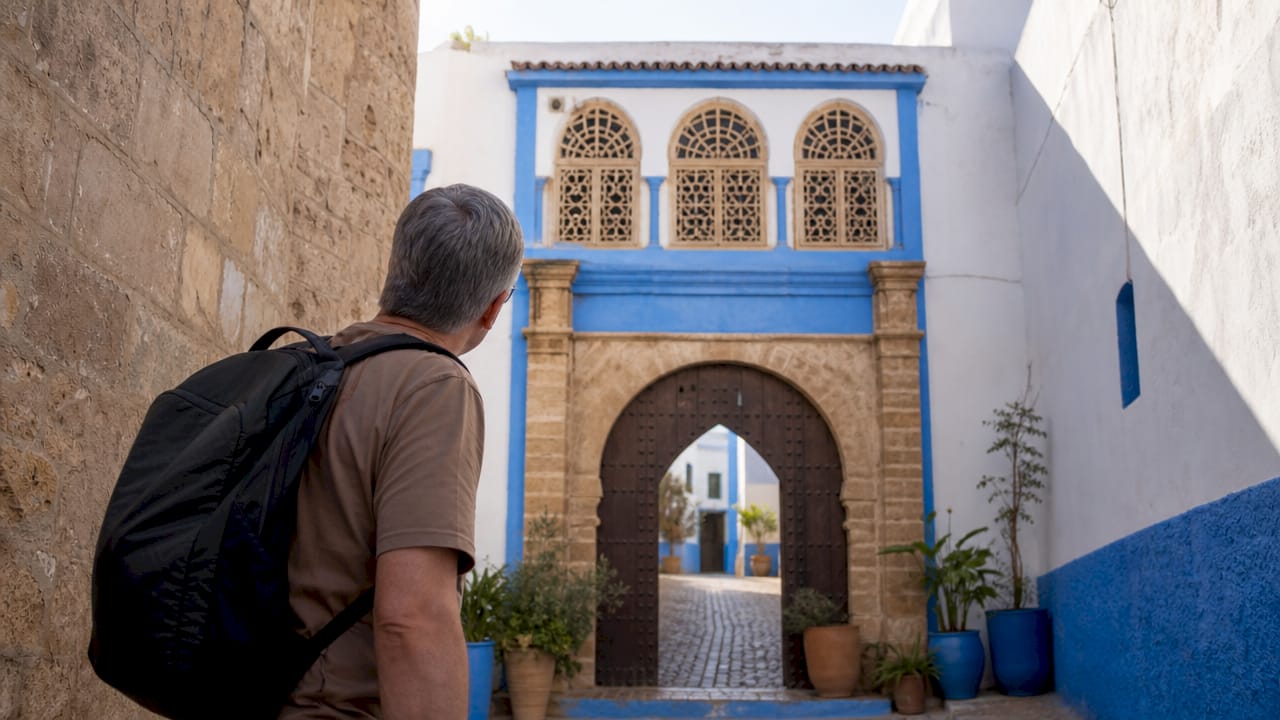
The Kasbah of the Udayas is a 12th-century Almohad fortress perched at the mouth of the Bou Regreg river. Its narrow lanes are painted blue and white in a style that predates Chefchaouen’s famous color scheme by centuries. Inside the walls, the Andalusian Garden offers a quiet courtyard of orange trees and tiled fountains. The kasbah is small enough to walk in 45 minutes but rich enough to hold your attention for twice that. Arrive before 10 a.m. to get the lanes to yourself before tour groups arrive.
Hassan Tower and the Mausoleum of Mohammed V
Hassan Tower is the unfinished minaret of an Almohad mosque begun in 1195. The mosque was never completed, and today a field of 200 stone columns surrounds the tower. Directly across the plaza stands the Mausoleum of Mohammed V, the white marble tomb of Morocco’s king who led independence from France in 1956. Royal guards in ceremonial dress stand at the entrance. The contrast between the ancient tower and the modern mausoleum, separated by just a few steps, captures Rabat’s character better than any description can.
Chellah necropolis
Chellah is the most underrated site in Rabat. It combines the ruins of a Roman city called Sala Colonia with a 14th-century Marinid necropolis built directly on top of the Roman foundations. Storks nest in the crumbling minarets from spring through summer, which makes for striking photographs. Plan a half-day for Chellah because the walled grounds are larger than they appear on a map, and the layered archaeology rewards slow exploration. Rushing through it is a common mistake.
The medina and souks
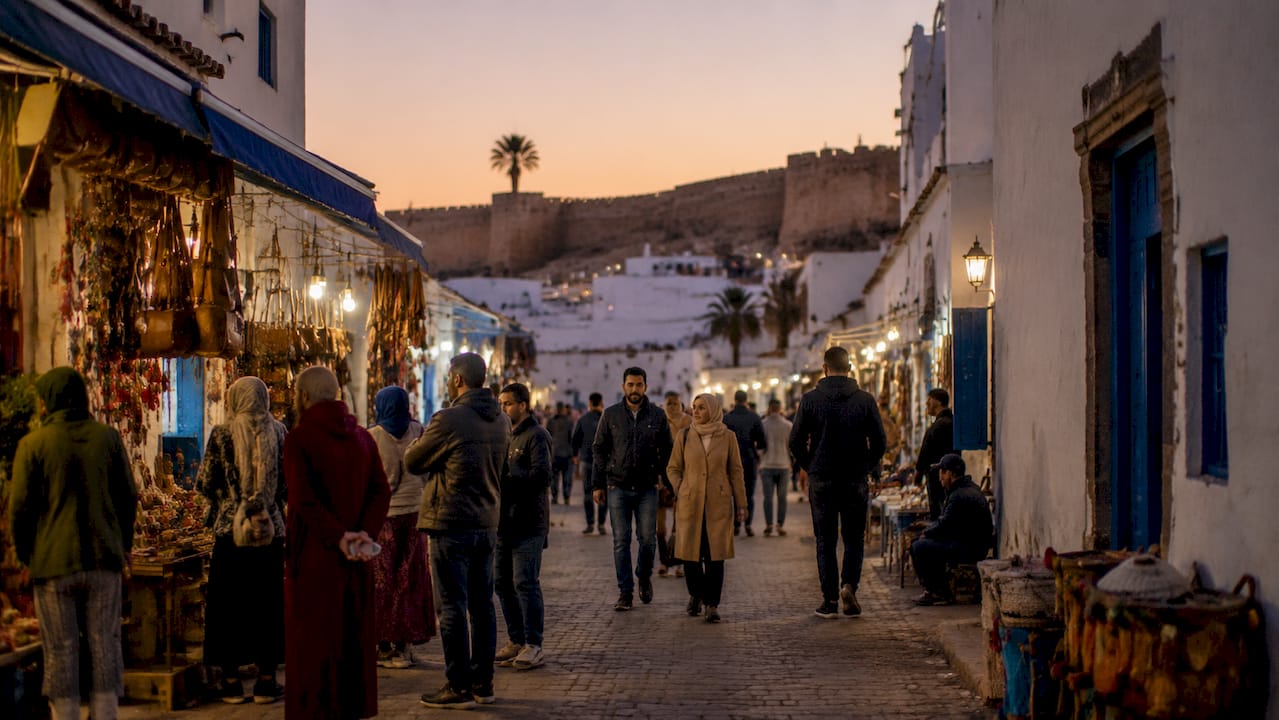
Rabat’s medina is smaller and calmer than those in Fes or Marrakech, which makes it ideal for first-time visitors to Morocco. The main commercial lanes are Souika and Consuls, where you find leather goods, hand-woven carpets, kaftans, and silver jewelry. Prices are more fixed than in Marrakech, and vendors are generally less aggressive. The medina connects directly to the Kasbah, so you can walk from the souk lanes to the fortress walls in under ten minutes.
Pro Tip: Visit the medina on a weekday morning. Fridays see reduced shop hours around midday prayer, and weekends bring more local foot traffic that can make the narrow lanes feel tight.
How to plan your itinerary for Rabat, Morocco
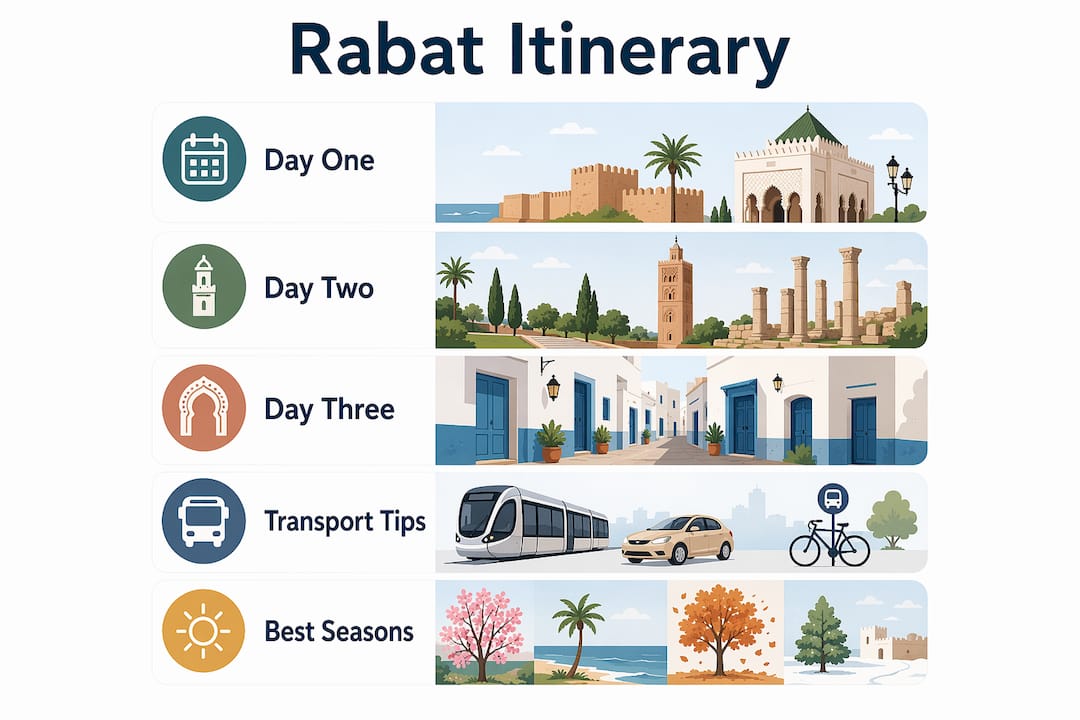
Splitting sightseeing by district makes Rabat far easier to manage. The city breaks naturally into four zones: the Kasbah and medina, the Hassan Tower and Mausoleum area, Chellah, and the Bou Regreg waterfront. A 1.5 to 3 day visit covers all of them without feeling rushed.
One-day itinerary
- Morning (8–11 a.m.): Start at the Kasbah of the Udayas. Walk the blue lanes, visit the Andalusian Garden, and look out over the river mouth toward Salé.
- Late morning (11 a.m.–1 p.m.): Walk south through the medina along Rue des Consuls. Pick up a snack from a street stall and browse the souk lanes.
- Afternoon (2–4 p.m.): Head to Hassan Tower and the Mausoleum of Mohammed V. The plaza is open and sunny, so bring water and a hat.
- Late afternoon (4–6 p.m.): Take a taxi or walk to Chellah for the golden hour light on the ruins. The storks are most active in late afternoon.
- Evening: Return to the medina or the modern Agdal district for dinner.
Two to three day itinerary
Day two works best for slower exploration of Chellah as a dedicated half-day, followed by a walk along the Bou Regreg riverside promenade. The promenade connects Rabat to the neighboring city of Salé via a pedestrian bridge, and the view back toward the Kasbah from the Salé side is one of the best in the country. Day three opens up options for day trips to Casablanca (45 minutes by train) or the coastal town of Asilah (about two hours north).
Pro Tip: Rabat has two train stations. Rabat Ville station sits closest to the medina and Kasbah, making it the better arrival point for most travelers. Rabat Agdal is further south and better suited if you are staying in the modern city.
Taxis in Rabat are metered and inexpensive by international standards. The city is also walkable between most major sites if you are comfortable with 20 to 30 minute walks on flat terrain.
When is the best time to visit Rabat, Morocco?
Rabat sits on the Atlantic coast, which gives it a milder climate than inland cities like Fes or Marrakech. Spring and autumn are the optimal travel windows, with temperatures around 24–27°C and low rainfall. Summer is warm and dry, while winter brings the bulk of the annual rain from october through april.
| Month | Temperature | Rainfall | Crowd Level |
|---|---|---|---|
| March–May | 18–24°C | Low | Moderate |
| June–August | 25–28°C | Very low | Low to moderate |
| September–November | 22–27°C | Low to moderate | Low |
| December–February | 12–18°C | High | Very low |
Spring is the most popular window for good reason. The Andalusian Garden in the Kasbah blooms in april and may, and the Chellah grounds are green and photogenic. Autumn offers similar temperatures with slightly fewer visitors. Summer in Rabat is more pleasant than in Marrakech because Atlantic breezes keep the heat manageable, though the city itself is quieter as many Moroccan families head to the beach towns north of the capital. Winter travel is viable for budget travelers who do not mind occasional rain, and the low crowds make popular sites feel almost private.
Ramadan timing shifts each year and affects restaurant hours and medina energy significantly. Check the lunar calendar before booking if you want full access to dining options throughout the day.
What cultural experiences and local tips make Rabat worth visiting?
Rabat is calmer and more relaxed than Marrakech or Fes, with a livable city vibe that many travelers find refreshing after the intensity of Morocco’s more famous destinations. That calm is not a sign of less to do. It is a sign of a city that has not been overrun.
Here are the practical tips that make the biggest difference:
- Eat where locals eat. The medina has several small restaurants serving harira soup, msemen flatbread, and grilled kefta at prices well below tourist-facing spots. Ask your riad host for specific recommendations rather than relying on review apps alone.
- Try the seafood. Rabat’s Atlantic location means fresh fish is a daily staple. The neighborhood of Hassan has several mid-range restaurants serving grilled sea bass and sardines. For the best restaurants in Rabat, look along Avenue Mohammed V and the streets around the medina’s northern edge.
- Use the tramway. Rabat has a modern tram system that connects the medina area to the Agdal district and beyond. A single ride costs the equivalent of a few cents and is far faster than a taxi during peak hours.
- Respect dress codes near royal sites. The Mausoleum of Mohammed V is an active royal site. Dress conservatively, meaning covered shoulders and knees, and follow the guard’s instructions without question.
- Cross to Salé. Most travelers stay on the Rabat side of the Bou Regreg river. Salé, the sister city directly across, has its own medina and a completely different atmosphere. The pedestrian bridge crossing takes five minutes and costs nothing.
- Learn two phrases. “Shukran” (thank you) and “La, shukran” (no, thank you) go a long way in the medina. Vendors respond warmly to any effort at Arabic, even minimal.
For travelers planning a broader Morocco trip, Rabat pairs naturally with Casablanca to the south and Asilah or Chefchaouen to the north. The train network makes these connections easy and affordable. Moroccotravel1 offers a luxury Rabat travel experience that combines guided site visits with curated riad stays, which removes the logistics pressure entirely.
Key Takeaways
Rabat, Morocco is the most accessible UNESCO World Heritage city in North Africa, combining royal monuments, Roman ruins, and a walkable medina without the tourist crowds of Marrakech or Fes.
| Point | Details |
|---|---|
| UNESCO status since 2012 | Rabat’s Kasbah, Hassan Tower, and Chellah are all protected World Heritage sites worth prioritizing. |
| Plan 1.5–3 days | Divide visits by district: Kasbah and medina, royal monuments, Chellah, and the waterfront. |
| Best months: spring and autumn | March through May and September through November offer 24–27°C temperatures and low crowds. |
| Arrive at Rabat Ville station | This station puts you closest to the medina and Kasbah, saving time on your first day. |
| Chellah needs a half-day | The walled ruins are larger than they look and reward slow, unhurried exploration. |
Why Rabat changed how I think about Morocco
Most travelers treat Rabat as a transit stop between Casablanca and Fes. I made that mistake on my first trip to Morocco. I gave the city four hours and left thinking I had seen it. I had not seen anything.
The second time, I stayed three nights. That is when Rabat revealed itself. The Chellah at golden hour with storks circling the Marinid towers is one of the most striking sights I have encountered anywhere in the Mediterranean world. The Kasbah’s blue lanes at 8 a.m., before the tour buses arrive, feel genuinely lived-in rather than staged for visitors. The medina is small enough that you stop feeling lost after the first hour, which is a relief if you have spent time in Fes.
What travelers consistently overlook is Rabat’s French colonial architecture along Avenue Mohammed V. The wide boulevards, the art deco post office, and the tree-lined sidewalks give the city a layered identity that no other Moroccan city replicates. Rabat is not trying to be Marrakech. That is precisely what makes it worth your time.
My honest recommendation: do not treat Rabat as a half-day stop. Give it two full days minimum. Walk slowly. Eat in the medina. Cross the bridge to Salé on your second evening. You will leave with a more complete picture of Morocco than most travelers ever get.
— Moroccotravel1
Plan your Rabat visit with Moroccotravel1
Moroccotravel1 builds Morocco itineraries that include Rabat as a full destination rather than a footnote. The 14-day Grand Tour covers Rabat’s major landmarks with guided visits to the Kasbah, Chellah, and Hassan Tower, then continues through Fes, the Sahara, and Marrakech. The 10-day family tour paces Rabat at a relaxed tempo suited to travelers with children. For couples, the honeymoon package includes riad stays in the medina with private guided tours of the royal sites. All packages include local expert guides, transportation, and 24/7 support. Browse the full range of private Morocco tour packages to find the itinerary that fits your travel style and timeline.
FAQ
What is Rabat, Morocco known for?
Rabat is Morocco’s capital city and a UNESCO World Heritage Site recognized for its Almohad monuments, including the Kasbah of the Udayas, Hassan Tower, and the Chellah necropolis. It is also known for its calm atmosphere compared to Marrakech and Fes.
How many days do you need in Rabat?
A visit of 1.5 to 3 days covers all major attractions comfortably. One day works for essential highlights, while two to three days allows for Chellah, the waterfront, and a day trip to Casablanca or Asilah.
What is the best time of year to visit Rabat?
Spring (march through may) and autumn (september through november) are the best months, with temperatures around 24–27°C and minimal rainfall. Summer is also viable thanks to Atlantic coastal breezes that keep heat moderate.
Is Rabat safe for travelers?
Rabat is widely regarded as one of Morocco’s safest cities for visitors. The capital’s status means a visible police presence around major landmarks, and the medina is notably less intense than those in Fes or Marrakech.
Which train station should I use to reach Rabat’s medina?
Rabat Ville station is the correct choice for travelers heading directly to the medina, Kasbah, or Hassan Tower. Rabat Agdal station serves the modern southern districts and requires additional transport to reach the historic core.


