

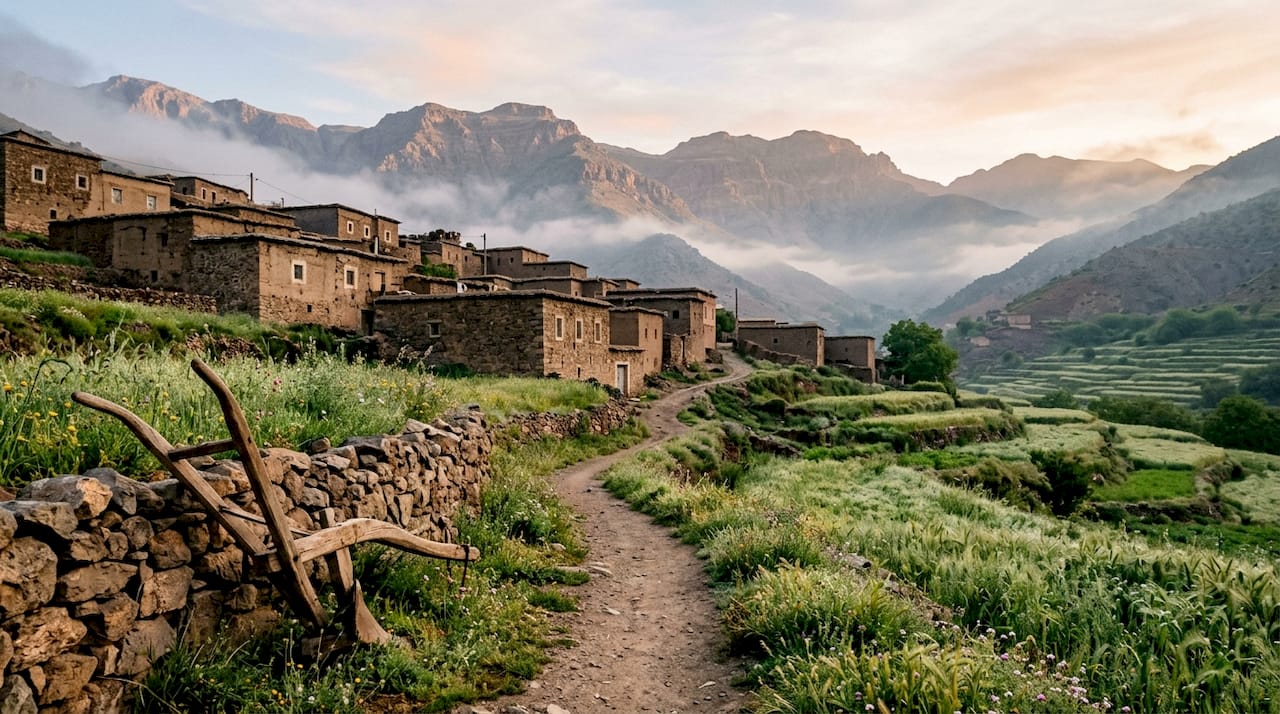
- Many of Morocco’s hidden destinations are off the usual tourist routes, offering authentic Berber culture and untouched landscapes.
- Travelers need careful planning, local guides, and patience to experience these places fully.
- Spending multiple nights in remote villages deepens cultural understanding and enhances the experience.
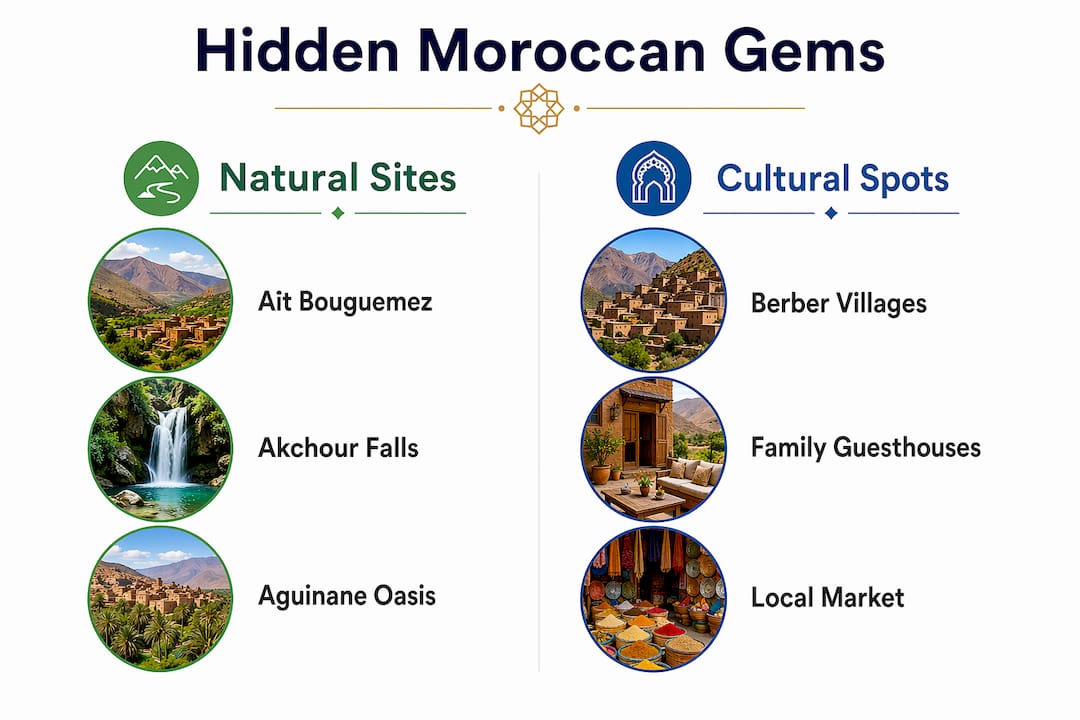
Morocco’s hidden gems are lesser-known destinations that sit beyond the tourist circuits of Marrakech and Fes, offering travelers direct access to Berber culture, raw desert landscapes, and ancient water systems that most visitors never see. The phrase “hidden gems in Morocco” has become shorthand for a real category of travel: places like Aït Bouguemez Valley, Akchour Waterfalls, and Aguinane Oasis that reward patience and preparation. These secret spots in Morocco are not undiscovered. They are simply undervisited, and that distinction matters enormously for the quality of experience you will have. Moroccotravel1 has built its entire approach around connecting travelers with exactly these kinds of places, pairing local expertise with thoughtful itinerary design.
What are the top hidden natural treasures in Morocco?
Morocco’s most rewarding natural sites are not on the standard tour bus route. They require a short detour, a local contact, or a willingness to trade comfort for something genuinely memorable.
Aït Bouguemez valley
The Aït Bouguemez valley is known as the “Happy Valley” and sits deep in the High Atlas Mountains, accessible only by a winding mountain road. The valley floor holds terraced wheat fields, mud-brick villages, and a way of life that has changed little in centuries. Family-run guesthouses are the only accommodation option here, which keeps visitor numbers low and interactions genuinely personal. Spring and autumn are the best seasons to visit, when temperatures stay mild and the landscape turns vivid green or gold.
Akchour Waterfalls and God’s Bridge
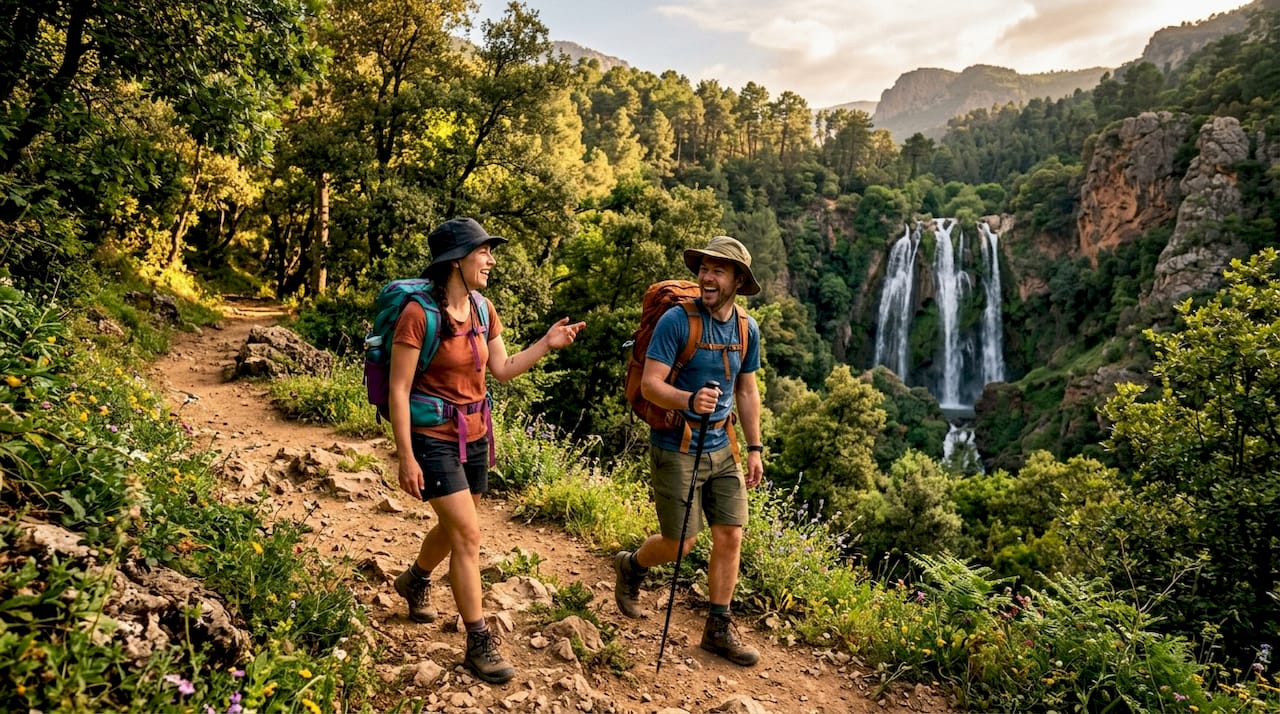
Akchour Waterfalls and God’s Bridge sit in the Rif Mountains and are reachable in about 45 minutes by taxi or shared transport from Chefchaouen. Most travelers who visit Chefchaouen never make this short trip, which means the trails stay quiet even during peak season. The lower waterfall is a straightforward two-hour hike. The upper waterfall and God’s Bridge, a natural rock arch spanning a river gorge, require a longer half-day effort. The payoff is a landscape that feels genuinely wild.
Aguinane Oasis
Aguinane Oasis sits between Agadir and Ouarzazate in the Anti-Atlas and features a vertical landscape of multi-layered gardens irrigated by ancient channels called seguias. These water systems have kept the oasis productive for generations, feeding date palms, almond trees, and vegetable plots stacked up the canyon walls. Nearby, ancient Ifri granaries carved directly into the cliffs add an architectural dimension that most desert destinations cannot match. This is one of the most visually striking unexplored destinations in Morocco.
La Source Bleue de Meski
La Source Bleue de Meski is a natural desert pool located 20 minutes south of Errachidia in the Ziz Valley. Colonial-era stone enhancements frame the spring, and the site carries genuine local significance as a gathering place and sacred spot tied to community rituals. Swimming here in the afternoon, surrounded by palm groves and red canyon walls, is an experience that no organized tour currently packages at scale. That will change. Visit now.
Pro Tip: Carry a physical map of the Ziz Valley before you leave Errachidia. Mobile signal disappears within a few kilometers of the town, and the road to La Source Bleue de Meski has minimal signage.
| Destination | Region | Best Season | Key Feature |
|---|---|---|---|
| Aït Bouguemez valley | High Atlas | Spring, Autumn | Berber villages, terraced fields |
| Akchour Waterfalls | Rif Mountains | Spring, Summer | Waterfalls, God’s Bridge rock arch |
| Aguinane Oasis | Anti-Atlas | Autumn, Winter | Vertical gardens, sub-irrigation |
| La Source Bleue de Meski | Ziz Valley | Spring, Autumn | Natural desert spring pool |
Which remote cultural spots offer authentic local experiences?
The most authentic cultural experiences in Morocco happen in places where tourism has not yet set the terms of the interaction. Rural Berber communities in the High Atlas and Anti-Atlas operate on their own rhythms, and visitors who show up with patience and respect are welcomed into daily life in ways that no medina tour can replicate.
Why local guides make the difference
Local guides are essential in off-the-beaten-path Moroccan destinations for three reasons: safety, cultural context, and community respect. A guide from the village knows which households welcome visitors, which trails are passable after rain, and how to read the social cues that a foreign traveler will miss entirely. Photography is a specific area where missteps happen. In many Berber communities, photographing women or religious spaces without explicit permission causes real offense. A local guide navigates this before it becomes a problem.
What to look for in cultural immersion
- Ancient irrigation systems. The seguias at Aguinane Oasis are a living example of pre-industrial engineering that still feeds entire communities. Watching water flow through hand-cut channels into terraced gardens is a lesson in sustainable agriculture that no museum can deliver.
- Ifri granaries. These cliff-carved storage structures in the Anti-Atlas were built to protect grain and valuables from raids. Many are still in use. A local guide can explain which families own which chambers and why the architecture varies by clan.
- Family-run guesthouses. Called “gîtes” in French, these small family operations are the standard accommodations in remote valleys. Staying in one means eating what the family eats, sleeping under wool blankets, and waking to the sound of livestock rather than traffic.
- Slow travel as a practice. Slow travel, prioritizing stillness over rushed sightseeing, is the single most effective way to preserve the character of Morocco’s lesser-known destinations. Spending two nights in a village instead of one changes every interaction you have.
- Traditional textile and craft observation. In High Atlas villages, women weave Berber rugs using patterns that encode family and regional identity. Watching this process, and understanding what the symbols mean, adds a layer of meaning that a souvenir market cannot provide.
Pro Tip: Bring small practical gifts rather than cash when visiting family guesthouses. School supplies, quality tea, or dried fruit are received warmly and avoid the transactional dynamic that cash can create.
For travelers who want to combine rural Berber life with comfort, Moroccotravel1 designs itineraries that include authentic village stays alongside well-chosen accommodations.
How do you prepare for off-the-beaten-path Morocco safely?
Preparation is the difference between a memorable adventure and a preventable crisis. Remote Morocco rewards travelers who plan ahead and penalizes those who assume the infrastructure will match what they are used to at home.
Navigation and connectivity
Remote areas often lack mobile connectivity and signage, making physical maps and offline GPS tools critical for safe navigation. Download offline maps for your target region before leaving any major city. Apps like Maps. It works well for rural Morocco when loaded with the correct regional data in advance. Do not rely on Google Maps with a live connection in the Anti-Atlas or the Ziz Valley.
Supply planning
Supply planning is critical for remote hiking and desert areas. Carry the following on every day trip into rural Morocco:
- Water. Carry at least two liters per person per day, plus a water purification method such as iodine tablets or a filter straw for emergencies.
- Snacks and food. Village shops exist, but stock is unpredictable. Bring enough food for the full day plus a buffer for delays.
- Cash. Electronic payments do not exist in remote areas. Small denominations of Moroccan dirhams cover transport, guesthouse fees, and market purchases.
- Sun protection. The Anti-Atlas and Ziz Valley receive intense sun year-round. A hat, sunscreen, and light long sleeves are not optional.
- A basic first aid kit. Blisters, cuts, and minor sprains are the most common issues on rural trails. A small kit handles all of them.
Cultural etiquette
Dress modestly in all rural communities. Shoulders and knees covered is the baseline standard. Ask before photographing any person, and accept a “no” without negotiation. Remove shoes before entering a home or mosque. Greet people with “As-salamu alaykum” and accept tea when it is offered. Refusing hospitality reads as disrespect in Berber culture, even when the offer is unexpected.
Pro Tip: Hire transport from the nearest town rather than driving a rental car on unmarked mountain tracks. Local drivers know the roads, know the villages, and can communicate on your behalf when language becomes a barrier.
For mountain trekking preparation in the Atlas range, Moroccotravel1 provides detailed pre-trip briefings that cover all of the above and more.
What makes Morocco’s forgotten high plateaus a unique destination?
Morocco’s high plateaus offer open, quiet landscapes characterized by sparse vegetation, low population density, and a quality of silence that is genuinely rare in modern travel. These are not dramatic mountain peaks or photogenic gorges. They are wide, flat expanses where the horizon stretches unbroken and the sky dominates everything. That openness is the point.
The Amazigh pastoralist communities who live on the high plateaus follow seasonal grazing patterns that have defined this landscape for thousands of years. Their tents, their herds, and their knowledge of the terrain are as much a part of the environment as the grass and the rock. Travelers who spend time here witness a relationship between people and land that industrial agriculture has erased almost everywhere else on earth.
“The high plateaus resist the logic of tourism. There is nothing to photograph that fits a social media frame, no restaurant to review, no souvenir to buy. What they offer instead is the experience of being genuinely somewhere else, in a place that has not been arranged for your arrival. That is rarer than any waterfall.”
The shift toward sustainable, eco-conscious travel in 2026 favors remote Moroccan destinations that resist mass tourism development. This trend means the high plateaus are attracting a small but growing number of travelers who prioritize low-impact activities like long-distance walking and wild camping over resort stays. The infrastructure for this kind of travel is minimal by design, and that is precisely what protects the experience.
| Feature | High Plateaus | Popular Tourist Destinations |
|---|---|---|
| Crowd level | Very low | High to very high |
| Accommodation | Wild camping, basic guesthouses | Hotels, riads, resorts |
| Main activity | Walking, observing pastoralist life | Guided tours, shopping, dining |
| Environmental impact | Minimal | Significant |
| Cultural authenticity | Very high | Variable |
For travelers who want to combine immersive cultural experiences with genuine remoteness, the high plateaus represent Morocco’s most underrated offering. Moroccotravel1 can build plateau itineraries into longer tours for travelers who want this kind of depth. Pairing a plateau stay with authentic lodging options that support local communities rounds out the experience without sacrificing comfort entirely.
Key Takeaways
Morocco’s most rewarding travel experiences come from its lesser-known destinations, where authentic Berber culture, ancient water systems, and quiet natural landscapes remain largely untouched by mass tourism.
| Point | Details |
|---|---|
| Best natural sites | Aït Bouguemez, Akchour, Aguinane Oasis, and La Source Bleue de Meski each offer distinct landscapes and low visitor numbers. |
| Local guides are non-negotiable | Guides provide safety, cultural context, and respectful access to Berber communities that travelers cannot achieve alone. |
| Preparation prevents problems | Physical maps, offline GPS, cash, and water are required in remote areas where connectivity and services do not exist. |
| Slow travel protects destinations | Spending more time in fewer places preserves the character of hidden sites and deepens every cultural interaction. |
| High plateaus are underrated | Morocco’s forgotten plateaus offer silence, Amazigh pastoralist culture, and low-impact travel that popular destinations cannot match. |
What I’ve learned from years of guiding travelers off the map
The most common mistake I see travelers make in Morocco is treating hidden gems as a checklist. They drive four hours to Aït Bouguemez, spend two hours walking around, take photos, and drive back. They saw the valley. They did not experience it. The difference between those two things is the entire point of going.
What I have found, working with travelers across the High Atlas, the Anti-Atlas, and the Ziz Valley, is that the people who come back changed are the ones who stayed an extra night, accepted the tea, and asked questions through their guide. A conversation with a Berber farmer about water rights and seguia maintenance tells you more about Morocco than any museum in Marrakech. That conversation only happens if you are not in a hurry.
The high plateaus taught me something specific: discomfort is information. When you are cold at night in a tent on the plateau, or when the trail is harder than expected, or when the guesthouse has no hot water, you are learning something real about the place and the people who live there year-round. That knowledge changes how you see everything else on the trip.
My honest recommendation is to build at least three nights into any off-the-beaten-path section of your Morocco itinerary. One night is an introduction. Two nights is a visit. Three nights is the beginning of understanding. The Atlas Mountains trekking data backs this up: traveler satisfaction increases significantly with longer stays in remote areas. That pattern holds across every hidden destination I have worked with.
— Moroccotravel1.com
Planning your Morocco hidden gems trip with Moroccotravel1.com
Moroccotravel1.com builds itineraries specifically for travelers who want more than the standard Morocco circuit. The 10-day family tour package includes stops at lesser-known natural and cultural sites, with local guides arranged in advance and authentic guesthouse stays built into the schedule. For travelers who want maximum depth, the 14-day Morocco grand tour covers remote valleys, desert oases, and high plateau landscapes alongside the country’s major cities. Every package includes 24/7 support, expert local guides, and accommodation that supports the communities you visit. Moroccotravel1 also offers a dedicated Morocco hiking tour for travelers who want to cover the Atlas range on foot, with full logistical support from start to finish.
FAQ
What are the best hidden gems in Morocco for first-time visitors?
The Aït Bouguemez valley and Akchour waterfalls are the most accessible hidden treasures in Morocco for first-time visitors. Both are reachable within a day from major cities and require no specialized equipment or experience.
How do I get to off-the-beaten-path destinations in Morocco?
Shared taxis and private drivers are the most reliable transport options for remote Moroccan destinations. Akchour Waterfalls, for example, is about 45 minutes by taxi from Chefchaouen, making it a straightforward day trip.
Is it safe to visit remote areas in Morocco alone?
Visiting remote areas alone is possible but not recommended. Local guides are essential for navigation, cultural context, and safety in areas with no mobile signal or clear trail markings.
What should I pack for a trip to Morocco’s hidden natural sites?
Carry water, cash, a physical map or offline GPS, sun protection, and a basic first aid kit. Supply planning is critical because remote areas have no electronic payment options and limited food or water sources.
When is the best time to visit Morocco’s secret spots?
Spring and autumn are the best seasons for most hidden destinations in Morocco. The Aït Bouguemez valley is particularly rewarding in spring and autumn, when temperatures are mild and the landscape is at its most vivid.


