


- Agadir in Morocco is built as a modern coastal city offering both beach leisure and authentic culture.
- It features a 9-kilometer sandy beach, a grid layout, and easy access to day trips like Paradise Valley and Taroudant.
- Travelers should plan visits during spring or fall for ideal weather and fewer crowds, and stay in neighborhoods like Talborjt to experience local life.
Agadir in Morocco is the country’s premier coastal city, built for sun seekers and adventure travelers in equal measure. Its 9-kilometer urban beach stretches along the Atlantic, backed by modern hotels, seafood restaurants, and a palm-lined promenade. Unlike Marrakech or Fes, Agadir was rebuilt from scratch after a devastating 1960 earthquake, giving it a clean grid layout, wide roads, and resort infrastructure that makes it one of the most accessible cities in Morocco. The result is a destination that delivers both beach comfort and genuine Moroccan culture without forcing you to choose between the two.
What makes Agadir’s beaches and climate ideal for travelers?
Agadir holds a rare weather advantage over most Mediterranean and Atlantic beach destinations. The city records over 300 days of sunshine annually. That figure means you can plan a beach trip here with far more confidence than in southern Spain or Portugal.
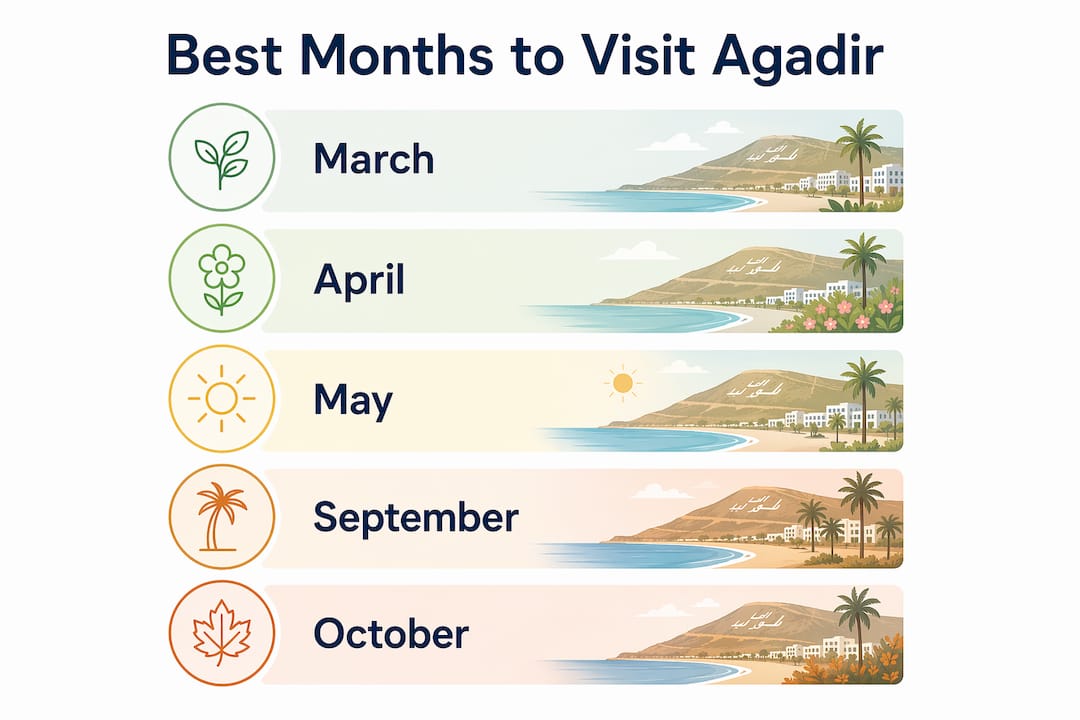
The best beach conditions fall in two windows. March through may brings warm days, light crowds, and comfortable water temperatures. September through october delivers the same balance after the summer peak. July and august are hot and busy, with European tourists filling the Agadir beach resorts along the promenade.
The beach itself runs for 9 kilometers without interruption. It is wide, well-maintained, and patrolled by lifeguards during peak season. Families favor the central stretch near the marina, where the water is calm and facilities are plentiful.
What sets Agadir’s beach apart from other Moroccan coastal areas:
- The sand is fine and golden, unlike the rockier shores near Tangier or Al Hoceima
- Water sports operators offer jet skiing, paddleboarding, and banana boat rides along the main stretch
- Beach clubs like those near the Sofitel Agadir Royal Bay provide sun loungers and food service directly on the sand
- The beach promenade stays active into the evening, with vendors, cafes, and joggers creating a safe, social atmosphere
- Essaouira, Morocco’s other Atlantic beach city, is windier and better suited to kitesurfers than casual swimmers
Pro Tip: Visit in late september or early october for the best combination of warm water, lower hotel rates, and fewer crowds. The sea temperature stays above 20°C well into fall.
The Agadir weather forecast for these shoulder months consistently shows daytime highs between 24°C and 28°C. That range is ideal for both beach time and exploring the city on foot.
How does Agadir’s modern layout compare to traditional Moroccan cities?
Agadir is a modern city rebuilt after the 1960 earthquake, and that history shapes everything about how it feels to visit. The city follows a grid system with wide boulevards, clear signage, and distinct neighborhoods. Travelers who have struggled to navigate the winding medinas of Marrakech or Fes will find Agadir refreshingly straightforward.
As of the 2024 Moroccan census, Agadir’s population reached 501,797. That size supports a full range of services, from international chain hotels to local guesthouses, without the overwhelming density of Casablanca.
Getting to Agadir is direct. Al Massira Airport (AGA) sits approximately 25 kilometers from the city center and receives direct flights from major European cities including London, Paris, Amsterdam, and Frankfurt. Most travelers clear customs and reach their hotel within 45 minutes of landing.
Accommodation options across Agadir’s neighborhoods:
- Beachfront zone: Large resort hotels like the Riu Palace Tikida Agadir and the Sofitel Agadir Royal Bay offer direct beach access, pools, and full-service dining
- City center: Mid-range hotels and apartments cluster around Avenue Hassan II and Avenue du Prince Moulay Abdallah
- Talborjt: A walkable neighborhood just inland from the beach with budget guesthouses, local cafes, and a more authentic daily rhythm
- Taghazout: A surf village 20 kilometers north of Agadir, favored by surfers and eco-travelers who prefer quieter beaches and smaller guesthouses
Agadir’s beachfront hotels suit travelers who want convenience and comfort. Talborjt suits those who want to spend less and see more of how locals actually live. Both neighborhoods sit within walking distance of each other, which is a genuine advantage unique to Agadir’s compact layout.
Agadir is one of Morocco’s safest cities for tourists. The beach promenade and marina remain active and well-lit into the evening. Women traveling solo should be aware that unwanted attention can occur in less-touristed areas, particularly around Talborjt at night.
Pro Tip: Stay in Talborjt for at least two nights of your trip. The neighborhood gives you a ground-level view of Agadir that no resort pool can replicate. Walk to the beach in the morning and eat dinner at a local grill in the evening for a fraction of the resort price.
What authentic food and culture can you find in Agadir?
Agadir’s local cuisine draws from two powerful sources: the Atlantic Ocean directly in front of the city and the Souss Valley stretching inland behind it. The combination produces a food culture that is distinct from the imperial cities of Fes and Marrakech.
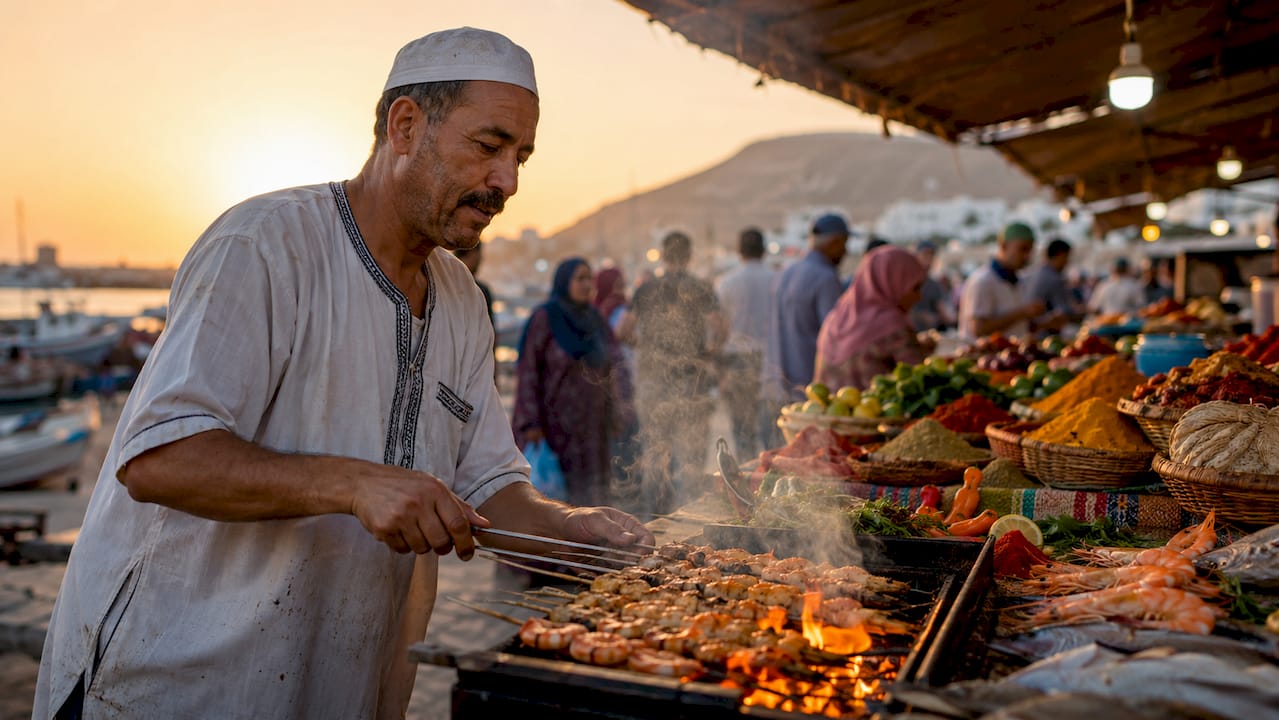
Signature dishes include seafood tagine slow-cooked with chermoula and preserved lemon, grilled sardines served with harissa and fresh bread, and Amlou, a thick spread made from roasted almonds, argan oil, and honey. Amlou is specific to the Souss region and rarely appears in the same form anywhere else in Morocco. It belongs on every breakfast table you sit at in Agadir.
Street food and casual restaurants outside the main resort zone offer authentic meals at lower prices than hotel dining rooms. The area around Souk El Had and the Talborjt neighborhood concentrates the best value eating in the city.
| Cultural experience | What to expect | Best time to visit |
|---|---|---|
| Souk El Had market | Morocco’s largest market; Berber crafts, spices, fresh produce, and textiles | Saturday and Sunday mornings |
| Agadir Oufella Kasbah ruins | Hilltop fortress ruins with panoramic views over the city and bay | Late afternoon for golden light |
| Yennayer festival | Berber New Year celebration with music, traditional food, and community gatherings | mid-january |
| Bujlood festival | Traditional Berber cultural festival with costumes and folk performances | Varies by year |
| Fishing port | Working harbor where local fishermen unload daily catches; fresh fish sold on-site | Early morning |
Souk El Had is Morocco’s largest market and a genuine cultural hub. It covers several city blocks and sells everything from live chickens to handwoven Berber rugs. Arriving on a weekend morning puts you in the middle of a working local market rather than a tourist attraction.
The Agadir Oufella Kasbah sits on a hill above the city. The 1960 earthquake destroyed most of the original structure, but the ruins and the views they frame are worth the climb. The Arabic inscription on the hillside reads “God, Country, King,” visible from the beach below.
Agadir also hosts festivals celebrating Berber culture including Yennayer, the Amazigh New Year, and Bujlood. These events connect the city to the Souss Valley’s deep Berber roots and offer travelers a cultural experience that goes well beyond the beach. For a deeper look at Morocco’s culinary traditions, the Moroccan food guide from Moroccotravel1 covers regional dishes and where to find them.
What day trips and adventures can you take from Agadir?
Agadir serves as a base for some of the most varied day trips in Morocco. The surrounding region combines surf beaches, mountain gorges, ancient towns, and Atlantic coastal cities within a two-hour drive. Travelers who treat Agadir only as a beach resort miss the most interesting part of the region.
Top day trips from Agadir, ranked by travel time:
- Taghazout (20 km north): Morocco’s most famous surf village sits just 25 minutes from Agadir. The point breaks at Anchor Point and Hash Point attract surfers from across Europe. Non-surfers come for the laid-back cafes, fresh fish grills, and quieter beaches. Surf schools like Surf Berbere offer lessons for beginners.
- Paradise Valley (60 km northeast): A palm-lined gorge in the Anti-Atlas foothills with natural rock pools fed by a freshwater river. The drive through argan tree forests is half the experience. Arrive before noon to claim a pool before day-trippers from Agadir fill the main swimming spots.
- Taroudant (80 km east): Called “the grandmother of Marrakech” by locals, Taroudant is a walled city with a working medina, tanneries, and souks that feel entirely untouched by mass tourism. The drive through the Souss Plain passes orange groves and olive farms.
- Essaouira (175 km north): A UNESCO-listed coastal city with a Portuguese-era medina, blue-and-white fishing harbor, and strong Atlantic winds that make it the kite-surfing capital of Morocco. The drive takes about two and a half hours and passes through Argan forest.
- Anti-Atlas Mountains (90–120 km inland): The range south of Agadir offers hiking trails through Berber villages, almond orchards, and dramatic canyon landscapes. The town of Tafraout makes a good base for a two-day mountain excursion.
Pro Tip: Book day trips to Paradise Valley and Taroudant through a local guide rather than a hotel desk. Local operators charge less, take smaller groups, and stop at roadside argan cooperatives where you can buy genuine cold-pressed argan oil directly from the women who produce it.
Transportation for these excursions runs on three options: rented cars from agencies at Al Massira Airport or in the city center; shared grand taxis from the main taxi station near Souk El Had, or organized tours through agencies in the marina district. Renting a car gives the most flexibility for Paradise Valley and the Anti-Atlas. Shared taxis work well for Taroudant. For Essaouira, a guided tour handles the distance and parking most efficiently.
The things to do in Agadir guide from Moroccotravel1 covers excursion logistics in detail, including recommended departure times and what to bring for each destination.
Key Takeaways
Agadir delivers the best of Morocco’s Atlantic coast: a long sandy beach, modern city infrastructure, authentic Berber culture, and easy access to some of the country’s most rewarding day trips.
| Point | Details |
|---|---|
| Best time to visit | March through May and September through October offer ideal beach weather with fewer crowds. |
| Beach quality | The 9-kilometer urban beach is one of North Africa’s best, with lifeguards and water sports during peak season. |
| City navigation | Agadir’s post-1960 grid layout makes it far easier to navigate than Marrakech or Fes. |
| Cultural depth | Souk El Had, Agadir Oufella Kasbah, and Berber festivals give the city genuine cultural substance beyond the resort zone. |
| Day trip range | Paradise Valley, Taghazout, Taroudant, and Essaouira are all reachable within two and a half hours from the city. |
What I’ve learned after years of sending travelers to Agadir
Most travelers arrive in Agadir expecting a beach resort and leave wishing they had planned more time. That gap between expectation and reality is the most consistent thing I hear from people after their first visit.
The mistake is treating the beach as the destination rather than the anchor. Agadir’s beach is excellent. Spend two or three mornings there. Then use the rest of your time to push outward. Talborjt for dinner. Souk El Had on a Saturday. Paradise Valley on a weekday when the crowds thin out. Taroudant for a full day if you can manage it.
Travelers who come expecting ancient medinas and riads will be disappointed. Agadir was rebuilt in the 1960s, and it looks like it. The architecture is functional, not photogenic. That is not a flaw. It means the city works. Roads are clear, taxis are easy to find, and you can walk from your hotel to the beach in ten minutes without getting lost.
The accommodation choice matters more in Agadir than in most Moroccan cities. Beachfront resorts are comfortable but isolating. Staying in Talborjt or booking a smaller hotel near the city center puts you in contact with the actual city. The Morocco travel tips from Moroccotravel1 cover cultural etiquette and practical logistics that make a real difference once you step outside the resort zone.
My honest recommendation: spend four nights minimum. Two on the beach, one in Talborjt, and one recovering in Paradise Valley. That rhythm gives you the full picture.
— Moroccotravel1.com
Plan your Agadir trip with Moroccotravel1
Agadir rewards travelers who plan with purpose rather than booking a hotel and hoping for the best. Moroccotravel1 builds custom Morocco tour packages that combine Agadir’s beach and resort experience with guided excursions to Paradise Valley, Taroudant, and the Anti-Atlas. Every itinerary includes local expert guides, pre-arranged transportation, and accommodation matched to your travel style, whether that means a beachfront resort or a boutique guesthouse in Talborjt. For travelers who want to extend beyond Agadir, the 14-day Morocco Grand Tour connects the Atlantic coast with the Sahara, imperial cities, and mountain landscapes in a single well-paced itinerary.
FAQ
What is the best time to visit Agadir?
March through May and September through October are the best months for beach weather, with warm temperatures and smaller crowds. July and August are peak seasons with higher prices and busier beaches.
Is Agadir safe for tourists?
Agadir is one of Morocco’s safest cities for tourists, with a well-lit beach promenade and marina that stay active into the evening. Solo women travelers should stay aware in less-touristed neighborhoods at night.
What are the best day trips from Agadir?
Paradise Valley, Taghazout, Taroudant, and Essaouira are the top day trips, all reachable within two and a half hours. Each offers a distinct experience, from surf beaches to walled medinas to mountain gorges.
What local food should I try in Agadir?
Seafood tagine, grilled sardines with harissa, and Amlou (a regional argan oil and almond spread) are the dishes most specific to Agadir and the Souss Valley. Eat at restaurants near Souk El Had for the best prices and authenticity.
How do I get to Agadir from Europe?
Al Massira Airport (AGA) receives direct flights from London, Paris, Amsterdam, and Frankfurt, among other European cities. The airport sits about 25 kilometers from the city center, with taxis and shuttle services available on arrival.


