

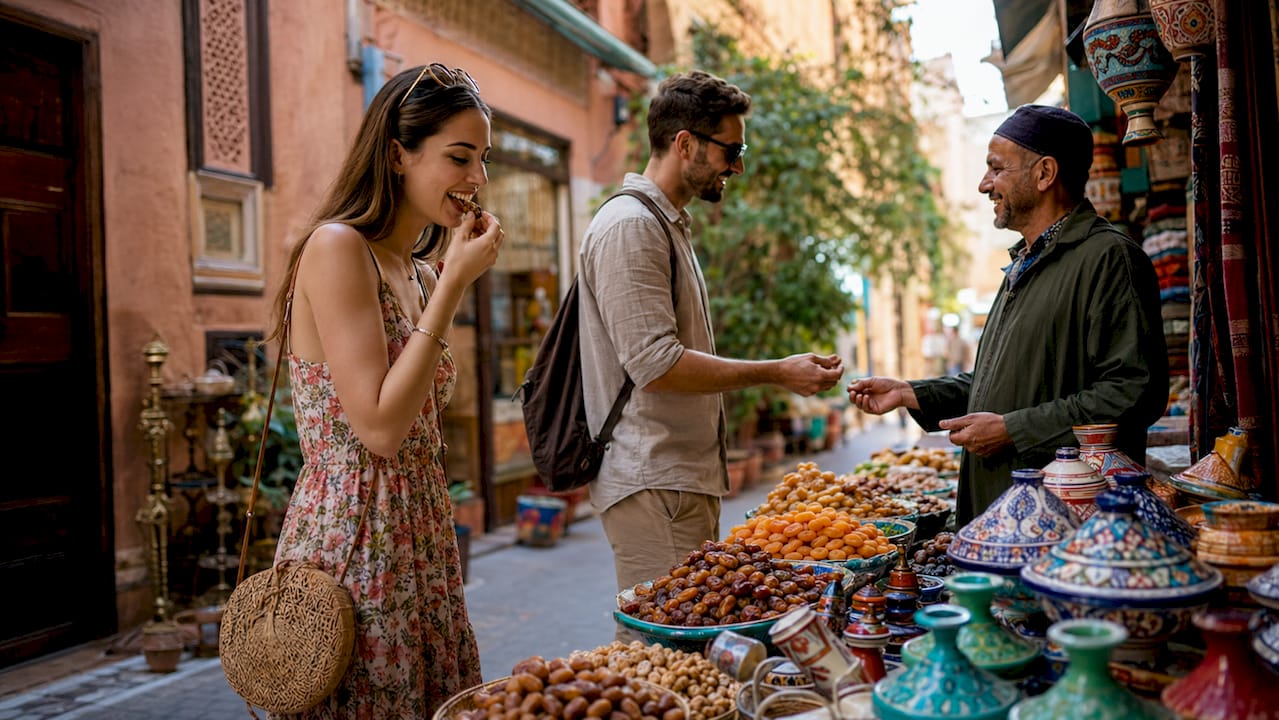
- Marrakech is Morocco’s most visited imperial city, known for its historic sites, vibrant markets, and contrasting districts.
- Visitors should prioritize key sites like Bahia Palace, Saadian Tombs, and Jemaa el-Fna and consider splitting their stay between the Medina and Gueliz.
- The best time to visit is spring or autumn, with practical tips including advance airport transfers, respectful bargaining, and slow pacing to fully experience the city’s culture.
Marrakech is defined as Morocco’s most visited imperial city, a place where 12th-century palaces stand within walking distance of contemporary art galleries. The city of Marrakech draws travelers with a combination found nowhere else in North Africa: ancient medina streets, world-class local cuisine, and a social energy centered on Jemaa el-Fna square. Bahia Palace, the Saadian Tombs, and the Majorelle Garden each represent a distinct layer of the city’s history. Understanding Marrakech means understanding its two faces: the historic Medina, where centuries of trade and craft still operate daily, and modern Gueliz, where wide boulevards and European-style cafes offer a quieter counterpoint.
What are the must-see historical sites in Marrakech?
Marrakech’s historical core contains some of the most significant monuments in all of Morocco. Bahia Palace, the Saadian Tombs, and El Badi Palace are the three anchors of any serious Marrakech historical sites itinerary. Each site tells a different chapter of the city’s story, from 16th-century dynastic power to 19th-century courtly life.
Bahia Palace, Saadian Tombs, and El Badi Palace
Bahia Palace was built in the late 19th century for a grand vizier and covers roughly eight hectares of gardens, courtyards, and decorated rooms. The carved cedar wood ceilings and hand-painted plasterwork inside are among the finest examples of Moroccan craftsmanship still accessible to visitors. The Saadian Tombs date to the 16th century and were sealed for nearly 200 years before being rediscovered in 1917. That long period of closure preserved the intricate tile and stucco work in near-original condition. El Badi Palace, once described as one of the most magnificent palaces in the world, now stands as a dramatic ruin that hosts the Marrakech International Film Festival each year.
Jemaa el-Fna: the city’s living stage
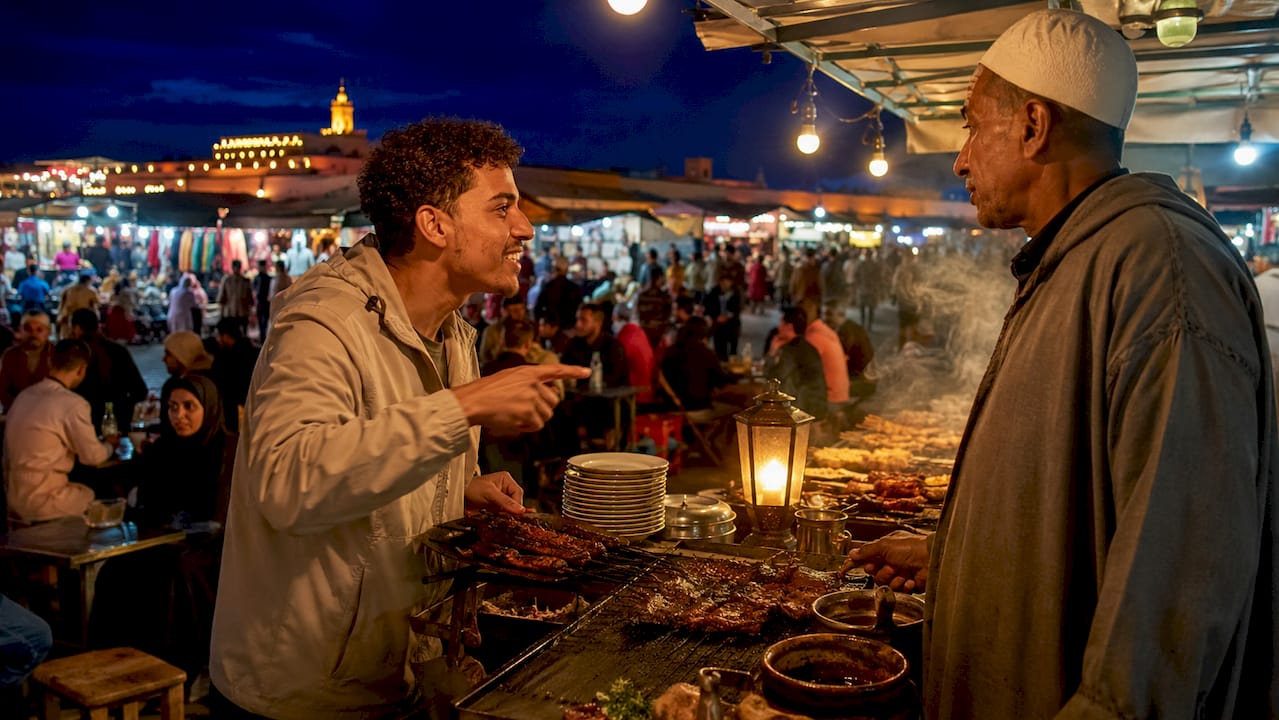
Jemaa el-Fna transforms from a busy open-air market by day into a sprawling food and entertainment hub at dusk. That shift makes it the social heart of Marrakech, drawing storytellers, musicians, snake charmers, and food vendors into a single electric space every evening. Arriving around sunset gives you both phases in one visit. The square sits at the entrance to the Medina and works as a natural orientation point for first-time visitors.
Traditional hammams as cultural ritual
Traditional hammams in Marrakech operate as cultural rituals with centuries-old practices, not simply as spas. A classic hammam session involves a steam room, a black soap scrub using savon beldi, and a full-body exfoliation with a kessa mitt. The experience is deeply embedded in Moroccan social life and offers a form of cultural immersion that no palace tour can replicate. Public hammams cost a fraction of hotel spa prices and deliver a far more authentic experience.
Pro Tip: Visit Bahia Palace on a weekday morning before 9:00 AM. Crowds thin considerably before tour groups arrive, and the light through the courtyard lattice is at its best in the early hours.
Key Marrakech attractions to prioritize:
- Bahia Palace: ornate 19th-century rooms with carved cedar wood ceilings
- Saadian Tombs: sealed 16th-century royal burial chambers with preserved tilework
- El Badi Palace: dramatic ruins with panoramic rooftop views over the Medina
- Jemaa el-Fna: the city’s central square, alive day and night with performers and food stalls
- Majorelle Garden: visiting before 9:00 AM reduces crowds significantly and improves the experience
- Traditional hammam: a full-body ritual that connects visitors to Moroccan daily life
A 3 to 4 day stay covers all major sites, souk exploration, and a hammam session without feeling rushed. That timeframe is the practical minimum for a balanced visit.
Medina vs. Gueliz: Which district suits your style?
Marrakech’s Medina and Gueliz districts differ sharply in atmosphere and pace. The contrast between these two neighborhoods is key to understanding Marrakech’s layered history and urban character. Choosing where to stay shapes your entire experience of the city.
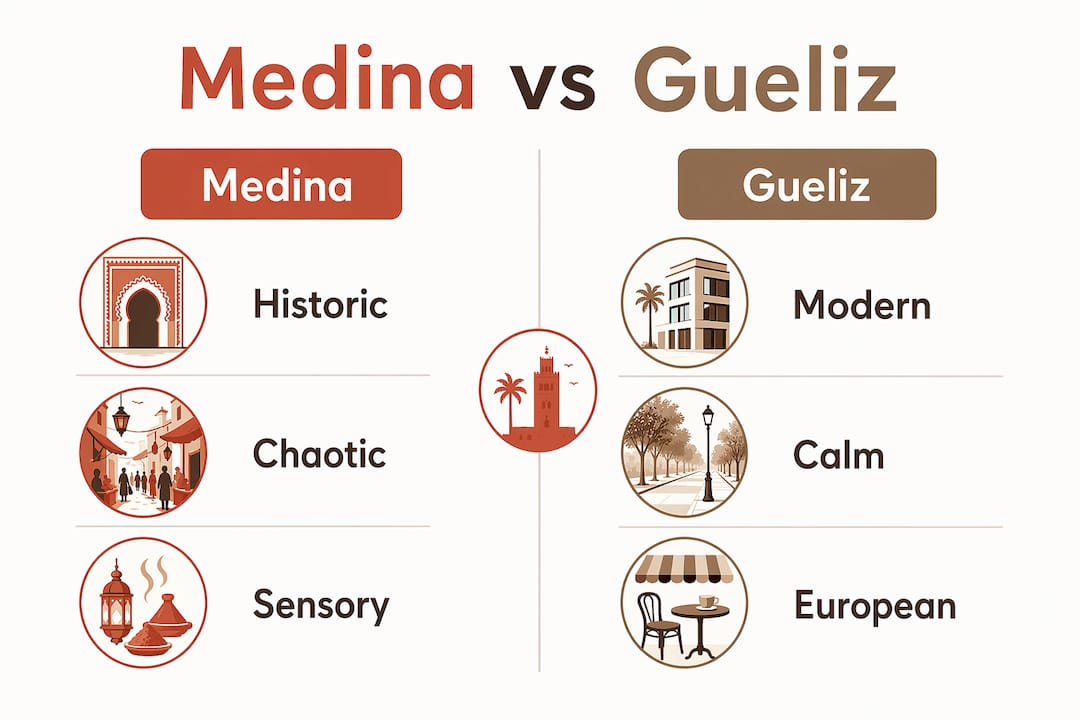
| Feature | Medina | Gueliz |
|---|---|---|
| Atmosphere | Historic, chaotic, sensory | Modern, calm, European-influenced |
| Streets | Narrow alleys, no cars | Wide boulevards, vehicle traffic |
| Accommodation | Traditional riads, guesthouses | Hotels, boutique properties |
| Dining | Street food, traditional restaurants | Cafes, international cuisine |
| Navigation | Challenging, GPS unreliable | Straightforward grid layout |
| Best for | Cultural immersion, souk access | Comfort, galleries, nightlife |
Staying in the Medina: riads and sensory immersion
A riad is a traditional Moroccan house built around a central courtyard, and staying in one is the defining Marrakech accommodation experience. The interior design typically features mosaic tile floors, carved plasterwork, and a rooftop terrace. Riads sit directly inside the Medina’s souk network, which means you step out of your door into the full energy of the market. For a deeper look at choosing the right property, the Morocco riads guide from Moroccotravel1 covers what to expect from different categories of riad.
Staying in Gueliz: comfort and modern convenience
Gueliz offers wide streets, reliable taxis, and a concentration of contemporary galleries and restaurants. The neighborhood developed during the French Protectorate period in the early 20th century and retains a distinctly European grid layout. Travelers who find the Medina’s intensity overwhelming after a few days often move to Gueliz for the final nights of a longer trip.
For stays beyond 4 nights, splitting time between a Medina riad and a modern hotel in Gueliz or Hivernage delivers the best of both worlds. That split stay strategy balances historic immersion with modern comfort without forcing a choice between them.
Pro Tip: GPS navigation inside the Medina is unreliable due to narrow alleys. Download an offline map before arrival and use it only for general orientation. Asking a local shopkeeper for directions is faster and often leads to a genuine conversation.
What practical travel tips should visitors know before arriving?
Smart logistics make the difference between a stressful trip and a smooth one. Marrakech rewards preparation in a few specific areas: timing your visit, getting from the airport, and shopping with confidence in the souks.
1. Choose the right season
The best time to visit Marrakech is during spring (February through April) or autumn (October through November), when temperatures sit at a comfortable 20–22°C (68–72°F). Summer months push temperatures above 38°C (100°F), which makes walking the Medina genuinely uncomfortable. Winter visits are possible and less crowded, but evenings can be cold. For a full breakdown of Morocco’s seasonal patterns, the season-by-season guide from Moroccotravel1 covers every month in detail.
2. Arrange your airport transfer in advance
Marrakech Menara Airport sits roughly 6 kilometers from the Medina. Fixed-price private transfers from the airport to the Medina or Gueliz cost approximately 150–200 MAD. That price certainty removes the stress of negotiating with unmetered taxis after a long flight. Book through your riad or hotel before arrival for the smoothest experience.
3. Learn the basics of souk bargaining
Souks in Marrakech are organized by craft sector: leather goods cluster near the tanneries, textiles fill one quarter, metalwork fills another, and jewelry occupies its own lane. Bargaining is expected, but the approach matters. Start at roughly half the asking price, stay calm, and be willing to walk away. Aggressive or dismissive bargaining damages the interaction and rarely produces a better price. For a deeper guide to navigating Moroccan markets, the Morocco shopping tours guide from Moroccotravel1 covers etiquette and strategy in detail.
4. Balance exploration with recovery
Marrakech’s sensory intensity is real. The Medina generates constant noise, color, and movement from early morning until late at night. The most effective strategy is to immerse fully in the souks and monuments for a few hours, then retreat to your riad’s courtyard for a midday break. Travelers who push through without rest often hit a wall by day two. Pacing yourself extends how much you actually enjoy.
5. Dress with cultural awareness
Marrakech is a Muslim city with conservative dress norms, particularly inside mosques and traditional neighborhoods. Covering shoulders and knees is the standard expectation for both men and women in the Medina. Lightweight linen or cotton layers work well for the climate and show cultural respect simultaneously.
What makes Marrakech’s local cuisine worth the trip alone?
Marrakech local cuisine is one of the most distinctive food cultures in the world, built on slow cooking, layered spices, and centuries of culinary tradition. The city’s food scene operates at two levels: the street stalls of Jemaa el-Fna and the sit-down restaurants tucked inside the Medina’s residential quarters.
The dishes every visitor should try:
- Tagine: a slow-cooked stew of meat or vegetables prepared in a conical clay pot, seasoned with cumin, coriander, ginger, and preserved lemon
- Couscous: traditionally served on Fridays, steamed semolina topped with braised vegetables and meat, often lamb or chicken
- Pastilla: a flaky pastry filled with pigeon or chicken, almonds, and cinnamon, dusted with powdered sugar. The sweet-savory combination surprises most first-time visitors
- Harira: a thick tomato and lentil soup eaten year-round as a starter or a light meal, especially popular during Ramadan
- Merguez: spiced lamb sausages grilled over charcoal and served with flatbread, a staple of the Jemaa el-Fna food stalls
- Fresh mint tea: poured from height to create froth, sweetened with sugar, and served as a gesture of hospitality in every shop and home
The spice markets inside the Medina sell ras el hanout, a blend that can contain up to 30 individual spices. Buying a small bag and taking a cooking class with a local chef is one of the most memorable Marrakech cultural experiences available to visitors. Several riads offer morning cooking classes that begin with a guided market visit to source ingredients.
Jemaa el-Fna’s food stalls open at dusk and run until midnight. Each stall is numbered, and locals tend to favor the stalls with the longest lines. Following that instinct produces better food than any restaurant recommendation app.
Key Takeaways
Marrakech rewards travelers who understand its rhythm: immerse in the Medina’s historic energy, then retreat to a quiet riad or modern Gueliz hotel to recover and go again.
| Point | Details |
|---|---|
| Best travel season | Visit in spring or autumn for temperatures of 20–22°C and manageable crowds. |
| Historical site priorities | Bahia Palace, Saadian Tombs, and Jemaa el-Fna cover the essential Marrakech history. |
| District strategy | Stay in a Medina riad for immersion; add Gueliz nights on trips longer than 4 days. |
| Souk navigation | Bargain calmly, shop by craft sector, and use offline maps in the Medina. |
| Culinary must-tries | Tagine, pastilla, harira, and fresh mint tea define the Marrakech food experience. |
What I’ve learned from years of sending travelers to Marrakech
Most visitors arrive expecting chaos and leave wishing they had stayed longer. That shift happens because Marrakech has a rhythm, and once you find it, the city becomes genuinely addictive.
The single biggest mistake I see is over-scheduling. Travelers book every monument, every cooking class, and every day trip into a 4-day window and end up exhausted by day two. Marrakech is not a checklist destination. The best moments come from slow wandering: turning down an unmarked alley, following the sound of a weaver’s loom, or sitting with a glass of mint tea while a neighborhood comes to life around you.
Getting “lost” in the Medina is not a problem to solve. Local guides consistently say the same thing: embrace the disorientation. The Medina’s layout was never designed for linear navigation. It was designed for community, trade, and privacy. Treating it as a puzzle to crack misses the point entirely.
Respectful bargaining matters more than most travelers realize. A fair negotiation leaves both sides satisfied and keeps the relationship between visitors and vendors healthy. Aggressive tactics might save a few dirhams but damage the experience for everyone who comes after you.
For longer trips, the split stay between a Medina riad and a Gueliz hotel is the approach I recommend without hesitation. Two or three nights inside the Medina gives you full immersion. Moving to Gueliz for the final nights gives you space to process what you have seen, sleep well, and enjoy the city from a calmer vantage point.
Marrakech does not need to be conquered. It needs to be experienced at its own pace.
— Moroccotravel1.com
Plan your Marrakech trip with Moroccotravel1.com
Moroccotravel1 builds custom Morocco itineraries that take the logistics out of your hands so you can focus on the experience. The 10-day Morocco family tour includes Marrakech city highlights, guided souk walks, and excursions to the Atlas Mountains and Sahara Desert, all with local expert guides and vetted accommodations. For travelers who want to cover more ground, the 14-day Morocco grand tour adds Fes, Chefchaouen, and the Atlantic coast to the Marrakech experience. Both packages include airport transfers, riad stays, and 24/7 support throughout your trip. Browse the full range of custom Morocco tours to find the itinerary that fits your travel style.
FAQ
What is the best time to visit Marrakech?
Spring (February through April) and autumn (October through November) are the best seasons, with comfortable temperatures of 20–22°C (68–72°F). Summer heat regularly exceeds 38°C and makes extended outdoor sightseeing difficult.
How many days do you need in Marrakech?
A 3 to 4 day stay covers the major historical sites, souk exploration, and a traditional hammam session without feeling rushed. Longer trips of 5 or more days benefit from a split stay between the Medina and Gueliz.
Is bargaining expected in Marrakech’s souks?
Bargaining is standard practice in the souks and is expected by vendors. Start at roughly half the asking price, stay respectful, and be prepared to walk away calmly if the price does not meet your budget.
What is the easiest way to get from Marrakech Menara Airport to the city?
A fixed-price private transfer from Marrakech Menara Airport to the Medina or Gueliz costs approximately 150–200 MAD. Booking through your hotel or riad before arrival avoids unmetered taxi negotiations on arrival.
What foods should first-time visitors try in Marrakech?
Tagine, couscous, pastilla, and harira are the four dishes that define Marrakech’s local cuisine. Fresh mint tea served at any cafe or shop is the city’s universal gesture of hospitality and should not be skipped.


