

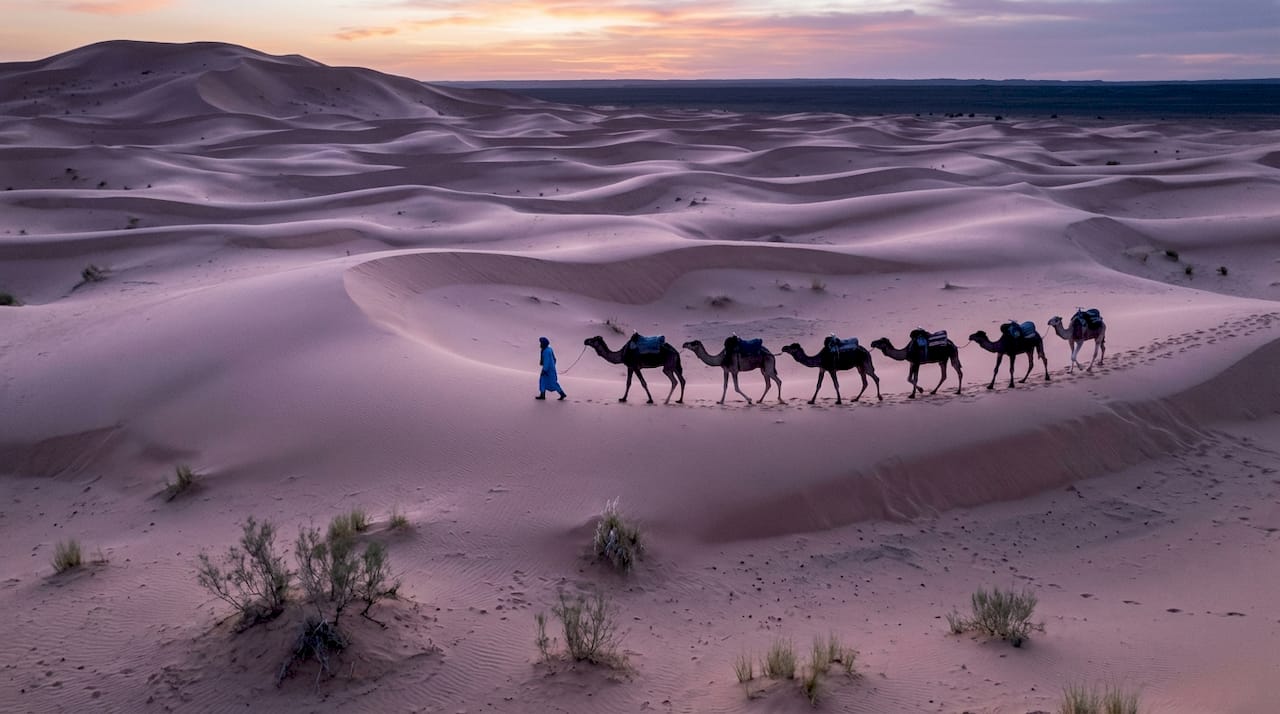
- Merzouga is a small village near the Algerian border in southeastern Morocco, serving as the main gateway to the Erg Chebbi dunes.
- Visitors can enjoy camel treks, desert camps, outdoor activities, and stargazing, especially during spring and autumn.
- To fully experience the desert, travelers should plan ahead, book camps early, and consider upgrading to luxury accommodations for comfort and atmosphere.
Merzouga is a small village in southeastern Morocco and the primary gateway to the Erg Chebbi dunes, one of the most dramatic desert landscapes on earth. Sitting near the Algerian border, this remote outpost draws travelers who want more than a postcard view of the Sahara. The Erg Chebbi dunes tower up to 150 meters high and stretch 50 km long and 5 km wide. That scale alone makes the area unlike any other desert destination in North Africa. Add in Berber culture, camel trekking, and skies with almost zero light pollution, and you have a destination that rewards every type of traveler.
What is Merzouga and where is it located?
Merzouga sits in the Draa-Tafilalet region of southeastern Morocco, roughly 35 km south of Erfoud and close to the Algerian border. The village itself is modest in size, but its position at the foot of the Erg Chebbi dune field makes it the most visited desert entry point in Morocco. No other location in the country puts you this close to true Saharan terrain.
The Erg Chebbi dunes are the defining feature of the area. These are ergs, meaning seas of sand shaped by wind over thousands of years. The dunes shift color throughout the day, moving from pale gold at midday to deep amber and rose at sunset. That visual drama is why photographers and first-time desert visitors consistently rank this spot above other Moroccan dune fields.
Climate and best times to visit
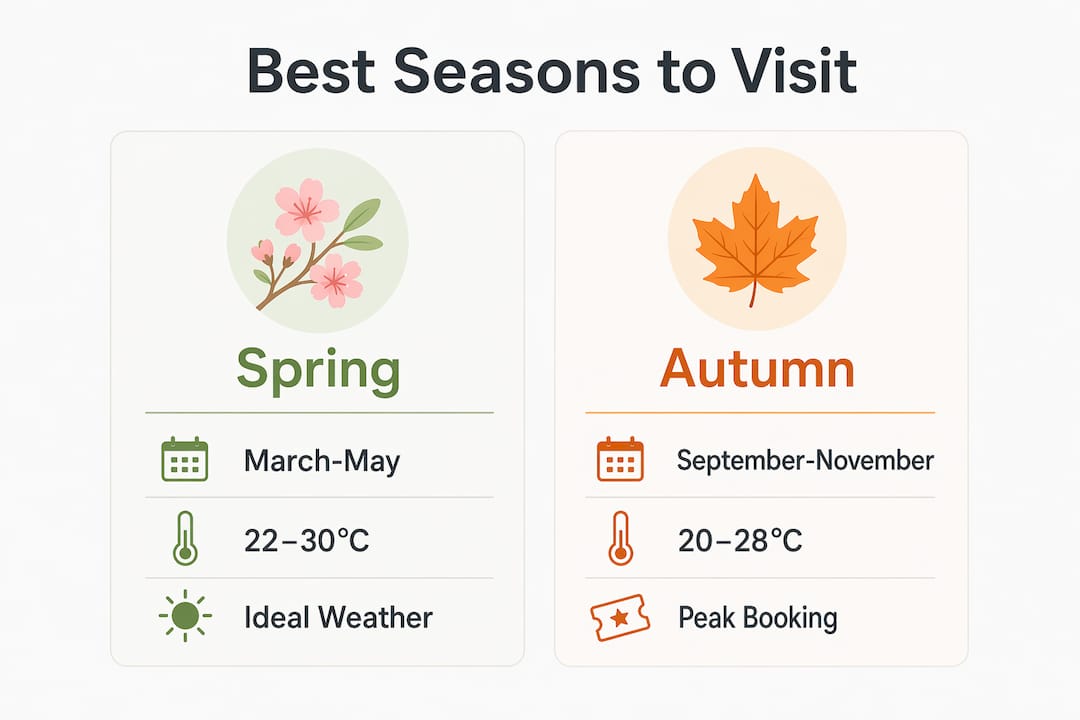
The best time to visit Merzouga is during spring (March through May) or autumn (September through November). Daytime temperatures during these windows sit in a comfortable range, while nights stay cool enough to enjoy sitting outside at camp. Summer heat regularly exceeds 40°C (104°F), which makes outdoor activity difficult and potentially dangerous. Winter visits are possible and offer the advantage of smaller crowds, but nighttime temperatures can drop sharply, so pack accordingly.
| Season | Months | Daytime Temp | Conditions |
|---|---|---|---|
| Spring | March–May | 22–30°C | Best overall; comfortable days, cool nights |
| Summer | June–August | 38–45°C | Extreme heat; not recommended for most travelers |
| Autumn | September–November | 24–32°C | Excellent; peak demand for camps |
| Winter | December–February | 15–22°C | Quiet; cold nights; possible rain |
Autumn and spring are also peak booking seasons. Travelers planning a trip during those windows should reserve camps early to secure quality accommodations, since demand consistently outpaces supply at reputable camps.
What can travelers do in Merzouga?
Merzouga offers a wider range of activities than most travelers expect from a remote desert village. The experiences range from physically active to deeply cultural, and the best trips combine both.
Camel trekking and desert camps
Camel trekking is the signature activity and the most direct way to connect with the nomadic Berber lifestyle. Most tours depart in the late afternoon, timing the ride to arrive at camp just as the sun drops behind the dunes. The camel trek experience typically takes one to two hours each way, covering terrain that no vehicle can access. Guides are local Berber men who have worked these routes for generations.
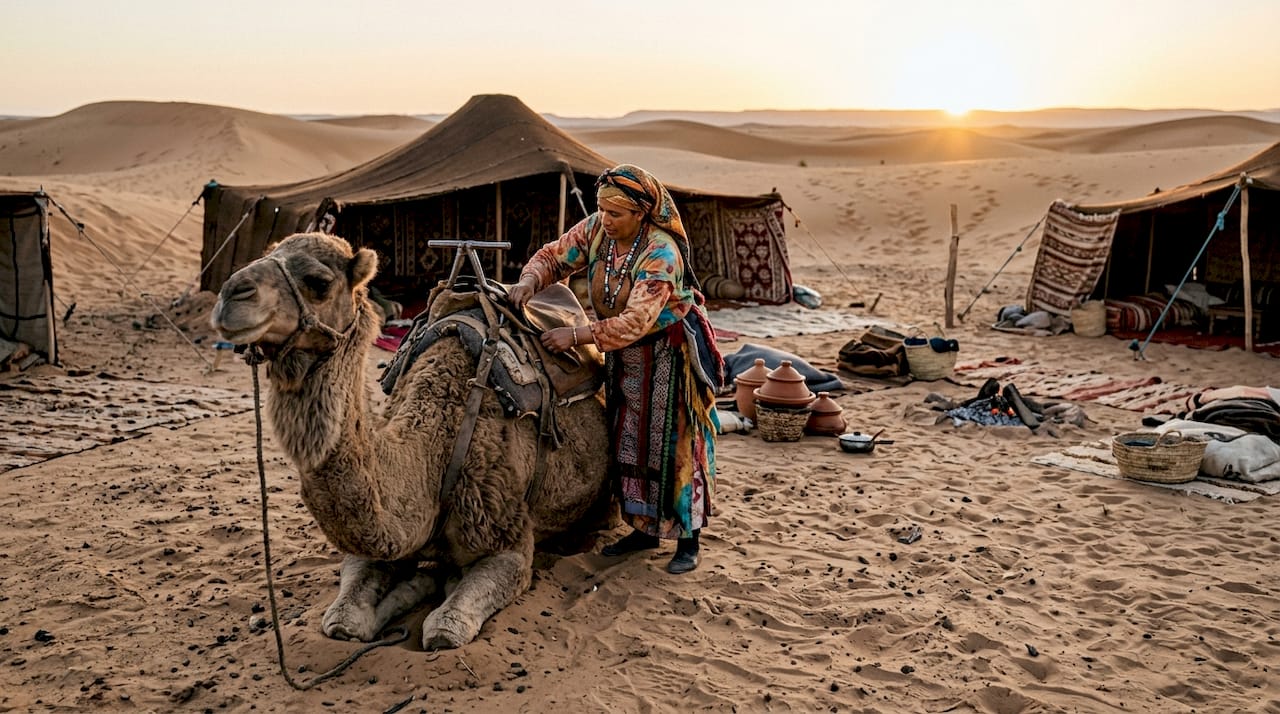
Overnight desert camps range from basic canvas tents with shared facilities to fully appointed luxury setups with private bathrooms, proper beds, and electricity. The gap between standard and luxury is significant. A basic camp gives you the raw desert experience at a lower price point. A luxury camp adds comfort without removing the atmosphere, and many travelers find that sleeping well makes the 4 a.m. sunrise climb far more enjoyable.
Pro Tip: Book a camp that faces east. Watching the sun rise over the dunes from your tent entrance is one of the most memorable moments the Sahara offers, and not every camp is positioned to give you that view.
Outdoor adventures beyond the camel ride
- Sandboarding: Rent a board in the village and hike to the top of a dune. The descent takes seconds and the climb takes effort, but the experience is worth it.
- 4×4 excursions: Off-road vehicles cover more ground and reach remote dune corridors that camel treks cannot. These tours often include stops at fossil sites and dried riverbeds.
- Dune climbing: No equipment needed. The main dune ridge above Merzouga takes about 45 minutes to climb and delivers a 360-degree view of the Erg Chebbi field.
- Quad biking: Available through local operators and popular with younger travelers who want speed alongside scenery.
- Berber music evenings: Most camps host a fire circle after dinner where local musicians play traditional drums and stringed instruments. This is not a staged show. It is a genuine cultural practice.
Stargazing in the Sahara
Merzouga is one of the best stargazing spots on the planet due to extremely low light pollution. On a clear night, the Milky Way is visible to the naked eye. Travelers staying overnight in desert camps regularly describe the night sky as the most unexpected highlight of their trip. Bring a red-light headlamp rather than a white flashlight to preserve your night vision and avoid disrupting other guests.
How to get to Merzouga
Merzouga has no airport and no train station. All travelers arrive by road, which means planning the route matters. The two most common departure points are Marrakech and Fez.
- From Marrakech: The drive covers roughly 560 km and takes 9–10 hours by car. The route passes through the High Atlas Mountains via the Tizi n’Tichka pass, then continues through Ouarzazate and the Draa Valley. This is one of the most scenic drives in Morocco.
- From Fez: The distance is shorter at around 480 km, with a drive time of 7–8 hours. The route passes through Midelt and Errachidia, crossing the Middle Atlas range.
- By guided tour: Guided tours from Marrakech or Fez handle all logistics and include cultural stops along the way, such as the Todgha Gorges and Ait Benhaddou. This is the most practical option for first-time visitors.
- By rental car: Renting a car gives you flexibility but requires comfort driving on mountain roads. Roads to Merzouga are paved and in reasonable condition, though GPS signal can be unreliable in remote stretches.
- By public bus: CTM and Supratours operate routes to Erfoud, the nearest town with regular service. From Erfoud, a shared taxi or private transfer covers the final 35 km to Merzouga.
Pro Tip: If you are driving independently, download an offline map of the route before you leave. Mobile data coverage becomes patchy after Erfoud, and the final stretch to Merzouga has no roadside services.
Multi-day desert tours from Marrakech typically run three days and include Erg Chebbi dunes, camel rides, Berber music evenings, and sunrise views. These packages remove the stress of logistics and let you focus entirely on the experience.
What are the accommodation options in Merzouga?
Merzouga accommodations split into two broad categories: village guesthouses and desert camps. Each serves a different type of traveler.
Village guesthouses, often run by Berber families, sit at the edge of the dunes and offer simple rooms, home-cooked meals, and direct access to the sand. These are the most authentic option and the most affordable one. Guests eat with the family, hear stories about local history, and get honest recommendations for guides and activities.
Desert camps sit further into the dune field and are reached by camel or 4×4. The quality gap between camp tiers is wide. Standard camps offer basic mattresses, shared toilets, and a communal fire. Luxury camps include private tents with proper beds, en-suite bathrooms, solar-powered lighting, and sometimes a small pool. The price difference reflects those amenities directly.
| Camp Type | Amenities | Best For | Booking Advice |
|---|---|---|---|
| Standard camp | Shared bathrooms, basic bedding, communal fire | Budget travelers, solo adventurers | Book 2–3 weeks ahead in peak season |
| Mid-range camp | Private tent, shared bathrooms, better meals | Couples, small groups | Book 4–6 weeks ahead in autumn/spring |
| Luxury camp | Private bathroom, real beds, premium meals | Honeymooners, luxury travelers | Book 2–3 months ahead; limited availability |
| Berber guesthouse | Simple rooms, family meals, village location | Cultural travelers, families | Flexible booking; less demand pressure |
Eco-friendly camps are a growing segment in the area. These operations use solar power, minimize plastic waste, and source food locally. Travelers who prioritize sustainable desert stays should ask camps directly about their environmental practices before booking, since the term “eco” is not regulated in Morocco.
Merzouga is considered very safe for travelers. Violent crime is rare, and the local Berber communities are known for their hospitality. Standard travel precautions apply, including keeping valuables secure and confirming guide credentials before heading into the dunes.
What do travelers eat in Merzouga?
Merzouga’s food scene reflects Berber desert culture directly. Meals are simple, filling, and built around ingredients that travel well in a desert climate.
The most common dishes served at camps and guesthouses include:
- Tagine: A slow-cooked stew of lamb, chicken, or vegetables served in a conical clay pot. This is the staple meal at virtually every camp.
- Couscous: Steamed semolina served with vegetables and meat, traditionally eaten on fridays but available throughout the week at tourist camps.
- Harira: A thick soup of tomatoes, lentils, chickpeas, and herbs. It appears at breakfast and as a starter at dinner.
- Mint tea: Poured from height to create a froth, this sweet green tea is the universal gesture of Berber hospitality. Refusing the first glass is considered impolite.
- Msemen: A flaky flatbread served at breakfast with honey and argan oil. Simple and genuinely good.
Berber cuisine at desert camps often includes a sunset dinner around the campfire, accompanied by traditional drumming and music. That combination of food, fire, and live music is one of the most cited highlights in traveler reviews. Respecting local customs matters here. Dress modestly when visiting the village, ask before photographing people, and accept tea when it is offered.
Key takeaways
Merzouga delivers the most authentic Sahara experience in Morocco when travelers plan ahead, choose the right camp tier, and time their visit for spring or autumn.
| Point | Details |
|---|---|
| Best time to visit | Spring and autumn offer the most comfortable temperatures and the best overall conditions. |
| Book camps early | Luxury and mid-range camps sell out weeks ahead during peak seasons; reserve at least 2–3 months in advance. |
| Erg Chebbi scale | Dunes reach 150 meters high and stretch 50 km long, making this one of the largest dune fields in Morocco. |
| Getting there | Marrakech takes 9–10 hours by road; Fez takes 7–8 hours; guided tours handle logistics and add cultural stops. |
| Safety and culture | Merzouga is safe for travelers; Berber hospitality is genuine, and respecting local customs enhances every interaction. |
What I have learned from years of sending travelers to Merzouga
Most travelers arrive in Merzouga focused on the camel ride and leave talking about the night sky. That shift tells you something important about what this place actually delivers. The dunes are spectacular, but the real value is the total sensory experience: the silence, the stars, the fire, the food, and the unhurried pace of Berber life.
The mistake I see most often is travelers booking the cheapest camp available and then feeling disappointed. A standard camp is not a bad experience, but it is a different experience from a mid-range or luxury option. The difference is not just comfort. It is the quality of the guide, the food, the fire setup, and the overall atmosphere. If you are traveling a long way to get here, spending a bit more on accommodation is the single highest-return upgrade you can make.
I also recommend building in an extra night if your schedule allows. One night in the desert is enough to check the box. Two nights lets you actually slow down, explore further from camp, and have a real conversation with your guide. The Sahara adventure guide from Moroccotravel1 covers extended itinerary options worth reviewing before you finalize your trip.
The other thing worth saying plainly: Merzouga is not a polished resort destination. Roads are rough in places, facilities outside the camps are basic, and the nearest hospital is in Erfoud. That is part of the appeal for most travelers. Go prepared, go curious, and go with a guide who knows the terrain.
— Moroccotravel1.com
Planning your Merzouga trip with Moroccotravel1
Moroccotravel1.com builds custom Morocco itineraries that include Merzouga desert camps, camel trekking, and cultural stops across the country. Whether you are planning a luxury 8-day Morocco tour with premium desert stays or a family-focused 10-day package that works for all ages, the team handles transportation, camp bookings, and local guides. Every itinerary is built around your travel style, not a fixed template. For travelers who want the full Sahara experience without the logistical headaches, Morocco tour packages from Moroccotravel1 cover everything from Marrakech to the dunes and back.
FAQ
Where exactly is Merzouga located?
Merzouga is a village in southeastern Morocco, near the Algerian border in the Draa-Tafilalet region. It sits at the base of the Erg Chebbi dune field, roughly 35 km south of Erfoud.
How long does it take to get to Merzouga from Marrakech?
The drive from Marrakech to Merzouga takes 9–10 hours by car or guided tour. Most multi-day tours include cultural stops along the route, such as Ouarzazate and the Draa Valley.
What is the best time to visit Merzouga?
Spring (March through May) and autumn (September through November) offer the most comfortable conditions. Summer temperatures regularly exceed 40°C, making outdoor activity difficult.
Is Merzouga safe for solo travelers?
Merzouga is considered very safe for travelers, including solo visitors. Violent crime is rare, and the local Berber communities are known for hospitality toward guests.
What should I pack for a Merzouga desert camp stay?
Pack a warm layer for cold nights, a headlamp, sunscreen, and a scarf to protect against sand. Closed shoes are better than sandals for dune climbing, and a reusable water bottle is practical for the full trip.


