

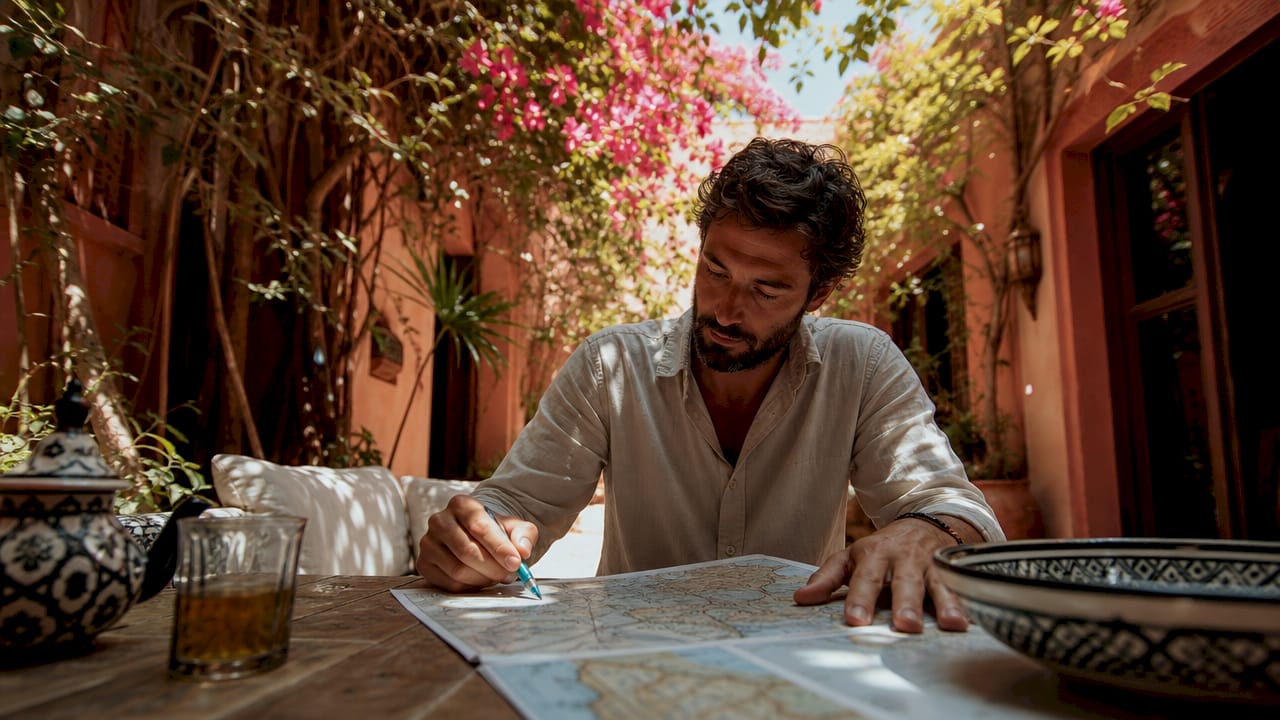
- A Morocco itinerary should include at least seven days to experience the main destinations without rushing.
- Choosing the right trip length is crucial to avoid spending excessive time on transit and missing local experiences.
A Morocco itinerary guide is a structured travel plan that maps the most rewarding routes through the country’s medinas, deserts, mountains, and coastal towns within a fixed number of days. The best plans balance Marrakech’s sensory intensity, Fes’s medieval depth, the Sahara’s silence, and Chefchaouen’s blue-washed calm without burning travelers out. A 7-day trip is the minimum to experience the classic Moroccan circuit, while 10 days gives you the space to breathe between destinations. Moroccotravel1 builds every package around this core principle: the right pace matters as much as the right places. Whether you have a week or two weeks, the decisions you make before you land shape everything that follows.
What are the best Morocco itineraries by trip length?
Choosing the right trip length is the single most important decision in any Morocco travel itinerary. Get it wrong and you spend half your time on buses instead of in souks.
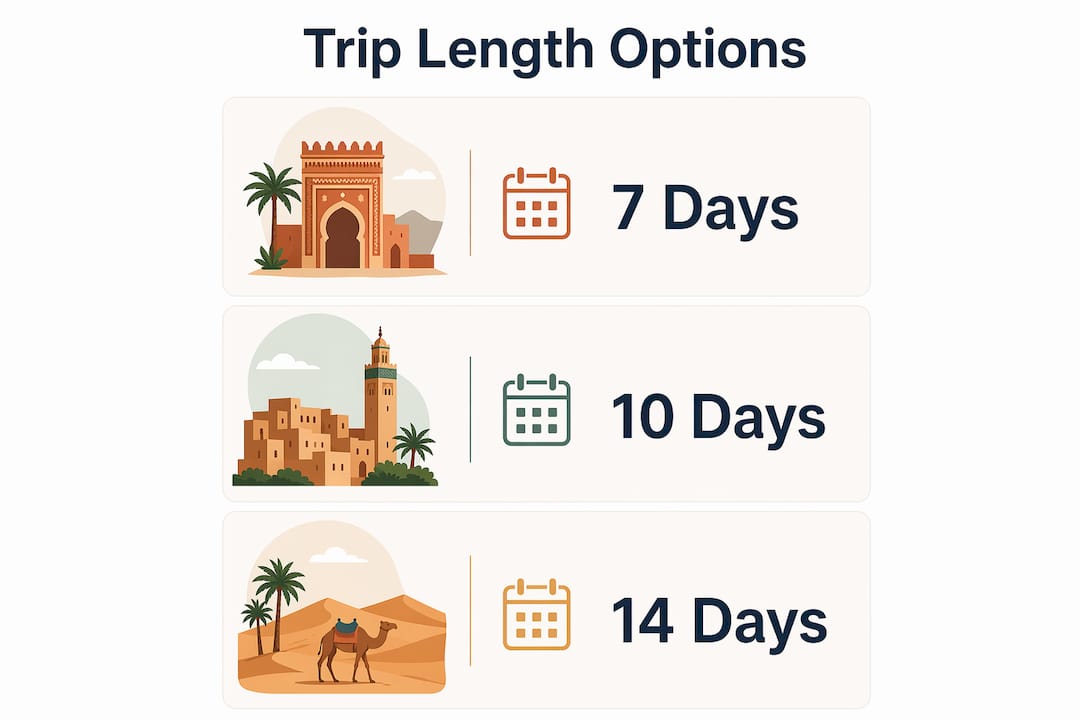
The 7-day classic loop
Seven days covers Marrakech, the Sahara, and Fes with almost no slack. You arrive in Marrakech, spend two nights exploring the medina and Djemaa el-Fna square, then drive south through the Draa Valley toward Merzouga for a night in the desert. The return leg swings north through the Ziz Gorges and Midelt to reach Fes for two nights before flying home. The drive from Marrakech to Merzouga takes roughly 7 hours. That is a full day of travel, so budget it honestly.
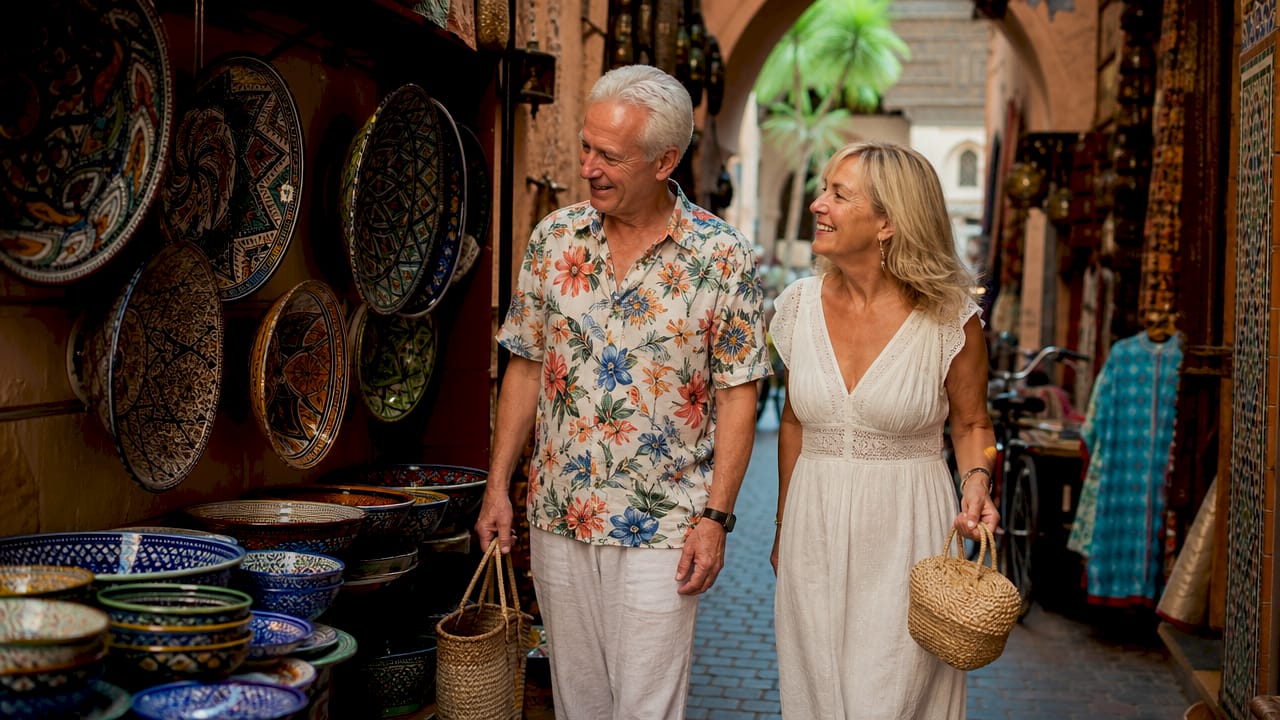
The 7-day classic loop costs approximately $2,400–$3,500 for two people, excluding flights. That figure covers mid-range riads, private transfers, and guided tours. It is a tight but achievable budget for travelers who plan ahead.
The 10-day sweet spot
Ten days is the ideal balance for most travelers. A 10-day itinerary starting in Marrakech and ending in Fes eliminates backtracking while adding Chefchaouen or the Atlantic coast at Essaouira. You get two full days in Marrakech, one day in Essaouira, two nights in the Sahara, and two nights each in Fes and Chefchaouen. The pacing feels human rather than frantic. Budget for a 10-day Morocco trip runs $3,300–$4,800 for two people.
Pro Tip: Book your Sahara Desert camp at least three weeks in advance during October and November. Camps fill fast, and last-minute options are often lower quality.
The 14-day grand tour
Fourteen days unlocks the full picture: the High Atlas Mountains, the northern Rif region, Casablanca, and the Roman ruins at Volubilis. You can add a trek in the Toubkal National Park area or spend extra time in the Draa Valley without feeling rushed. The 14-day grand tour costs $4,500–$7,000 for two people. That range reflects the difference between comfortable mid-range stays and luxury riad and desert camp experiences.
| Trip length | Key destinations | Pacing | Estimated cost (2 people) |
|---|---|---|---|
| 7 days | Marrakech, Sahara, Fes | Tight | $2,400–$3,500 |
| 10 days | Marrakech, Essaouira, Sahara, Fes, Chefchaouen | Comfortable | $3,300–$4,800 |
| 14 days | Full circuit plus Atlas and northern loop | Relaxed | $4,500–$7,000 |
Which cities should you visit for a well-rounded trip?
Morocco’s best destinations each deliver a completely different experience. A well-built Morocco travel itinerary treats them as chapters in a story, not stops on a checklist.
- Marrakech is the entry point for most travelers and the most sensory city in the country. The medina around Djemaa el-Fna square packs snake charmers, spice merchants, and rooftop cafes into a few square kilometers. The Bahia Palace and the Saadian Tombs are within walking distance of each other and worth a half-day each. Marrakech rewards slow mornings and late evenings more than rushed daytime tours.
- Fes holds the oldest continuously inhabited medieval city in the world. The Fes el-Bali medina is a UNESCO World Heritage Site where tanneries like the Chouara Tannery have operated since the 11th century. Watching dyers work leather in stone vats from a rooftop terrace above the tannery is one of the most visually striking experiences in North Africa.
- Chefchaouen is the Blue City of the Rif Mountains, where nearly every wall and staircase is painted in shades of blue and white. Travelers who skip it to save time consistently say it was their biggest regret. Two nights here is enough to hike the surrounding hills and photograph the medina at golden hour.
- The Sahara at Merzouga delivers the camel trek and overnight desert camp experience that most travelers picture when they think of Morocco. The Erg Chebbi dunes rise to over 150 meters and glow orange at sunrise. One night in a desert camp is the minimum; two nights let you explore the dunes without rushing.
- Essaouira offers a complete change of pace. This Atlantic port city has whitewashed ramparts, a working fishing harbor, and a medina that feels calmer than Marrakech or Fes. It is the best place to eat fresh grilled fish and watch the wind surfers on the beach.
Staying in riads inside the medinas of each city is the single best accommodation decision you can make. Riads offer authentic cultural immersion and direct access to local life in a way that hotels outside the medina walls simply cannot match.
Pro Tip: In Fes, hire a licensed local guide for your first medina walk. The medina has over 9,000 streets and alleys. Getting lost is part of the experience, but a guide helps you find the tanneries, the souks, and the hidden fountains without wasting hours.
How do you handle logistics and travel within Morocco?
Getting between cities efficiently is what separates a smooth Morocco trip from a stressful one. The country has three main transport options: trains, intercity buses, and private transfers.
- Trains connect Casablanca, Rabat, Fes, Tangier, and Marrakech reliably. The ONCF rail network runs on time and offers first-class seats at reasonable prices. Trains are the best option for the Casablanca to Fes or Casablanca to Marrakech legs.
- Intercity buses from operators like CTM and Supratours reach destinations the train network misses, including Essaouira, Ouarzazate, and Merzouga. CTM is the most reliable option for long-haul routes. Book seats online at least 24 hours ahead during peak season.
- Private transfers are the most practical choice for the Marrakech to Sahara route. No train or bus covers this route directly, and a private driver lets you stop at the Draa Valley, Todra Gorge, and Dades Valley along the way. Moroccotravel1 includes private transfers in most of its tour packages for exactly this reason.
Within cities, taxis are everywhere, but pricing is inconsistent. Taxi meters are often ignored, so confirm the fare before you get in. In Marrakech and Casablanca, the InDrive app offers transparent, agreed-upon prices before the ride starts. It is the most reliable way to avoid overcharging.
Visas are not required for American citizens staying under 90 days. Your passport must be valid and have at least one blank page. Check this before you pack, not at the airport.
Pro Tip: Keep a digital copy of your passport on your phone. Riads and desert camps require passport details for their internal logs, and having a photo ready speeds up check-in significantly.
What cultural tips should travelers follow in Morocco?
Cultural awareness is not optional in Morocco. It is the difference between being welcomed and being tolerated.
- Learn three phrases in Moroccan Arabic. Saying “Salam” (hello), “Choukran” (thank you), and “Bshwia” (slowly) opens doors that English alone cannot. Locals respond warmly to any effort, however imperfect.
- Ask before photographing people. Pointing a camera at someone in a souk or tannery without asking is considered disrespectful. A simple gesture and a smile usually gets you a yes. Offering a small tip after is good practice.
- Dress modestly outside beach resorts. Shoulders and knees covered is the standard for both men and women in medinas and rural areas. Marrakech is more relaxed than Fes or Chefchaouen, but modest dress shows respect everywhere.
- Carry cash in Moroccan dirhams. Cards are accepted at larger hotels and restaurants, but most medina shops, street food stalls, and small riads are cash only. ATMs are widely available in city centers. Avoid exchanging money at unofficial street changers.
- Keep your itinerary flexible. Morocco moves at its own pace. A souk visit that was supposed to take an hour becomes three. A road through the Atlas Mountains closes for a day after rain. Travelers who build buffer time into their plans enjoy the country far more than those who schedule every hour.
- Autumn and winter offer the best conditions for desert and mountain travel. September through february brings mild temperatures ideal for outdoor activities. Summer heat in the Sahara regularly exceeds 110°F, which makes camel trekking genuinely dangerous.
Key Takeaways
A well-structured Morocco itinerary balances city depth, desert adventure, and cultural immersion across a minimum of 7 days, with 10 days delivering the best experience for most travelers.
| Point | Details |
|---|---|
| Choose the right trip length | Seven days covers the classic loop; 10 days adds Chefchaouen or the coast without rushing. |
| Prioritize riad stays | Riads inside medinas provide cultural access and convenience that outside hotels cannot match. |
| Confirm taxi fares upfront | Use InDrive in major cities or agree on a price before entering any taxi to avoid disputes. |
| Travel in autumn or winter | September through February offers the most comfortable conditions for desert and mountain activities. |
| Keep your schedule loose | Build buffer days into your plan so local pace and unexpected detours become highlights, not setbacks. |
What I’ve learned from watching travelers rush Morocco
Most travelers make the same mistake: they try to see too much. They book 6 cities in 10 days, spend half their time in transit, and arrive home with photos but no real memories. I have seen this pattern repeatedly, and it almost always comes from the same source: the fear of missing out on a destination they may never return to.
The travelers who leave Morocco most satisfied are the ones who go deep rather than wide. They spend three nights in Fes instead of one. They sit in a riad courtyard for an hour after breakfast instead of rushing to the next site. They accept a shopkeeper’s invitation for mint tea without checking the time. That is where Morocco actually happens.
Riad stays are not just a comfort choice. Staying in riads exposes travelers to the living history of medinas in a way that no guided tour replicates. You hear the call to prayer from the courtyard. You eat breakfast on a rooftop above the medina roofline. You understand the city from the inside out.
The other thing I tell every traveler: carry a digital passport photo on your phone from day one. It sounds minor. At 11:00 PM at a desert camp after a 7-hour drive, it is not minor at all.
— Moroccotravel1.com
Moroccotravel1’s curated packages for every itinerary
Moroccotravel1.com offers Morocco tour packages built around the same principles this article covers: the right pace, the right places, and local expertise at every step. Options range from the 7-day north Morocco circuit to the 14-day grand tour covering the full country. Families, honeymooners, and luxury travelers each have dedicated packages with accommodations and guides matched to their needs. Every package includes private transfers, riad bookings, and 24/7 support so you spend your time experiencing Morocco rather than managing it.
FAQ
What is the minimum trip length for a Morocco itinerary?
Seven days is the minimum to cover the classic Moroccan circuit of Marrakech, the Sahara, and Fes. Anything shorter forces you to skip major destinations or spend most of your time traveling between them.
When is the best time to visit Morocco?
Autumn and winter, from September through February, offer the most comfortable temperatures for city tours, desert trips, and mountain hikes. Summer heat in the Sahara regularly makes outdoor activities impractical.
Do Americans need a visa to visit Morocco?
American citizens do not need a visa for stays under 90 days. A valid passport with at least one blank page is required for entry.
What is the best way to get between cities in Morocco?
Trains work well for the Casablanca, Rabat, Fes, and Marrakech corridor. Private transfers are the best option for the Marrakech to Sahara route, which has no direct train or bus service.
Why should I stay in a riad instead of a hotel?
Riads inside medinas place you at the center of local life and within walking distance of major landmarks. They offer a cultural experience that standard hotels outside the medina walls cannot replicate.


