

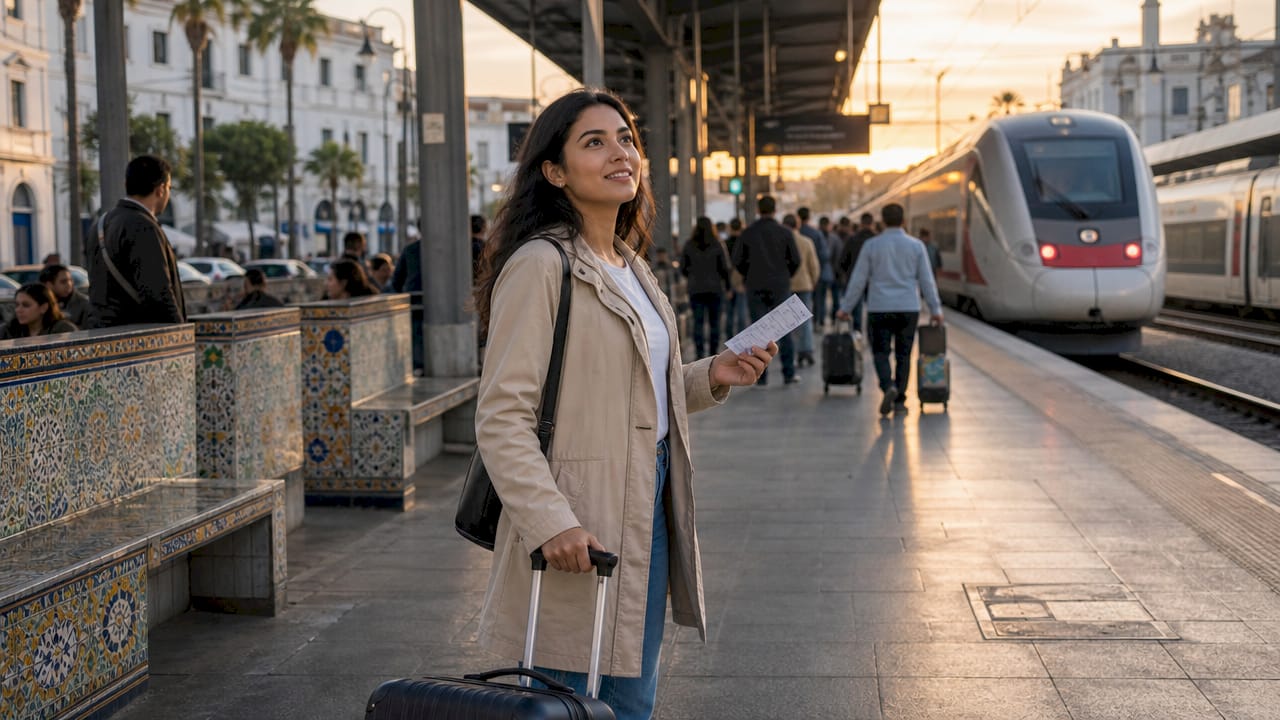
- Morocco’s rail network includes high-speed and standard trains serving different travel needs.
- Booking early and understanding station distinctions improve travel experience and safety.
- Upgrading to first class offers better comfort for minimal extra cost, especially on Al Boraq routes.
Morocco’s national rail network, operated by ONCF, is the most efficient way to connect the country’s major cities, and it runs two distinct train types that serve very different travel needs. The Al Boraq high-speed service links Tangier to Casablanca in roughly 2 hours and 10 minutes, making it Africa’s fastest train. The standard Al Atlas trains extend the network south to Marrakech and east to Fez and Oujda. This Morocco Train Guide covers every practical detail you need: routes, fares, booking windows, onboard comfort, and cultural tips that most travelers only learn the hard way.
What are the main train routes in Morocco?
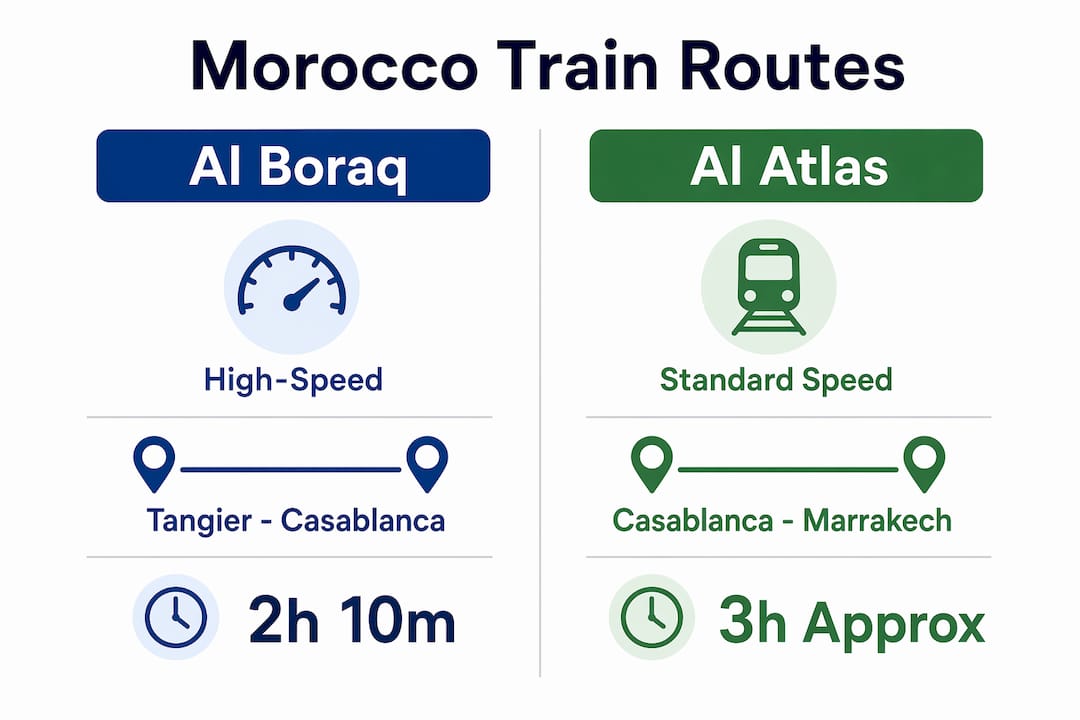
Morocco’s rail network divides cleanly into two corridors. The high-speed Al Boraq corridor runs along the Atlantic coast, while the Al Atlas standard network fans out to inland cultural cities. Knowing which train serves which route saves you from booking the wrong ticket entirely.
The Al Boraq high-speed corridor
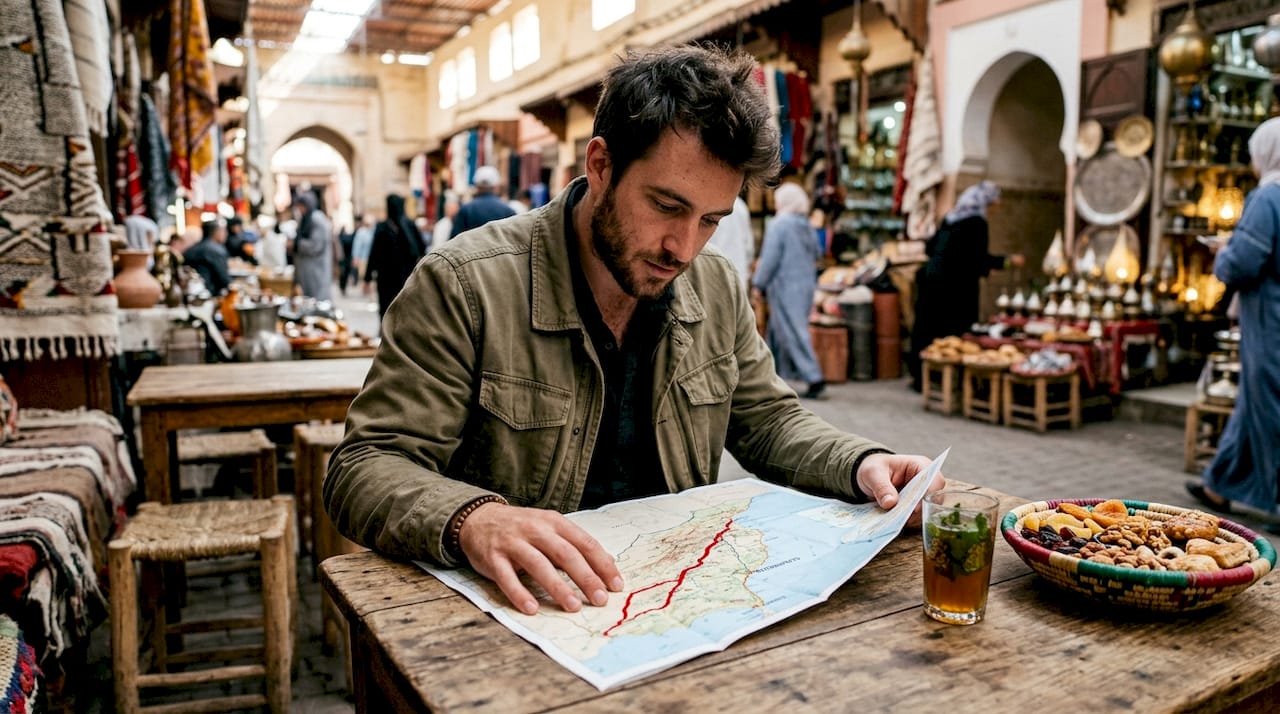
Al Boraq connects Tangier in the north to Casablanca, stopping at Asilah, Kenitra, and Rabat along the way. The full Tangier to Casablanca journey takes about 2 hours and 10 minutes. That speed makes it genuinely competitive with flying when you factor in airport check-in time. First-class tickets on this route cost around $32 USD, which is exceptional value for a high-speed rail experience.
The Al Atlas standard network
Al Atlas trains cover the routes Al Boraq does not. Casablanca to Marrakech takes roughly 3 hours. Casablanca to Fez runs about 4 hours, and the Fez to Oujda route adds another 4–5 hours heading east. These trains are slower and more traditional, but they pass through landscapes that reward patient travelers: olive groves, the Middle Atlas foothills, and stretches of the Sebou River valley.
The table below shows the major routes, approximate travel times, and the train type serving each.
| Route | Train Type | Approx. Travel Time |
|---|---|---|
| Tangier to Casablanca | Al Boraq (high-speed) | 2h 10m |
| Casablanca to Marrakech | Al Atlas (standard) | 3h 00m |
| Casablanca to Fez | Al Atlas (standard) | 4h 00m |
| Rabat to Casablanca | Al Boraq / Al Atlas | 45m |
| Fez to Oujda | Al Atlas (standard) | 4h 30m |
One station detail catches travelers off guard every year. Casablanca has two stations: Casa Port handles commuter services, while Casa Voyageurs is the main hub for intercity and high-speed trains. Always check your ticket carefully before heading to either station.
How to book Morocco train tickets and save money
Booking strategy matters more on Moroccan trains than on most European rail networks. ONCF uses dynamic pricing, which means fares rise steadily as the departure date approaches. The earlier you book, the less you pay.
Booking windows and timing
The booking window for both ONCF and Al Boraq opens exactly 90 days before departure. Booking 7–14 days ahead saves 15–25% compared to standard fares. Wait until the last minute and you can expect fares to surge 40–50% above the base price. That gap is significant on a budget trip.
Over 40% of ONCF passengers now book digitally, which reflects how much the system has shifted toward online reservations. Digital booking also gives you seat selection, which matters on busy routes like Casablanca to Marrakech on a Friday afternoon.
Practical booking tips
- Book through the official ONCF website or the Al Boraq portal as your starting point.
- International credit cards sometimes fail on the official site. If yours does, try a travel booking aggregator that accepts Visa or Mastercard without regional restrictions.
- First class is worth selecting at the booking stage, not as an upgrade at the station. Availability shrinks fast on popular routes.
- Print your ticket or save a clear screenshot. Conductors scan both paper and digital tickets.
- Check your travel booking timeline well before your trip to coordinate train departures with hotel check-ins and onward connections.
Pro Tip: Set a calendar reminder for 90 days before your travel date and book the moment the window opens. On peak routes like Tangier to Casablanca during summer, first-class seats sell out within days of release.
What should you expect onboard Morocco’s trains?
The onboard experience varies significantly between Al Boraq and Al Atlas trains. Choosing the right class before you board makes a real difference in comfort, especially on journeys over two hours.
First class vs. second class
- Al Boraq first class offers wide, reclining seats in a quiet cabin with strong air conditioning. The price difference between first and second class is under $12 USD, which makes upgrading a straightforward decision for most travelers.
- Al Atlas first class provides assigned seating, more space, and better air conditioning than second class. Compartments seat six passengers and feel noticeably calmer than the open second-class cars.
- The Atlas second class is functional and affordable. Seats are not always assigned, and the cars fill quickly on popular routes. Noise levels rise considerably during school holidays and weekends.
- Al Boraq second class is still a modern, comfortable experience by regional standards. If you are traveling solo on a short hop like Rabat to Casablanca, second class is perfectly fine.
Luggage, amenities, and onboard services
Large suitcases go in the oversized storage racks at the ends of each carriage, not in the overhead bins. You carry your own bags to that rack, so packing light genuinely improves your experience. Overhead space suits a day pack or a small carry-on.
Al Boraq trains have a café car serving hot drinks, sandwiches, and snacks. Standard Al Atlas trains sometimes have a snack trolley, but service is inconsistent. Bring your own water and a light snack on any journey over two hours. Wi-Fi is available on Al Boraq but tends to be slow. Do not rely on it for video calls or large downloads.
Pro Tip: Packing a small bag within your main luggage lets you grab what you need for the journey without wrestling your suitcase out of the end-of-carriage rack every time the train stops.
How do seasons and culture affect train travel in Morocco?
Morocco’s train schedule does not exist in a vacuum. Religious observances, school holidays, and seasonal tourism patterns all affect how trains run and how crowded they get.
Punctuality and connection planning
Al Boraq runs with strong punctuality. Al Atlas trains are a different story. Standard trains can run 15–30 minutes late, and delays compound when multiple connections are involved. Never book a tight same-day connection between an Al Atlas train and a flight. Give yourself at least three hours of buffer at the airport.
Ramadan and seasonal schedule changes
During Ramadan, train schedules can shift without much advance notice. Some trains pause briefly for Iftar, the evening meal that breaks the fast. If you are traveling at sunset during Ramadan, build extra time into your plans and check the schedule the day before departure.
“Traveling by train during Ramadan is one of the most memorable experiences Morocco offers. Sharing dates and harira soup with fellow passengers at Iftar creates a genuine connection that no guided tour can replicate. Just plan your timing carefully.”
Seasonal travel tips and station behavior
- July and August are peak months. Trains to Marrakech fill fast, and fares reflect that demand. Book as early as possible.
- October through November and March through April offer lower fares, thinner crowds, and cooler temperatures on longer routes.
- Station platforms attract unofficial “helpers” who offer to carry bags or guide you to your platform. A polite but firm refusal works best. The phrase “La, shukran” (No, thank you in Arabic) is recognized and respected.
- Keep your bag in front of you on crowded platforms, especially at Casablanca and Marrakech stations.
- Dress modestly when traveling through smaller towns. Morocco’s train network connects cosmopolitan cities and conservative rural areas alike.
For a broader look at cultural expectations before you arrive, the first-timer’s Morocco guide from Moroccotravel1 covers etiquette, dress, and local customs in practical detail.
Key Takeaways
Morocco’s rail network rewards travelers who book early, choose the right class, and understand the difference between Al Boraq and Al Atlas services.
| Point | Details |
|---|---|
| Book 90 days ahead | The booking window opens 90 days before departure; early booking saves 15–25% on fares. |
| Know your Casablanca station | Casa Port and Casa Voyageurs serve different routes; always verify which station your ticket shows. |
| Upgrade to first class on Al Boraq | The price difference is under $12 USD and delivers significantly more comfort on the flagship route. |
| Plan for Al-Atlas delays | Standard trains run 15–30 minutes late regularly; never book tight same-day flight connections. |
| Adjust plans during Ramadan | Train schedules shift during Ramadan, and some services pause for Iftar at sunset. |
What I’ve learned from Morocco’s trains that guidebooks skip
Most travel content treats Al Boraq and Al Atlas as interchangeable. They are not, and that misunderstanding causes real problems. I have seen travelers miss flights because they assumed the Casablanca to Marrakech run would be as punctual as the Tangier corridor. It is not. Treat them as two separate rail systems that happen to share a booking platform.
The station navigation issue is equally underreported. Casa Port vs. Casa Voyageurs is not a minor detail. Arriving at the wrong station in Casablanca with a connecting train in 20 minutes is a genuinely stressful situation. Check the station name on your ticket three times before you leave your accommodation.
First-class upgrades on Al Boraq are the single best value decision in Moroccan rail travel. The cabin is quieter, the seats are wider, and the price gap is negligible. On a route like Tangier to Casablanca, that comfort matters. You arrive relaxed and ready to explore rather than crumpled from a crowded second-class car.
One thing I genuinely appreciate about Morocco’s trains is the human element. Conversations with local passengers, the rhythm of the landscape outside the window, and the smell of mint tea from a vendor at a small station stop. These moments do not appear in any app or booking platform. They are the actual reason to travel by rail through Morocco rather than flying. Respect the culture, pack light, and book early, and the trains will reward you.
For more on what to expect across Morocco’s cities and landscapes, the top destinations guide from Moroccotravel1 pairs well with any rail itinerary.
— Moroccotravel1.com
Moroccotravel1’s tours built around Morocco’s rail cities
Moroccotravel1 designs tour packages that connect directly with Morocco’s major train hubs, including Casablanca, Marrakech, Fez, and Rabat. If you want a fully arranged itinerary that accounts for train schedules, local guides, and accommodation near key stations, the Morocco Grand Tour covers 14 days across the country’s most rewarding destinations. Families traveling with children will find the 10-day family package a practical fit, with logistics handled so you focus on the experience. For a full overview of what Moroccotravel1 offers, visit the Morocco tours page to browse private and custom itineraries built for every travel style.
FAQ
How fast is the Al Boraq train in Morocco?
Al Boraq covers the Tangier to Casablanca route in approximately 2 hours and 10 minutes, making it the fastest train in Africa. First-class tickets cost around $32 USD.
How far in advance can I book Morocco train tickets?
The ONCF and Al Boraq booking window opens exactly 90 days before departure. Booking 7–14 days ahead typically saves 15–25% compared to fares purchased closer to travel.
What is the difference between Casa Port and Casa Voyageurs?
Casa Port serves Casablanca’s commuter rail lines, while Casa Voyageurs is the main hub for intercity and high-speed Al Boraq trains. Always check your ticket to confirm which station applies to your journey.
Is first class worth it on Moroccan trains?
On Al Boraq, first class costs under $12 more than second class and provides wider seats, quieter cabins, and better air conditioning. On Al Atlas standard trains, first class adds assigned seating and more personal space.
Do trains run normally during Ramadan in Morocco?
Train schedules can shift during Ramadan, and some services pause briefly at sunset for Iftar. Check the schedule the day before any Ramadan journey and build extra time into your plans.


