


- Visit Morocco offers a rich tapestry of African, Arab, Amazigh, Andalusian, and Mediterranean cultures within one country.
- Visitors should prioritize immersive experiences in imperial cities, desert camps, and coastal towns, allowing sufficient time in each location.
- Strategic planning, such as choosing authentic accommodations and visiting during spring or autumn, enhances the overall travel experience.
Visit Morocco is defined by one of the world’s most concentrated blends of African, Arab, Amazigh, Andalusian, and Mediterranean culture packed into a single country. Morocco drew nearly 20 million visitors in 2025, and that number keeps climbing as travelers discover that the country delivers ancient medinas, Sahara dunes, Atlantic coastline, and imperial cities within a few hours of each other. Marrakech, Fez, Rabat, and Casablanca each offer a distinct identity, which means no two trips feel the same. This guide covers the best places to visit in Morocco, where to stay, how to move around, and how to build an itinerary that gives you depth instead of a checklist.
What are the top must-visit places in Morocco?
Morocco’s most rewarding destinations fall into four categories: imperial cities, mountain towns, coastal escapes, and desert experiences. Understanding which category fits your travel style determines whether you leave satisfied or wishing you had stayed longer.
Imperial cities: Marrakech and Fez
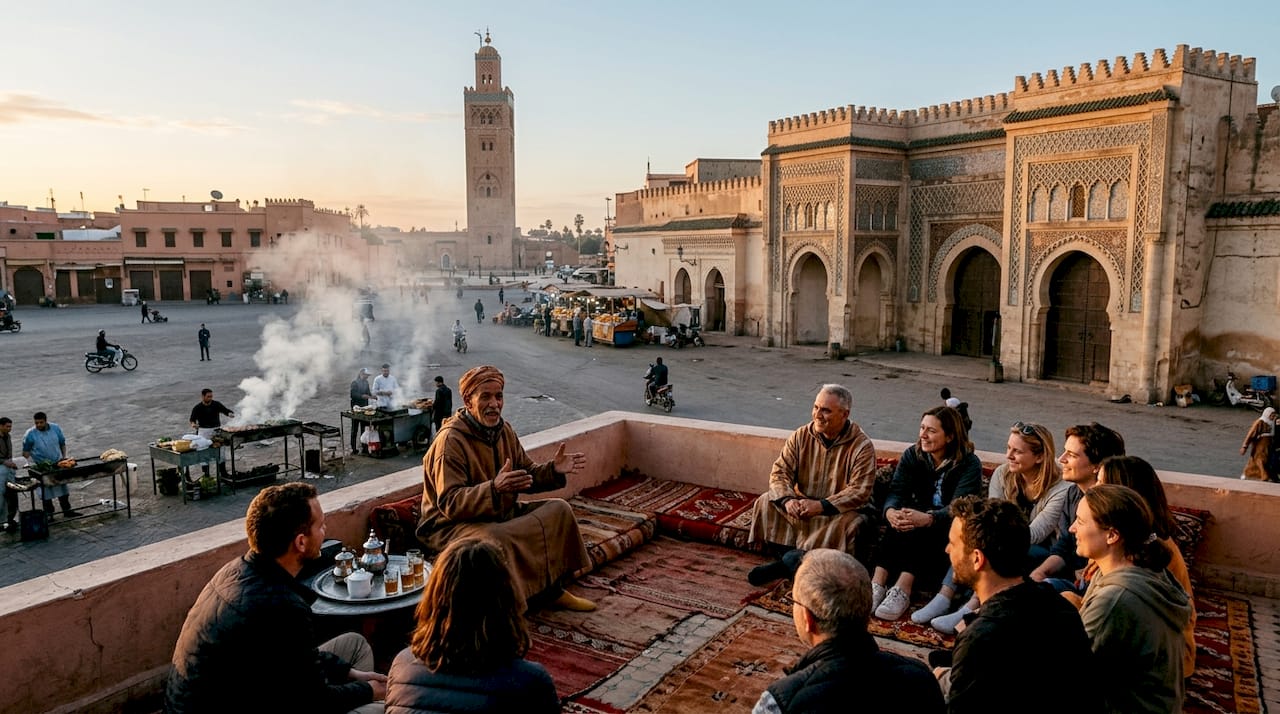
Marrakech and Fez anchor every serious Morocco travel guide for good reason. Marrakech’s Jemaa el-Fnaa square transforms from a daytime market into a full sensory theater after dark, with storytellers, musicians, and food stalls that appear only at night. Staying until after dark is not optional if you want the real experience. Fez el-Bali, the world’s largest car-free urban area, holds over 9,000 streets and lanes, and navigating Fez el-Bali without a local guide is a reliable way to spend two hours walking in circles. The Chouara Tannery, the Bou Inania Madrasa, and the Al-Attarine Souks reward visitors who slow down and look past the first layer.
Chefchaouen and the Rif Mountains
Chefchaouen’s blue-painted medina sits at roughly 600 meters elevation in the Rif Mountains, which keeps temperatures cooler than Marrakech and the crowds noticeably thinner. The town’s photogenic lanes are the obvious draw, but the surrounding hiking trails and the Spanish Mosque viewpoint above the city offer perspectives that most visitors miss entirely. Chefchaouen works best as a two-night stop rather than a day trip from Fez.
Sahara Desert and Erg Chebbi
The Erg Chebbi dunes near Merzouga represent the Morocco that most travelers picture before they arrive. A camel trek at sunset followed by a night in a desert camp, with the Milky Way overhead and no light pollution for 100 kilometers, is genuinely difficult to replicate anywhere else. The drive from Fez to Merzouga takes roughly eight hours, so building in a night at Midelt or Erfoud on the way south makes the journey part of the experience rather than a grind.
Essaouira and the Atlantic coast
Essaouira offers a completely different register from the imperial cities. The Portuguese-era ramparts, the wind-swept beach, and the relaxed medina make it a natural decompression stop before or after Marrakech. The town is also Morocco’s center for windsurfing and kitesurfing, with consistent Atlantic winds from April through October.
Rabat: the underrated capital
Rabat offers a calmer alternative to Marrakech’s intensity, with Hassan Tower, the Kasbah of the Udayas, and a medina that you can actually walk through without being followed by vendors. Rabat was named the UNESCO World Book Capital, which has added a program of literary and cultural events throughout the year. Tourism in Rabat grew only 3% year over year compared to Marrakech’s 40% surge, which translates directly into shorter lines and more authentic interactions.
- Spend at least two nights in Marrakech and two in Fez to go beyond surface-level sightseeing
- Add Chefchaouen as a transit stop between Fez and the coast rather than a separate detour
- Allocate two full days for the Sahara, including travel time from the nearest city
- Use Essaouira as a wind-down destination at the end of a longer trip
- Book popular attractions early or arrive at opening time, especially at Marrakech’s Majorelle Garden
Pro Tip: Majorelle Garden in Marrakech sells out its morning entry slots by 9 a.m. on peak days. Book online at least 48 hours ahead and arrive at opening time to beat the crowds and get the best light for photos.
How to plan accommodations for your Morocco trip
Where you sleep in Morocco shapes the entire experience. A riad in the medina puts you inside the living city. A desert camp puts you under the stars. A modern hotel puts you in comfort but outside the culture. The right choice depends on your budget, travel style, and how much sensory immersion you actually want.
Riads: the medina standard
Riads in medinas typically cost $50 to $80 per night with breakfast included, making them competitive with mid-range hotels while delivering far more character. A riad is a traditional courtyard house, usually two to four stories built around a central garden or fountain, and the best ones in Fez and Marrakech have been restored to a standard that rivals boutique hotels in Europe. The trade-off is location: medina addresses mean narrow lanes, no car access, and occasional noise from the surrounding souks. That trade-off is worth it for most travelers.
Desert camps at Erg Chebbi
Desert camp quality varies more than any other accommodation category in Morocco. Budget camps share facilities and offer basic meals. Mid-range camps run $40 to $100 per night, including dinner, breakfast, and a sunrise camel ride. Luxury camps add private en-suite tents, Berber music performances, and guided stargazing. The difference between a $45 camp and a $90 camp is not just comfort. It is privacy, meal quality, and whether your sunrise experience involves 30 other tourists or just your group.
Budget and luxury options
Dorm beds in hostels across Marrakech and Fez run $10 to $15 per night, and family-run guesthouses in smaller towns like Chefchaouen offer private rooms from $25 to $40. At the luxury end, Rabat recently added a Four Seasons and a Ritz-Carlton, both positioned near the diplomatic quarter and the Hassan Tower. These properties make Rabat a credible base for travelers who want five-star infrastructure with access to a less crowded medina. For luxury stays in Rabat, the new properties represent a genuine upgrade over what was available even three years ago.
| Lodging type | Price range | Best for |
|---|---|---|
| A riad in medina | $50–$80/night with breakfast | Authentic atmosphere, cultural immersion |
| Desert camp (mid-range) | $40–$100/night with meals | Sahara experience: group or solo travelers |
| Budget hostel or guesthouse | $10–$40/night | Cost-conscious travelers, backpackers |
| Luxury hotel (Rabat, Marrakech) | $200+/night | Comfort-first travelers, honeymooners |
Pro Tip: Book riads directly through the property rather than through large booking platforms. Owners often offer better rates for direct reservations, and you get a personal contact who can arrange airport transfers, restaurant recommendations, and medina orientation on arrival.
What practical travel tips should every visitor know?
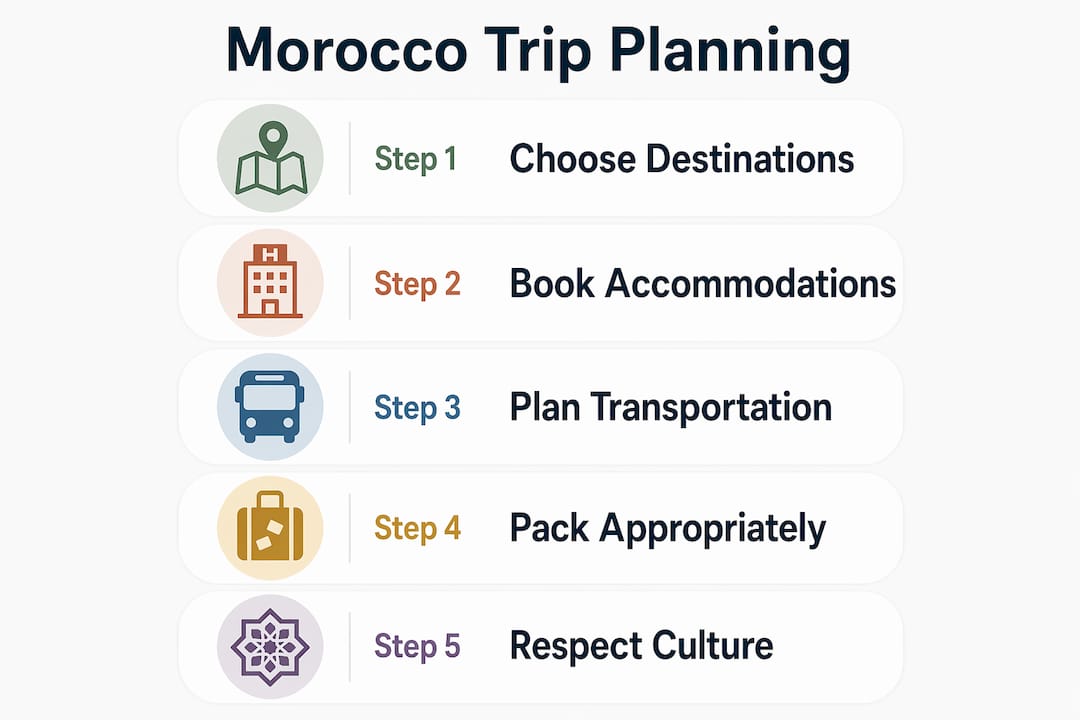
Preparation separates a smooth Morocco trip from a frustrating one. Entry requirements, transport logistics, and cultural etiquette are the three areas where under-prepared travelers consistently lose time and goodwill.
Entry requirements and visas
- Check your nationality’s visa status before booking. Citizens of the United States, the European Union, the United Kingdom, and Canada are among those who qualify for visa-free stays up to 90 days, provided your passport is valid beyond your planned departure date.
- If your nationality requires a visa, the Morocco e-visa is a single-entry permit valid for up to 180 days from issuance, allowing a maximum 30-day stay. Eligibility is nationality-dependent, so verify before applying.
- Carry a printed or digital copy of your accommodation bookings and a return or onward ticket. Border officers occasionally ask for proof of onward travel.
- Register with your country’s embassy or consulate if you plan to travel to remote areas, including the southern regions near the Algerian border.
Best time to visit Morocco
Spring from March to May and autumn from September to November offer the most comfortable temperatures across all regions. Summer in Marrakech and the Sahara regularly exceeds 40°C (104°F), which makes sightseeing genuinely unpleasant between noon and 4 p.m. Winter is mild on the coast but cold in the mountains and the desert at night, which matters if you are planning a Sahara camp stay.
Getting around Morocco
Morocco’s national rail network and CTM buses connect major cities reliably. Train fares between Casablanca and Marrakech or Rabat run $5 to $8. CTM bus fares between cities average $12 to $15. For the Sahara and smaller towns not on the rail network, shared taxis (grand taxis) or private transfers are the practical options. Renting a car gives you flexibility in the south and the mountains, but driving in medinas is not possible, and parking near them is limited.
Cultural etiquette
Dress modestly when visiting mosques, medinas, and rural areas. Shoulders and knees covered is the baseline. Non-Muslims cannot enter most Moroccan mosques, with the Hassan II Mosque in Casablanca being the notable exception. Bargaining in souks is expected and part of the social exchange, but aggressive haggling over small amounts creates friction rather than savings. Learning five words of Darija (Moroccan Arabic) or French goes further than any guidebook tip in building genuine rapport with locals.
How do you build a balanced Morocco itinerary?
The most common mistake in Morocco trip planning is treating the country like a city-hopping checklist. The distances between major destinations are real: Fez to Merzouga is eight hours; Merzouga to Marrakech is another five. Compressing too many destinations into a short trip produces long drives and shallow experiences that leave travelers exhausted rather than enriched.
A well-structured Morocco travel itinerary for 10 days looks like this:
- Days 1 to 2: Casablanca for arrival, Hassan II Mosque, and the Corniche. Casablanca is a working city, not a tourist destination, so two days is sufficient.
- Days 3 to 4: Rabat for the Hassan Tower, Kasbah of the Udayas, and the medina. Rabat’s top cities for culture credentials are underappreciated, and the city rewards slower exploration.
- Day 5: Chefchaouen via a scenic drive through the Rif Mountains. Arrive by afternoon and spend the evening in the blue medina.
- Days 6 to 7: Fez for Fez el-Bali, the tanneries, and the madrasas. Two full days is the minimum to do Fez justice.
- Days 8 to 9: Sahara via Midelt and Erfoud, with an overnight desert camp at Erg Chebbi.
- Day 10: Marrakech for Jemaa el-Fnaa, Majorelle Garden, and the souks before departure.
For travelers with seven days, an imperial cities circuit covering Casablanca, Fez, and Marrakech with a Chefchaouen detour is the most coherent option. For 14 days, a grand tour adds the Draa Valley, Ait Benhaddou, and the Dades Gorge between the Sahara and Marrakech. The Morocco travel tips that matter most at the itinerary stage are about pacing: build in at least one rest day per week, and resist the urge to add one more city.
The principle that applies to every itinerary length is this: Two nights in a destination gives you one full day. One full day in Fez is not enough. Plan accordingly.
Key takeaways
Visit Morocco rewards travelers who prioritize depth over distance, choosing fewer destinations with longer stays over a rushed circuit of every major city.
| Point | Details |
|---|---|
| Prioritize depth over distance | Two nights minimum per city prevents shallow, exhausting itineraries. |
| Book accommodations strategically | Riads at $50 to $80 per night deliver authentic culture at mid-range prices. |
| Travel in spring or autumn | March to May and September to November offer the best weather across all regions. |
| Use trains and CTM buses | Rail and bus connections between major cities cost $5 to $15 and are reliable. |
| Visit Rabat for fewer crowds | Rabat’s 3% tourism growth versus Marrakech’s 40% surge means a calmer, richer experience. |
What I’ve learned from years of sending travelers to Morocco
The travelers who come back most satisfied from Morocco are almost never the ones who covered the most ground. They are the ones who spent three nights in Fez instead of one, hired a local guide for half a day in the medina, and ate dinner at a place with no English menu. That pattern holds across every trip type we plan at Moroccotravel1, from solo backpackers to luxury honeymoon couples.
Rabat is the destination I recommend most often to travelers who are skeptical about crowds. It has everything that makes Morocco compelling: a beautiful medina, a kasbah overlooking the Atlantic, excellent food, and a pace that lets you actually absorb what you are seeing. The Four Seasons and Ritz-Carlton properties there now mean that comfort-first travelers no longer have to choose between luxury and authenticity.
The Sahara is non-negotiable for first-timers, but the camp you choose matters enormously. I have seen travelers spend a night in a budget camp surrounded by generators and shared bathrooms and leave disappointed. The experience is not the dunes. The experience is silence, stars, and a sunrise with no one else in frame. That requires spending a bit more and booking with someone who knows which camps actually deliver it.
My honest advice: resist the urge to add Essaouira, Ouarzazate, and Chefchaouen to an already full 10-day plan. Pick two of the three and do them properly. Morocco does not reward rushing. It rewards the traveler who sits in a medina cafe long enough for the city to reveal itself.
— Moroccotravel1
Plan your Morocco trip with Moroccotravel1
Moroccotravel1 designs private and custom Morocco tours built around how you actually want to travel, not a generic itinerary. Whether you are planning a 10-day family tour covering imperial cities and the Sahara, a romantic honeymoon package with riad stays and private desert camps, or an 8-day luxury tour with exclusive experiences and five-star accommodations, every itinerary is built by local experts who know the country in depth. Moroccotravel1 handles transportation, accommodation, guided tours, and activity bookings with 24/7 support throughout your trip. Explore the full range of private and custom Morocco tours and start planning a trip that goes beyond the surface.
FAQ
How many days do you need to visit Morocco?
Ten days is the practical minimum for covering Marrakech, Fez, the Sahara, and one additional destination without feeling rushed. Seven days works for an imperial cities circuit focused on Casablanca, Fez, and Marrakech.
What is the best time of year to visit Morocco?
Spring from March to May and autumn from September to November offer the most comfortable temperatures and manageable crowds across all regions, including the Sahara and the mountains.
Do US citizens need a visa to visit Morocco?
US citizens do not need a visa for stays up to 90 days. Your passport must be valid beyond your planned departure date, and proof of onward travel may be requested at the border.
Is Morocco safe for solo travelers?
Morocco is generally safe for solo travelers, including solo women, with standard urban precautions. The Canadian government travel advisory recommends normal security awareness and advises against travel near the Algerian border region.
What is a riad and why should you stay in one?
A riad is a traditional Moroccan courtyard house converted into a guesthouse or boutique hotel, typically located inside a medina. Staying in a riad places you at the center of the city’s historic fabric and costs $50 to $80 per night with breakfast at most mid-range properties.


