

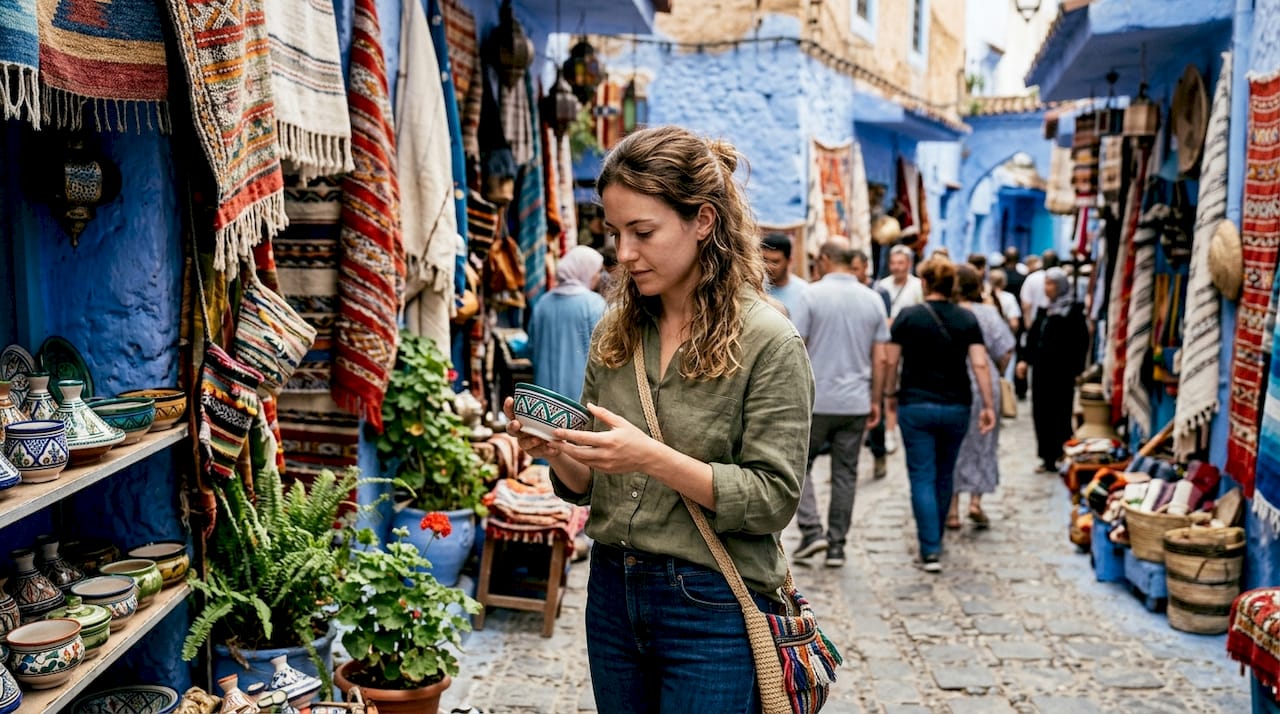
- The best Moroccan cities offer diverse experiences, from imperial heritage to coastal relaxation and desert adventures.
- Planning a focused itinerary with a few key cities ensures a deeper, more authentic exploration of the country.
Morocco is defined by its cities, each one a distinct world of ancient medinas, Atlantic coastlines, mountain villages, and Saharan gateways that no other country replicates. Marrakech, Fes, Chefchaouen, and Casablanca are the names most travelers recognize, but the full roster of best Moroccan cities to visit stretches far beyond those four. This guide covers the top Moroccan destinations from the imperial capitals to the hidden coastal gems, explains what makes each one worth your time, and gives you a practical framework for building an itinerary that matches your travel style and trip length. Whether you have seven days or three weeks, Morocco rewards every level of planning.
What are the best Moroccan cities to visit?
The best Moroccan cities span four distinct categories: imperial cities, coastal towns, mountain retreats, and desert gateways. Understanding which category fits your interests is the fastest way to narrow down your list.
Marrakech is the city most first-time visitors start with, and for good reason. Vibrant souks, Bahia Palace, and Jardin Majorelle make it a quintessential Morocco experience. The Djemaa el-Fna square transforms from a daytime market into a full outdoor theater of musicians, storytellers, and food stalls after sunset. No other city in Morocco delivers that level of sensory intensity in a single public space.
Fes is the intellectual and spiritual capital. Its medina, Fes el-Bali, is the largest car-free urban area in the world and contains the Chouara Tannery, the Al-Qarawiyyin University (founded in 859 AD and recognized as the world’s oldest continuously operating university), and hundreds of mosques. Fes rewards slow travelers who are willing to get lost and find their way back.
Casablanca is Morocco’s economic engine and its most modern city. The Hassan II Mosque, built on a promontory over the Atlantic, holds 105,000 worshippers and is one of the largest mosques on earth. Casablanca also offers the best restaurant scene in the country, with French-Moroccan fusion dining that reflects the city’s colonial and cosmopolitan history.
Chefchaouen is the most picturesque city in Morocco, ranked highest among travelers seeking photography and calm atmospheres. Its blue-washed streets in the Rif Mountains create an atmosphere unlike anywhere else in North Africa. The pace here is slow, the light is extraordinary in the late afternoon, and the surrounding hiking trails into the Rif are genuinely underrated.
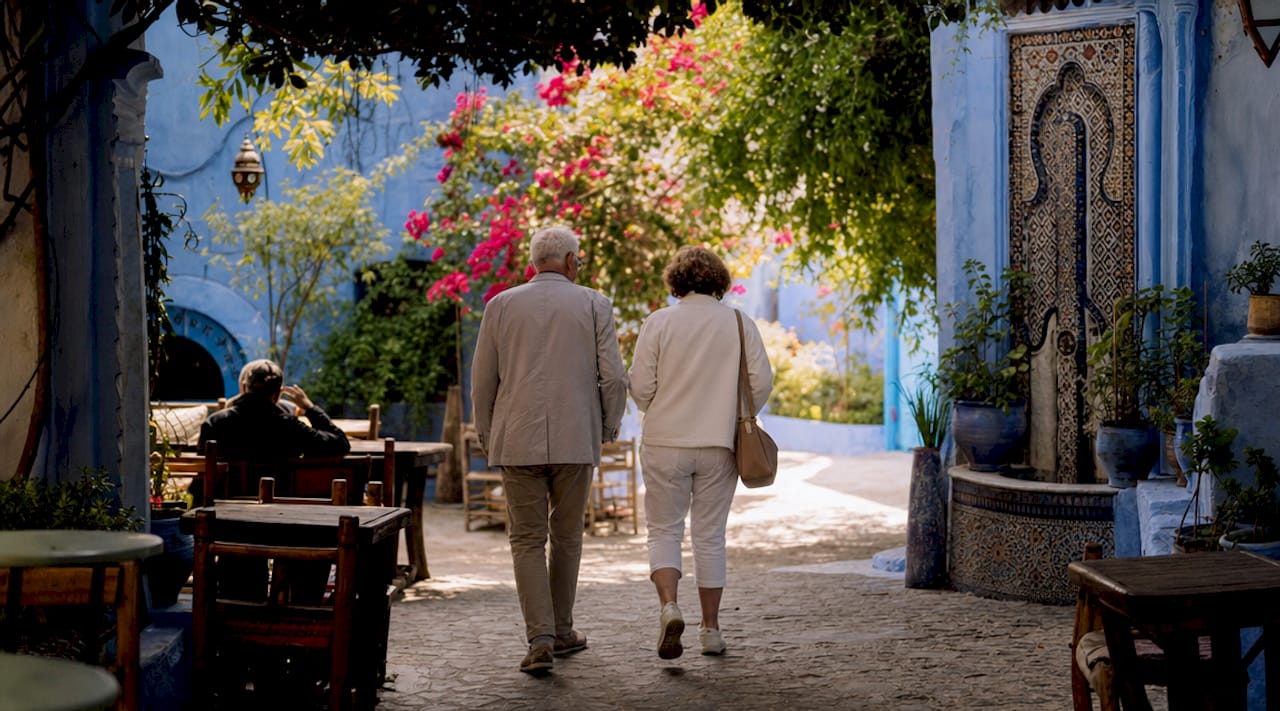
Essaouira is rated the best coastal city for relaxation, known for its Portuguese ramparts, Atlantic winds, and a medina that feels lived-in rather than staged for tourists. It draws surfers, artists, and musicians in equal measure. The Gnawa music festival held here each June is one of the most authentic cultural events in North Africa.
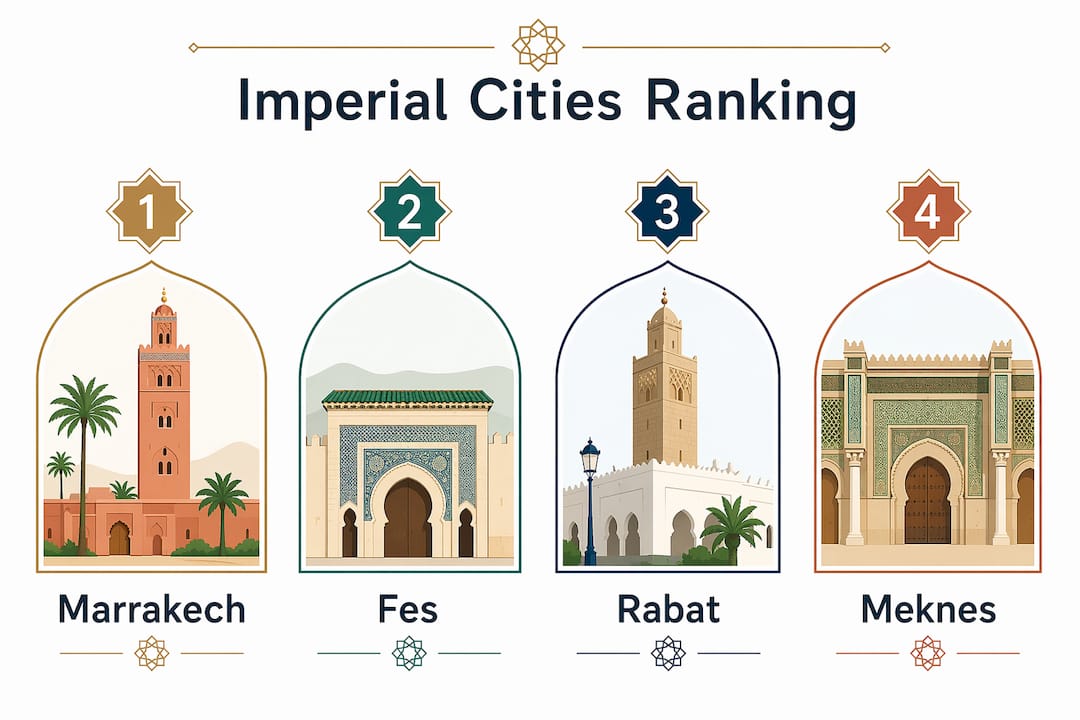
Rabat, Morocco’s capital, combines a working royal palace, the Kasbah of the Udayas, and the unfinished Hassan Tower into a city that feels dignified and unhurried. Meknes sits nearby and offers imperial grandeur at a fraction of Marrakech’s tourist traffic. Tangier in the north carries a literary history tied to Paul Bowles and William S. Burroughs and serves as the natural gateway for travelers arriving from Spain.
Merzouga is the desert gateway city near the Erg Chebbi dunes, where sand dunes exceed 450 feet in height. Camel trekking here is more comfortable and accessible than horseback riding, making it the preferred way to reach overnight desert camps.
- Marrakech: Souks, palaces, Djemaa el-Fna, Jardin Majorelle
- Fes: Al-Qarawiyyin, Chouara Tannery, car-free medina
- Casablanca: Hassan II Mosque, modern dining, Atlantic waterfront
- Chefchaouen: Blue streets, Rif Mountain hikes, photography
- Essaouira: Ramparts, surf beaches, Gnawa music culture
- Rabat: Kasbah of the Udayas, Hassan Tower, royal capital
- Meknes: Bab Mansour gate, Mausoleum of Moulay Ismail
- Tangier: Literary history, Strait of Gibraltar views, Cap Spartel
- Merzouga: Erg Chebbi dunes, camel trekking, Sahara camps
Pro Tip: Book your Marrakech riad at least six weeks in advance during March through May and September through November. Those shoulder seasons draw the highest visitor numbers, and the best riads inside the medina sell out faster than hotels on booking platforms.
How to choose which Moroccan cities to explore
Matching cities to your trip length and travel style prevents the most common Morocco mistake: trying to see everything and experiencing nothing deeply. Here is a framework that works for most travelers.
For a one-week trip, focus on two or three cities maximum. The classic pairing is Marrakech plus Chefchaouen, with a night in Fes between them. This combination gives you the high-energy medina experience, the mountain calm, and a taste of Morocco’s spiritual capital without exhausting yourself on long transfers.
For a two-week trip, you can add Essaouira as a coastal reset after Marrakech, include a two-night desert excursion to Merzouga, and finish in Fes or Rabat. Mixing contrasting destinations like ancient medinas with coastal or mountain areas produces richer travel experiences and measurably reduces burnout. That contrast is the single most important principle in Morocco itinerary planning.
For three weeks or longer, build in Meknes, Tangier, and at least one lesser-known town like Taroudant or Ouarzazate. Repeat visitors consistently report that their second trip, focused on slower and less-visited places, was more rewarding than their first.
Here is a practical sequence for a two-week itinerary:
- Arrive in Casablanca and spend one day at Hassan II Mosque and the Corniche
- Travel to Marrakech by train (three hours), spend three nights
- Day trip or overnight to Essaouira from Marrakech (three-hour drive)
- Head east to Merzouga for two nights in the desert
- Drive or take a shared taxi north through the Draa Valley to Fez
- Spend two nights in Fes exploring the medina with a local guide
- Day trip to Meknes and Volubilis from Fes
- Travel north to Chefchaouen for two nights
- Return to Casablanca or Tangier for departure
Pro Tip: Never schedule back-to-back intense Medina days without a buffer. One day in Fes followed immediately by one day in Marrakech will exhaust even experienced travelers. Place Essaouira or Chefchaouen between your two most intense cities to reset your energy.
For first-timers, Marrakech is the right starting point because its infrastructure for tourists is the most developed. For repeat visitors, Morocco travel tips consistently point toward the north and south as the regions that reward deeper exploration.
How do Morocco’s imperial cities compare?
Morocco has four imperial cities, each designated as a former seat of royal power: Marrakech, Fes, Rabat, and Meknes. They share a heritage of grand architecture and medina culture but deliver very different visitor experiences.
Rabat and Meknes are often overlooked but offer authentic, less touristy Moroccan history and architecture, making them ideal for travelers who want cultural depth without the crowds. That distinction matters enormously when you are planning where to spend your limited days.
| Imperial city | Signature landmark | Crowd level | Best for |
|---|---|---|---|
| Marrakech | Bahia Palace, Djemaa el-Fna | Very high | First-timers, culture, nightlife |
| Fes | Chouara Tannery, Al-Qarawiyyin | High | History, architecture, medina depth |
| Rabat | Kasbah of the Udayas, Hassan Tower | Low to moderate | Calm exploration, royal heritage |
| Meknes | Bab Mansour gate, Mausoleum of Moulay Ismail | Low | Authentic atmosphere, day trips to Volubilis |
Marrakech is the most accessible and the most commercially developed. Its medina has been shaped by tourism for decades, which means excellent riad accommodation and guided experiences but also persistent touts in the souk areas. Fes is harder to navigate but more architecturally intact. Its medina contains over 9,000 streets and alleys, and navigating Fes’s medina genuinely requires a guide to avoid confusion and maximize cultural insights. That is not a tourist cliché. It is practical advice from every experienced traveler who has tried to do it alone.
Rabat carries a different energy entirely. As the functioning capital, it has government ministries, embassies, and a population that is not oriented around tourism. The Kasbah of the Udayas overlooks the Atlantic at the mouth of the Bou Regreg River and is one of the most photogenic spots in Morocco that most visitors never see. Meknes, built by Sultan Moulay Ismail in the 17th century, contains the Bab Mansour gate, widely considered the finest example of Moroccan monumental architecture. It is 45 minutes from Fes by train and almost always visited as a day trip, which is a mistake. Meknes deserves at least one overnight stay to experience it after the day-trippers leave.
What are the best lesser-known Moroccan cities to visit?
Beyond the famous names, Morocco contains a second tier of destinations that deliver some of the country’s most authentic experiences. These are the must-see places in Morocco that most itineraries skip entirely.
Volubilis is not a city in the modern sense but a Roman archaeological site north of Meknes that functions as a full-day destination. The Roman ruins of Volubilis are a UNESCO World Heritage Site with well-preserved mosaics and ancient architecture that contrast sharply with everything else Morocco offers. Standing inside a 2,000-year-old Roman basilica in North Africa reframes your entire understanding of the region’s history.
Ifrane sits in the Middle Atlas Mountains at 5,500 feet elevation and looks nothing like the rest of Morocco. Built by the French during the Protectorate era, it has alpine-style chalets, a university campus, and a ski resort at nearby Michlifen. Moroccan families vacation here in summer to escape the heat of the lowland cities. Most foreign tourists have never heard of it.
Taroudant is often called “little Marrakech” because it has a walled medina and a souk culture that mirrors the larger city but at a fraction of the scale and tourist density. It sits in the Souss Valley south of the High Atlas Mountains and makes an excellent base for exploring the Anti-Atlas range.
Ouarzazate is the gateway to the Draa Valley and the Sahara, known internationally as the filming location for Gladiator, Game of Thrones, and Lawrence of Arabia. The Aït Benhaddou ksar nearby is a UNESCO-listed fortified village that has appeared in more films than any other Moroccan location.
Azemmour is a small Atlantic coastal town north of El Jadida with Portuguese-era walls, a medina painted in shades of blue and white, and almost no tourist infrastructure. It is what Essaouira was before it became famous.
Here is a quick reference for the top lesser-known destinations:
- Volubilis: Roman ruins, UNESCO mosaics, half-day from Meknes
- Ifrane: Alpine architecture, Middle Atlas setting, summer retreat
- Taroudant: Walled medina, Souss Valley, low tourist traffic
- Ouarzazate: Film studios, Aït Benhaddou ksar, desert gateway
- Azemmour: Portuguese walls, Atlantic coast, undiscovered medina
- Merzouga: Erg Chebbi dunes, camel trekking, Sahara overnight camps
These towns reward travelers who have already seen the headline cities and want to go deeper. They also work well as add-ons within a longer itinerary. Taroudant pairs naturally with Agadir. Ouarzazate connects Marrakech to the desert route. Ifrane fits between Fes and Meknes on a northern circuit. For a deeper look at combining these destinations with the right accommodations, the top cities in Morocco guide from Moroccotravel1 covers practical logistics for each pairing.
Key takeaways
Morocco’s most rewarding itineraries combine at least one imperial city, one coastal or mountain town, and one lesser-known destination to capture the full range of what the country offers.
| Point | Details |
|---|---|
| Start with Marrakech | It offers the most developed tourist infrastructure and is the best entry point for first-time visitors. |
| Balance intensity with calm | Pair high-energy medina cities like Fes with relaxed spots like Essaouira or Chefchaouen to avoid burnout. |
| Don’t skip the imperial cities | Rabat and Meknes offer authentic history with far fewer crowds than Marrakech or Fes. |
| Add one hidden gem | Destinations like Taroudant, Ifrane, or Azemmour deliver authentic Morocco without the tourist saturation. |
| Use guides in complex medinas | Fes in particular requires a local guide to navigate effectively and gain real cultural context. |
What I’ve learned from planning Morocco trips
After years of helping travelers build Morocco itineraries through Moroccotravel1, the pattern I see most often is this: people overbook their first trip and underbook their second. The first trip tries to hit Marrakech, Fes, Chefchaouen, Essaouira, and the desert in ten days. The second trip picks two cities and goes deep.
The travelers who enjoy Morocco most are the ones who treat it as a place to inhabit rather than a checklist to complete. Spending three nights in Fes instead of one means you can visit the tannery twice, once in the morning light and once in the afternoon, and the difference is remarkable. Spending two nights in Chefchaouen instead of one means you can hike to the Spanish mosque above the city at sunrise without rushing back for a bus.
Seasoned travelers caution that Marrakech and Fes are genuinely intense and recommend balancing them with more relaxed cities. I agree completely, and I would add that the transition between those cities matters as much as the cities themselves. The drive from Marrakech through the Tizi n’Tichka pass to Ouarzazate is one of the most spectacular road journeys in Africa. The train from Casablanca to Fes passes through landscapes that most travelers never see because they are focused on the destination rather than the route.
My honest recommendation: resist the urge to see everything. Morocco is not a country you finish. It is a country you return to.
— Moroccotravel1.com
Plan your Morocco trip with expert-curated packages
Moroccotravel1 designs itineraries that cover the best cities in Morocco without the guesswork. The 14-day Morocco Grand Tour covers Casablanca, Marrakech, Fes, Chefchaouen, and the Sahara with expert local guides, hand-picked riad accommodations, and private transfers between every destination. For families, the 10-day Morocco Family Tour balances cultural city visits with activities designed for all ages, including cooking classes, camel rides, and guided medina walks. Every package includes 24/7 support and can be customized to your travel dates and group size. If the Sahara is your priority, the 9-day desert tour runs from Marrakech through the Draa Valley to Erg Chebbi and back. Moroccotravel1 handles every detail so you can focus on experiencing Morocco rather than managing logistics.
FAQ
What is the best city to visit in Morocco for first-timers?
Marrakech is the best starting point for first-time visitors because it offers the most developed tourist infrastructure, including guided tours, riad accommodations, and direct international flights. Its Djemaa el-Fna square, Bahia Palace, and Jardin Majorelle deliver an immediate and memorable introduction to Moroccan culture.
How many days do you need to explore Morocco’s top cities?
Two weeks gives you enough time to visit four to five cities with meaningful depth, including Marrakech, Fes, Chefchaouen, Essaouira, and a desert excursion to Merzouga. One week is sufficient for two to three cities if you avoid rushing between them.
Is Chefchaouen worth visiting in Morocco?
Chefchaouen is worth visiting for its blue-painted streets, Rif Mountain setting, and calm atmosphere that contrasts sharply with Morocco’s busier imperial cities. It ranks as the most picturesque city in Morocco among photographers and travelers seeking a quieter experience.
Do you need a guide to visit Fes?
A local guide is strongly recommended for Fes because its medina contains over 9,000 streets and is the largest car-free urban area in the world. Without a guide, most visitors spend significant time disoriented rather than engaging with the city’s cultural and architectural highlights.
What is the best lesser-known Moroccan city to visit?
Taroudant offers the most complete lesser-known experience, with a walled medina, active souk culture, and proximity to the Anti-Atlas Mountains, all with a fraction of the tourist traffic found in Marrakech. Volubilis and Ifrane are strong alternatives for travelers interested in Roman history or mountain scenery, respectively.


