


- Morocco’s ideal travel time varies by region and activity, with spring and fall offering the best conditions for most travelers.
- Desert trips are safest between October and April, while the Atlantic coast remains pleasant in summer, especially for beach holidays.
Morocco is not a one-season country. The best time to go to Morocco depends almost entirely on where you are going and what you want to do when you get there. A traveler planning Sahara camping has completely different needs than someone surfing the Atlantic coast or trekking the High Atlas. This guide cuts through the oversimplified advice and breaks down Morocco’s travel seasons by region, activity, and personal priority so you can make a decision that actually fits your trip.
Table of Contents
- Key takeaways
- Best time to go Morocco: understanding the climate first
- Seasonal breakdown: what each season actually feels like
- Best months by activity and experience
- Planning around Ramadan, crowds, and budget
- My honest take on timing a Morocco trip
- Plan your trip with Moroccotravel1
- FAQ
Key takeaways
| Point | Details |
|---|---|
| Spring is peak season for most | March through May offers the most balanced weather across all regions for the widest range of travelers. |
| Desert trips need careful timing | Plan Sahara visits between October and April to avoid extreme heat and enjoy clear stargazing nights. |
| Summer suits the coast only | Atlantic towns like Essaouira stay pleasant while inland cities like Marrakech regularly exceed 40°C. |
| October is the logistics winner | Multi-region itineraries work best in October when heat recedes and mountain passes stay open. |
| Ramadan shifts every year | Check dates before booking since Ramadan changes the rhythm of medinas and restaurant hours significantly. |
Best time to go Morocco: understanding the climate first
Most travel sites give you a single answer. The reality is that Morocco’s weather regimes vary dramatically from north to south and from coast to mountain. Understanding this is what separates a great trip from a frustrating one.
The northern and coastal zones
Morocco’s northern coast and cities like Fes and Chefchaouen experience a Mediterranean climate. Winters are mild and occasionally rainy, rarely dropping below 8°C at night. Summers are warm and dry but not brutal, especially near the sea. This region behaves almost like southern Spain in terms of seasonal rhythm.
The Atlas Mountains
The Atlas range is its own world. The High and Middle Atlas receive heavy snowfall in winter, and that snow can linger on higher trails well into May. Anyone planning serious trekking in Toubkal or the Dadès Valley needs to factor this in. Late spring and early fall are the sweet spots for mountain travel, when passes are clear and temperatures at altitude are comfortable.
| Region | Best Travel Months | Conditions to Watch |
|---|---|---|
| Northern coast and Rif | March to May, September to November | Summer humidity, winter rain |
| High Atlas | May to June, September to October | Snow until May, hot in July |
| Sahara Desert | October to April | Extreme heat June to September |
| Atlantic coast | June to September | Strong winds in Essaouira |
| Imperial cities | March to May, October | Summer heat above 40°C |
The Sahara and deep south
The Sahara operates on entirely different rules. Summer temperatures in the Deep South can hit 48°C. That is not discomfort. That is a health risk. The further south you go toward Merzouga and Zagora, the more extreme the seasonal contrast becomes. Atlantic coastal influences fade, and you are dealing with pure desert thermodynamics.
Pro Tip: If you are combining multiple regions in one trip, choose your most temperature-sensitive destination first and build the rest of the itinerary around it. The Sahara has the narrowest comfort window, so let it anchor your dates.
Seasonal breakdown: what each season actually feels like
Spring (March to May)
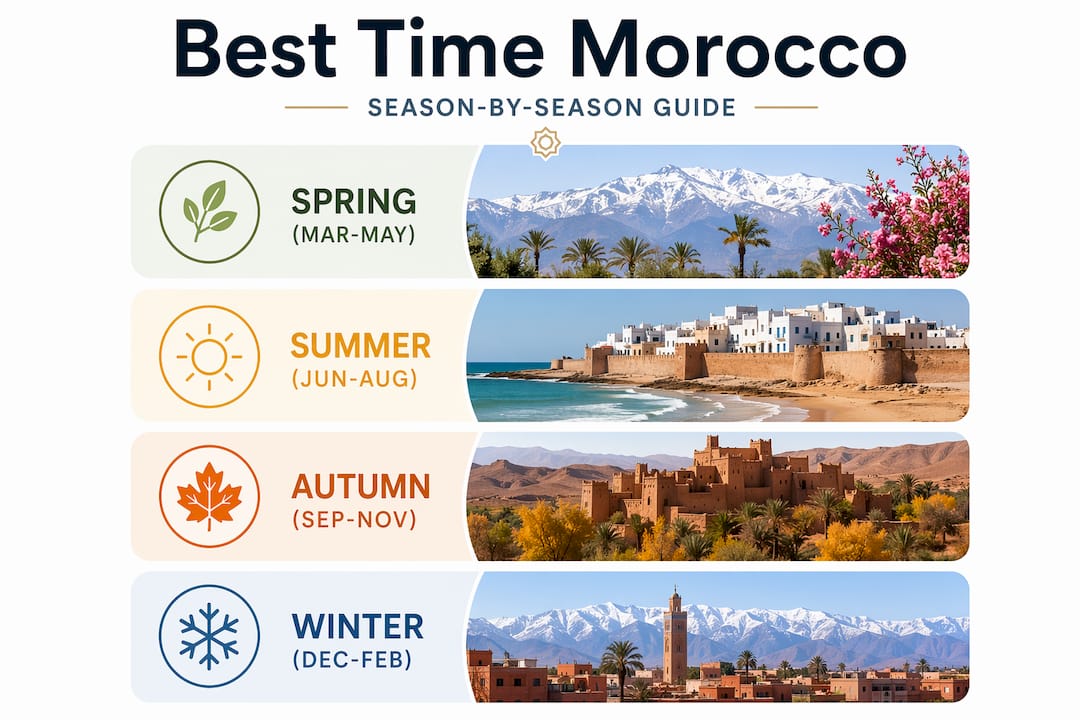
Spring is widely considered the best overall time to visit Morocco, and for good reason. Temperatures in major cities average between 20 and 28°C. The Atlas Mountains are thawing, wildflowers are out in the valleys, and the Sahara is warm without being dangerous. You can visit Marrakech in the morning, drive into the mountains in the afternoon, and not feel punished by either.
Spring suits first-time visitors most of all. City touring, desert excursions, and mountain day trips all work comfortably within the same itinerary. The Rose Festival in the Dadès Valley typically falls in May and is one of the most visually striking cultural events Morocco offers.
Summer (June to August)
Summer is a split story. Inland cities like Marrakech and Fes regularly reach 38 to 42°C, and the desert can climb to 48°C. If your plan involves walking medinas or riding camels at noon, summer will wear you down fast. That said, the Atlantic coast is a completely different experience. Essaouira sits at 22 to 26°C even in July, cooled by consistent ocean breezes. Agadir and Taghazout draw surfers and beach travelers precisely because the coast avoids the inland heat.
Summer works for you if your trip is coastal-focused. It does not work if you want to cover multiple regions or spend meaningful time in the interior.
Autumn (September to November)
Autumn is arguably the most underrated window for Morocco travel. The summer heat pulls back in September, and by October the country is genuinely pleasant across almost every region. Crowds thin out compared to spring, prices drop slightly, and the light quality in the afternoons is exceptional for photography. This is the ideal period for multi-region trips that combine cities, mountains, and desert in a single itinerary.
Here is what autumn has going for it:
- Imperial cities like Fes and Marrakech are walkable again without early morning starts
- Desert tours become possible from October onward without heat risk
- Mountain trails are clear and the Atlas valleys are at their most colorful
- Accommodation costs drop from summer peak rates
- The Fes Festival of World Sacred Music sometimes extends into fall programming
Winter (December to February)
Winter is misunderstood. Many travelers skip Morocco in winter, which is actually an argument for going. Marrakech averages 18°C on winter days, the souks are quiet, and riads offer lower rates. The Sahara is at its most beautiful during winter nights, when temperatures drop enough to make campfire evenings genuinely magical and stargazing is exceptional.
The tradeoff is the Atlas Mountains. High-altitude routes and some passes can be inaccessible. Northern Morocco sees its rainiest months between November and February. If your trip stays in the low-altitude south or the Sahara region, winter is a surprisingly rewarding season.
Best months by activity and experience
Choosing your travel dates gets much easier when you match months to your priorities rather than searching for a universally “best” time.
For Sahara desert tours and camping
The most comfortable window for Sahara visits runs from October through April. The temperature balance between warm days and cool nights is what makes desert camping worthwhile. July and August desert trips mean scorching midday rides and nights that barely cool off. For a 9-day Marrakech to Sahara Desert tour, October and March are the standout months.
- October offers the best balance of day warmth and comfortable evening temperatures for campfire gatherings
- November through February delivers the clearest skies and coldest nights, ideal for serious stargazing
- March and April bring warming days and lush oasis landscapes as spring green briefly touches the desert edges
- Avoid June through September for any Sahara-centered itinerary unless you are specifically heat-adapted
For Atlas Mountain trekking
Planning a trip that combines the Atlas and Sahara requires finding months that work for both. Mountain snow can persist until May, making this the most restrictive element in itinerary planning. September and October check both boxes: Atlas trails are clear and dry, and the Sahara is just entering its comfortable season.
If the Toubkal summit is on your list, June is the earliest reliable month for a snow-free ascent. Late September gives you the clearest trails with the added bonus of post-summer quiet in mountain villages.
Pro Tip: Book your mountain guides and mule support at least two months ahead for the May to June window. It fills up fast as spring trekkers and school groups converge on the same narrow season.
For imperial cities and cultural exploration
Fes, Marrakech, Meknes, and Rabat are year-round destinations, but the experience varies sharply by season. The sweet spots are March to May and October to November. Temperatures in that range let you spend full days in the medinas without retreating indoors by noon. Visiting for luxury travel in spring also aligns with festivals, cultural events, and riad gardens at their peak.
For coastal beach holidays and surfing
The Atlantic coast from Agadir to Essaouira and up through the Rabat region has a genuinely long beach season. Agadir stays warm from May through October. Taghazout, Morocco’s surf capital, has a broader window. December through March brings consistent Atlantic swells that serious surfers prioritize. For casual beach tourism, June through September is comfortable and reliable.
Planning around Ramadan, crowds, and budget
The Ramadan factor
Ramadan shifts roughly 11 days earlier each year, which means it rotates through all seasons over time. During Ramadan, many local restaurants close during daylight hours, some music venues quiet down, and the pace of medinas changes noticeably. Tourist restaurants and hotels continue operating normally, but the street-food culture that many travelers love becomes harder to access until iftar in the evenings.
This is not a reason to avoid Morocco during Ramadan. Watching cities come alive after sunset, the communal atmosphere of iftar meals, and the quieter daytime streets offer an authentic experience you cannot find at any other time. But you should go in knowing what to expect rather than arriving surprised that your favorite lunch spot is shuttered.
Key Morocco travel tips for navigating the calendar:
- Check the projected Ramadan dates before booking any trip between 2026 and 2030, since it will fall in different seasons across that window
- Book riads and hotels well in advance for March to May, as this is when European and American travelers converge
- Consider a shoulder-season trip in November or late February to hit mild weather with significantly thinner crowds
- For the Sahara specifically, avoid the Eid al-Adha holiday period if you want smaller desert camp groups
Managing peak crowds
“Spring peak” means Marrakech’s Jemaa el-Fna Square is packed and popular riads sell out months in advance. The ideal season to visit Morocco for avoiding this crunch while keeping good weather is early October. You get almost all the spring benefits without the spring crowd levels.
Budget and off-season advantages
Winter offers warm Sahara nights and lower accommodation prices across the country. A riad that runs $200 per night in April may be available for $120 in January. Flights from North America and Europe also drop significantly outside the April to August window. If budget is a major factor in your planning, combining a winter trip focused on the south and Sahara with a few nights in Marrakech gives you the best of both worlds at the lowest cost.
My honest take on timing a Morocco trip
I’ve spent years helping travelers plan Morocco itineraries, and the single biggest mistake I see is treating the country like one destination with one season. Morocco is three countries in one, climactically speaking. The coast, the mountains, and the desert do not agree on weather, and the traveler who ignores that ends up compromising on everything.
What I’ve found works best is committing to a region-first approach before locking in dates. Ask yourself which experience is most important to you. If the answer is the Sahara, pick a month between October and April and build outward from there. If it is the Atlas, work around the mountain conditions. If it is the cities and culture, almost any month outside of peak summer works, with spring and fall being the most rewarding.
I’ve also seen travelers discover that the less obvious windows give them the best memories. A February trip through the south, camping in the Sahara under cold clear skies with almost no other tourists around, often beats a crowded April version of the same route. The logistics of multi-region trips get easier when you accept that there is no perfect month, only the best month for your specific priorities.
Be flexible with the first and last days of your trip. Morocco’s weather is more variable than the averages suggest, and building in flexibility often turns a weather delay into an unexpected local experience.
— Moroccotravel1.com
Plan your trip with Moroccotravel1
Knowing when to go is only half the equation. The other half is having an itinerary that actually takes advantage of the season. At Moroccotravel1, every package is built around the optimal travel window for the regions involved. The 14-day Morocco Grand Tour covers imperial cities, Atlas valleys, and the Sahara with scheduling that avoids the worst of each region’s extremes. The 10-day family tour is designed for the spring and fall windows when temperatures work for all ages. From honeymoon packages in luxury desert camps to guided Atlas trekking departures, every Moroccotravel1 itinerary includes local expert guidance on timing, accommodations suited to each season, and 24/7 support throughout your trip. Reach out to the team to build a custom schedule around your ideal travel dates.
FAQ
What is the best overall month to visit Morocco?
October is considered the easiest month for a multi-region Morocco trip, with receding summer heat, open mountain passes, and comfortable desert temperatures all converging at once.
Can you visit the Sahara in summer?
It is not recommended. Desert temperatures can reach 48°C in summer, making midday travel and outdoor activities a genuine health risk. The comfortable Sahara visiting window runs from October through April.
Is Morocco good to visit in winter?
Yes, particularly the South and Sahara regions. Marrakech averages 18°C on winter days, prices drop, and the desert nights are ideal for stargazing. The main limitation is snow in the High Atlas, which can close higher mountain trails.
How does Ramadan affect a Morocco trip?
During Ramadan, local restaurants close during daylight hours, and some medina businesses run on reduced schedules. Tourist facilities stay open, but the street-food experience changes. Checking the annual Ramadan dates before booking is a practical step for any Morocco itinerary.
When is the best time to visit Morocco for hiking?
Late spring (May to June) and early fall (September to October) are the optimal windows for Atlas Mountain trekking. Snow clears from high trails by late May, and fall brings dry conditions with cooler temperatures before winter sets in.


