


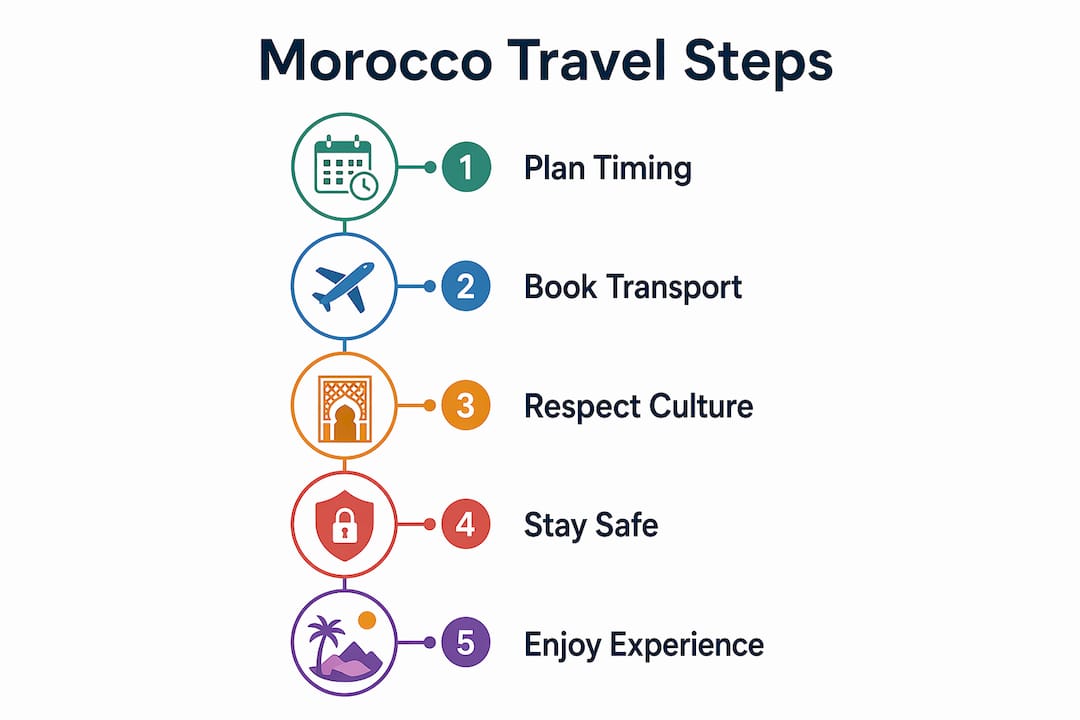
- Travelers should plan their visit during spring or autumn for ideal weather in Morocco’s cities, mountains, and desert.
- Using reliable transportation, dressing modestly, and hiring licensed guides help ensure a safe, respectful, and enjoyable trip.
Morocco is one of the most rewarding countries to visit, and the right traveling Morocco tips will determine whether your trip feels magical or exhausting. Marrakech, Fez, and the Sahara Desert each demand a different approach to timing, transport, and cultural conduct. First-time visitors who skip the prep often spend their first two days lost in medinas, overpaying for taxis, and offending locals without realizing it. This guide covers everything you need: when to go, how to get around, what to wear, and how to stay safe.
What are the best travel Morocco tips for first-timers?
The single most important Morocco travel advice is this: plan your timing and cultural conduct before you book anything else. Morocco rewards prepared travelers and punishes impulsive ones. A visitor who shows up in August without a plan will face 100°F heat in Fez, aggressive touts in Marrakech’s Djemaa el-Fna square, and no desert excursion worth taking because the Sahara is genuinely dangerous in peak summer. A visitor who arrives in April with modest clothing, a downloaded offline map, and a rough Morocco itinerary will have an entirely different experience.
The ideal first trip runs 7–10 days. That window gives you enough time to cover two or three cities plus a desert or mountain excursion without burning out. Five days works if you’re focusing on a single region like Marrakech and the Atlas Mountains. Fourteen or more days opens up the full circuit: Casablanca, Rabat, Fez, Chefchaouen, the Sahara, and the southern coast.
Named entities matter here. The ONCF rail network, the Djemaa el-Fna square in Marrakech, the Bou Inania Madrasa in Fez, and the Erg Chebbi dunes near Merzouga are the anchors of any serious Morocco travel guide. Know them before you land.
What is the best time to visit Morocco?
Spring and autumn are the best seasons to visit Morocco. March through May and September through November deliver mild daytime temperatures, cool nights, and manageable tourist crowds. That combination makes sightseeing in Fez’s medina, trekking in the High Atlas, and sleeping in a Sahara desert camp genuinely comfortable.
Summer is a different story. Inland cities like Fez and Marrakech regularly hit 104°F in July and August. The heat makes long medina walks miserable and limits outdoor activity to early morning and late evening. Coastal towns like Essaouira and Agadir stay cooler thanks to Atlantic breezes, so summer beach trips are viable. Desert excursions in summer are not recommended for most travelers.
Winter brings its own trade-offs:
- December through February offers lower prices and thinner crowds in cities
- Mountain passes in the High Atlas can close due to snow, cutting off some southern routes
- Nighttime temperatures in the Sahara drop sharply, sometimes below freezing
- Coastal destinations remain pleasant and accessible year-round
Pro Tip: Book your Sahara Desert camp for late March or early October. You get warm days, cold nights that feel dramatic rather than dangerous, and sunrises over the dunes without the summer haze.
The seasonal weather extremes directly affect which activities are available and how comfortable you’ll be. Spring and autumn are not just “nice to have.” They are the difference between a trip you’ll remember fondly and one you’ll spend recovering from.
How do you navigate Moroccan transportation?
Morocco’s transport system is more organized than it looks from the outside. The ONCF rail network is the backbone of intercity travel. The Casablanca to Marrakech train takes about 3 hours and costs roughly $18–$30 USD. Trains are air-conditioned, punctual on major routes, and far more comfortable than long-distance buses for the same corridors. Book ONCF tickets online in advance during spring and autumn when trains fill up.
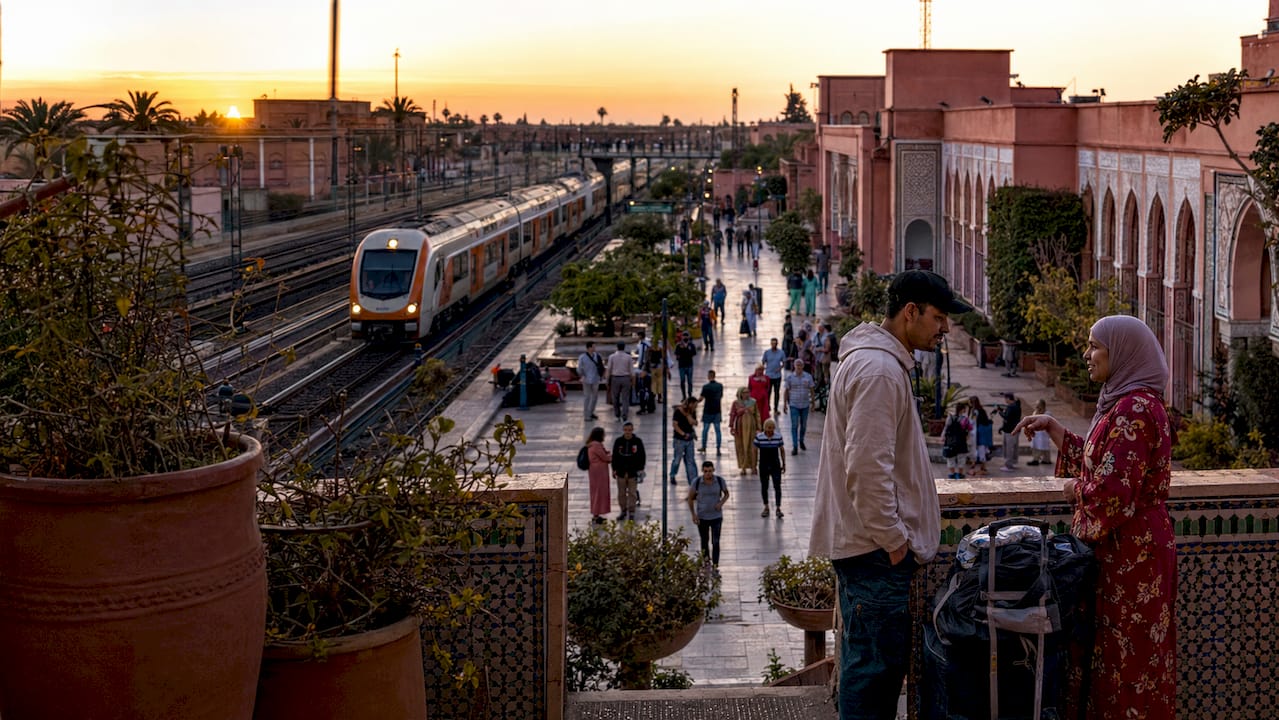
For routes the train doesn’t cover, like Marrakech to Merzouga or Fez to Chefchaouen, your options are long-distance buses (CTM and Supratours are the reliable operators), shared grand taxis, or private transfers. CTM buses are the safest and most comfortable bus option. Supratours connects train stations to towns the rail doesn’t reach.
Here’s how to handle taxis without getting overcharged:
- Petit taxis operate within cities. They use meters in theory. In practice, agree on a price before you get in, especially in Marrakech.
- Grand taxis are shared intercity vehicles. They leave when full, typically six passengers. Negotiate the price per seat, not the whole car, unless you want to pay for all seats.
- Ride-hailing apps like Careem work in Casablanca and Rabat. They don’t operate reliably in Fez or Marrakech’s medina areas.
- Private transfers booked through a reputable agency cost more but eliminate all negotiation stress, especially useful for airport arrivals.
Renting a car unlocks southern Morocco, the Draa Valley, and coastal routes that public transport barely touches. Driving in cities is chaotic by American standards but follows its own logic. Roundabouts are everywhere, and locals treat them as yield-to-whoever-is-bolder situations. Outside cities, roads are generally good. Carry at least 1,000 MAD cash for on-the-spot fines at police checkpoints. Checkpoints are common, and paying immediately is standard practice.
Pro Tip: Download Google Maps offline before you leave your riad each morning. GPS in medinas is unreliable because street names are inconsistent and alleys don’t always appear correctly. When you’re lost, ask a shopkeeper using a landmark, not a street name.
What cultural etiquette should travelers know before visiting Morocco?
Moroccan culture is warm, generous, and deeply rooted in Islamic tradition. Respecting that tradition is not optional. It’s the single most effective thing you can do to improve every interaction you have.
Clothing is the most visible signal of respect:
- Cover shoulders and knees in medinas, mosques, and rural areas
- Women traveling solo benefit most from dressing modestly, which significantly reduces street harassment
- Men in shorts are generally tolerated in tourist areas but draw attention in conservative towns
- Swimwear belongs on the beach, not in the street or market
Bargaining in souks is expected and even enjoyable once you understand the rules. Start at 30–40% of the asking price and expect to settle around 50–60%. The first price a vendor quotes is never the real price. Walking away slowly often brings the price down further. Never bargain aggressively for something you don’t intend to buy. That wastes everyone’s time and creates bad feelings.
Touts and unsolicited “guides” are a reality in Marrakech and Fez. The standard approach is a firm, calm “no thank you” repeated once. Do not engage with follow-up questions, do not explain yourself, and do not make eye contact after the first refusal. Engaging even briefly signals that you might be persuadable.
Photography requires judgment. Photographing people, especially women, without asking first is considered rude. Many locals will ask for payment if you photograph them. Mosques are generally off-limits to non-Muslim visitors, and photographing the interior of religious sites is disrespectful even when technically permitted.
Hiring a reputable local guide for your first day in Marrakech or Fez costs roughly $30–$50 for a half-day and pays for itself immediately. A good guide navigates the medina efficiently, deflects touts, explains context you’d otherwise miss, and introduces you to shops without commission pressure if you book through your riad or a licensed agency. Check out the top cities in Morocco to understand what each destination demands culturally before you arrive.
How can travelers stay safe and healthy in Morocco?
Morocco is a safe country for tourists by regional standards. The risks that do exist are manageable with basic awareness.
The most common threats are non-violent:
- Scams targeting new arrivals at airports and train stations, usually involving fake taxi drivers or “helpful” strangers who lead you to shops
- Overcharging in restaurants near major tourist squares, especially Djemaa el-Fna
- Fake guides who approach you in medinas and demand payment after “helping” you find a landmark
The tourist police in Marrakech and Fez are accessible and responsive. If a situation escalates, walk toward a police officer or into a hotel lobby. Moroccan authorities take tourist safety seriously because tourism is a major part of the national economy.
Water safety is straightforward. Drink bottled water. Avoid ice in drinks outside of established restaurants. Street food is generally safe when it’s cooked fresh in front of you and served hot. Salads and raw vegetables washed in tap water are the most common cause of stomach issues for visitors. Pharmacies are well-stocked across Morocco, and pharmacists speak French and often English.
Women traveling solo face more street attention than in Western countries. Modest dress is the most effective practical measure. Walking with purpose, avoiding eye contact with persistent individuals, and staying in well-lit areas after dark all reduce friction significantly. Booking accommodations in riads with secure entrances adds another layer of comfort.
For health preparation, no specific vaccinations are required for Morocco beyond routine shots. Travel insurance that covers medical evacuation is worth having, particularly if you plan to trek in the High Atlas or take remote desert routes. Carry a basic kit: rehydration salts, antidiarrheal medication, sunscreen rated SPF 50 or higher, and a lip balm. The Moroccan sun is intense even in spring.
Key takeaways
Successful travel in Morocco depends on timing your visit correctly, respecting local customs, and understanding how transportation actually works on the ground.
| Point | Details |
|---|---|
| Travel in shoulder seasons | March–May and September–November offer the best weather for cities, desert, and mountains. |
| Book the right trip length | A 7–10 day itinerary covers cities and landscapes without rushing; 14+ days are for a full circuit. |
| Use ONCF trains on major routes | Trains between Casablanca, Fez, and Marrakech are reliable, affordable, and air-conditioned. |
| Dress modestly and bargain smart | Cover shoulders and knees; start souk negotiations at 30–40% of the asking price. |
| Hire a licensed guide on day one | A half-day guide in Marrakech or Fez costs $30–$50 and eliminates most tout-related stress. |
What morocco actually taught me about traveling differently
Most travel guides tell you to “be respectful” and “stay aware.” That advice is technically correct and almost completely useless without context. Here’s what I’ve found actually separates a great Morocco trip from a frustrating one.
The medina is not a problem to solve. It’s a place to slow down in. Every first-time visitor I’ve seen struggle in Fez or Marrakech made the same mistake: they treated the medina like a navigation challenge and got angry when it resisted. The medina is designed to disorient outsiders. That’s not a flaw. It’s a feature that protected these cities for centuries. Once you stop fighting it and start following curiosity instead of a map, the experience shifts completely.
The other thing most guides understate is how much pacing matters. Morocco is dense with sensory input. The smells of the tanneries in Fez, the noise of Djemaa el-Fna at night, and the visual overload of a souk in full swing. Trying to hit five cities in seven days means you absorb none of them. Two or three cities done slowly, with afternoons free for tea and wandering, produce a trip worth remembering. Moroccotravel1 builds this pacing into every itinerary we design, and it’s the detail clients thank us for most.
Flexibility is not a backup plan. It’s the plan. Buses run late. Souks close for prayer. A local you meet at a cafe invites you to his family’s home for lunch. The travelers who say yes to that last one come home with the best stories. Build slack into your schedule, and Morocco will fill it better than any itinerary can.
— Moroccotravel1.com
Plan your morocco trip with Moroccotravel1.com
Moroccotravel1 designs private and group tours that handle every logistical detail so you can focus on the experience. The 9-day Morocco desert tour takes you from Marrakech through the Atlas Mountains to the Erg Chebbi dunes and back, covering the highlights most first-timers want without the planning stress. Families traveling with kids will find the 10-day family tour package paced and structured for mixed-age groups. For travelers who want the full country, the 14-day grand tour covers cities, coast, mountains, and desert in one connected route. Every package includes licensed local guides, vetted accommodations, and 24/7 support.
FAQ
What is the best time of year to visit Morocco?
Spring (March–May) and autumn (September–November) are the best times to visit Morocco. These shoulder seasons offer mild temperatures ideal for city tours, desert excursions, and mountain treks.
How long should a first trip to Morocco be?
A first Morocco trip should be 7–10 days to balance city visits and natural landscapes. Five days works for a single region, while 14 or more days allow a full circuit, including the coast and Sahara.
Is Morocco safe for solo female travelers?
Morocco is generally safe for solo female travelers who take basic precautions. Dressing modestly to cover shoulders and knees significantly reduces street harassment, and staying in reputable riads adds security.
How do I get around Morocco without getting scammed?
Use ONCF trains on major intercity routes, book CTM or Supratours buses for routes the train doesn’t cover, and always agree on taxi fares before getting in. Hiring a licensed guide through your accommodation on your first day in any medina eliminates most scam exposure.
Do I need to speak French or Arabic to travel to Morocco?
You do not need to speak French or Arabic, but knowing basic French phrases helps significantly in Fez, Casablanca, and Rabat. In tourist-heavy areas like Marrakech, English is widely spoken by guides, riad staff, and restaurant workers.


