

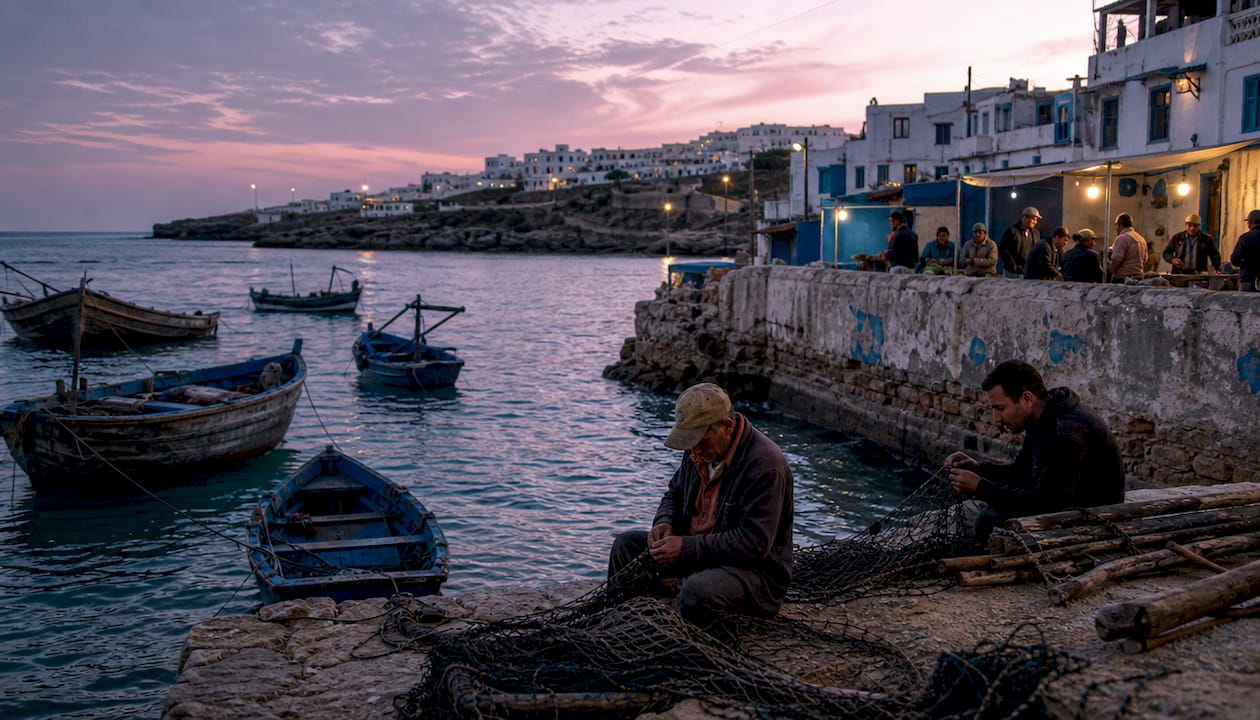
- Moroccan coastal towns offer diverse experiences, with Atlantic surf and Mediterranean calm waters.
- They feature Blue Flag beaches, reliable sunshine, and vibrant maritime cultures year-round.
- Travelers should explore multiple towns to fully appreciate Morocco’s seaside diversity and rich heritage.
Moroccan coastal towns are defined by a rare combination of natural beauty, living maritime culture, and year-round sunshine that few destinations on earth can match. Morocco’s 3,500-kilometer coastline spans both the Atlantic Ocean and the Mediterranean Sea, giving travelers two entirely different coastal personalities in one country. The Atlantic side delivers powerful surf, wide sandy beaches, and windswept fishing villages. The Mediterranean side offers warmer, calmer waters and dramatic cliff scenery. Whether you want to surf world-class breaks, eat fresh oysters beside a lagoon, or wander a UNESCO-listed medina, the answer to why visit Moroccan coastal towns is simple: nowhere else gives you this much variety in one trip. Moroccotravel1 has built its entire coastal offering around this diversity, designing itineraries that move travelers through the full spectrum of what these towns deliver.
Why visit Moroccan coastal towns? Geography and climate explain everything
The geography of Morocco’s coast is the foundation of its appeal. The Atlantic side stretches roughly 2,940 kilometers, while the Mediterranean adds another 500 kilometers of warmer, sheltered shoreline. That contrast means travelers can choose their experience based on mood, skill level, and season rather than settling for one type of beach.
Morocco records over 300 days of sunshine annually, which makes the coast genuinely viable as a year-round destination. That figure matters because it removes the gamble most beach destinations carry. You are not betting on a two-week window in August. You can plan a coastal trip in March, October, or January and still expect warm, clear days.
The climate also splits neatly by coast. Atlantic beaches run cooler and windier, which is exactly what surfers and kitesurfers want. Mediterranean towns like Al Hoceima sit in a more sheltered position, with warmer, calmer waters and dramatic cliffs that create a completely different atmosphere. Families seeking gentle swimming conditions will find the Mediterranean coast far more forgiving than the open Atlantic.
Morocco holds 28 Blue Flag-certified beaches across its coastline. Blue Flag certification is an internationally recognized standard covering water quality, safety infrastructure, environmental management, and accessibility. That number signals that Morocco takes beach standards seriously, which matters for travelers who want clean water and reliable lifeguard coverage.
Key geographic features that shape the coastal experience include:
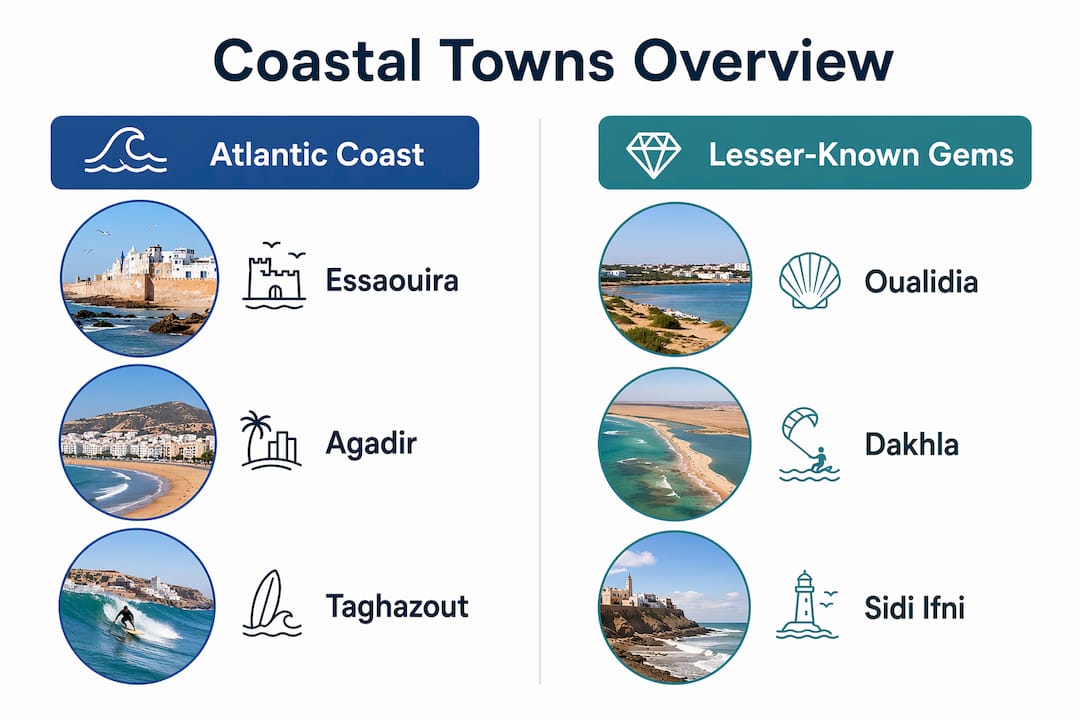
- Atlantic lagoons at Oualidia and Dakhla, offering calm, protected water inside otherwise energetic coastlines
- Long sandy beaches at Agadir stretching several kilometers with consistent, gentle waves
- Rocky cliffs and coves along the Mediterranean near Al Hoceima, ideal for snorkeling and photography
- Wind corridors at Essaouira and Taghazout that generate the reliable conditions surf and kite sports depend on
Which are the best coastal towns in Morocco, and what sets each one apart?
No two Moroccan coastal towns feel alike. Each has a distinct identity built from its geography, history, and the community that lives there. Choosing the right town depends on what kind of experience you want.
Essaouira: wind, art, and UNESCO heritage
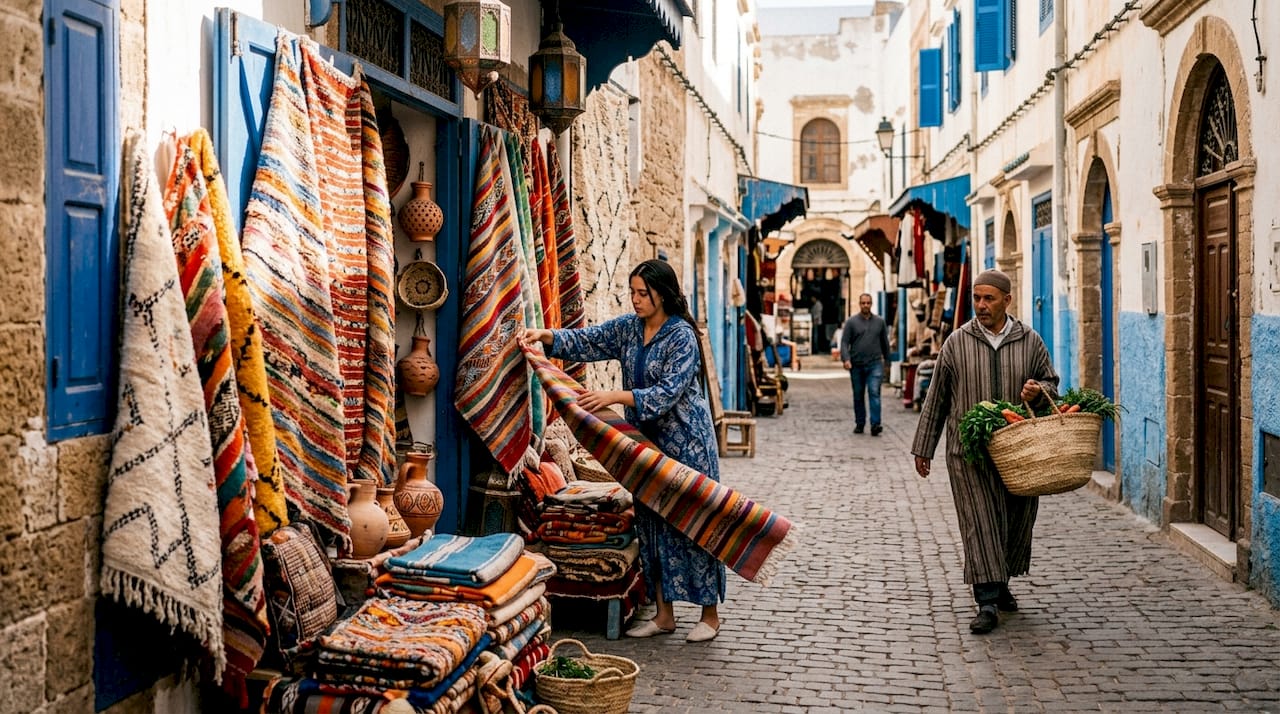
Essaouira is the most culturally layered of Morocco’s coastal towns. Its medina carries UNESCO World Heritage status and is one of the best-preserved examples of Portuguese-influenced North African architecture anywhere in the world. The blue-and-white ramparts, narrow alleys, and working fishing port create a backdrop that feels genuinely historic rather than staged for tourists.
The wind at Essaouira is relentless, and that is a feature rather than a flaw. Global kitesurfers and windsurfers treat the town as a pilgrimage site because the conditions are that reliable. The town sits roughly 2.5 to 3 hours from Marrakech, making it an easy addition to any inland itinerary. Moroccotravel1’s Essaouira cultural guide covers the town’s gallery scene, riad accommodations, and the best spots to eat grilled fish straight off the boats.
Pro Tip: Visit Essaouira in June for the Gnaoua World Music Festival, one of Africa’s most celebrated music events, which draws international artists and transforms the medina into an open-air concert venue.
Agadir: modern comfort with serious beach credentials
Agadir is the most accessible Moroccan beach destination for travelers who want resort infrastructure alongside genuine Atlantic scenery. The city was rebuilt after a 1960 earthquake and designed with wide boulevards, modern hotels, and a long, well-maintained beach promenade. That history explains why Agadir feels different from other Moroccan cities. It lacks the ancient medina atmosphere of Fes or Marrakech, but it compensates with convenience and beach quality that families and first-time visitors appreciate. For a deeper look at what the city offers, Moroccotravel1’s Agadir travel guide covers everything from surf schools to luxury spa resorts.
Taghazout: surf culture and village character
Taghazout sits just north of Agadir and represents the opposite end of the coastal spectrum. What was once a small fishing village has become a world-renowned surf destination attracting experienced surfers and yoga practitioners from across Europe and North America. The surf breaks here are reliable year-round, and the village has developed boutique guesthouses and surf camps without losing its laid-back character. The combination of serious wave quality and a relaxed, youthful atmosphere makes Taghazout one of the hidden gems on Morocco’s coastline for travelers who want more than a sun lounger.
Oualidia: the lagoon town that rewards patience
Oualidia is Morocco’s best-kept coastal secret for travelers who know where to look. The town sits beside a protected lagoon that produces some of the finest oysters in North Africa. The calm lagoon waters make it ideal for families with young children, kayaking, and flamingo spotting. Oualidia is about 2.5 hours from Casablanca, and peak season traffic can surge dramatically, so visiting in spring or autumn delivers the best experience. The seafood here, particularly the oysters and grilled fish, represents some of the most authentic coastal eating in the country.
Lesser-known gems worth the detour
Beyond the well-known names, Morocco’s coastline holds towns that reward travelers willing to go further. Dakhla, far to the south near the Western Sahara border, has become a global kitesurfing capital with a desert-meets-ocean landscape unlike anything else in Africa. Saïdia, on the Mediterranean near the Algerian border, offers long sandy beaches and a calmer, more local atmosphere. Al Hoceima sits inside a national park with turquoise water and cliffs that rival anything in southern Europe.
How does seasonality shape a trip to Morocco’s coast?
Timing a coastal trip to Morocco correctly changes the entire experience. The coast does not have a single “best” season. The right time depends entirely on what you want to do.
- November through March is peak Atlantic surf season. Powerful swells arrive consistently along the Atlantic coast, and towns like Taghazout and Agadir fill with surfers chasing the best breaks of the year. Water temperatures drop, but experienced surfers in wetsuits find these months ideal. The surf season guide from Moroccotravel1 maps the best breaks by month and skill level.
- April through May and September through October represent the shoulder seasons. Weather is mild, crowds thin out at popular spots, and the sea remains warm enough for swimming. These months suit travelers who want calm beaches, cultural exploration, and the ability to move through towns without fighting tourist traffic.
- June through August brings dry heat and peak crowds to major resorts like Agadir. Summer suits families who want reliable sunshine, calm lagoon swimming at Oualidia, and long beach days. The heat can be intense, so early mornings and evenings become the most comfortable times for activity.
- Year-round sunshine means even winter visits to the southern Atlantic coast around Agadir deliver warm, pleasant days. Seasonal planning is the single most effective way to match your travel style to the right destination window. Moroccotravel1’s Morocco climate guide breaks down each region’s weather patterns month by month.
Pro Tip: If you want Oualidia’s lagoon without the crowds, visit in October. The water is still warm from summer, the oyster season is in full swing, and the town returns to its quiet, local character.
What cultural, culinary, and recreational experiences define Morocco’s coast?
Moroccan coastal towns offer far more than beaches. The maritime cultural heritage of these towns runs deep, connecting fishing traditions, local festivals, and community life in ways that most beach destinations have long since lost.
Food as a coastal experience
Seafood is the defining culinary experience along Morocco’s coast. Fresh fish grilled on open charcoal, sardines stuffed with chermoula, and tagines built around the morning’s catch appear on menus from Essaouira to Al Hoceima. Oualidia’s oysters have a specific reputation. The lagoon’s unique mix of fresh and salt water produces oysters with a clean, mineral flavor that chefs across Morocco seek out. Moroccotravel1’s Moroccan food guide covers the full range of coastal dishes and where to find the best versions of each.
Water sports across the coast
The range of water sports available along Morocco’s coastline is one of the strongest arguments for exploring Moroccan beaches beyond simple sunbathing.
- Surfing and bodyboarding at Taghazout, Anchor Point, and Safi for experienced riders
- Kitesurfing and windsurfing at Essaouira and Dakhla, where wind conditions are among the most consistent in the world
- Kayaking and paddleboarding in the calm lagoons of Oualidia and Dakhla
- Snorkeling and diving in the clear Mediterranean waters around Al Hoceima National Park
Atlantic currents require awareness at open beaches, and lifeguard flag systems at major beaches like Agadir mark safe swimming zones clearly. Always check the flag before entering the water, particularly during winter months when swells intensify.
Culture, crafts, and local life
The fishing villages and historic medinas along Morocco’s coast carry a living culture that goes well beyond museum visits. Essaouira’s medina hosts working artisan workshops producing marquetry, silver jewelry, and hand-painted ceramics. Local markets in smaller towns sell the same goods locals buy, from fresh produce to handwoven baskets. Coastal festivals, particularly in summer, celebrate fishing traditions with music, food, and community gatherings that welcome visitors. Moroccan coastal towns combine natural beauty with centuries of maritime heritage in a way that typical beach destinations simply cannot replicate.
Accommodation along the coast ranges from boutique riads in Essaouira’s medina to large resort hotels in Agadir and surf camps in Taghazout. Each style delivers a different relationship with the town. Staying inside a medina means waking to the sound of the fishing port. Staying at a surf camp means your day is organized around tides and swell forecasts.
Key Takeaways
Moroccan coastal towns deliver a travel experience that combines Blue Flag beach quality, centuries of maritime culture, and year-round sunshine across two distinct coastlines that no single European beach destination can replicate.
| Point | Details |
|---|---|
| Two coastlines, two experiences | The Atlantic offers surf and wind; the Mediterranean delivers calm, warm water and dramatic cliffs. |
| Blue Flag quality standards | Morocco holds 28 Blue Flag-certified beaches, signaling reliable water quality and safety infrastructure. |
| Year-round viability | Over 300 annual sunshine days make coastal Morocco a genuine four-season destination. |
| Town diversity matters | Essaouira, Taghazout, Oualidia, and Agadir each serve a different traveler profile and travel style. |
| Shoulder seasons win | April through May and September through October offer the best balance of weather, crowds, and cost. |
What I’ve learned from Morocco’s coast that most travel guides miss
Most travel content about Morocco focuses on Marrakech and the Sahara. The coast gets treated as an afterthought, a place to decompress after the intensity of the medinas. That framing undersells what the coast actually is.
The contrast between Agadir’s resort strip and a small fishing village 20 minutes up the road is one of the sharpest I’ve encountered anywhere in the world. In Agadir, you have international hotel chains, beach clubs, and a promenade that could belong to any Mediterranean resort city. Drive north toward Taghazout, and the landscape shifts completely. Boats pulled up on the sand, nets drying in the sun, a handful of guesthouses run by surfers who never left. Both are valid. Neither is the “real” Morocco. They are two faces of the same coast.
My honest recommendation is to resist the urge to base yourself in one town and treat the coast as a single destination. The Atlantic and Mediterranean coasts feel like different countries. Essaouira and Dakhla are separated by more than distance. They represent entirely different relationships between a community and the ocean. The travelers who get the most from Morocco’s coastline are the ones who move between town types rather than settling into one resort for a week.
Combine at least one surf or wind sport town with one lagoon or fishing village. Add a night or two inside a medina. That combination gives you the full picture of what exploring Morocco’s seaside actually means.
— Moroccotravel1.com
Plan your coastal Morocco trip with Moroccotravel1
Moroccotravel1 has designed two packages that cover the best of Morocco’s coast alongside the country’s inland highlights. The 10-Day Morocco Family Tour includes Agadir and Essaouira with family-friendly pacing and accommodation suited to all ages. The 14-Day Morocco Grand Tour moves through major coastal towns and cultural sites with expert local guides handling every detail. Both packages include transportation, vetted accommodations, and guided cultural experiences. Travelers who want a fully customized coastal itinerary can browse all private Morocco tour options and build a trip around their specific interests, timeline, and travel style.
FAQ
What makes Moroccan coastal towns worth visiting?
Moroccan coastal towns combine Blue Flag beach quality, active surf culture, UNESCO-listed medinas, and fresh seafood in a single destination. The country’s 3,500-kilometer coastline spans both the Atlantic and Mediterranean, offering two distinct coastal experiences.
When is the best time to visit Morocco’s coast?
Shoulder seasons in spring (April through May) and autumn (September through October) offer mild weather, fewer crowds, and warm water. Surfers target the Atlantic coast from November through March for peak swell conditions.
Are Moroccan beaches safe for swimming?
Major beaches like Agadir operate lifeguard flag systems that mark safe swimming zones. Atlantic currents can be strong, so always check the flag color before entering the water, particularly in winter.
How far is Essaouira from Marrakech?
Essaouira is approximately 2.5 to 3 hours by road from Marrakech, making it a practical addition to any itinerary that includes the city.
What food should I try in Moroccan coastal towns?
Fresh grilled fish, sardines with chermoula, and seafood tagines are the staples. Oualidia’s lagoon oysters are a specific regional specialty worth planning a visit around.


