


- Morocco tour packages offer curated experiences combining desert adventures, imperial city exploration, and mountain trekking for diverse traveler profiles.
- They vary from budget group tours to luxury private options, with length and inclusions tailored to preferences and seasonality.
- Travelers should consider their comfort, transit time, and cultural interests, ensuring they choose a pace that truly immerses them in Morocco’s rich landscapes and history.
Morocco tour packages are curated itineraries that combine desert adventures, imperial city exploration, Atlas Mountains trekking, and deep cultural immersion into a single, organized travel experience. The country packs an extraordinary range of landscapes and living history into a geography roughly the size of California, which is exactly why structured packages outperform DIY planning for most first-time and returning visitors. Whether you want to sleep under Saharan stars in Merzouga, hike Berber trails above 8,000 feet, or spend three days wandering the medinas of Fes and Marrakech, the right package shapes that experience from arrival to departure. This guide breaks down every major package type, compares group versus luxury formats, and gives you the practical entry details you need before booking.
What types of Morocco tour packages are available?
Morocco tour packages fall into four primary categories: desert tours, Atlas Mountains treks, imperial city cultural tours, and family or honeymoon itineraries. Each category targets a different traveler profile and delivers a distinct experience, though many packages overlap two or three categories within a single itinerary.
Desert adventure tours
Desert tours from Marrakech to Merzouga are the most requested Morocco itinerary type. A standard 3-day version covers roughly 600 kilometers of road, and long driving days of up to 10 hours on days one and three are the norm. That transit reality matters because it directly affects how much time you spend at the actual dunes. The camel trek to the desert camp typically runs about one hour, which means your choice of camp quality determines the quality of the entire overnight experience. Moroccotravel1’s 5-day Marrakech and desert itinerary adds two extra days to reduce daily driving and include stops at Aït Benhaddou and the Draa Valley, which is a much more comfortable pace for most travelers.
Atlas Mountains trekking packages
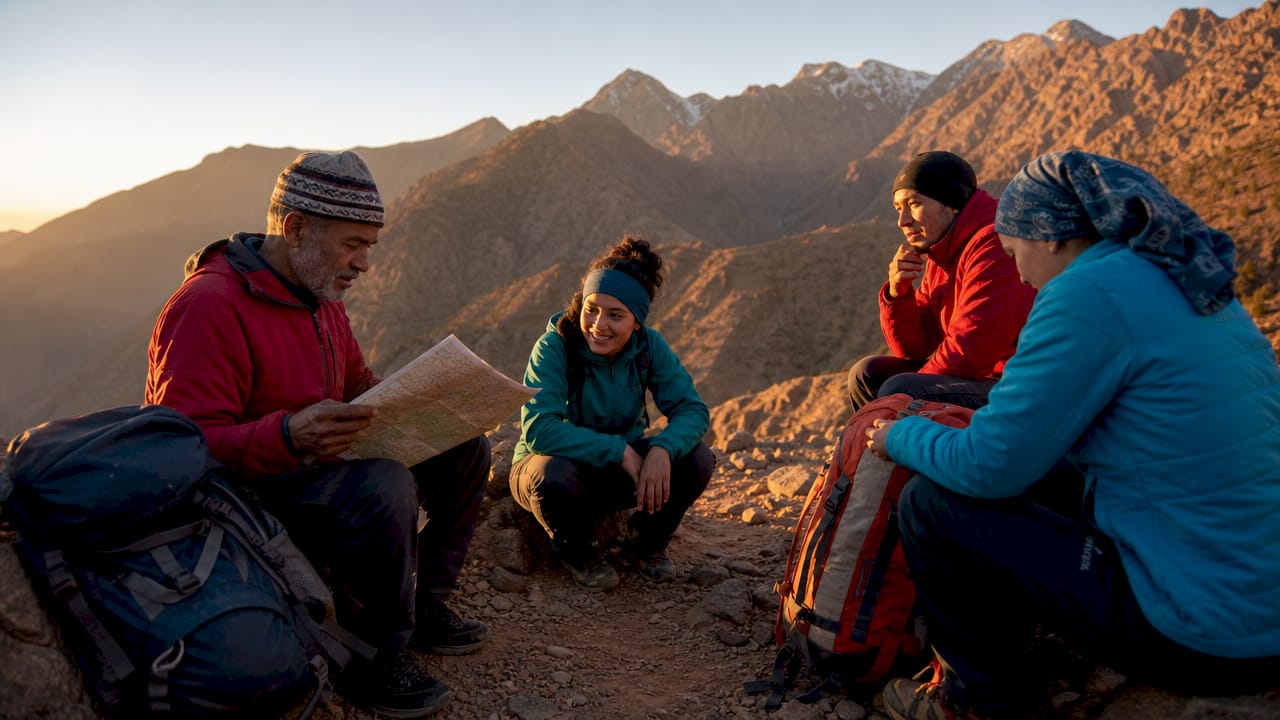
Atlas Mountains packages combine city nights in Marrakech with trail time in the High Atlas. Much Better Adventures’ trek, for example, includes 2 nights in Marrakech riads and 3 nights in traditional Berber gites, with guided hikes reaching up to 8,850 feet. Porter and guide support is included, which makes the physical demands manageable for active travelers who are not technical mountaineers. These packages typically run 7 to 10 days and appeal to travelers who want physical challenge alongside cultural contact. The Berber gite experience, where you sleep and eat with local families in mountain villages, is one of the most authentic lodging options available anywhere in Morocco.
Imperial city cultural tours
Cultural city tours focus on Marrakech, Fes, Meknes, and Rabat, the four imperial cities that hold Morocco’s deepest historical layers. A well-built cultural itinerary includes a guided walk through the Fes el-Bali medina (a UNESCO World Heritage site), a visit to the Saadian Tombs in Marrakech, and time in the blue-painted streets of Chefchaouen. Cooking classes, henna workshops, and souk navigation with a local guide are common add-ons. These tours run 5 to 8 days and work well as standalone trips or as the cultural bookend to a desert or mountain adventure.
Family and honeymoon packages
Family trips to Morocco work best when the itinerary mixes accessible activities with comfortable, centrally located accommodations. Moroccotravel1’s 10-day family tour includes riad stays, camel rides, and visits to Ouzoud Waterfalls, which are activities that work for children and adults equally. Honeymoon packages prioritize private riads, candlelit dinners in medina restaurants, and rose valley excursions near Kelaat M’Gouna.
Pro Tip: Book any desert camp upgrade at the time of package purchase, not on arrival. Standard camps fill first, and luxury tented camps with private bathrooms and proper beds sell out weeks in advance during October through April.
Here is a quick reference for the main package types and their typical inclusions:
| Package Type | Duration | Key Inclusions | Typical Accommodation |
|---|---|---|---|
| Desert adventure | 3 to 9 days | Camel trek, desert camp, guided drive | Riad + desert camp |
| Atlas Mountains trek | 7 to 10 days | Guided hikes, porter service, Berber gites | Riad + Berber gite |
| Imperial city cultural | 5 to 8 days | Medina tours, cooking class, souk visits | Riad or boutique hotel |
| Family or honeymoon | 8 to 12 days | Tailored activities, private transfers | Luxury riad or resort |
How do group tours, solo packages, and luxury tours differ?
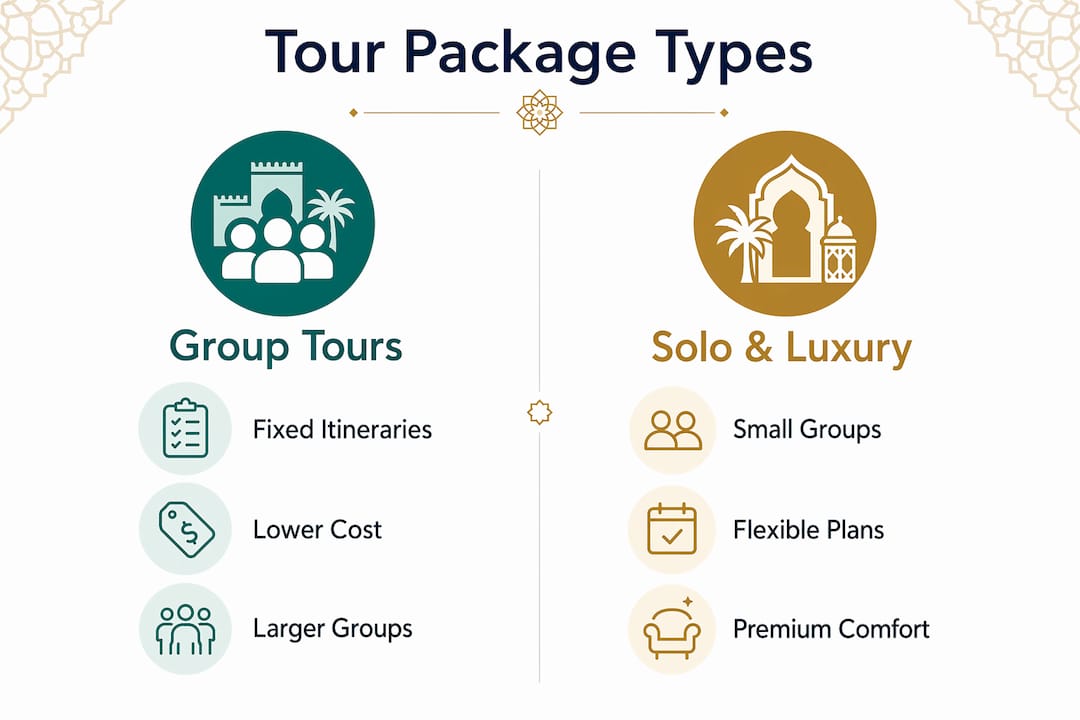
The three main package formats differ on four axes: group size, itinerary flexibility, price, and accommodation quality. Understanding those differences before you book prevents the most common traveler disappointment, which is paying for one experience and receiving another.
Group tours: economical but fixed
Group tours to Morocco represent the most affordable entry point. WeRoad’s 9-day “Morocco 360°” package starts at $1,045 per person, covering breakfasts, some dinners, guided tours, a camel ride, and local experiences. Flights and non-included meals are extra. That price point makes Morocco accessible for budget-conscious travelers, but the trade-off is a fixed itinerary with limited room for detours or personal pace adjustments. Group tours typically run with 12 to 20 participants, which means you move at the group’s speed, not your own. For first-time visitors who want structure and social energy, this format works well. For travelers who want to linger in a medina or skip a scheduled activity, it creates friction.
For practical advice on getting the most from a shared itinerary, the group tour tips from RBAN Tours cover expectations around hospitality and group dynamics that apply directly to Morocco travel.
Solo adventure packages: small groups, real connections
Solo-focused Morocco adventure packages are not truly solo travel. They are small-group departures, typically capped at 16 participants, designed for people traveling alone who want social connection without the rigidity of a large group tour. Flash Pack’s “The Best of Morocco” is a well-known example: it excludes flights and advises arrival at Casablanca Mohammed V International Airport with departure from Marrakech Menara International Airport. The smaller group size produces more authentic local interaction and a stronger sense of shared experience among participants. These packages attract travelers in their 30s and 40s who want adventure without the backpacker hostel dynamic.
Luxury packages: private, premium, and bespoke
Luxury Morocco tours operate on a completely different model. Private vehicles, five-star riads, exclusive desert camps with private bathrooms and furnished terraces, and custom itinerary adjustments define this format. Moroccotravel1’s 8-day luxury tour illustrates the difference clearly: private transfers throughout, premium riad accommodations in Marrakech and Fes, and a luxury desert camp in Merzouga replace the shared vans and standard tents of group tours. Price per person is significantly higher, but the experience-to-cost ratio holds up for travelers who prioritize comfort and privacy over savings.
Pro Tip: Budget separately for tipping. Flash Pack recommends approximately $5.50 per day for pack leaders and $3 per day for drivers, collected in a tipping kitty at the welcome meeting. Even on luxury packages, local guide tipping is culturally expected and not included in the package price.
Here is a direct comparison of the three formats:
| Format | Group Size | Price Range | Flights Included | Flexibility |
|---|---|---|---|---|
| Group tour | 12 to 20 | From $1,045 for 9 days | Rarely | Low |
| Solo/small group | Up to 16 | Mid-range, land only | No | Moderate |
| Luxury private | 2 to 8 | Premium pricing | Sometimes | High |
What should you consider when choosing the best Morocco tour?
Choosing the right Morocco package comes down to five factors: your traveler profile, your tolerance for transit, the season you plan to travel, your comfort threshold for accommodation, and your total budget, including extras.
- Match your traveler profile to the package format. Solo travelers who want social connection should look at small-group adventure packages. Families with children under 12 benefit from private transfers and flexible daily schedules. Couples on a honeymoon or anniversary trip get the most value from private luxury itineraries where the pace is entirely their own.
- Assess your transit tolerance honestly. The 3-day desert tour involves up to 10 hours of driving on two of the three days. That is a significant physical commitment. If long road days drain you, choose a 5-day or 9-day desert itinerary that spreads the driving across more days and adds meaningful stops along the route.
- Time your trip by season. Morocco’s peak travel window runs from October through April, when desert temperatures are comfortable and mountain trails are accessible. Summer in the Sahara means temperatures above 100°F, which makes outdoor activities genuinely difficult. Moroccotravel1’s season-by-season guide breaks down the specific trade-offs for each month, including crowd levels and pricing patterns.
- Choose your desert camp category deliberately. Standard desert camps offer shared bathrooms and basic bedding. Luxury camps provide private en-suite tents, proper beds, and sometimes a private terrace with unobstructed dune views. The luxury desert camp experience is worth the upgrade for travelers who plan to spend more than one night in the Sahara.
- Understand what is and is not included. Most packages cover accommodation, breakfast, some dinners, guided activities, and ground transportation within Morocco. They typically exclude international flights, travel insurance, alcoholic beverages, optional activities, and tips. Reading the inclusions list carefully before booking prevents budget surprises on arrival.
Pro Tip: Ask your tour operator specifically whether airport transfers are included on arrival and departure days. Many packages include in-country transportation but not the first and last airport pickup, which can add $40 to $80 per person if booked separately.
What entry requirements do travelers need for Morocco?
Morocco’s entry rules are straightforward for most Western travelers, but the details matter.
- Visa-free entry: Citizens of the US, UK, EU member states, Canada, and Australia enter Morocco visa-free for stays up to 90 days. No pre-approval or visa application is required. You receive an entry stamp at the border or airport.
- Passport validity: Your passport must be valid for at least 6 months beyond your return date. A passport expiring within 6 months of your travel dates will result in denied boarding at your departure airport.
- Supporting documents: Border officials may ask for proof of accommodation (a hotel booking confirmation or tour operator letter works), a return or onward ticket, and evidence of sufficient funds. In practice, travelers on organized packages rarely face detailed questioning, but having these documents accessible is good practice.
- Primary arrival airports: Mohammed V International Airport in Casablanca handles the most international arrivals. Marrakech Menara Airport is the second major hub and the preferred arrival point for packages focused on the south. Fes-Saïss Airport serves northern itinerary-focused travelers.
- Flights and packages: Most Morocco tour packages are sold as land-only arrangements, meaning you book your own international flights. Some luxury and honeymoon packages offer flight-inclusive pricing, but this is the exception rather than the rule.
| Nationality | Visa Required | Max Stay | Passport Validity Needed |
|---|---|---|---|
| US citizens | No | 90 days | 6 months beyond return |
| UK citizens | No | 90 days | 6 months beyond return |
| EU citizens | No | 90 days | 6 months beyond return |
| Canadian citizens | No | 90 days | 6 months beyond return |
For long travel days, pack a neck pillow, download offline maps of your Moroccan cities, and carry local dirhams for small purchases at airports and roadside stops. ATMs are available at both Casablanca and Marrakech airports, and the exchange rate at airport ATMs is generally reasonable.
Key takeaways
The best Morocco tour package is the one that matches your pace, comfort level, and travel style rather than simply the one with the lowest price.
| Point | Details |
|---|---|
| Package types vary widely | Desert, mountain, cultural, and family packages each deliver a distinct experience and suit different traveler profiles. |
| Group tours start around $1,045 | WeRoad’s 9-day package sets the benchmark, but flights and tips are always extra. |
| Luxury upgrades change the experience | Private vehicles and premium desert camps transform comfort on long-transit itineraries. |
| Tipping is culturally expected | Budget roughly $5.50 per day for guides and $3 per day for drivers, separate from package costs. |
| Entry is visa-free for most travelers | US, UK, and EU citizens enter Morocco for up to 90 days with a valid passport and no pre-approval. |
What I’ve learned from years of Morocco itineraries
The single most common mistake travelers make when booking Morocco packages is choosing the shortest itinerary to save money and then spending most of it in a van. A 3-day desert tour sounds efficient until you realize that two of those three days are almost entirely transit. The dunes are real, the stars are extraordinary, and the camel ride is genuinely memorable. But arriving exhausted after 10 hours of driving and leaving the next morning after a rushed sunrise does not do the Sahara justice.
My honest recommendation is to treat the 5-day or 9-day desert itinerary as the minimum viable experience. The extra days are not padding. They are the difference between passing through Morocco and actually being in it. The 9-day desert tour from Moroccotravel1 is a good reference point for what a properly paced itinerary looks like.
I also think travelers consistently undervalue small-group formats. The smaller group dynamic creates something that large group tours cannot replicate: genuine conversation with local guides, flexibility to linger at a souk stall, and the kind of shared experience that produces actual friendships rather than just travel acquaintances. If you are traveling solo, a small-group package with a cap of 12 to 16 people is almost always the right call.
Finally, embrace the cultural activities that feel optional. The cooking class in a Marrakech riad, the henna session in the medina, and the mint tea ceremony with a Berber family in the Atlas Mountains. These are not tourist traps. They are the moments that make Morocco different from every other destination you have visited. An itinerary that treats culture as a checkbox misses the entire point of traveling here.
— Moroccotravel1.com
Plan your Morocco adventure with Moroccotravel1
Moroccotravel1 offers a full range of curated itineraries built specifically for travelers who want more than a surface-level trip. The private and custom Morocco tours cover everything from short 5-day desert escapes to the 14-day grand tour that covers the country’s full geographic and cultural range. Families can explore the 10-day family package, while couples planning a romantic trip will find the 10-day honeymoon tour a well-structured option with private accommodations and curated experiences throughout. Every itinerary includes 24/7 support, local expert guides, and detailed inclusions lists so you know exactly what you are getting before you book.
FAQ
What do Morocco tour packages typically include?
Most Morocco tour packages include ground transportation within Morocco, accommodation (riads, desert camps, or gites), breakfast daily, some dinners, guided tours, and key activities like camel rides or medina walks. Flights, travel insurance, alcoholic beverages, and tips are almost always excluded.
How long should a Morocco tour package be?
A minimum of 7 days is recommended to cover both a desert experience and at least two imperial cities without feeling rushed. Ten to fourteen days allows for the Atlas Mountains, the Sahara, and the full imperial city circuit at a comfortable pace.
Are Morocco tours safe for solo travelers?
Morocco is considered safe for solo travelers, and small-group packages with a cap of 16 participants are specifically designed for people traveling alone. Flash Pack’s “The Best of Morocco” is one well-known example that caters to solo adventurers seeking social connection.
What is the best time of year to book Morocco tours?
October through April is the optimal window for most Morocco tour packages, particularly desert and mountain itineraries. Summer temperatures in the Sahara regularly exceed 100°F, making outdoor activities physically demanding and less enjoyable.
Do I need a visa for Morocco as a US citizen?
US citizens do not need a visa for Morocco. Entry is visa-free for up to 90 days, requiring only a valid passport with at least 6 months of validity beyond your return date and proof of onward travel.


